
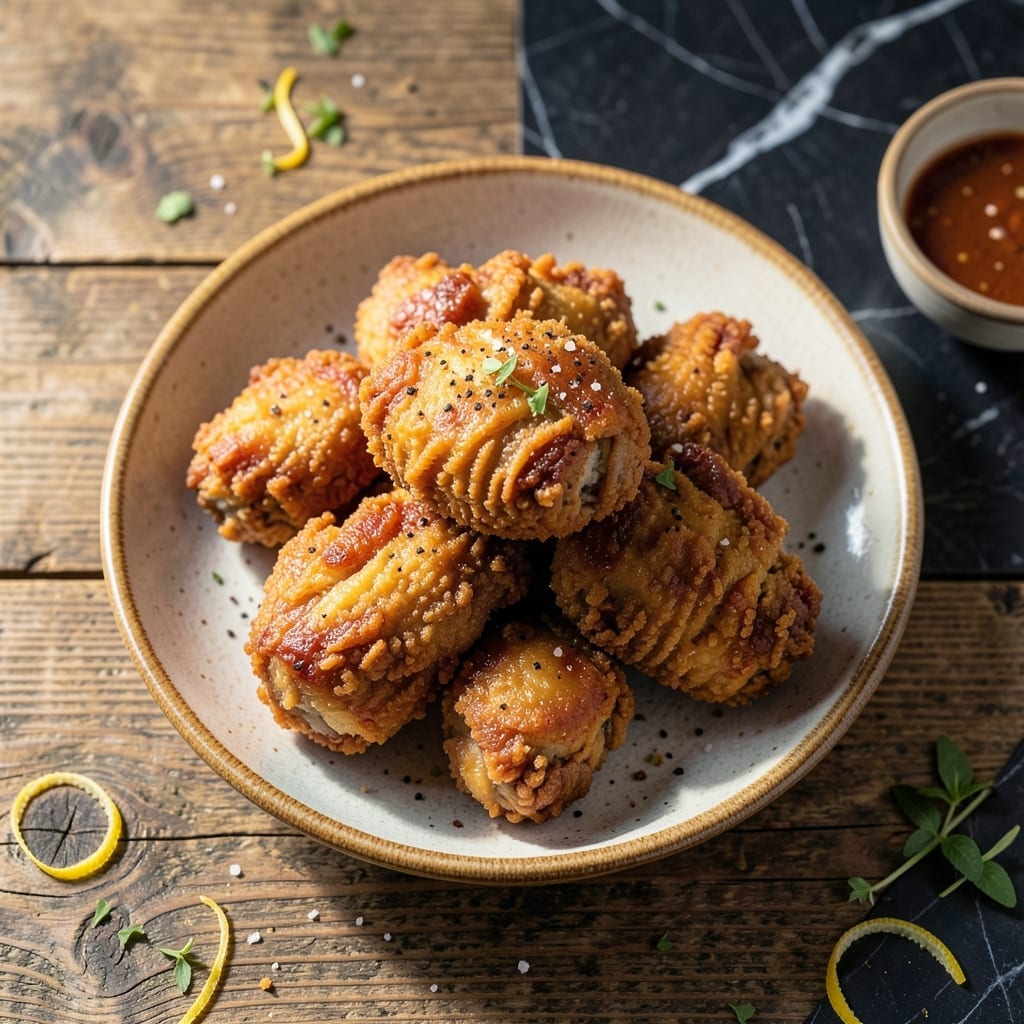
This Korean-style fried chicken delivers on its promise of crispy, double-coated perfection with every bite. The secret lies in a two-step frying process that ensures maximum crunch while keeping the meat juicy inside.
The sweet and spicy glaze transforms this dish from ordinary to extraordinary. It clings to the ridged surface of the chicken, creating layers of flavor that balance heat with caramelized sweetness. Each piece offers a satisfying contrast of textures and tastes.
What sets this recipe apart is the attention to detail in each step. The marinade tenderizes the chicken, while the batter creates that signature shatteringly crispy exterior. The final glaze ties everything together into one irresistible package.
Serve immediately for the best texture, as the glaze will soften the coating over time. This dish is perfect for gatherings or when you want to treat yourself to restaurant-quality fried chicken at home.
Ingredients for Kyochon Fried Chicken
Double-dipped chicken with a sweet-spicy glaze requires these key ingredients for maximum crunch and flavor.
| Ingredient | Amount | Notes |
|---|---|---|
| Chicken Thighs 🍗 | 2 lb | Boneless, skin-on, cut into bite-sized pieces |
| Potato Starch 🥔 | 1 cup | For ultra-crispy coating |
| All-Purpose Flour 🌾 | ½ cup | For initial dredging |
| Baking Powder 🧂 | 1 tsp | Makes coating extra light |
| Kosher Salt 🧂 | 1 tsp | Plus more for seasoning |
| Black Pepper 🌶️ | ½ tsp | Freshly ground preferred |
| Garlic Powder 🧄 | 1 tsp | For depth of flavor |
| Gochujang 🌶️ | 3 tbsp | Korean chili paste for heat |
| Honey 🍯 | ⅓ cup | Balances the spice |
| Soy Sauce 🥢 | 2 tbsp | Low-sodium preferred |
| Rice Vinegar 🍚 | 1 tbsp | Adds tang to the glaze |
| Minced Garlic 🧄 | 2 cloves | Fresh is essential here |
| Ginger 🌿 | 1 tbsp | Fresh, grated for glaze |
| Vegetable Oil 🫒 | 4 cups | For deep frying, high smoke point |
| Sesame Seeds 🌰 | 1 tbsp | Toasted, for garnish |
| Green Onions 🧅 | 3 pieces | Thinly sliced for garnish |
The chicken thighs are non-negotiable—boneless, skin-on for that perfect crisp-to-juicy ratio. H-Mart or Korean markets will have the best selection, but most supermarkets carry them too. Potato starch is the secret to that shatteringly crisp coating (Bob’s Red Mill is widely available). For the gochujang, look for Sempio or CJ brands—they’ve got the right balance of heat and fermented depth.
No gochujang? Sriracha plus a touch of miso paste (one-third the amount) gets you close. Substitute cornstarch for potato starch if that’s all you have, though the texture won’t be quite as crispy. Honey can be swapped for maple syrup or agave—just avoid artificial sweeteners. For a gluten-free version, use tamari instead of soy sauce and ensure your starch is certified GF.
Fry in batches and keep finished pieces warm in a 200°F oven while you work. The glaze thickens as it cools, so toss the chicken in it right before serving. Leftovers? Re-crisp in a 375°F oven for 10 minutes. Best eaten same day, but holds 2-3 days refrigerated (though the coating softens).
Why You’ll Love This Recipe
- One Bowl Wonder: I just toss the chicken thighs in potato starch and flour—no fancy prep, no mess.
- Crispy Perfection: That baking powder trick gives it the most addictive crunch with every bite.
- Weeknight Hero: Honestly, it’s my go-to for quick dinners or when friends drop by unannounced.
- Budget Friendly: Chicken thighs stay cheap, and a little starch goes a long way for feeding a crowd.
Step-by-Step Instructions for Double-Dipped Crispy and Sweet Spicy Glazed Chicken
Master the technique behind this dish with precise steps for ultra-crispy results and balanced flavors.
Step 1: Prepare and Season the Chicken
Pat the 2 lb Chicken Thighs completely dry with paper towels—this is non-negotiable for maximum crispiness. I cut them into uniform bite-sized pieces so they cook evenly. Season lightly with 1 tsp Kosher Salt and 0.5 tsp Black Pepper to enhance the natural flavor of the meat.
In a shallow bowl, whisk together 0.5 cup All-Purpose Flour, 1 tsp Baking Powder, 1 tsp Garlic Powder, and the remaining Kosher Salt and Black Pepper. The baking powder creates micro-air pockets in the coating for that signature crunch. Dredge each piece of chicken in this mixture, shaking off any excess.
Step 2: Apply the Potato Starch Coating
In a separate bowl, add the 1 cup Potato Starch. Dip each floured chicken piece into the starch, pressing gently to ensure full coverage. Potato starch creates an exceptionally crispy, light crust that stays crunchy longer than traditional flour coatings.
Let the coated chicken rest for 10 minutes at room temperature. This allows the starch to adhere properly and prevents it from sliding off during frying. I arrange the pieces in a single layer on a wire rack set over a baking sheet to maintain airflow and prevent sogginess.
Step 3: Deep Fry to Golden Perfection
In a heavy-bottomed pot or deep fryer, heat 4 cups Vegetable Oil to 350°F. Use a deep-fry thermometer for accuracy—oil temperature is critical. Carefully lower the chicken pieces into the oil in batches, avoiding overcrowding which causes temperature drops and uneven cooking.
Fry the chicken for 8-10 minutes, turning occasionally, until deep golden brown and the internal temperature reaches 165°F. The coating should be perfectly crisp and the meat juicy. Transfer to a wire rack or paper towels to drain, then repeat with remaining batches, allowing the oil to return to temperature between each.
Step 4: Create the Sweet Spicy Glaze
In a saucepan over medium heat, combine 3 tbsp Gochujang, 0.33 cup Honey, 2 tbsp Soy Sauce, 1 tbsp Rice Vinegar, 2 cloves Minced Garlic, and 1 tbsp Ginger. Stir constantly as the mixture comes to a gentle simmer.
Cook for 3-4 minutes until the glaze thickens slightly and becomes glossy. The honey should caramelize at the edges, and the gochujang will mellow into a balanced sweet-spicy flavor. Remove from heat immediately to prevent burning.
Step 5: Double-Dip and Garnish
Working quickly while the chicken is still hot, dip each piece into the glaze, ensuring full coverage. Return the glazed chicken to the wire rack for 1 minute to set. For extra crunch and flavor intensity, I repeat the dipping process once more.
Sprinkle with 1 tbsp Sesame Seeds and 3 pieces Green Onions thinly sliced just before serving. The sesame seeds add nutty depth, while the green onions provide fresh contrast to the rich glaze. Serve immediately while the coating remains at peak crispiness.
Pro Tips For Making Kyochon Fried Chicken
- Double-Fry for Crisp: Fry the chicken once at 325°F until cooked through, then rest for 5 minutes before frying again at 375°F. I learned this the hard way—skipping the second fry leaves the coating soggy instead of that signature Kyochon crunch.
- Chill the Coated Chicken: After dredging in the potato starch and flour mix, let the chicken rest in the fridge for 20 minutes. Sounds weird, but it works: the coating adheres better and fries up lighter.
- Skip the Overcrowding: Fry in small batches—no more than 3-4 thighs at a time in a standard pot. After burning a few test pieces, I finally figured out that crowding drops the oil temp and makes the chicken greasy.
- Use Thighs, Not Breasts: Stick to bone-in, skin-on thighs for juicier meat that stands up to the double-frying. My grandmother swore by this, and she was right: breasts dry out and just don’t taste the same in this recipe.
Perfect Pairings for This Dish
Beer Pairings
Korean lagers like Hite or OB Beer cut through the richness with crisp carbonation. The light malt profile complements the sweet-spicy glaze without overpowering it. I always keep a few cold ones ready for this dish. 🍺
Wine Options
Off-dry white wines work beautifully here. Try a German Riesling with its bright acidity and touch of sweetness to balance the heat. Moscato d’Asti is another great choice with its fruity notes. 🍷
Side Dish Ideas
Crisp pickled radish provides a refreshing contrast to the fried chicken. I also love serving with steamed rice to soak up the extra glaze. The rice’s mild flavor lets the chicken shine.
Vegetable Pairings
Light, fresh vegetables balance this rich dish perfectly. A simple cucumber salad with rice vinegar dressing adds crunch. Kimchi brings fermented depth that pairs wonderfully with the gochujang glaze. 🥗
Dipping Sauces
Offer ranch dressing for those who prefer creaminess. I also set out a bowl of soy-garlic sauce made with 2 tbsp soy sauce, 1 tbsp vinegar, and 1 tsp sesame oil. Both complement the chicken’s flavors.
Dessert Follow-Up
End with green tea ice cream to cleanse the palate. The bittersweet matcha flavor contrasts nicely with the spicy-sweet chicken. I find it’s the perfect light finish to this hearty meal.
Nutrition Facts
Frequently Asked Questions
Can I use chicken breast instead of thighs?
Thighs are ideal for their fat content and juiciness, but breasts work if you brine them first for 30 minutes in saltwater. They tend to dry out faster, so reduce frying time by 1-2 minutes.
What if I don’t have a deep fryer?
Use a heavy pot with 2-3 inches of oil and a thermometer to maintain 350°F. A Dutch oven works great. Never fill the pot more than halfway with oil for safety.
How do I keep the chicken crispy if making ahead?
Fry and glaze the chicken, then place on a rack in a 200°F oven for up to 20 minutes. For longer storage, refrigerate unglazed and re-crisp in the oven at 375°F for 10 minutes before glazing.
Can I bake instead of fry?
Yes, but the texture won’t be as crispy. Bake at 400°F for 25-30 minutes on a wire rack, flipping halfway. Spray with oil before baking to help crisp the coating.

- Chuy’s Green Chili Rice Copycat Recipe: Spicy Southwest Flavor in Every Bite - September 25, 2026
- Beaten Rice Recipe: Fluffy Grains With Nutty Depth - September 25, 2026
- Machboos Rice Recipe: Bahraini Spiced One-Pot Tradition - September 25, 2026