
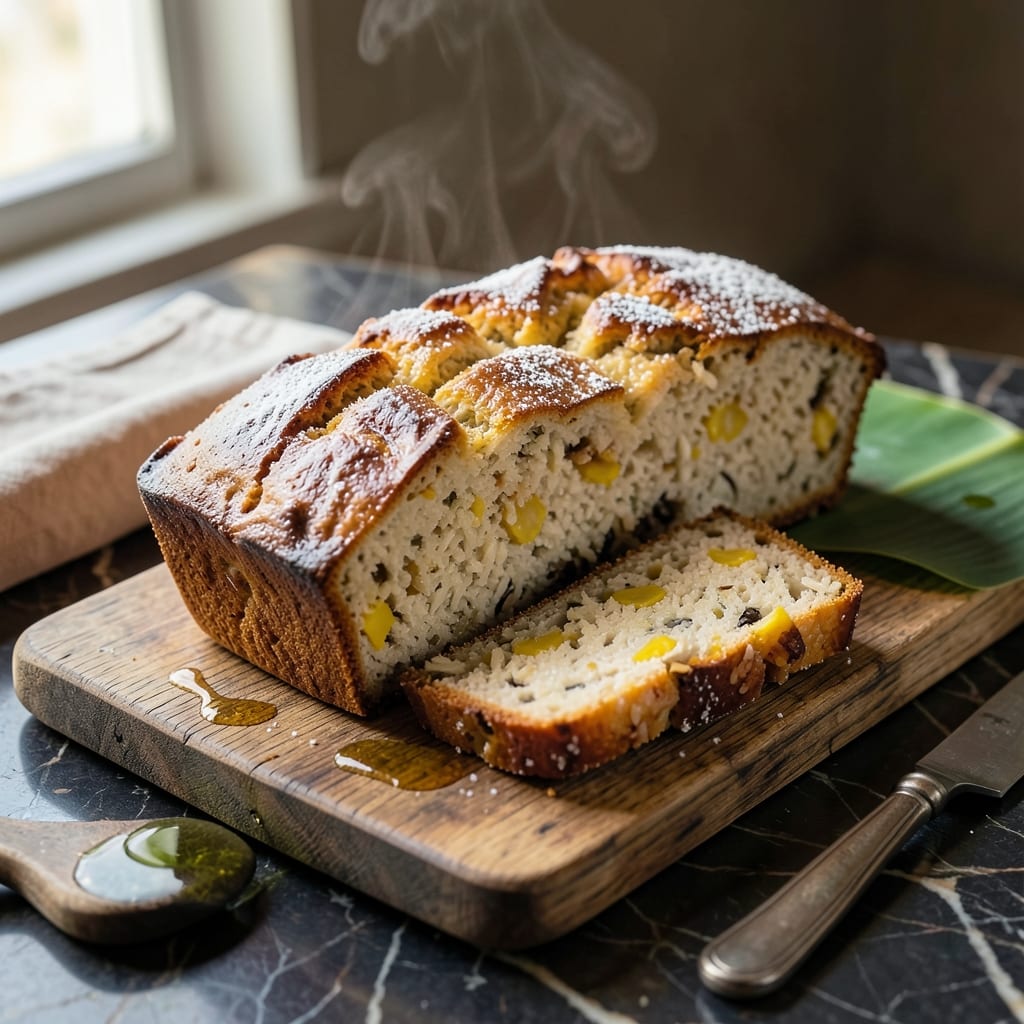
This Liberian specialty transforms simple ingredients into a fragrant, comforting dish that’s deeply rooted in tradition. The combination of ripe plantains and rice creates a naturally sweet, moist bread that’s both filling and delightful.
What sets this recipe apart is its straightforward approach—no yeast, no waiting. Just mix, shape, and bake for a result that’s tender inside with a lightly crisp exterior. The plantains add natural sweetness, while the rice provides a satisfying texture.
Perfect for breakfast or as a side, this bread pairs beautifully with savory stews or a simple cup of tea. Its subtle sweetness makes it a favorite across generations in Liberian households.
Here’s how to bring this cultural staple to your kitchen with ease.
Ingredients for Liberian Banana Rice Bread
Ripe plantains and rice form the heart of this traditional Liberian bread with warm spices.
| Ingredient | Amount | Notes |
|---|---|---|
| Ripe Plantains 🍌 | 4 whole | Very ripe, black skin preferred |
| Long-Grain White Rice 🍚 | 2 cups | Uncooked, rinsed thoroughly |
| All-Purpose Flour 🌾 | 1 ½ cups | Sifted for even texture |
| Coconut Milk 🥥 | 1 cup | Full-fat canned preferred |
| Granulated Sugar 🍚 | ½ cup | Adjust to taste if needed |
| Baking Powder 🧂 | 2 tsp | Ensures proper rise |
| Ground Cinnamon 🌿 | 1 tsp | Freshly ground for best flavor |
| Ground Nutmeg 🌰 | ½ tsp | Freshly grated preferred |
| Vanilla Extract 🌿 | 1 tsp | Pure extract, not imitation |
| Salt 🧂 | ½ tsp | Fine sea salt |
| Vegetable Oil 🫒 | ¼ cup | For greasing the pan |
The plantains are crucial—look for very ripe ones with mostly black skin at an African or Latin market for authentic sweetness. Jasmine rice can substitute for long-grain white, but avoid instant varieties. For coconut milk, Thai Kitchen or Chaokoh brands deliver consistent richness. The rice should be rinsed until the water runs clear to remove excess starch.
No coconut milk? Almond or oat milk with 1 tbsp coconut oil mimics the flavor. Out of plantains? Very ripe bananas at a 1:1 ratio work in a pinch (the bread will be denser). For gluten-free, swap the flour for a 1:1 GF blend. The cinnamon and nutmeg can be replaced with pumpkin pie spice if that’s what you have.
The bread stays fresh wrapped at room temperature for 2 days. For longer storage, refrigerate for up to 5 days or freeze slices (toasted, they taste freshly baked). The flavors deepen after a day, so consider making it ahead.
Why You’ll Love This Recipe
- One Pot Wonder: I can mix the rice, plantains, and coconut milk right in the pot—no extra bowls, no fuss.
- Sweet & Earthy: The ripe plantains and coconut milk create this warm, caramel-like richness that’s hard to resist.
- Breakfast or Dessert: I’ve served it with tea in the morning and as a sweet end to dinner—totally adaptable.
- Stretches Further: A small batch of rice and plantains makes enough to feed my family for two meals, easy.
Step-by-Step Instructions for Liberian Banana Rice Bread
Master the technique for this traditional bread with precise steps and professional guidance.
Step 1: Prepare and Cook the Rice Base
Begin by rinsing the 2 cups long-grain white rice thoroughly under cold water until the water runs clear. This removes excess starch and prevents gumminess in the final bread.
Cook the rice according to package instructions until tender, then spread it on a baking sheet to cool completely. The rice must be at room temperature before mixing to maintain the proper texture. I typically prepare this the night before to save time.
Step 2: Process the Ripe Plantains
Peel the 4 whole ripe plantains and cut them into large chunks. In a food processor, blend the plantains with the 1 cup coconut milk until smooth. The mixture should resemble a thick puree with no visible lumps.
Add the 0.5 cup granulated sugar, 1 tsp vanilla extract, 1 tsp ground cinnamon, and 0.5 tsp ground nutmeg to the plantain puree. Pulse until all ingredients are fully incorporated and the mixture is uniform in color and texture.
Step 3: Combine Wet and Dry Ingredients
In a large mixing bowl, combine the 1.5 cups all-purpose flour, 2 tsp baking powder, and 0.5 tsp salt. Whisk thoroughly to aerate the flour and evenly distribute the leavening agent.
Gradually fold the cooled rice into the plantain puree mixture until fully combined. Then, gently incorporate the dry ingredients into the wet mixture. Be careful not to overmix—just combine until no dry spots remain. The batter will be thick and slightly sticky.
Step 4: Bake to Golden Perfection
Preheat your oven to 350°F. Grease a standard loaf pan with the 0.25 cup vegetable oil, ensuring all surfaces are evenly coated. This prevents sticking and promotes even browning.
Transfer the batter to the prepared pan and smooth the top with a spatula. Bake for 50-60 minutes or until a toothpick inserted into the center comes out clean and the top is golden brown. The bread should pull slightly away from the sides of the pan when done.
If the top begins to brown too quickly, tent the pan with aluminum foil to prevent over-browning while the interior finishes cooking.
Step 5: Cool and Serve
Remove the bread from the oven and let it cool in the pan for 10 minutes. This allows the structure to set before removing it from the pan. Then, transfer it to a wire rack to cool completely.
Slicing while warm can cause the bread to crumble, so exercise patience. Once cooled, the bread should have a moist, dense crumb with a fragrant aroma. Serve at room temperature for the best texture and flavor.
Pro Tips For Making Liberian Banana Rice Bread
- Mash Plantains Well: I learned this the hard way—lumpy plantains make dense bread. Use a fork or potato masher until they’re completely smooth, with no fibrous bits left.
- Toast the Rice: Lightly toasting the long-grain rice in a dry pan for 3-4 minutes before mixing adds a nutty depth that raw rice just can’t deliver.
- Warm the Coconut Milk: After burning three batches, I finally figured out that cold coconut milk can make the batter seize up. Warm it gently before mixing, just until it loses its chill.
- Check Early: My grandmother swore by this, and she was right: start testing for doneness 10 minutes before the recipe suggests—overbaked banana rice bread turns dry fast.
Regional Styles of These Flavors
Monrovia Tradition
In Liberia’s capital, this bread is a staple at celebrations and family gatherings. The locals often use freshly pounded rice for an authentic texture. I remember the scent of baking bread wafting through Monrovia’s streets during festive seasons. 🌟
Coastal Variations
Along the coast, chefs add grated coconut or palm oil to the batter for extra richness. The coconut milk is sometimes replaced with fresh coconut water for a lighter version. This reflects the region’s abundant coconut groves.
Northern Adaptations
In northern Liberia, some bakers incorporate peanut butter into the mix, creating a nutty flavor profile. The plantains are often slightly underripe to balance the sweetness. This variation is popular during peanut harvest season.
Urban Twists
Modern Liberian bakers in cities like Gbarnga add chopped nuts or dried fruits for extra texture. Some even use brown sugar instead of white for a deeper caramel note. These innovations keep the traditional recipe exciting.
Rural Simplicity
In rural areas, this bread is often made without baking powder, relying on natural fermentation. The rice might be pounded by hand, and wild honey sometimes replaces sugar. This version has a denser, heartier texture.
Festival Special
During Liberia’s Independence Day, families add food coloring to create red, white, and blue swirls. The bread is shaped into the national flag’s colors, making it as visually stunning as it is delicious.
Nutrition Facts
Frequently Asked Questions
Can I use regular bananas instead of plantains?
Yes, very ripe bananas work in a pinch, though the texture will be denser. Use 4 large bananas for the same quantity, and expect a slightly different flavor profile since plantains are less sweet.
Why does the rice need to cool completely?
Warm rice can make the batter too sticky and affect the baking process. Cooling ensures even mixing and prevents a gummy texture in the final bread.
Can I make this bread gluten-free?
Substitute the all-purpose flour with a 1:1 gluten-free blend. The rice and plantains already provide structure, so the texture remains similar.
What’s the best way to store leftovers?
Wrap tightly and store at room temperature for 2 days or refrigerate for 5 days. For longer storage, freeze slices and toast before serving.

- Laos Sticky Rice Recipe: Traditional Steamed Perfection - November 4, 2026
- Magic Rice Recipe: One-Pot Aromatic Wonder - November 4, 2026
- Mushroom Fried Rice Indian Recipe: Spiced Wok-Tossed Comfort with Basmati - November 4, 2026