
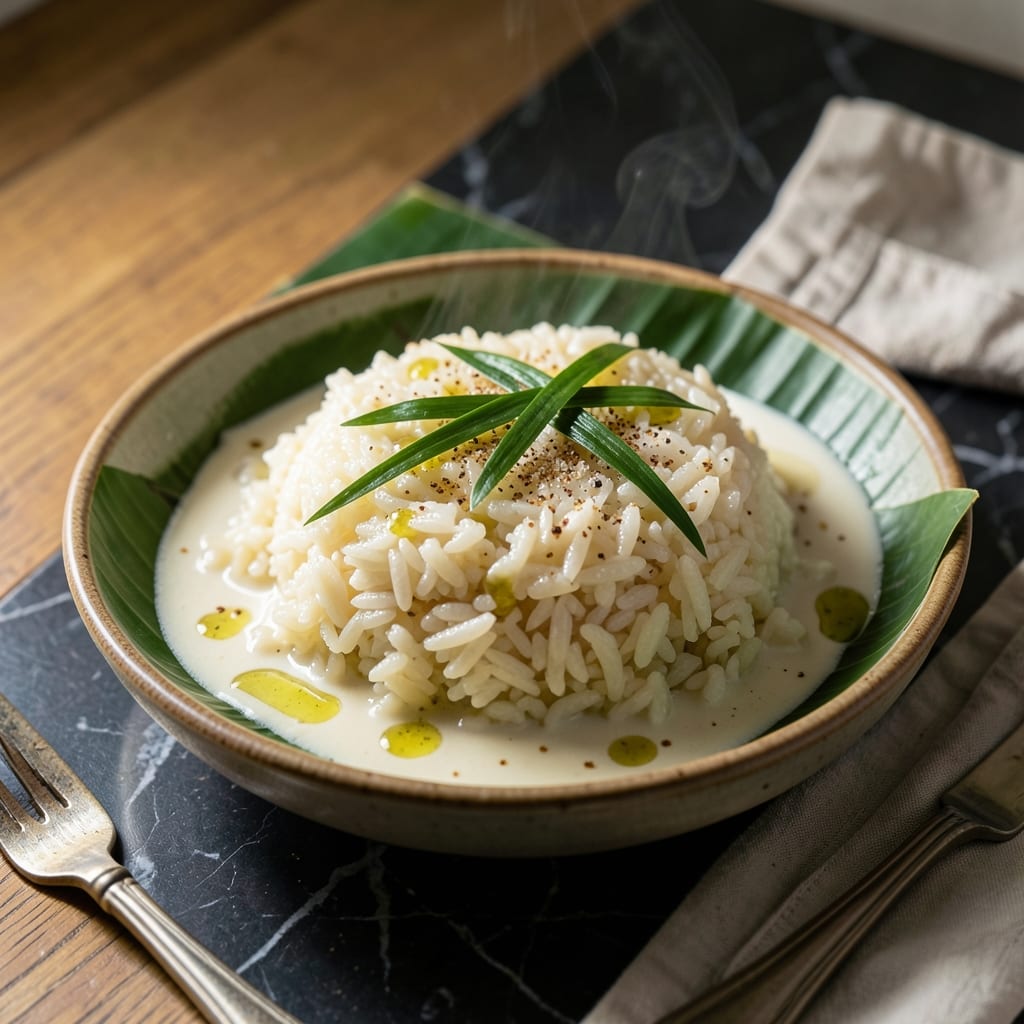
This malagkit rice dish delivers a perfect balance of sweetness and tropical richness that defines Filipino desserts. The coconut milk creates a creamy texture while maintaining the signature sticky consistency of glutinous rice.
I’ve refined this method to ensure the rice absorbs the coconut milk evenly, resulting in a dish that’s tender yet firm. A touch of salt enhances the natural sweetness without overpowering the delicate coconut flavor.
Traditional versions often include mango or ube, but this recipe keeps the focus on the pure, comforting combination of rice and coconut. The aroma alone will transport you to a tropical kitchen.
Serve warm or at room temperature for a dessert that’s as versatile as it is delicious.
Ingredients for Malagkit Rice Recipe with Coconut Milk
Glutinous rice and coconut milk create this creamy, sticky Filipino dessert with pure tropical flavor.
| Ingredient | Amount | Notes |
|---|---|---|
| Glutinous Rice 🍚 | 2 cups | Also called sweet rice or malagkit |
| Coconut Milk 🥥 | 2 cups | Full-fat for creamy texture |
| Water 💧 | 1 ½ cups | For cooking rice |
| Granulated Sugar 🍬 | ¾ cup | Adjust sweetness to taste |
| Salt 🧂 | ½ tsp | Enhances coconut flavor |
| Pandan Leaves 🌿 | 2 pieces | Optional, for aroma |
| Vanilla Extract 🌿 | 1 tsp | Pure extract preferred |
| Coconut Oil 🥥 | 1 tbsp | For greasing pan |
| Toasted Coconut Flakes 🥥 | ¼ cup | For garnish and texture |
| Mango Slices 🥭 | 1 cup | Optional, for serving |
The glutinous rice is non-negotiable here. Look for Thai sweet rice or malagkit rice at Asian markets or the international aisle of well-stocked supermarkets. Full-fat coconut milk is essential—Thai Kitchen or Chaokoh brands deliver the richest, most authentic flavor. Avoid light coconut milk; it lacks the necessary fat for that signature creamy texture. Pandan leaves add authentic aroma but can be omitted without disaster.
No pandan leaves? A drop of pandan extract works in a pinch (but use sparingly). Brown sugar can replace white for a deeper caramel note. For a nutty twist, swap half the rice for black glutinous rice. The coconut flakes are optional but add a lovely textural contrast. If using fresh mango, ripe ataulfo or Manila varieties offer the best sweetness and texture.
Store uncooked glutinous rice in an airtight container for up to 1 year. Leftovers keep well, covered, in the fridge for 4-5 days. Reheat gently with a splash of coconut milk to restore creaminess. The dish actually improves overnight as the flavors meld together.
Why You’ll Love This Recipe
- One-Pot Wonder: I love that it all comes together in a single pot—just rinse the rice, dump in the coconut milk and sugar, and let it simmer.
- Sweet Coconut Heaven: The way the sticky rice soaks up the rich coconut milk? It’s like dessert and comfort food had a baby.
- Feeds a Crowd: Honestly, this stretches perfectly for potlucks or lazy Sundays when everyone’s hovering around the kitchen.
- Budget Stretch: A bag of glutinous rice and a can of coconut milk feed my family for days without breaking the bank.
Step-by-Step Instructions for Malagkit Rice With Coconut Milk
Here is the method. Precise, tested, and designed for the perfect texture.
Step 1: Rinse and Soak the Glutinous Rice
Place the 2 cups Glutinous Rice in a fine-mesh strainer and rinse under cold running water until the water runs clear. This removes excess starch, which could make the final dish overly gummy rather than pleasantly sticky.
After rinsing, transfer the rice to a bowl and cover it with cool water. Let it soak for 20-30 minutes. Soaking ensures the grains cook evenly and absorb the liquid properly, resulting in a tender, uniform texture.
Step 2: Cook the Rice with Coconut Milk and Water
In a medium saucepan, combine the soaked and drained 2 cups Glutinous Rice, 2 cups Coconut Milk, 1.5 cups Water, 0.75 cup Granulated Sugar, and 0.5 tsp Salt. Stir gently to dissolve the sugar and salt.
Add the 2 pieces Pandan Leaves to the mixture for aroma, if using. Bring the mixture to a gentle boil over medium heat, then reduce the heat to low. Cover the saucepan and let it simmer for 15-20 minutes, or until the rice is tender and the liquid is mostly absorbed.
Resist the urge to stir during cooking—this can break the rice grains and make the dish mushy.
Step 3: Finish with Vanilla and Coconut Oil
Once the rice is cooked, remove the saucepan from heat. Stir in the 1 tsp Vanilla Extract and 1 tbsp Coconut Oil. The vanilla enhances the sweetness, while the coconut oil adds a subtle richness and prevents sticking.
Let the mixture sit covered for an additional 5-10 minutes. This resting period allows the rice to absorb any remaining liquid and develop its characteristic sticky consistency.
Step 4: Serve with Toppings
Scoop the warm rice into serving bowls. Top each portion with 0.25 cup Toasted Coconut Flakes for a nutty crunch and visual appeal. For a refreshing contrast, serve with 1 cup Mango Slices on the side or arranged on top.
The rice should be glossy, slightly chewy, and infused with the tropical flavors of coconut and vanilla. Serve warm for the best texture and flavor experience.
Pro Tips For Making Malagkit Rice Recipe With Coconut Milk
- Soak the Rice: I learned this the hard way—soak the glutinous rice for at least 30 minutes (or up to 4 hours) to guarantee even cooking and that perfect sticky texture.
- Use Full-Fat Coconut Milk: Skip the light versions; full-fat coconut milk makes a real difference in richness and creaminess, and it’s what gives malagkit that decadent mouthfeel.
- Watch the Simmer: After bringing it to a boil, drop the heat to low immediately—coconut milk can separate if cooked too aggressively, and nobody wants oily rice.
- Salt Last: Add salt at the very end, right before serving, to avoid over-seasoning as the liquid reduces during cooking.
Wine and Beer Pairings for malagkit rice recipe with coconut milk
Tropical White Wines
For this creamy creation, I recommend a Riesling from Germany or Washington State. Its bright acidity and hint of sweetness complement the coconut’s richness beautifully. A slightly off-dry style works particularly well. 🍷
Sparkling Options
A Prosecco or Moscato d’Asti offers effervescence that cuts through the dish’s creaminess. The light sweetness of Moscato mirrors the dessert’s profile, while Prosecco provides a refreshing contrast with its dry finish.
Asian-Inspired Beers
Light lagers like Sapporo or Singha work surprisingly well. Their crisp, clean profile cleanses the palate between bites. I’ve found Sapporo Premium to be particularly refreshing with the tropical notes. 🍺
Coconut-Infused Choices
For a fun twist, try a coconut porter from craft breweries like Maui Brewing Co. The beer’s roasted notes pair surprisingly well with the dish’s sweetness. The coconut connection creates a delightful thematic harmony.
Dessert Wine Pairing
A chilled Moscatel from Spain offers intense fruit and floral notes. Its honeyed sweetness matches the dessert’s profile while adding a layer of complexity. Serve in small 2-ounce portions for perfect balance.
Nutrition Facts
Frequently Asked Questions
Can I use regular rice instead of glutinous rice?
No, regular rice won’t work. Glutinous rice is essential for the sticky texture. Regular rice lacks the starch content needed to achieve that signature chewy consistency.
How do I store leftovers?
Keep in an airtight container in the fridge for 4-5 days. Reheat gently with a splash of coconut milk to restore creaminess. The flavors actually deepen overnight.
Why did my rice turn out mushy?
This usually happens from stirring during cooking or using too much liquid. Avoid stirring once simmering begins, and measure 2 cups coconut milk and 1.5 cups water precisely.
Can I make this ahead of time?
Yes! It reheats beautifully. Prepare up to 2 days in advance and store covered. The texture improves as it sits, making it perfect for meal prep.

- Laos Sticky Rice Recipe: Traditional Steamed Perfection - November 4, 2026
- Magic Rice Recipe: One-Pot Aromatic Wonder - November 4, 2026
- Mushroom Fried Rice Indian Recipe: Spiced Wok-Tossed Comfort with Basmati - November 4, 2026