
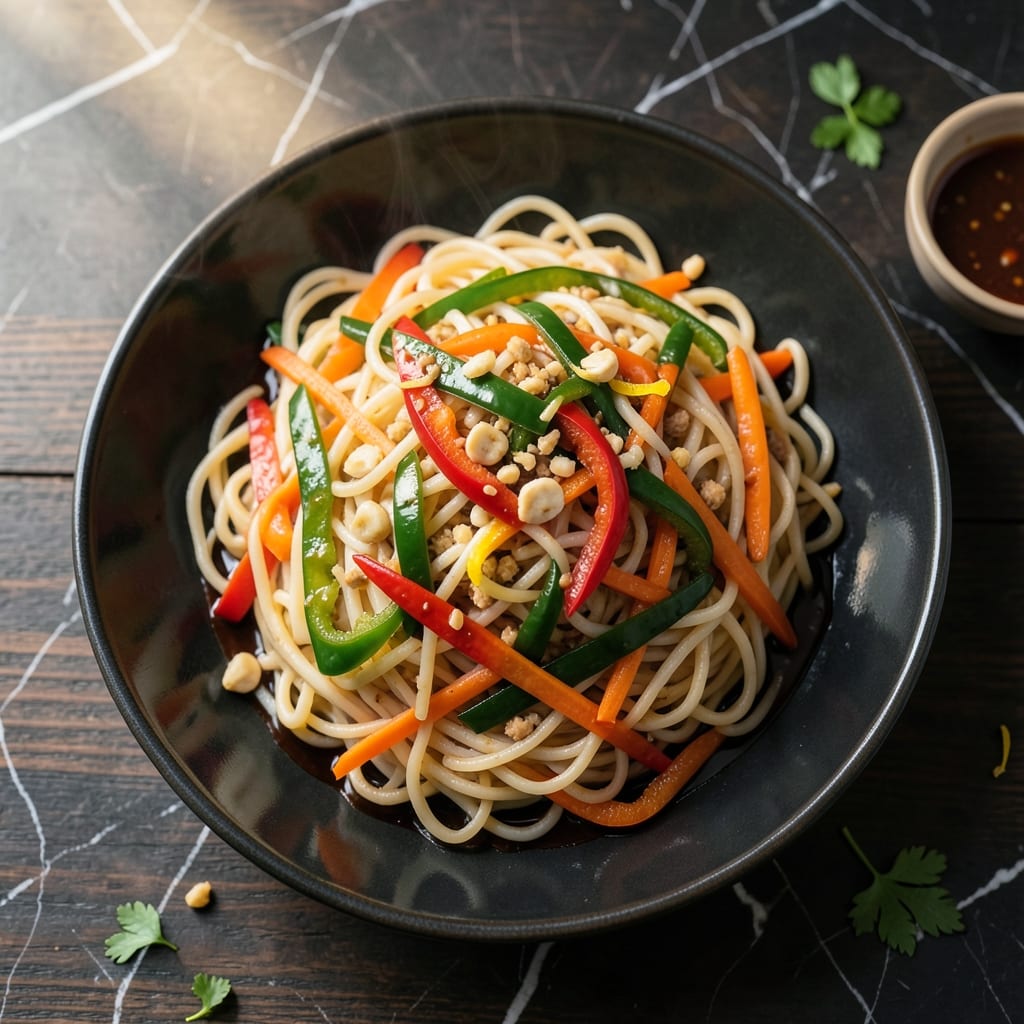
This vegetarian lo mein delivers restaurant-quality flavor with a satisfying chewy texture from rice noodles. The dish combines umami-rich ingredients with wok-seared vegetables for a complete meal.
I developed this method to achieve that signature takeout taste at home. High heat and quick cooking preserve the vegetables’ crispness while creating those characteristic charred edges.
The sauce brings everything together with its perfect balance of savory, sweet, and slightly tangy notes. Each strand of noodle absorbs the flavorful sauce without becoming mushy.
Ready in 20 minutes, this version proves you don’t need meat to create a deeply satisfying noodle dish that hits all the right notes.
Ingredients for Lo Mein Recipe with Rice Noodles
Restaurant-quality vegetarian lo mein starts with these carefully selected ingredients for authentic flavor and texture.
| Ingredient | Amount | Notes |
|---|---|---|
| Rice Noodles 🍜 | 8 oz | Dried, flat rice sticks |
| Vegetable Oil 🫒 | 2 tbsp | High smoke point preferred |
| Garlic Cloves 🧄 | 4 cloves | Minced finely for sauce |
| Fresh Ginger 🌿 | 1 tbsp | Peeled and grated |
| Bell Peppers 🌶️ | 2 whole | Thinly sliced, any color |
| Carrots 🥕 | 2 whole | Julienned or matchstick cut |
| Green Cabbage 🥬 | 2 cups | Thinly shredded |
| Scallions 🧅 | 4 whole | Sliced, whites and greens separated |
| Soy Sauce 💧 | ⅓ cup | Low-sodium preferred |
| Dark Soy Sauce 💧 | 1 tbsp | For color and depth |
| Vegetarian Oyster Sauce 🥄 | 2 tbsp | Or mushroom stir-fry sauce |
| Sesame Oil 🫒 | 1 tsp | Toasted, for finishing |
| Rice Vinegar 💧 | 1 tbsp | For tangy balance |
| Brown Sugar 🍚 | 1 tbsp | Light or dark variety |
| Cornstarch 🌾 | 1 tbsp | Mixed with water for slurry |
The rice noodles are non-negotiable—look for flat rice sticks labeled lo mein or chow mein at Asian markets or the international aisle. Fresh noodles work but dry are more accessible. For the sauces, Kikkoman soy sauce is reliable, while Lee Kum Kee makes an excellent vegetarian oyster sauce. The vegetables should be fresh and crisp; bell peppers with vibrant color and firm carrots are ideal.
No vegetarian oyster sauce? Mushroom stir-fry sauce is the closest swap. Out of brown sugar? White sugar plus a dash of molasses mimics the depth. For extra umami, add 1 tsp miso paste to the sauce. The ginger and garlic must be fresh—jarred versions lack punch. If you’re missing rice vinegar, apple cider vinegar works but reduce by half the amount.
Store dry noodles in a cool, dark place for up to 1 year. Refrigerate fresh noodles and use within 1 week. Once cooked, this keeps 3-4 days in the fridge but doesn’t freeze well—the noodles turn mushy. Prep all ingredients before cooking; the stir-fry moves fast.
Why You’ll Love This Recipe
- I’ll be real: rice noodles and veggies feed my family for days without breaking the bank.
- One Pan Wonder: I just toss the rice noodles with bell peppers in one pan—minimal cleanup, maximum flavor.
- Garlic Ginger Magic: Honestly, the combo of fresh garlic and ginger makes every bite ridiculously good.
- Weeknight Hero: Between us, this is my go-to for busy evenings—ready before the kids finish their homework.
Step-by-Step Instructions for Lo Mein With Rice Noodles
Master the wok technique for perfectly chewy noodles and vibrant vegetables every time.
Step 1: Soak and Prepare the Rice Noodles
Place the 8 oz Rice Noodles in a large bowl and cover completely with hot tap water. Soak for 8-10 minutes until pliable but still slightly firm—they’ll finish cooking in the wok. Drain immediately and rinse under cold water to stop the cooking process.
Toss the soaked noodles with 1 tsp Sesame Oil to prevent sticking. This step ensures they stay separated and develop that signature chewy texture when stir-fried. Set aside while you prep the remaining ingredients for maximum efficiency.
Step 2: Stir-Fry the Aromatics and Vegetables
Heat 2 tbsp Vegetable Oil in a wok or large skillet over high heat until shimmering. Add the 4 cloves Garlic Cloves and 1 tbsp Fresh Ginger, stir-frying for 30 seconds until fragrant but not browned—burnt garlic turns bitter.
Immediately add the 2 whole Bell Peppers, 2 whole Carrots, and 2 cups Green Cabbage. Stir-fry for 4-5 minutes until the vegetables soften slightly but retain their vibrant color and a slight crunch. The wok should be hot enough to creating a gentle sizzle throughout.
Step 3: Combine Noodles with Sauce and Vegetables
In a small bowl, whisk together the 0.33 cup Soy Sauce, 1 tbsp Dark Soy Sauce, 2 tbsp Vegetarian Oyster Sauce, 1 tbsp Rice Vinegar, and 1 tbsp Brown Sugar until the sugar dissolves. This umami-rich blend will coat every strand of noodle.
Add the drained noodles to the wok with the vegetables. Pour the sauce over and toss everything vigorously with tongs for 2-3 minutes until the noodles are tender and glossy. The sauce should cling to the noodles, creating a beautiful sheen.
Step 4: Thicken and Finish with Scallions
Mix the 1 tbsp Cornstarch with 2 tbsp water to create a slurry. Pour this into the wok and stir continuously for 1-2 minutes until the sauce thickens into a velvety coating that clings to the noodles and vegetables.
Remove from heat and stir in the 4 whole Scallions (whites and greens separated as noted). The residual heat will soften the scallions just enough while preserving their fresh, oniony bite. Serve immediately while the noodles are at their peak texture.
Pro Tips For Making Lo Mein Recipe With Rice Noodles
- Soak Noodles First: Cover rice noodles in warm water for 8-10 minutes until pliable but still firm—they’ll finish cooking in the wok and won’t turn to mush.
- High Heat Only: Crank the burner to max and let the oil shimmer before adding garlic and ginger; anything less and your veggies will steam instead of sear.
- Slice Peppers Thin: Cut bell peppers into ¼-inch strips so they soften quickly and blend into the noodles instead of staying crunchy and awkward to eat.
- Use Fresh Aromatics: I learned this the hard way—old garlic and ginger lose their punch, so grab the freshest cloves and root you can find for that bright, zingy flavor.
Pro Cooking Tips for This Recipe
Wok Heat Control
Achieving that signature wok hei (breath of the wok) requires high heat throughout. I use a carbon steel wok on my gas stove at maximum flame. If using an electric stove, preheat your pan for 5 minutes before adding oil to compensate for slower heat recovery. 🔥
Noodle Prep Secret
Don’t oversoak your 8 oz rice noodles—they should be just pliable when drained. Over-soaked noodles turn to mush during stir-frying. I test by breaking a strand; it should snap with slight resistance. The cold water rinse stops cooking and removes excess starch that could make your dish gummy.
Sauce Timing
Always mix your sauce ingredients (soy sauces, vegetarian oyster sauce, vinegar) before cooking begins. The stir-fry happens too fast to measure while cooking. I keep all components at room temperature to prevent the sauce from seizing when it hits the hot wok.
Stir-Fry Sequence
Aromatics first, then vegetables, then noodles—this order is non-negotiable. Cooking garlic and ginger first builds the flavor base. The vegetables need 4-5 minutes to soften slightly but stay crisp. Adding noodles last ensures they absorb all the developed flavors without overcooking. 💡
Slurry Technique
Mix your cornstarch slurry with cold water and add it at the very end. Stir constantly as it thickens—this takes about 1-2 minutes. I use a small whisk to break up any lumps before pouring. The sauce should coat the back of a spoon when properly thickened.
Finishing Touch
Off the heat, finish with sesame oil and fresh scallions. The residual heat gently softens the scallions without losing their bright color. I always taste one last time here and adjust with a splash of rice vinegar if needed for balance.
Nutrition Facts
Frequently Asked Questions
Can I use a different type of noodle?
Rice noodles give authentic chewy texture, but wheat-based lo mein noodles work too. Avoid spaghetti—it lacks the right bite. For gluten-free, stick with rice sticks.
How do I prevent the noodles from sticking?
Soak them just until pliable, then rinse in cold water. Toss with 1 tsp sesame oil before stir-frying. Use high heat and keep them moving in the wok.
What if my sauce is too thin?
Mix 1 tbsp cornstarch with 2 tbsp cold water and stir into the wok. Cook for 1-2 minutes until it thickens to coat the noodles.

- Mujadara Rice and Lentils Recipe: Earthy Spiced Lentils With Caramelized Onions - November 1, 2026
- Naija Fried Rice Recipe: Street-Style Spice With Veggie Crunch - November 1, 2026
- Mushy Rice Recipe: Fluffy Grains Transformed in Minutes - November 1, 2026