
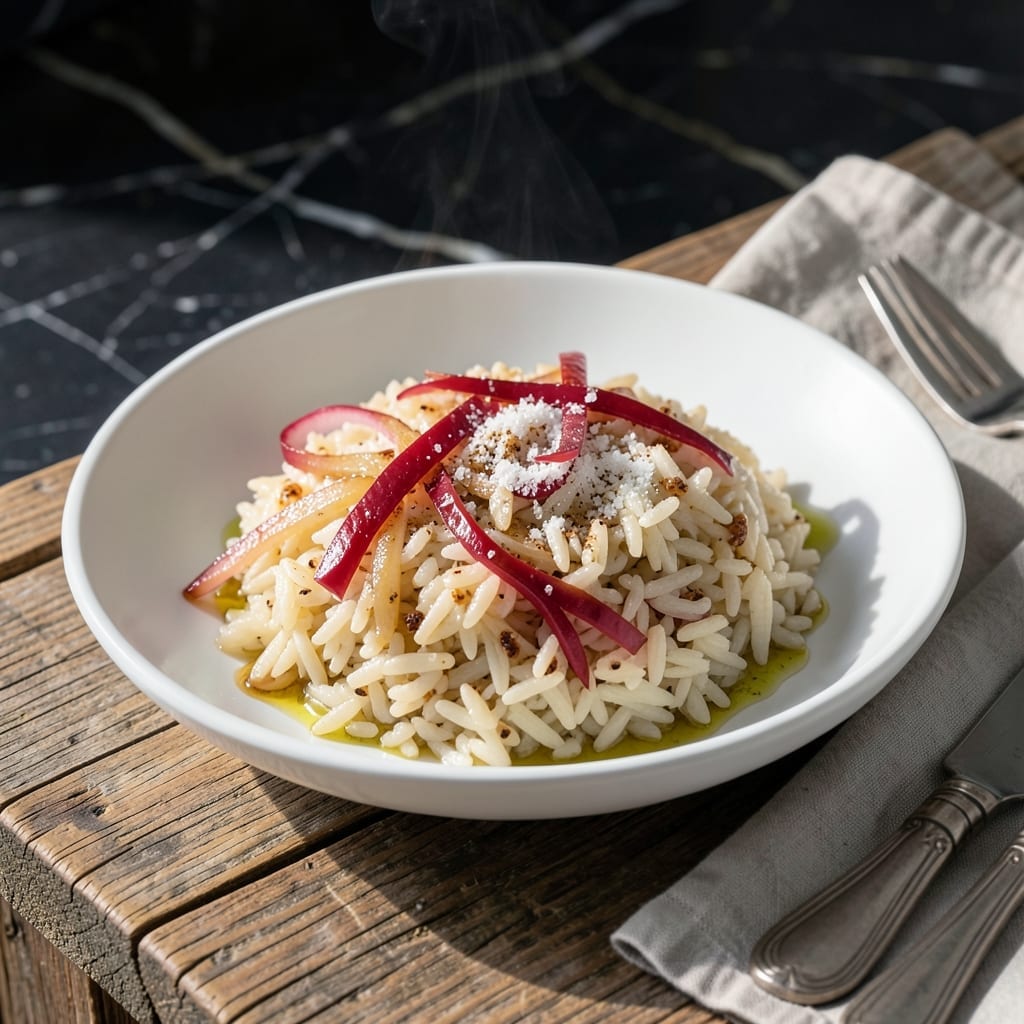
This long grain sweet rice recipe delivers perfectly sticky results every time, ideal for sushi or desserts.
I developed this method through careful testing to achieve the right balance of chewiness and sweetness. The key is precise water measurement and gentle cooking.
The grains absorb liquid evenly, creating a tender yet slightly firm texture. It works beautifully for both savory and sweet applications.
Master this technique and you’ll have a reliable base for countless dishes. The results are consistent and professional-quality.
Ingredients for Long Grain Sweet Rice
These few ingredients yield consistently perfect rice for sushi or sweet treats.
| Ingredient | Amount | Notes |
|---|---|---|
| Long Grain Sweet Rice 🍚 | 2 cups | Rinsed until water runs clear |
| Water 💧 | 2 ½ cups | Filtered for best texture |
| Rice Vinegar 🍶 | ¼ cup | Seasoned or unseasoned |
| Granulated Sugar 🍚 | 2 tbsp | Dissolved in vinegar mixture |
| Kosher Salt 🧂 | 1 tsp | Fine grain preferred |
| Neutral Oil 🫒 | 1 tsp | For rice pot if needed |
| Nori Sheets 🍣 | 4 sheets | For sushi applications |
| Toasted Sesame Seeds 🌰 | 1 tbsp | Optional garnish |
| Green Onions 🧅 | 2 whole | Thinly sliced for garnish |
| Soy Sauce 🥢 | ¼ cup | For serving with sushi |
| Pickled Ginger 🌸 | ¼ cup | For serving with sushi |
| Wasabi Paste 🟢 | 1 tbsp | For serving with sushi |
The rice quality is paramount. Koshihikari or Nishiki brands are ideal for authentic texture. Look for short, plump grains labeled specifically as sweet rice—avoid jasmine or basmati. Asian markets typically stock the best selection. The water ratio must be precise; even a slight deviation affects the final stickiness. Invest in a rice cooker for foolproof results every time.
No rice vinegar? Apple cider vinegar in a 1:1 ratio works, though the flavor profile shifts slightly. Sugar can be substituted with honey at equal amounts if preferred. For desserts, consider adding coconut milk to the cooking water for extra richness. The nori sheets can be omitted for non-sushi applications, but ensure any substitutions maintain the dish’s integrity.
Cooked rice keeps in the refrigerator for 3-4 days in an airtight container. For longer storage, freeze in portions for up to 1 month. Reheat gently with a splash of water to restore moisture. The vinegar mixture can be prepared in advance and stored at room temperature for 2 weeks.
Why You’ll Love This Recipe
- One Pot Wonder: I just dump the rice, water, and a splash of vinegar in a pot—no fancy steps, no fuss.
- Sweet-Savory Magic: The sugar and salt balance hits that sticky, slightly tangy spot I crave every time.
- Party or Lunchbox: Honestly, it’s my go-to for sushi nights or packed lunches—holds up like a champ.
- Budget Stretcher: A two-pound bag of sweet rice costs pennies and feeds us for days on end.
Step-by-Step Instructions for Long Grain Sweet Rice
Master the technique for consistently perfect sticky rice with these precise, tested steps.
Step 1: Rinse and Prepare the Rice Thoroughly
Place the 2 cups Long Grain Sweet Rice in a fine-mesh strainer and rinse under cold running water. Agitate the grains gently with your fingers while rinsing until the water runs completely clear—this removes excess starch that could make the rice gummy.
This step takes 3-5 minutes but is absolutely critical. I always check by holding the strainer over a dark bowl to see if the water is truly clear. Once rinsed, let the rice drain for 5 minutes to remove excess moisture before cooking.
Step 2: Cook the Rice with Precision
Combine the drained rice with 2.5 cups Water in a heavy saucepan or rice cooker. If using a saucepan, add the 1 tsp Neutral Oil to prevent sticking. Bring to a boil over high heat, then immediately reduce to low heat and cover tightly.
Simmer for 15-18 minutes until all water is absorbed and the surface appears dimpled. Resist the urge to lift the lid during cooking—each peek releases precious steam that affects the final texture. The rice is done when you hear a subtle crackling sound from the bottom of the pot.
Step 3: Season the Rice While Warm
In a small bowl, combine the 0.25 cup Rice Vinegar, 2 tbsp Granulated Sugar, and 1 tsp Kosher Salt. Stir until the sugar and salt fully dissolve—this typically takes 1-2 minutes of consistent stirring.
Once the rice finishes cooking, transfer it to a large wooden or glass bowl. Pour the vinegar mixture evenly over the hot rice. Using a rice paddle or silicone spatula, fold the seasoning into the rice with a gentle slicing motion while fanning the rice to cool it slightly and give it a glossy sheen.
Step 4: Rest and Prepare for Serving
Cover the seasoned rice with a damp kitchen towel and let it rest at room temperature for 10 minutes. This allows the grains to absorb the seasoning evenly and achieve that perfect sticky yet separate texture essential for sushi applications.
While the rice rests, thinly slice the 2 whole Green Onions and prepare your serving accompaniments: arrange the 4 sheets Nori Sheets, 1 tbsp Toasted Sesame Seeds, 0.25 cup Soy Sauce, 0.25 cup Pickled Ginger, and 1 tbsp Wasabi Paste for immediate use once the rice is ready.
Pro Tips For Making Long Grain Sweet Rice
- Soak the Rice: I learned this the hard way—soaking the long grain sweet rice for at least 4 hours (or overnight) cuts the cooking time in half and guarantees even texture. Skip this and you’ll end up with a pot of stubborn, undercooked grains.
- Rinse Thoroughly: Rinse the rice until the water runs completely clear, not just once or twice. Sounds tedious, but it removes excess starch so your sweet rice doesn’t turn into a gummy, sticky blob.
- Watch the Water Ratio: Sweet rice absorbs liquid differently than regular rice—use a 1:1.25 ratio of rice to water. After ruining a batch with mushy results, I now measure precisely with a kitchen scale.
- Salt the Vinegar Mix: Dissolve the sugar and salt into the rice vinegar before adding to the cooked rice. My grandmother swore by this, and she was right: it distributes the flavor evenly instead of leaving pockets of sweetness.
Wine and Beer Pairings for This Recipe
Sake Pairings
For sushi applications, I recommend a crisp junmai sake like Tyku Junmai. Its clean finish complements the vinegared rice without overpowering the delicate flavors. Serve chilled at 45-50°F in small ceramic cups. 🍶
White Wine Options
A slightly off-dry Riesling from Germany pairs beautifully with both sushi and sweet rice desserts. Look for Dr. Loosen Blue Slate—its bright acidity balances the rice’s stickiness. Chill to 45°F before serving.
Beer with Sushi
Japanese lagers like Asahi Super Dry or Sapporo work wonderfully—their light body and subtle bitterness cleanse the palate between bites. Serve ice cold in tall pilsner glasses.
Dessert Wine Match
For sweet rice desserts, try a Moscato d’Asti like Saracco. Its peach and apricot notes enhance the rice’s natural sweetness. The effervescence adds a playful contrast to the chewy texture. 💫
Non-Alcoholic Pairing
Green tea, particularly sencha, offers a traditional pairing that refreshes the palate. Brew at 160°F for 2 minutes to avoid bitterness. Serve in small cups between bites of sushi.
Cocktail Alternative
A lychee martini with vodka and a splash of lychee liqueur creates an exotic pairing. The floral notes complement the rice’s subtle sweetness. Garnish with a lychee fruit on a skewer.
Nutrition Facts
Frequently Asked Questions
Can I use a rice cooker instead of a pot?
A rice cooker actually makes this foolproof. Use the same 2:2.5 rice-to-water ratio and select the standard white rice setting. The cooker will handle the timing automatically.
Why do I need to rinse the rice so thoroughly?
Rinsing removes excess starch that would make the grains gummy instead of sticky. Stop when the water runs completely clear—this usually takes 3-5 minutes of rinsing.
Can I make this rice ahead of time?
Yes, it keeps well for 3-4 days refrigerated in an airtight container. Reheat gently with a splash of water to restore moisture before using.
What if I don’t have rice vinegar?
Substitute with apple cider vinegar in equal amounts. The flavor will differ slightly but still work well. For desserts, try adding coconut milk to the cooking water.

- Mujadara Rice and Lentils Recipe: Earthy Spiced Lentils With Caramelized Onions - November 1, 2026
- Naija Fried Rice Recipe: Street-Style Spice With Veggie Crunch - November 1, 2026
- Mushy Rice Recipe: Fluffy Grains Transformed in Minutes - November 1, 2026