
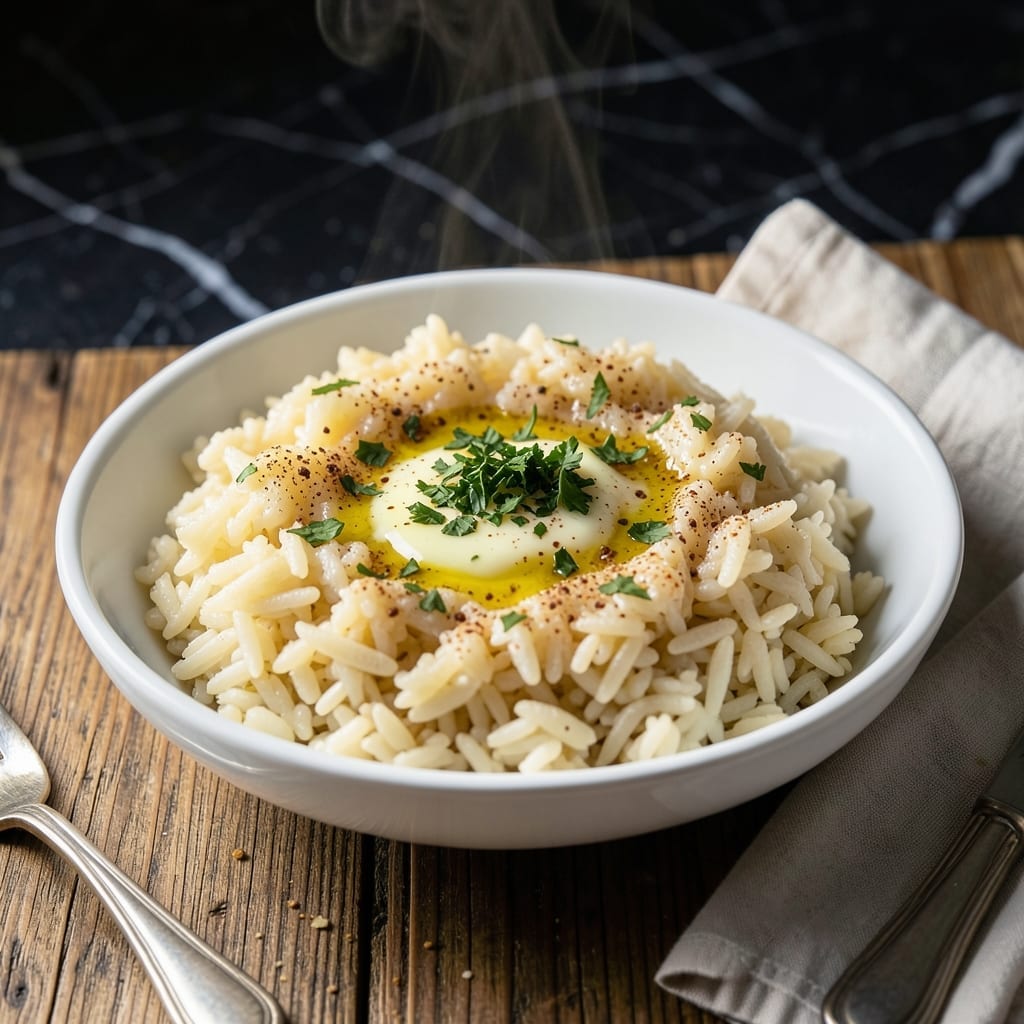
This buttery pilaf delivers the signature kick you expect from Longhorn Steakhouse, with a simple technique that elevates basic rice to restaurant-quality side dish. I’ve perfected the balance of rich butter and subtle seasoning to capture that familiar flavor.
The method relies on toasting the rice before cooking, which enhances its nutty depth. A touch of beef bouillon and a hint of garlic powder recreate that unmistakable Longhorn taste without overpowering the dish.
What you’ll get is fluffy, fragrant rice with a golden hue and a satisfying savory note. It pairs perfectly with steak, chicken, or any grilled protein.
Ready in under 30 minutes, this recipe brings the steakhouse experience to your kitchen with minimal effort and maximum flavor.
Ingredients for Longhorn Steakhouse Rice
Basic pantry staples transform into this steakhouse-style side with minimal effort.
| Ingredient | Amount | Notes |
|---|---|---|
| Long-Grain White Rice 🍚 | 2 cups | Uncooked, rinsed until clear |
| Unsalted Butter 🧈 | 4 tbsp | Divided for toasting and finishing |
| Beef Bouillon Granules 🥩 | 1 tbsp | Or one bouillon cube crushed |
| Garlic Powder 🧄 | 1 tsp | Not garlic salt |
| Onion Powder 🧅 | ½ tsp | For depth of flavor |
| Dried Parsley Flakes 🌿 | 1 tsp | For color and freshness |
| Salt 🧂 | ½ tsp | Adjust to taste |
| Ground Black Pepper 🌶️ | ¼ tsp | Freshly ground preferred |
| Water 💧 | 3 ½ cups | For cooking rice |
| Low-Sodium Soy Sauce 🫒 | 1 tbsp | Adds umami depth |
The rice quality matters—long-grain white rice (like Mahatma or Carolina Gold) gives you that separate, fluffy texture. Don’t skip rinsing it first (removes excess starch so it doesn’t turn gummy). The butter should be unsalted so you control the seasoning. I grab mine at Costco for the best price, but any grocery store brand works in a pinch.
No beef bouillon? Chicken bouillon at the same amount works fine, or 1 cup low-sodium beef broth instead of water + bouillon. Out of garlic powder? Fresh minced garlic (2 cloves) adds a brighter note. The soy sauce might seem odd, but it’s the secret to that restaurant depth—skip it if you’re avoiding gluten (though the flavor won’t be as rich).
Cooked rice keeps 4-5 days in the fridge, but it’s best fresh. Reheat with a splash of water to revive the fluffiness. Doesn’t freeze well—it gets mushy. Leftovers? Toss into fried rice or soup for a quick meal.
Why You’ll Love This Recipe
- One-Pot Wonder: I just dump everything in a single pot—rice, butter, bouillon, and those cozy garlic and onion powders—then let it simmer while I do something else.
- Restaurant-Level Flavor: Honestly, the beef bouillon gives it that deep, savory richness you’d expect from a steakhouse side, but at home.
- Pairs With Anything: I’ve served it with grilled chicken, steak, even roasted veggies—it’s my reliable side for weeknight dinners or Sunday suppers.
- Budget-Friendly Batch: A pound of rice, a few pantry staples, and I’ve got enough for leftovers that taste even better the next day.
Step-by-Step Instructions for Buttery Rice Pilaf With a Signature Kick
Here’s the method. Straightforward, tested, works every time.
Step 1: Toast the Rice in Butter
In a medium saucepan with a tight-fitting lid, melt 2 tbsp Unsalted Butter over medium heat. Add the 2 cups Long-Grain White Rice and stir constantly for 2-3 minutes until the grains turn light golden brown and smell nutty.
This toasting step is crucial—it enhances the rice’s natural flavor and prevents a mushy texture. Watch closely; you want even browning without burning. The rice should look slightly translucent at the edges when it’s ready for the next step.
Step 2: Bloom the Aromatics and Add Liquids
Stir in the 1 tbsp Beef Bouillon Granules, 1 tsp Garlic Powder, and 0.5 tsp Onion Powder. Cook for 30 seconds until fragrant—this wakes up the spices and builds depth.
Pour in the 3.5 cups Water, 1 tbsp Low-Sodium Soy Sauce, 0.5 tsp Salt, and 0.25 tsp Ground Black Pepper. Add the remaining 2 tbsp Unsalted Butter and stir well. The liquid should come to a gentle simmer almost immediately.
Step 3: Simmer Until Rice Is Tender
Once simmering, stir in the 1 tsp Dried Parsley Flakes, then immediately cover with the lid. Reduce heat to low and cook undisturbed for 18-20 minutes.
Resist the urge to peek or stir—steam is your friend here, and lifting the lid releases it. The rice is done when all liquid is absorbed and the grains are tender with no chalky center. If it’s still firm, add 2-3 tablespoons of water, cover, and cook for 2-3 minutes longer.
Step 4: Rest and Fluff for Perfect Texture
Remove the pan from heat and let it sit, covered, for 5 minutes. This final rest allows the rice to steam evenly and absorb any remaining moisture.
Gently fluff the rice with a fork, breaking up any clumps and redistributing the melted butter. The grains should be separate, glossy, and uniformly tender. Taste and adjust seasoning if needed—though the bouillon and soy sauce should provide plenty of flavor.
Pro Tips For Making Longhorn Steakhouse Rice
- Toast the Rice: Cook the rice in the butter for 2-3 minutes before adding liquid—it deepens the nutty flavor and prevents mushiness.
- Use Hot Broth: Dissolve the beef bouillon in hot water, not cold, so it fully incorporates and doesn’t leave gritty bits in your rice.
- Skip the Stirring: Once the liquid is in, resist the urge to stir—it breaks the grains and turns your rice gluey instead of fluffy.
- Double the Bouillon: I learned this the hard way—standard amounts taste bland, so use 1.5–2x the recommended bouillon for that bold Longhorn flavor.
Dietary Considerations for This longhorn steakhouse rice
Gluten-Free Adaptation
This dish can easily be made gluten-free by swapping the low-sodium soy sauce for tamari or coconut aminos. I use San-J Tamari—it has the same umami punch without the gluten. Just use the same 1 tbsp measurement.
Dairy-Free Option
For dairy-free versions, replace the unsalted butter with olive oil or vegan butter. I like Miyoko’s Creamery for its rich flavor. Use 4 tbsp total, divided the same way as the original recipe. 💪
Vegetarian Adjustments
To make this vegetarian, simply swap the beef bouillon for vegetable bouillon. Better Than Bouillon Vegetable Base works perfectly at the same 1 tbsp amount. The flavor profile stays surprisingly close to the original.
Sodium Considerations
If watching sodium, use low-sodium beef bouillon and skip the added ½ tsp salt. The soy sauce already contributes saltiness. Taste before serving and adjust with ¼ tsp increments if needed.
Allergen Notes
This recipe is naturally free of nuts, eggs, and shellfish. The main allergens to consider are dairy (butter) and gluten (soy sauce). Always check labels on bouillon and soy sauce for hidden allergens.
Lower-Carb Alternative
For a lighter version, try cauliflower rice in place of white rice. Toast it in butter first, then follow the same liquid and seasoning ratios. The texture will differ, but the flavor will still shine. ⚡
Nutrition Facts
Frequently Asked Questions
What kind of rice works best?
Use long-grain white rice like Mahatma or Carolina Gold for that separate, fluffy texture. Avoid instant rice or short-grain varieties, as they won’t hold up the same way.
Why toast the rice first?
Toasting deepens the nutty flavor and prevents mushiness. It only takes 2-3 minutes over medium heat until the grains turn light golden brown. Skipping this step dulls the final taste.
Can I make this in a rice cooker?
Yes! Sauté the rice and aromatics in a pan first, then transfer to the rice cooker with all liquids. Cook using the standard white rice setting. The texture may be slightly less crisp but still delicious.
How do I fix undercooked rice?
If grains are still firm, add 2-3 tablespoons of water, cover, and cook on low heat for another 2-3 minutes. Let it rest 5 minutes before checking again.

- Lump Rice Recipe Sri Lanka: Traditional Island-Style Texture - November 4, 2026
- Laos Sticky Rice Recipe: Traditional Steamed Perfection - November 4, 2026
- Magic Rice Recipe: One-Pot Aromatic Wonder - November 4, 2026