
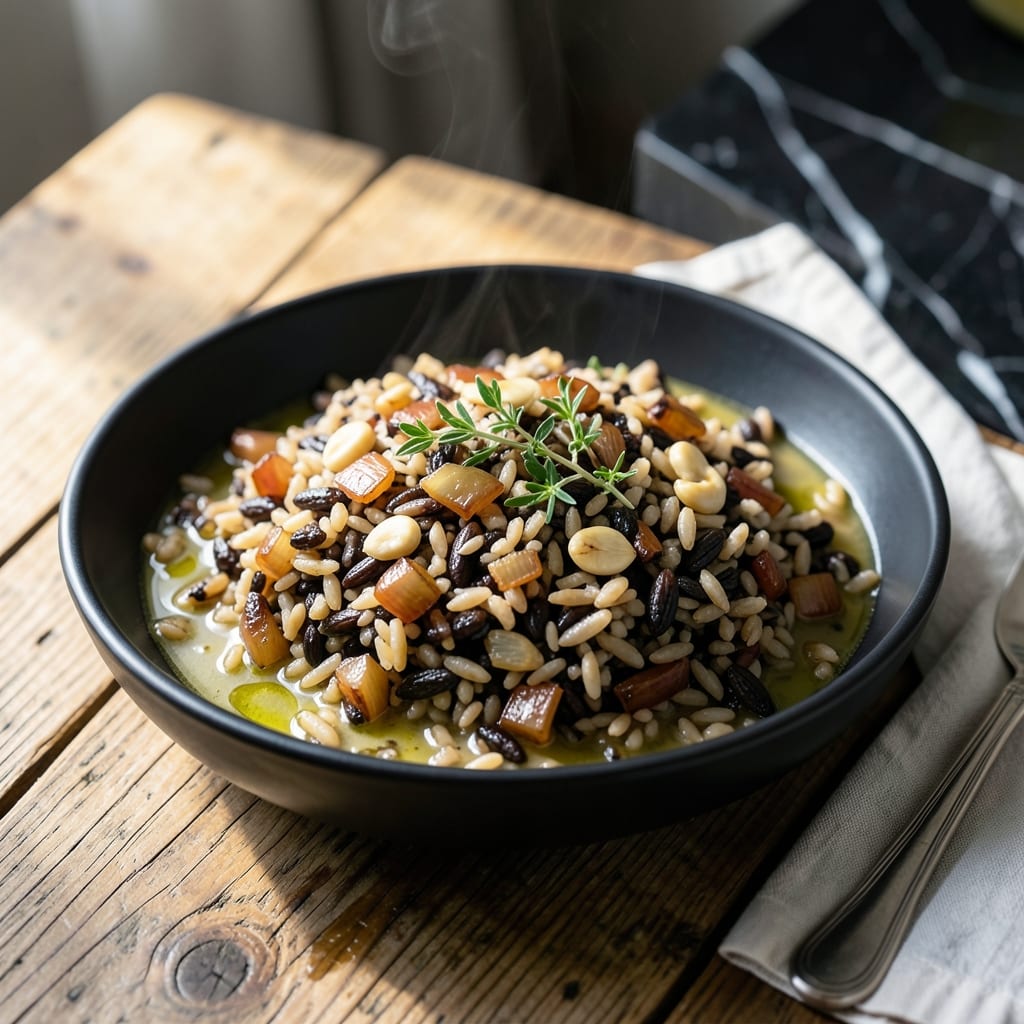
This wild rice blend pilaf delivers a nutty texture and herbed aroma that elevates any meal. The combination of long-grain brown rice, wild rice, and whole grains creates a dish with complex flavors and satisfying chew.
I developed this method to highlight the natural earthiness of Lundberg’s blend while adding layers of savory depth. A simple sauté of onions and garlic builds the foundation, while fresh herbs bring brightness to every bite.
The result is a side dish that’s hearty enough to stand alone yet complementary to proteins like chicken or fish. The grains stay perfectly tender, and the herbs infuse every mouthful with fragrant complexity.
Serve warm or at room temperature for a versatile addition to your table.
Ingredients for Lundberg Wild Rice Blend Pilaf
Lundberg’s blend plus fresh herbs and a few pantry staples build this aromatic pilaf.
| Ingredient | Amount | Notes |
|---|---|---|
| Lundberg Wild Rice Blend 🌾 | 1 ½ cups | Uncooked, long-grain brown and wild rice mix |
| Onion 🧅 | 1 whole | Medium, finely diced |
| Garlic Cloves 🧄 | 3 cloves | Minced for aromatic base |
| Olive Oil 🫒 | 2 tbsp | Extra-virgin for richness |
| Vegetable Broth 🥫 | 3 cups | Low-sodium preferred |
| Fresh Thyme 🌿 | 2 tsp | Chopped, or 1 tsp dried |
| Fresh Rosemary 🌿 | 2 tsp | Chopped, or 1 tsp dried |
| Fresh Parsley 🌿 | ¼ cup | Chopped, for garnish |
| Butter 🧈 | 2 tbsp | Unsalted, for finishing |
| Salt 🧂 | 1 tsp | Diamond Crystal kosher |
| Black Pepper 🌶️ | ½ tsp | Freshly ground preferred |
| Bay Leaf 🍃 | 1 whole | Dried, for infusion |
| Lemon Zest 🍋 | 1 tsp | Optional, for brightness |
The rice is everything here—Lundberg’s wild blend has the perfect mix of chewy wild rice and tender brown rice. Grab it at Whole Foods or Sprouts (or order online if your store doesn’t carry it). Don’t rinse it first—you want that natural starch for a slightly creamy texture. The broth matters too: Better Than Bouillon vegetable base gives a deeper, more complex flavor than canned.
No fresh herbs? Dried work at one-third the amount—just add them earlier so they rehydrate. Swap rosemary for tarragon if you’re feeling fancy. Out of vegetable broth? Chicken broth works fine (but skip it if you’re keeping it vegetarian). The butter can be olive oil, but I like that rich finish. If you’ve got ghee on hand, that’s even better for a nutty depth.
Pilaf holds up well—actually improves after a night in the fridge. Keeps for 4-5 days covered, or freeze for 3 months. Reheat with a splash of water or broth to loosen the grains (the good stuff, not the pre-shredded kind).
Why You’ll Love This Recipe
- One Pot Meal: I love that everything cooks together—just sauté the onion and garlic in olive oil, add the rice blend and broth, then let it simmer.
- Rich Nutty Depth: The wild rice blend has this earthy, slightly chewy texture that soaks up the garlic and broth like a flavor sponge.
- Meal Prep Hero: It reheats beautifully, so I make a big batch for lunches all week. Honestly, it tastes even better the next day.
- Budget Stretcher: A single bag of Lundberg’s blend feeds my family twice, and the pantry staples keep the cost low.
Step-by-Step Instructions for Lundberg Wild Rice Blend Pilaf
This method delivers perfectly fluffy grains with layered herbal notes and a bright finish.
Step 1: Sauté Aromatics in Olive Oil
Heat the 2 tbsp olive oil in a medium saucepan over medium heat until it shimmers. Add the 1 whole onion, finely diced, and cook for 4-5 minutes until translucent and just beginning to caramelize at the edges.
Stir in the 3 cloves garlic cloves, minced, and cook for 30 seconds until fragrant. Don’t let the garlic brown—it should soften without coloring. This aromatic base builds the flavor foundation for the pilaf.
Here’s the thing—rushing this step means raw garlic or onion flavor in your finished dish. Patience ensures sweet, mellow depth.
Step 2: Toast the Wild Rice Blend
Add the 1.5 cups Lundberg Wild Rice Blend to the saucepan and stir to coat in the oil. Toast for 2-3 minutes, stirring constantly, until the grains become slightly nutty and fragrant.
Toasting enhances the natural earthiness of the wild rice and ensures each grain absorbs maximum flavor. You’ll notice the rice darken slightly as the starches on the surface begin to cook.
Watch closely—this step happens fast. If the rice starts to brown, lower the heat immediately to prevent burning.
Step 3: Deglaze and Simmer with Broth and Herbs
Pour in the 3 cups vegetable broth, then add the 2 tsp fresh thyme, 2 tsp fresh rosemary, 1 whole bay leaf, 1 tsp salt, and 0.5 tsp black pepper. Stir well and bring to a boil.
Once boiling, reduce the heat to low, cover the saucepan, and let it simmer for 40-45 minutes. The liquid should bubble gently, not vigorously. This slow cook allows the rice to absorb the broth evenly without turning mushy.
Check the rice at 40 minutes. It’s done when the grains are tender but still have a slight chew, and the liquid has been fully absorbed.
Step 4: Rest and Finish with Bright Notes
Remove the saucepan from heat and let it sit, covered, for 10 minutes. This resting period lets the grains steam and finish cooking while absorbing any remaining liquid.
After resting, discard the bay leaf, then stir in the 2 tbsp butter and 1 tsp lemon zest. The butter adds a rich, velvety finish, while the lemon zest cuts through the richness with a bright, citrusy lift.
Finally, fold in the 0.25 cup fresh parsley just before serving. This keeps the parsley fresh and vibrant, adding a pop of color and a clean, herbal note to every bite.
Pro Tips For Making Lundberg Wild Rice Blend Pilaf
- Toast the Rice: Sauté the Lundberg Wild Rice Blend in olive oil for 2-3 minutes before adding liquid—it brings out a nutty depth that plain boiling misses.
- Use Hot Broth: Pour in vegetable broth that’s already simmering, not cold; it kicks off even cooking and prevents the wild rice from turning gummy.
- Skip the Over-Stir: Resist the urge to stir once the liquid’s added; wild rice needs still heat to cook properly and stirring breaks the grains.
- Rest Before Serving: After the liquid’s absorbed, cover and let it sit off heat for 10 minutes—this lets the grains plump fully and the flavors meld.
Wine and Beer Pairings for This Recipe
White Wine Pairings
A crisp Sauvignon Blanc from New Zealand cuts through the earthy rice with its bright acidity and citrus notes. I love Kim Crawford or Oyster Bay—they’re widely available and balance the dish’s herbal complexity beautifully.
For something richer, try a buttery California Chardonnay like Kendall-Jackson Vintner’s Reserve. The oak notes complement the rice’s nuttiness while the creamy texture enhances the dish’s finish.
Red Wine Options
A light-bodied Pinot Noir from Oregon, such as A to Z Wineworks, works surprisingly well. Its red fruit flavors and subtle earthiness mirror the pilaf’s savory depth without overwhelming it.
Avoid heavy tannic reds like Cabernet—they’ll clash with the dish’s delicate herbal notes. Stick to lighter, fruit-forward options.
Beer Pairings
A Belgian-style witbier like Hoegaarden or Blue Moon brings citrus and spice that harmonize with the thyme and rosemary. The effervescence cleanses your palate between bites. 🍺
For craft lovers, a saison from Ommegang or Allagash offers peppery complexity that elevates the pilaf’s savory layers.
Nutrition Facts
Frequently Asked Questions
Can I use chicken broth instead of vegetable?
Yes, chicken broth works perfectly for a richer flavor. Just ensure it’s low-sodium to control seasoning. For strict vegetarians, stick with vegetable broth to keep the dish meat-free.
Do I need to rinse the rice first?
No, skip rinsing! The starch on Lundberg’s blend helps create a slightly creamy texture. Rinsing washes away those natural starches and can affect the final consistency.
How do I store leftovers?
Store in an airtight container in the fridge for 4-5 days or freeze for 3 months. Reheat with a splash of water or broth to refresh the grains.
Can I make this in a rice cooker?
Yes! Sauté aromatics in a pan first, then transfer to the rice cooker with the rice, broth, and herbs. Cook on the standard setting for 40-45 minutes.

- Lump Rice Recipe Sri Lanka: Traditional Island-Style Texture - November 4, 2026
- Laos Sticky Rice Recipe: Traditional Steamed Perfection - November 4, 2026
- Magic Rice Recipe: One-Pot Aromatic Wonder - November 4, 2026