
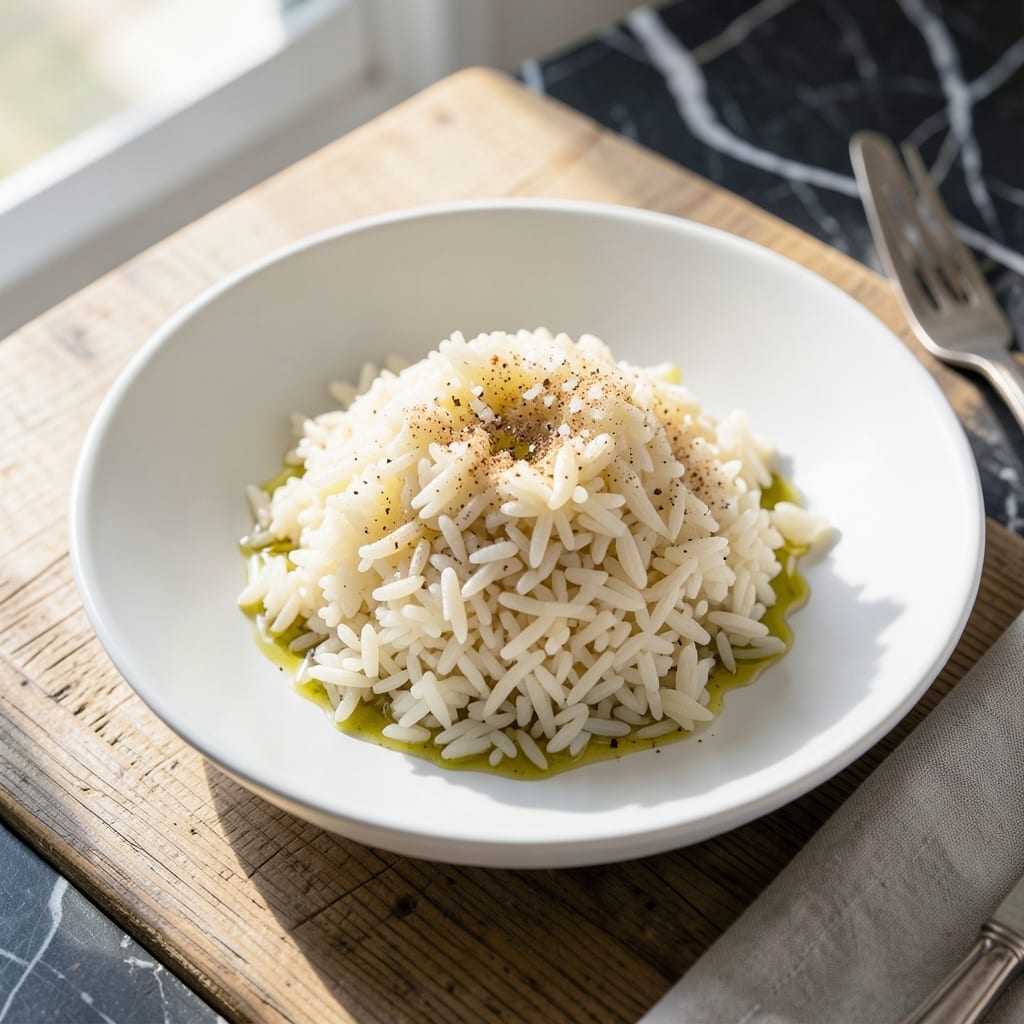
This basic rice recipe delivers perfectly fluffy grains every time with a simple, foolproof method. The key is the right water-to-rice ratio and gentle cooking that prevents mushy or undercooked results.
With just two ingredients and minimal effort, you can achieve restaurant-quality rice at home. The technique works for both white and brown rice, with slight adjustments to cooking time and liquid.
What you get is light, separate grains that hold their shape and absorb flavors beautifully. This serves as the ideal foundation for countless meals, from stir-fries to hearty bowls.
Master this method and you’ll never need to guess about rice again. The process takes about 20 minutes with hands-off cooking.
Ingredients for Basic Rice
Minimal ingredients yield restaurant-quality results with every perfectly fluffy grain.
| Ingredient | Amount | Notes |
|---|---|---|
| Long-Grain White Rice 🍚 | 2 cups | Rinsed until water runs clear |
| Water 💧 | 4 cups | Filtered or tap, at room temperature |
| Sea Salt 🧂 | 1 tsp | Fine grain, optional for seasoning |
| Extra-Virgin Olive Oil 🫒 | 1 tbsp | Or neutral oil like avocado |
| Garlic Powder 🧄 | ½ tsp | Optional for aromatic depth |
| Onion Powder 🧅 | ½ tsp | Optional for savory base |
| Bay Leaf 🌿 | 1 whole | Optional for subtle infusion |
| Vegetable Broth 🥕 | 1 cup | Low-sodium, optional for flavor boost |
The rice quality matters most here. Long-grain white rice like Jasmine or Basmati delivers the best texture—avoid instant or minute rice. Rinsing is non-negotiable to remove excess starch, which prevents gumminess. Most grocery stores carry suitable options in the bulk or international aisle. For the water, filtered produces the cleanest flavor, but tap works fine if that’s what you have.
No long-grain on hand? Medium-grain works too (adjust water to 1.5 cups per cup of rice). Skip the seasonings entirely for pure, neutral grains. The broth can be swapped for mushroom or miso broth for deeper umami. Vegetable bouillon cubes dissolved in water are a quick alternative. For oil, any neutral variety like grapeseed or canola prevents sticking without altering flavor.
Uncooked rice keeps indefinitely in a cool, dry pantry. Store in airtight containers to deter pests. Cooked rice stays fresh for 4-5 days refrigerated or 6 months frozen. Pro tip: spread hot rice on a tray to cool quickly before storing to prevent sogginess.
Why You’ll Love This Recipe
- Set It and Forget: I toss everything in one pot, cover it, and walk away—no stirring, no fuss.
- Garlicky Comfort: That hint of garlic powder in the olive oil makes even plain rice taste like it came from a restaurant.
- Meal Prep Hero: It pairs with everything from stir-fry to roasted chicken, so I make a big batch for the week.
- Pennies per Serving: A pound of rice and a few pantry staples feed my family for days without breaking the bank.
Step-by-Step Instructions for Basic Rice
Master these simple techniques and you will achieve perfectly fluffy grains without fail.
Step 1: Rinse and Prepare the Rice
Place the 2 cups Long-Grain White Rice in a fine-mesh strainer and rinse under cold running water until the water runs completely clear. This removes excess starch that can make your rice gummy or sticky.
Rinsing also prevents the grains from clumping together during cooking. I always give it a gentle swirl with my hand to ensure every grain gets rinsed. Once the water runs clear, let the rice drain completely in the strainer for 2-3 minutes.
Step 2: Toast the Rice for Enhanced Flavor
In a medium saucepan with a tight-fitting lid, heat the 1 tbsp Extra-Virgin Olive Oil over medium heat. Add the drained rice and stir constantly for 1-2 minutes until the grains become slightly translucent at the edges and emit a light, nutty aroma.
This toasting step adds depth of flavor and helps prevent the rice from becoming mushy. Watch carefully to avoid browning—you only want to enhance the natural taste, not create a dark color. The rice should look slightly glossy when it’s ready for the next step.
Step 3: Add Liquids and Seasonings
Pour in the 4 cups Water and 1 cup Vegetable Broth, then add the 1 tsp Sea Salt, 0.5 tsp Garlic Powder, 0.5 tsp Onion Powder, and 1 whole Bay Leaf. Stir once to distribute the seasonings evenly throughout the liquid.
Bring the mixture to a full, rolling boil over medium-high heat. You’ll see large bubbles breaking the surface consistently across the entire pan. This is your signal that it’s time to reduce the heat and cover the pot.
Step 4: Simmer Until Tender
Once boiling, immediately reduce the heat to low, cover the saucepan with its lid, and let the rice simmer undisturbed for 15-18 minutes. Resist the urge to lift the lid and check—steam is crucial for even cooking and fluffy texture.
After the simmering time, turn off the heat but keep the lid on. Let the rice steam for an additional 5-10 minutes. You’ll know it’s done when all the liquid has been absorbed and the grains are tender but still distinct. The surface should look dry with small steam holes where the rice has finished cooking.
Step 5: Fluff and Serve
Remove the lid and discard the Bay Leaf. Using a fork, gently fluff the rice from the bottom to the top, separating any grains that may have stuck together. This aerates the rice and creates that light, fluffy texture everyone loves.
Let it sit for 2-3 minutes after fluffing to allow any remaining moisture to distribute evenly. The rice should be light, separate, and perfectly tender with no hard centers. Serve immediately while hot for the best texture and flavor.
Pro Tips For Making Basic Rice
- Rinse the Rice: Always rinse long-grain white rice until the water runs clear to remove excess starch—this prevents gummy, sticky rice.
- Use the Right Ratio: For fluffy rice, stick to a 1:1.5 ratio of rice to water (1 cup rice to 1.5 cups water) and don’t skip measuring.
- Skip the Peeking: Resist the urge to lift the lid while cooking—released steam drops the temperature and leads to uneven doneness.
- Toast the Rice: Heat the rice in olive oil for 1-2 minutes before adding water to deepen flavor and prevent mushiness.
Common Mistakes When Making This Recipe
Skipping the Rinse
Never skip rinsing your 2 cups Long-Grain White Rice. Unrinsed rice contains excess starch that turns your grains gummy. I rinse mine until the water runs completely clear—usually 3-4 times. 💧
Wrong Water Ratio
Using the wrong water-to-rice ratio is the biggest culprit for mushy or crunchy results. For long-grain white rice, stick to 2:1 liquid to rice—4 cups water for 2 cups rice. Measuring precisely ensures consistent texture every time.
Lifting the Lid
Resist peeking while cooking. Every time you lift the lid, you release precious steam that’s essential for even cooking. Keep it covered for the full 15-18 minutes of simmering. Trust the process—your grains will thank you.
High Heat Simmer
Boiling vigorously or simmering too high causes uneven cooking. Once it reaches a boil, immediately reduce to low heat. The water should barely shimmer, not bubble aggressively. This gentle approach yields perfectly tender grains.
Over-Stirring
Stirring during cooking breaks the rice grains and releases more starch. Stir just once after adding liquid and seasonings, then leave it alone. The only stirring comes at the end when you fluff with a fork.
Ignoring Rest Time
Let your rice steam off the heat for 5-10 minutes after cooking. This final rest allows grains to absorb remaining moisture and firm up. Skipping this step often results in wet, undercooked rice at the bottom of the pot. 🔥
Nutrition Facts
Frequently Asked Questions
What’s the best rice-to-water ratio?
For long-grain white rice, use a 1:2 ratio—1 part rice to 2 parts water. This means 2 cups rice needs 4 cups water for perfect results.
Do I need to rinse the rice first?
Always rinse until the water runs clear to remove excess starch. This prevents gummy texture and ensures fluffy, separate grains. Skipping this step often leads to sticky results.
How long should I let the rice rest after cooking?
Let it steam off heat with the lid on for 5-10 minutes. This allows grains to absorb remaining moisture and firm up properly.
Can I use a rice cooker instead?
Use the same 1:2 ratio and follow your cooker’s instructions. Most models automatically handle timing and steam, making the process even easier.

- Jollof Rice Sauce Recipe: West African Tomato and Spice Infusion - September 25, 2026
- Japanese Rice Soup Recipe: Umami-Rich Comfort in a Bowl - September 25, 2026
- Homemade Cream Of Rice Recipe: Silk-Smooth Breakfast in Minutes - September 25, 2026