
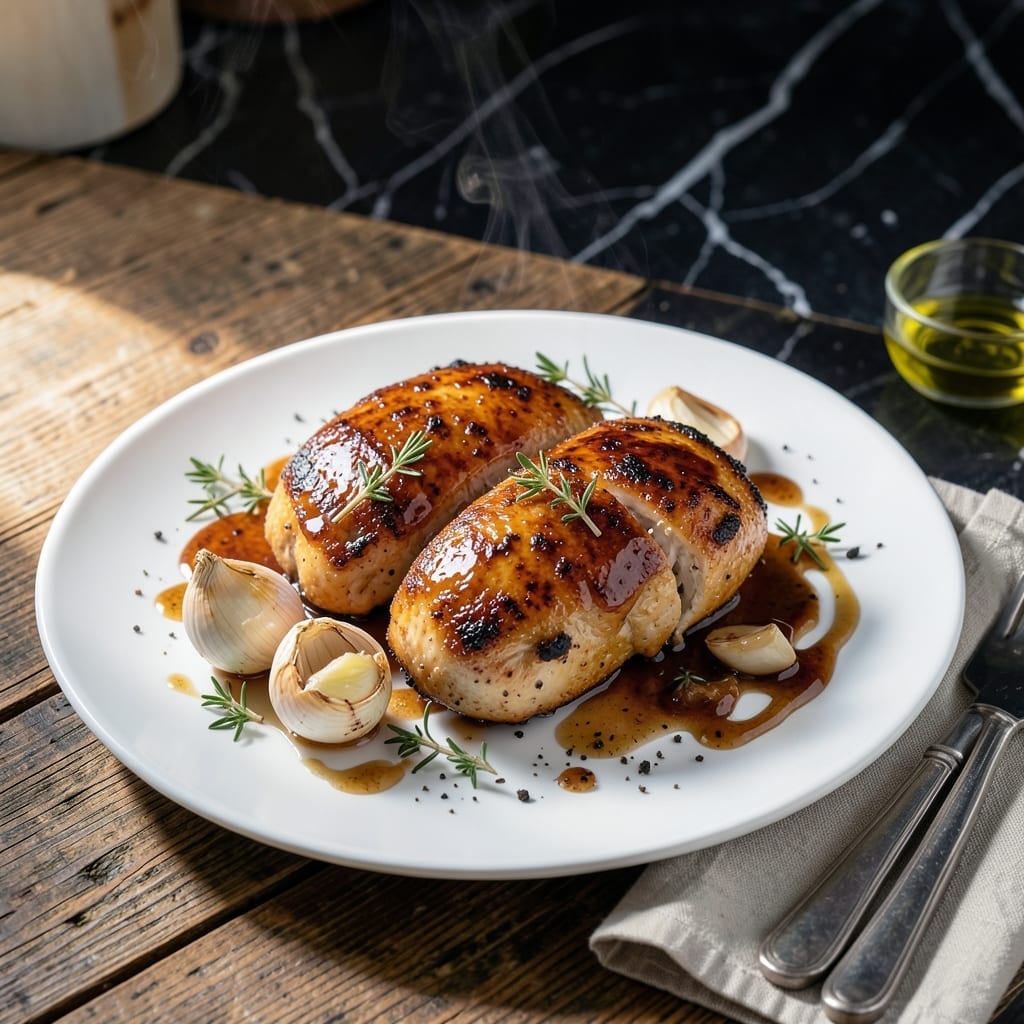
This maple mustard chicken delivers the ideal balance of sweet and tangy in every bite. The glaze caramelizes beautifully, creating a perfectly sticky coating that clings to the juicy chicken.
I developed this recipe after testing multiple glaze ratios, and the combination of real maple syrup with sharp Dijon mustard creates a depth of flavor that’s both complex and approachable. The chicken stays moist while developing a golden exterior.
The sauce thickens naturally as it bakes, eliminating the need for complicated reductions. Serve it with roasted vegetables or mashed potatoes to soak up every last drop of that incredible glaze.
This dish proves that weeknight dinners can be both impressive and effortless. The results speak for themselves with each tender, flavorful bite.
Ingredients for Maple Mustard Chicken
Quality ingredients create that perfectly sticky, golden glaze on tender chicken every time.
| Ingredient | Amount | Notes |
|---|---|---|
| Boneless Skinless Chicken Breasts 🍗 | 1 ½ lb | Pounded to even thickness |
| Pure Maple Syrup 🍁 | ½ cup | Grade A or B preferred |
| Dijon Mustard 🟡 | ¼ cup | Sharp variety for tang |
| Olive Oil 🫒 | 2 tbsp | Divided for cooking and glaze |
| Garlic Cloves 🧄 | 3 cloves | Minced finely |
| Apple Cider Vinegar 🍏 | 1 tbsp | Balances sweetness |
| Dried Thyme 🌿 | 1 tsp | Or 1 tbsp fresh |
| Kosher Salt 🧂 | 1 tsp | Diamond Crystal preferred |
| Black Pepper 🌶️ | ½ tsp | Freshly ground |
| Unsalted Butter 🧈 | 2 tbsp | For finishing glaze |
| Fresh Rosemary 🌿 | 1 tbsp | Chopped, optional garnish |
The maple syrup is non-negotiable—Grade A or B from Vermont or New Hampshire producers offers the best depth. Chicken breasts should be uniformly thick for even cooking; pound them yourself rather than buying pre-cut. For the Dijon, Grey Poupon or Maille deliver the sharp tang required. Fresh garlic cloves are essential (the jarred stuff lacks punch).
Out of maple syrup? Honey or agave work in a pinch, though the flavor profile shifts slightly. No Dijon? Whole-grain mustard at equal volume adds texture but similar tang. Apple cider vinegar can be swapped for white wine vinegar. For a dairy-free finish, replace the butter with olive oil—the glaze will be slightly less rich but still delicious.
The glaze thickens as it cools, so serve immediately for that perfectly sticky coating. Leftovers keep for 3-4 days refrigerated (the chicken absorbs the glaze beautifully). Reheat gently to avoid drying—300°F oven works best. Freezing isn’t recommended as the texture suffers.
Why You’ll Love This Recipe
- One Pan Wonder: I toss everything in a single dish—chicken, maple syrup, mustard, garlic—and let the oven do the work.
- Sweet & Tangy Magic: The maple and Dijon create this sticky, caramelized glaze that clings to every bite.
- Meals for Days: Leftovers taste even better cold in salads or wrapped in a tortilla the next day.
- Budget Hero: Chicken breasts stretch far, and the sauce comes together with pantry staples I always have.
Step-by-Step Instructions for Maple Mustard Chicken
Execute this method precisely and you’ll achieve restaurant-quality results with a glossy, caramelized finish.
Step 1: Prepare and Season the Chicken
Pat the 1.5 lb boneless skinless chicken breasts completely dry with paper towels. This ensures proper browning and prevents the glaze from sliding off. I always pound them to an even ½-inch thickness using a meat mallet—this guarantees uniform cooking and prevents dry, overdone edges.
Season both sides aggressively with 1 tsp kosher salt and 0.5 tsp black pepper. The salt should create a visible crust on the surface. Let the seasoned chicken rest at room temperature for 10-15 minutes while you prepare the glaze—this takes the chill off for more even cooking.
Step 2: Create the Maple Mustard Glaze
In a medium bowl, whisk together 0.5 cup pure maple syrup, 0.25 cup Dijon mustard, 1 tbsp apple cider vinegar, 1 tsp dried thyme, and the 3 minced garlic cloves. The vinegar cuts through the sweetness while the mustard provides sharpness and body to the glaze.
Whisk vigorously for 30 seconds until fully emulsified and smooth. The mixture should be thick enough to coat the back of a spoon but still pourable. Here’s the thing—this glaze reduces significantly during cooking, so don’t be tempted to thin it out.
Step 3: Sear and Glaze the Chicken
Heat 1 tbsp olive oil in a large oven-safe skillet over medium-high heat until shimmering. Add the chicken and cook undisturbed for 4-5 minutes per side until golden brown and the internal temperature reaches 160°F. The chicken should release easily from the pan when properly seared.
Reduce heat to medium-low and add the remaining 1 tbsp olive oil to the pan. Pour the glaze over the chicken, then add 2 tbsp unsalted butter. Bast the chicken with the glaze continuously for 2-3 minutes until the sauce thickens and becomes glossy. The butter enriches the sauce and creates a professional sheen.
Step 4: Rest and Garnish for Service
Transfer the chicken to a cutting board and let it rest for 5 minutes. This allows the juices to redistribute and the internal temperature to rise to the safe 165°F. Meanwhile, spoon any remaining glaze from the pan over the chicken to maximize flavor.
Slice the chicken against the grain into ½-inch thick pieces and arrange on a platter. Garnish with 1 tbsp chopped fresh rosemary for a pop of color and aromatic finish. The rosemary’s piney notes complement the sweet-tangy glaze beautifully.
Pro Tips For Making Maple Mustard Chicken
- Pound the Chicken: Use a meat mallet to even out the thickness of the chicken breasts to about ½ inch—this guarantees they cook through at the same rate and soak up the maple mustard glaze evenly.
- Bloom the Garlic: Sauté the minced garlic in olive oil for just 30 seconds until fragrant before adding the syrup and mustard—any longer and it turns bitter, ruining the sauce.
- Skip the Cheap Syrup: I learned this the hard way—fake maple syrup makes the glaze taste artificial; spend the extra on pure maple syrup, or the dish won’t taste right.
- Reduce the Glaze: After removing the chicken, simmer the leftover sauce for 2-3 minutes until it thickens slightly—this turns it from a runny mess into a glossy coating that clings to the meat.
Wine and Beer Pairings for This Dish
White Wine Picks
A crisp Riesling from Washington State balances the dish’s sweetness with its bright acidity. I love Chateau Ste. Michelle—its citrus notes cut through the maple glaze beautifully. Serve chilled at 45-50°F for best results. 🍷
Red Wine Options
For red lovers, a light Pinot Noir from Oregon works surprisingly well. Eyrie Vineyards offers earthy notes that complement the mustard without overpowering. Avoid heavy tannic reds—they’ll clash with the sweetness.
Craft Beer Pairings
A Belgian-style Witbier like Allagash White brings citrus and coriander that enhance the dish’s complexity. The effervescence cleanses your palate between bites. Serve at 40-45°F in a chilled glass.
Cider Alternative
For a non-alcoholic option, try a dry hard cider such as Angry Orchard Traditional Dry. The apple notes echo the vinegar in the glaze while the bubbles refresh. Chill to 45°F before serving.
Sparkling Water
Even simple sparkling water with a squeeze of lime works. The bubbles and acidity mirror wine’s palate-cleansing properties. I keep Topo Chico on hand for quick weeknight meals. ✨
Nutrition Facts
Frequently Asked Questions
Can I use chicken thighs instead of breasts?
Bone-in thighs work great and stay juicier. Reduce cooking time to 6-7 minutes per side since dark meat cooks faster. The skin crisps beautifully under the glaze.
What if my glaze is too thin?
Simmer it for 2-3 minutes before adding to the chicken. The vinegar and mustard will reduce and thicken. Avoid high heat—it can cause burning.
How do I prevent the glaze from burning?
Use medium-low heat when basting and keep the pan moving. The butter helps prevent sticking. If it darkens too quickly, add a splash of water.
Can I make this ahead of time?
Cook the chicken fully, then reheat at 300°F for 10 minutes. Store glaze separately to avoid sogginess. The flavors deepen overnight!

- Jollof Rice Sauce Recipe: West African Tomato and Spice Infusion - September 25, 2026
- Japanese Rice Soup Recipe: Umami-Rich Comfort in a Bowl - September 25, 2026
- Homemade Cream Of Rice Recipe: Silk-Smooth Breakfast in Minutes - September 25, 2026