
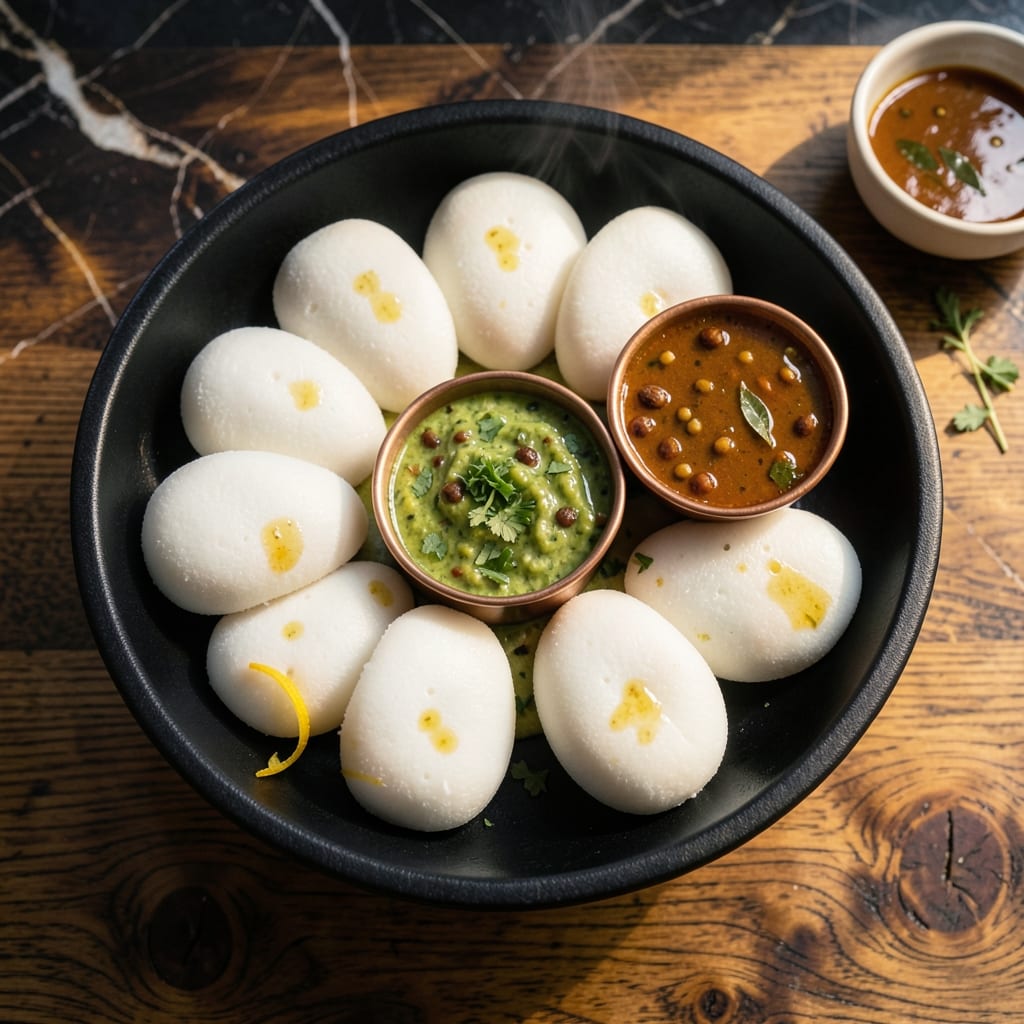
There’s a reason mappillai samba rice is prized for idli—its nutty depth transforms the dish into something extraordinary. This recipe stays true to tradition while ensuring light, fluffy results every time.
The process begins with soaking the rice and urad dal, then grinding them into a smooth batter. Proper fermentation develops the signature tang and airy texture that makes these idlis melt in your mouth.
Steaming the batter in molds creates soft, pillowy idlis with a subtle sweetness unique to this heirloom rice variety. The aroma alone signals you’re doing something right.
Serve warm with coconut chutney and sambar for a breakfast that feels both comforting and special. Here’s how to make them perfectly.
Ingredients for Mappillai Samba Rice Idli
Traditional heirloom rice and urad dal create these pillowy South Indian classics.
| Ingredient | Amount | Notes |
|---|---|---|
| Mappillai Samba Rice 🌾 | 2 cups | Heirloom variety, rinsed well |
| Urad Dal 🌾 | ½ cup | Split black gram, skinless |
| Fenugreek Seeds 🌿 | ¼ tsp | For fermentation boost |
| Water 💧 | 4 cups | For soaking and grinding |
| Salt 🧂 | 1 ½ tsp | Adjust to taste in batter |
| Coconut Oil 🥥 | 2 tbsp | For greasing idli molds |
| Cooking Oil 🫒 | 1 tsp | For greasing grinding jar |
| Coconut Chutney 🥥 | 1 cup | For serving, optional |
| Sambar 🍲 | 2 cups | For serving, optional |
The rice is everything here. Indian grocery stores like Patel Brothers or H-Mart usually stock mappillai samba—look for the short, plump grains. Urad dal should be split and skinless (whole urad has a black skin). I rinse both three times until the water runs clear. Fenugreek seeds are tiny but mighty for fermentation—don’t skip them even if it’s just half a teaspoon.
No mappillai samba? Regular idli rice works in a pinch, but the flavor won’t be as complex. Out of urad dal? Moong dal at double the quantity changes the texture but still ferments. For the chutney, store-bought is fine (I like MTR or Haldiram’s brands). If your batter isn’t fermenting, a pinch of baking soda can help—but fermentation is ideal for that signature tang.
Batter keeps in the fridge for 2 days (ferment longer for more sourness). Cooked idlis stay fresh for 24 hours—reheat by steaming again. Freeze extras for up to 1 month (thaw, then steam to revive). Always grease molds well to prevent sticking.
Why You’ll Love This Recipe
- No Soaking Needed: I love that mappillai samba rice requires just a quick rinse—no overnight soaking like regular idli batter.
- Fenugreek Magic: The fenugreek seeds add that subtle bitterness that makes these idlis irresistibly aromatic.
- Breakfast to Dinner: I make a big batch on Sunday and we’re set for steamy idlis morning, noon, or paired with sambar at night.
- Budget Stretch: A kilo of mappillai samba rice and a handful of urad dal feeds my family for days without breaking the bank.
Step-by-Step Instructions for Mappillai Samba Rice Idli
Here’s how I make these airy, nutty idlis with the heirloom rice every single time.
Step 1: Soak the Rice and Dal for Optimal Fermentation
Rinse the 2 cups Mappillai Samba Rice thoroughly until the water runs clear, then soak it in 2 cups Water for 4-5 hours. I use a large bowl to give the grains room to expand. Meanwhile, rinse the 0.5 cup Urad Dal and soak it with the 0.25 tsp Fenugreek Seeds in another 2 cups Water.
The fenugreek seeds are key—they kickstart fermentation and add a subtle complexity to the flavor. You’ll notice the urad dal plumps up significantly, nearly doubling in size. Drain both just before grinding; any leftover soaking water can make the batter too thin.
Step 2: Grind to the Perfect Batter Consistency
Start with the urad dal and fenugreek seeds. Add the 1 tsp Cooking Oil to your grinder first—this prevents the batter from sticking. Grind with just enough water (about ¼ cup from the soaking liquid) until silky smooth. It should look like whipped cream when done right.
Next, grind the Mappillai Samba Rice in batches, using minimal water. The ideal batter is thick but pourable. Combine both in a large container, add the 1.5 tsp Salt, and mix well with your hands. This is the only time you’ll touch the batter with your hands—after fermentation, it’s all about clean utensils.
Step 3: Ferment Until Light and Bubbly
Cover the batter and let it ferment in a warm place for 8-12 hours. I like to preheat my oven to its lowest setting (170°F), turn it off, and place the batter inside with the light on. You’re aiming for a batter that’s risen by about 50% with visible bubbles throughout.
The Mappillai Samba Rice gives it a distinctive nutty aroma at this stage. Don’t stir it yet—wait until you’re ready to cook. If your kitchen is cold, extend fermentation time. The batter should smell slightly tangy, like yogurt, when it’s ready.
Step 4: Steam to Fluffy Perfection
Just before steaming, give the batter a gentle stir. Pour into greased idli molds—I use the 2 tbsp Coconut Oil for this, brushing each mold lightly. The oil adds a subtle sweetness that complements the rice’s nuttiness.
Steam for 10-12 minutes on medium heat until a toothpick inserted in the center comes out clean. Don’t open the lid during steaming or the idlis won’t rise properly. You’ll know they’re done when they’ve puffed up like little pillows and the surface looks matte, not sticky.
Step 5: Serve with Traditional Accompaniments
Let the idlis cool for 2-3 minutes in the molds before removing—they’ll firm up slightly but stay soft. Use a spoon dipped in water to help release them if needed. The texture should be light yet substantial, with a slightly crisp exterior from the coconut oil.
Serve warm with the 1 cup Coconut Chutney and 2 cups Sambar. The nutty depth of the Mappillai Samba Rice shines through best when paired with these traditional sides. Leftovers reheat beautifully by steaming for 3-4 minutes.
Pro Tips For Making Mappillai Samba Rice Idli
- Soak Overnight: Mappillai samba rice needs at least 6-8 hours in water—any less and your idlis turn dense. I learned this the hard way after my first batch came out like hockey pucks.
- Grind Urad Dal Last: Always grind the urad dal fresh after soaking, and do it right before mixing with rice batter. Sounds weird, but it works: the fresher the dal paste, the fluffier the idlis.
- Skip Cold Water: Use warm water for grinding the urad dal—it whips up faster and gives that smooth, aerated texture crucial for soft idlis.
- Ferment Properly: Let the batter rise for 8-12 hours in a warm place, like your turned-off oven with the light on. After burning three batches, I finally figured out that under-fermented batter makes tough idlis.
Creative Variations of These Flavors
Heritage Rava Style
Replace 1 cup of Mappillai Samba Rice with 1 cup fine semolina (rava) for a quicker version. Soak the rava for just 30 minutes while preparing the dal. The result has a slightly grainier texture but maintains the nutty profile. I love this when I’m short on time but still want that authentic taste. 💛
Kancheepuram Special
Add 1 tsp whole black peppercorns, 2 tsp cumin seeds, and 1 inch grated ginger to the urad dal while grinding. This Tamil Brahmin variation creates idlis with a fragrant spice kick. The Mappillai Samba Rice balances these bold flavors beautifully.
Coconut-Carrot Fusion
Grind ½ cup fresh coconut and ½ cup grated carrot into the batter for a naturally sweet version. Reduce water slightly as these add moisture. The coconut enhances the rice’s nuttiness, while carrot adds color and subtle sweetness. Kids especially love this variation.
Oats Boost
For a fiber-rich twist, replace ½ cup Mappillai Samba Rice with ½ cup rolled oats. Soak the oats with the rice. The idlis become heartier while keeping their soft texture. I use Quaker Oats for consistent results.
Spinach Green Idli
Blend 1 cup chopped spinach with ¼ cup water and mix into the fermented batter. This adds vibrant color and nutrients without altering the classic taste. The Mappillai Samba Rice ensures the spinach flavor doesn’t overpower the dish.
Nutrition Facts
Frequently Asked Questions
Can I skip the fenugreek seeds?
It’s best not to. They’re tiny but mighty for fermentation and add subtle flavor complexity. Without them, your batter may not rise properly or develop that signature tang within 8-12 hours.
Why does my batter not ferment?
Cold temperatures are often the culprit. Try placing the container in a warm spot like an oven with the light on, or extend fermentation time. Ensure your urad dal is fresh—old dal loses its fermenting power.
How do I fix dense idlis?
Over-grinding or insufficient fermentation usually causes this. Grind urad dal to a smooth, fluffy consistency and let the batter ferment until it’s 50% increased in volume. Also, avoid opening the steamer lid during cooking.
Can I use regular rice instead?
Yes, but the flavor and texture won’t be the same. Regular idli rice works in a pinch, but mappillai samba’s nutty depth is unique. If substituting, ensure the rice is short-grained for the best results.

- Mujadara Rice and Lentils Recipe: Earthy Spiced Lentils With Caramelized Onions - November 1, 2026
- Naija Fried Rice Recipe: Street-Style Spice With Veggie Crunch - November 1, 2026
- Mushy Rice Recipe: Fluffy Grains Transformed in Minutes - November 1, 2026