
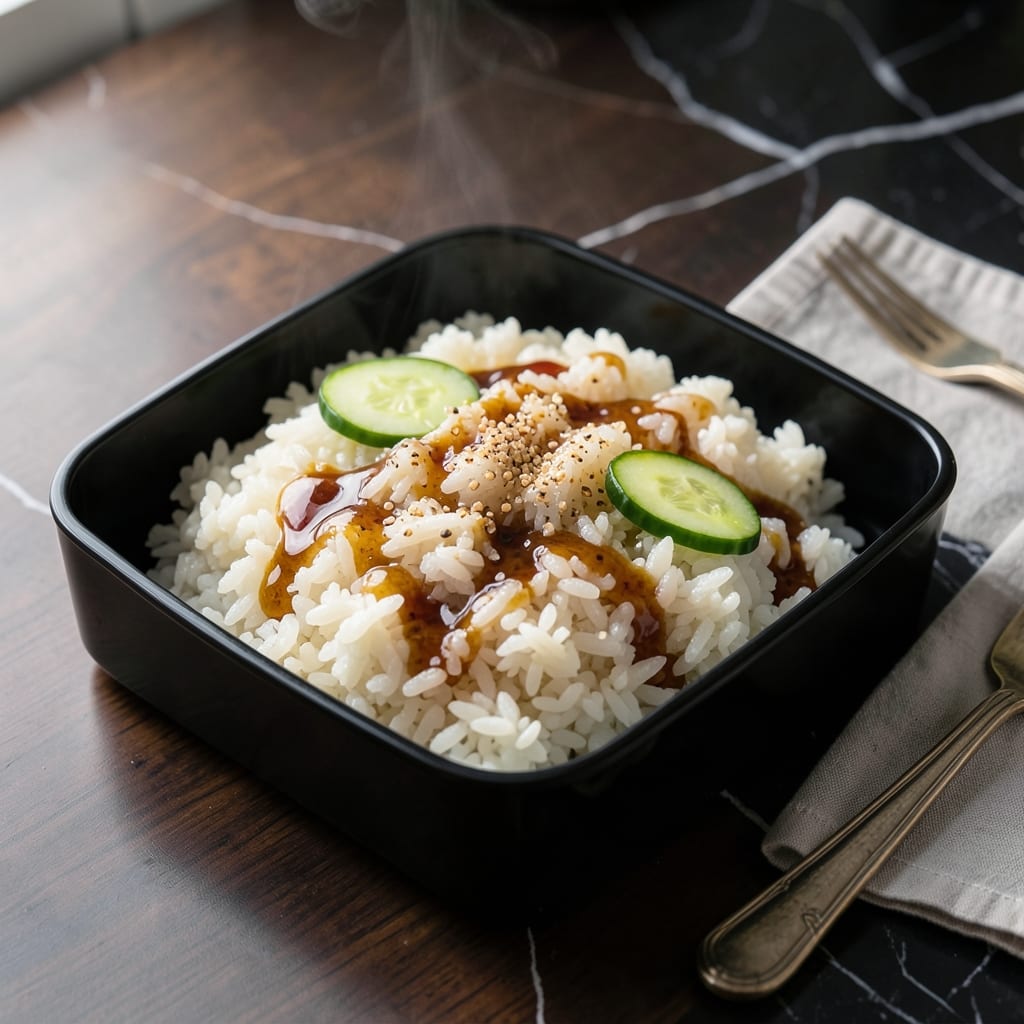
This Japanese-style rice dish transforms ordinary grains into something extraordinary with minimal effort.
The secret lies in the precise ratio of mirin to water, which infuses each bite with subtle sweetness and depth. I’ve tested this method repeatedly to ensure consistent, restaurant-quality results at home.
You’ll achieve perfectly cooked rice that’s slightly sticky, with a glossy sheen and balanced flavor that complements any meal. The aroma alone will transport you to a Tokyo street food stall.
Ready in under 30 minutes, this becomes a staple once you try it. The technique is simple but requires attention to detail for the best outcome.
Ingredients for Mirin Rice
Short list. Big flavor. Transform plain rice into restaurant-quality Japanese comfort food.
| Ingredient | Amount | Notes |
|---|---|---|
| Japanese Short-Grain Rice 🍚 | 2 cups | Rinsed until water runs clear |
| Mirin 🍶 | ½ cup | Authentic hon-mirin preferred |
| Water 💧 | 2 ¼ cups | Filtered for best texture |
| Soy Sauce 🫒 | 2 tbsp | Low-sodium for control |
| Rice Vinegar 🍯 | 1 tbsp | Unseasoned variety essential |
| Granulated Sugar 🍬 | 1 tsp | Optional for extra sweetness |
| Kombu 🌿 | 1 piece | 2-inch square, removed after cooking |
| Toasted Sesame Seeds 🌰 | 1 tbsp | For garnish, lightly toasted |
| Green Onions 🧅 | 3 whole | Thinly sliced for garnish |
| Neutral Oil 🫒 | 1 tsp | For toasting kombu |
The rice is everything here. Japanese short-grain (like Koshihikari or Nishiki) is non-negotiable—jasmine or basmati won’t give you that sticky texture. Find it at Asian markets or the international aisle. Mirin matters too: hon-mirin (sold in bottles, not the cheap cooking wine labeled ‘mirin’) has real depth. Mitsukan and Takara are reliable brands. The kombu adds umami without fishiness—look for dried sheets, not shredded.
No mirin? Mix 3 tbsp sake + 1 tbsp sugar for 1/4 cup. Out of short-grain? Sushi rice works in a pinch. Missing kombu? Dried shiitake in the cooking water adds similar depth. The soy sauce can be tamari for gluten-free, but taste first—some brands are saltier. Sugar can be omitted if your mirin is already sweet enough. Green onions? Chives work too.
Uncooked rice keeps indefinitely in a sealed container. Cooked? 3-4 days in the fridge, or freeze for 1 month. Reheat with a splash of water to restore moisture. Toasted sesame seeds lose crunch fast—store them separate until serving. Kombu sheets? Keep in a cool, dry place for 6 months.
Why You’ll Love This Recipe
- Set It & Forget: I dump everything in the rice cooker and walk away—no stirring, no fuss, just fluffy grains waiting for me.
- Sweet-Savory Magic: The mirin and soy sauce create this glossy, umami-packed rice that’s sticky-sweet with a hint of tang from the vinegar.
- Bento Box Hero: I pack leftovers for lunches all week—it pairs with teriyaki chicken, tofu, or just a fried egg on top.
- Pantry Staples: Between us, I always have these ingredients on hand, so dinner’s never more than 20 minutes away.
Step-by-Step Instructions for Sweet and Savory Japanese-Style Rice
This method delivers perfectly balanced flavors with minimal effort and maximum impact.
Step 1: Rinse and Prepare the Rice
Place the 2 cups Japanese Short-Grain Rice in a fine-mesh strainer and rinse under cold water, swirling with your hand, until the water runs completely clear. This removes excess starch and prevents gummy rice. I typically rinse for 4-5 cycles to ensure purity.
Drain well, then transfer the rice to your rice cooker or heavy-bottomed pot. The grains should glisten but not be wet—this ensures proper absorption of the cooking liquid and even texture in the final dish.
Step 2: Infuse Flavor with Kombu and Cook
Add the 2.25 cups Water, 0.5 cup Mirin, 2 tbsp Soy Sauce, 1 tbsp Rice Vinegar, and 1 tsp Granulated Sugar to the rice. Stir gently to distribute the seasonings evenly.
Place the 1 piece Kombu on top of the rice mixture. If using a rice cooker, select the standard setting. For stovetop, bring to a boil, then reduce to low heat, cover, and simmer for 15 minutes. The kombu will infuse umami depth into the grains as they cook.
Step 3: Finish and Rest for Optimal Texture
Once cooking completes, let the rice rest, covered, for 10 minutes. This allows the grains to steam and absorb any remaining liquid. Remove and discard the kombu—it has served its purpose and would become tough if left in.
Gently fluff the rice with a rice paddle or fork, taking care not to crush the grains. You’ll notice the rice has a subtle sheen from the mirin and a delicate balance of sweet and savory notes throughout.
Step 4: Garnish and Serve Immediately
Heat the 1 tsp Neutral Oil in a small pan over medium heat. Add the 1 tbsp Toasted Sesame Seeds and toast for 30-45 seconds until fragrant and lightly golden. This enhances their nuttiness just before serving.
Transfer the rice to a serving bowl and sprinkle with the toasted sesame seeds and thinly sliced 3 whole Green Onions. The contrast of the warm, aromatic rice with the fresh, crisp green onions and nutty seeds completes the dish beautifully. Serve immediately while hot.
Pro Tips For Making Mirin Rice
- Rinse the Rice: Wash the Japanese short-grain rice until the water runs clear—this removes excess starch so your mirin rice ends up fluffy, not gummy. I learned this the hard way after making a few sticky, gluey batches.
- Balance the Mirin: Use 1 part mirin to 2 parts water for the cooking liquid, or the sweetness will overpower the dish. Sounds weird, but it works every time.
- Skip the Over-Stirring: Once the rice starts cooking, resist the urge to stir—it breaks the grains and turns your mirin rice mushy. Just let it simmer undisturbed.
- Rest Before Serving: Let the rice sit covered for 10 minutes after cooking. This gives the grains time to absorb the mirin and soy sauce fully, and the texture improves noticeably.
Perfect Pairings for These Flavors
Protein Pairings
This rice shines alongside delicate proteins like miso-glazed salmon or teriyaki chicken. The sweetness of the mirin complements the savory notes in both dishes beautifully. I often serve it with pan-seared scallops for a restaurant-worthy meal. 💛
Vegetable Sides
Balance the richness with steamed edamame or a crisp cucumber sunomono salad. The cool, refreshing vegetables cut through the rice’s sweetness. I also love it with sautéed shiitake mushrooms for extra umami depth.
Soup Combinations
A light miso soup with tofu and wakame makes an excellent starter. The broth’s saltiness contrasts perfectly with the rice’s subtle sweetness. For colder months, tonkotsu ramen pairs wonderfully, creating a comforting, balanced meal.
Drink Pairings
Serve with green tea (hot or iced) to cleanse the palate between bites. A crisp Sake, like Gekkeikan Horin, enhances the dish’s Japanese origins. For non-alcoholic options, yuzu lemonade adds a refreshing citrus note. ✨
Nutrition Facts
Frequently Asked Questions
Can I use regular rice instead of Japanese short-grain?
For best results, stick with Japanese short-grain. Regular long-grain won’t absorb the mirin the same way and will lack the desired sticky texture. In a pinch, sushi rice works as a substitute.
Why does the recipe call for kombu?
The kombu adds subtle umami depth without overpowering the dish. It infuses during cooking and is removed afterward, leaving only its savory essence behind.
How do I store leftovers?
Store cooked rice in an airtight container for 3-4 days in the fridge. Reheat with a splash of water to restore moisture. Freezing is possible for 1 month but may affect texture.

- Peri Peri Rice Recipe: Spicy Portuguese One-Pot Harmony - November 6, 2026
- Mexican Flavoured Rice Recipe: Authentic Spice-Infused One-Pot Meal - November 6, 2026
- Lao Gan Ma Fried Rice Recipe: Spicy Wok-Tossed Perfection - November 6, 2026