
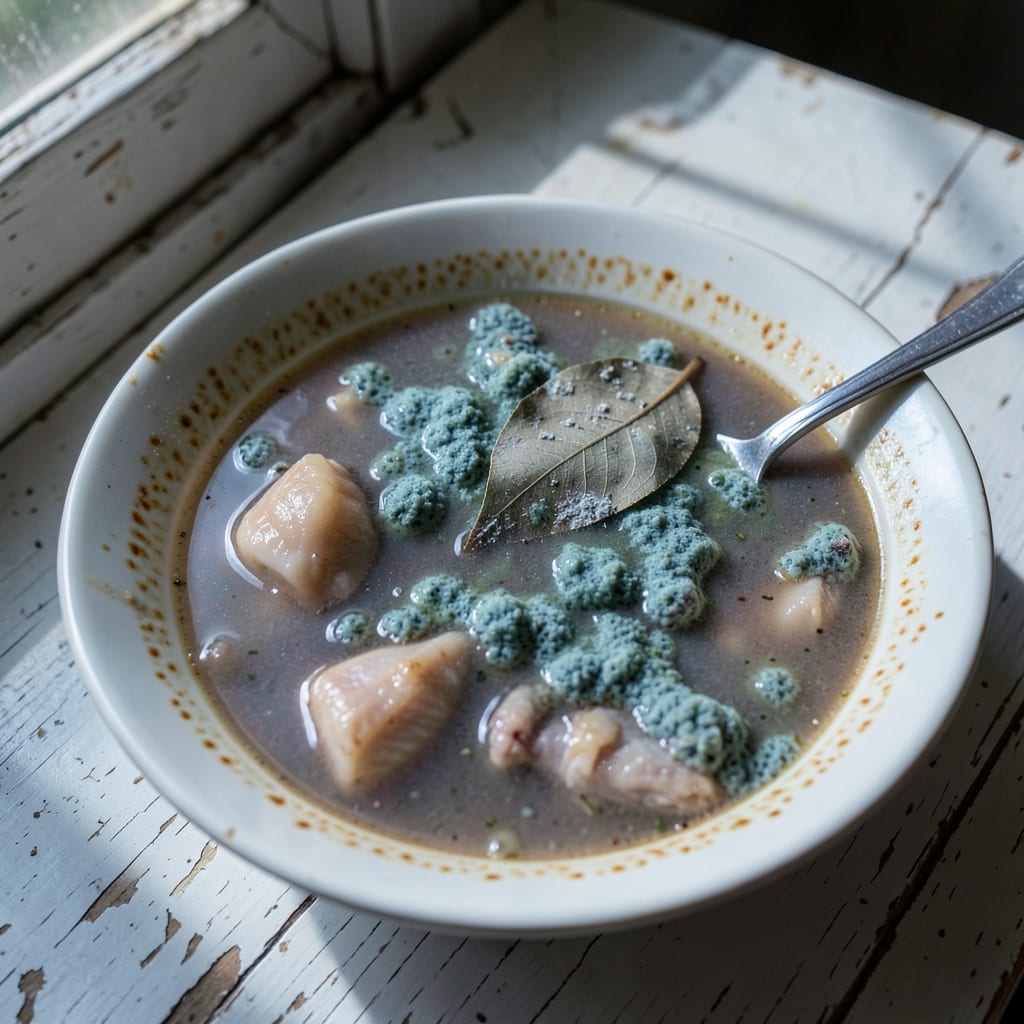
Any visible mold in chicken broth means it must be discarded immediately—even small amounts can spread invisible toxins. Never taste-test or salvage portions, as bacteria and mycotoxins may contaminate the entire batch.
Mold isn’t just a surface issue—it’s a sign of deeper contamination that can’t be removed by skimming or boiling. 🔥 The spores you see are just the tip of the iceberg, with thread-like hyphae often spreading throughout the liquid. I’ve learned through food safety training that even clear broth can harbor dangerous levels of aflatoxins or penicillin molds, which thrive in protein-rich environments like chicken stock. These toxins remain stable even at high temperatures, making reheating a false sense of security.
What many don’t realize is that broth’s low acidity creates the perfect breeding ground for rapid microbial growth. ✨ A single mold spore can multiply into millions within 24-48 hours, especially if the broth wasn’t cooled properly after cooking. I always recommend using the two-hour rule: get freshly made broth below 40°F within this window to prevent invisible contamination from taking hold.
💡 In This Article
- Why Mold in Chicken Broth Is a Serious Health Risk
- Preventing Mold in Homemade Chicken Broth Storage
Why Mold in Chicken Broth Is a Serious Health Risk
Mold growth in chicken broth isn’t just about visible fuzz—it signals a complex biological invasion. The real danger comes from mycotoxins, which are secondary metabolites produced by molds like Aspergillus and Penicillium. These toxins can persist even after the mold itself is removed, with some varieties remaining stable at temperatures up to 250°F.
The protein-rich environment of chicken broth provides the perfect nutrient medium for these molds to produce toxins at alarming rates. 🔥
What makes broth particularly vulnerable is its low acidity (typically pH 6.0-7.0), which fails to inhibit mold growth. In this neutral environment, a single spore can germinate and spread thread-like hyphae throughout the liquid within 12-24 hours at room temperature.
The hyphae release enzymes that break down proteins and carbohydrates, creating a nutrient soup that feeds both the mold and potentially harmful bacteria like Bacillus cereus or Clostridium botulinum. This dual contamination makes the broth unsafe long before visible signs appear. ✨
The invisible nature of this contamination is what makes it so dangerous. While you might see surface mold, the hyphae network can extend deep into the liquid, and the mycotoxins they produce are often colorless and odorless.
Reheating won’t help—studies show that aflatoxin B1, one of the most potent mycotoxins, retains 70% of its toxicity even after 30 minutes of boiling. The USDA confirms that no cooking method can reliably neutralize these compounds once they’re present in food. 💥
Broth’s high moisture content (typically 90-95%) creates another risk factor. This moisture allows mold spores to swell and germinate rapidly, while also enabling bacterial growth that can produce additional toxins. The combination of mold metabolites and bacterial byproducts creates a synergistic effect that’s more dangerous than either contaminant alone.
This is why food safety experts treat visible mold as an indicator of complete contamination—what you see represents just 10-20% of the actual microbial load present. ⚡
Consider that chicken broth’s nutrient density supports not just mold but also yeast and bacteria that can produce their own toxins. For example, Bacillus cereus can produce emetic toxins that cause vomiting within 1-5 hours of ingestion. These toxins are heat-stable and can survive normal cooking temperatures.
The broth’s fat content (typically 3-5%) also helps dissolve and distribute lipid-soluble toxins throughout the liquid, making partial salvage impossible. 💫
The risk extends beyond immediate food poisoning. Some mycotoxins like ochratoxin A are known carcinogens that can accumulate in the body over time. Even small, repeated exposures through “salvaged” portions of contaminated broth could potentially contribute to long-term health issues.
This cumulative risk is why health organizations worldwide recommend complete disposal of any mold-contaminated liquid foods, regardless of how “small” the affected area appears. 🌟

- Jollof Rice Sauce Recipe: West African Tomato and Spice Infusion - September 25, 2026
- Japanese Rice Soup Recipe: Umami-Rich Comfort in a Bowl - September 25, 2026
- Homemade Cream Of Rice Recipe: Silk-Smooth Breakfast in Minutes - September 25, 2026