
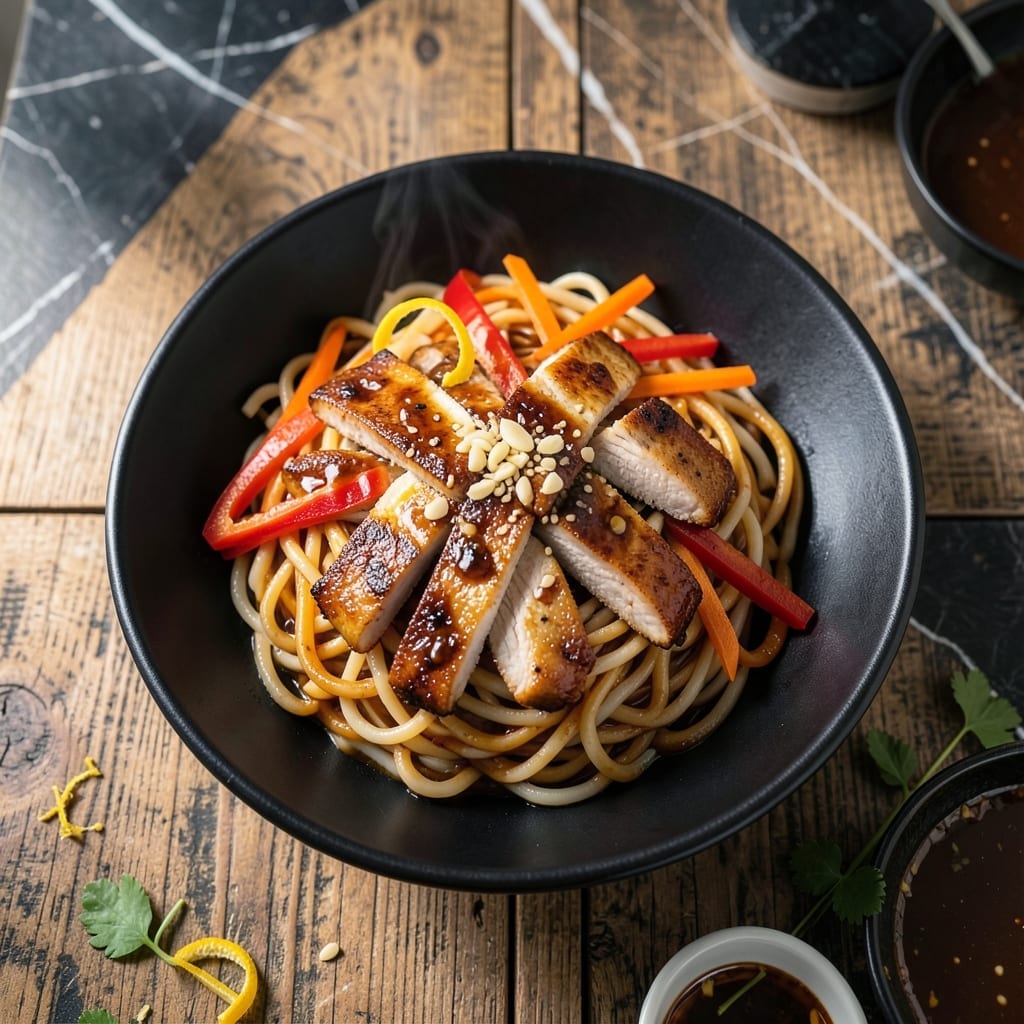
This stir-fried creation brings the bold flavors of Mongolian cuisine to your kitchen with a satisfying chewy texture that’s hard to resist. I’ve refined this method to ensure the rice noodles absorb just enough sauce without turning mushy.
The key lies in pre-soaking the noodles and cooking them over high heat for that signature wok-fried quality. A simple yet flavorful sauce ties everything together, balancing savory and slightly sweet notes.
You’ll end up with a dish that’s rich in tradition but easy to adapt with your choice of protein or vegetables. The noodles stay springy, the sauce clings perfectly, and every bite delivers authentic taste.
Serve it hot for the best experience. This is comfort food with depth and character.
Ingredients for Mongolian Rice Noodles
Pantry staples meet fresh veggies for this bold, chewy stir-fry masterpiece.
| Ingredient | Amount | Notes |
|---|---|---|
| Rice Stick Noodles 🍜 | 8 oz | Dry, medium-width preferred |
| Soy Sauce 🫙 | ⅓ cup | Low-sodium recommended |
| Dark Brown Sugar 🍚 | ¼ cup | Packed, for sweetness |
| Rice Vinegar 🍶 | 2 tbsp | Or apple cider vinegar |
| Sesame Oil 🫒 | 1 tbsp | Toasted, for aroma |
| Garlic Cloves 🧄 | 4 cloves | Minced finely |
| Fresh Ginger 🌿 | 1 tbsp | Peeled, grated |
| Green Onions 🧅 | 4 whole | Thinly sliced |
| Vegetable Oil 🫒 | 2 tbsp | High smoke point for stir-frying |
| Chicken Breast 🍗 | 1 lb | Boneless, skinless, sliced thin |
| Carrots 🥕 | 2 whole | Julienned for texture |
| Red Bell Pepper 🌶️ | 1 whole | Thinly sliced |
| Cornstarch 🌾 | 1 tbsp | For thickening sauce |
| Water 💧 | ¼ cup | For cornstarch slurry |
| Red Pepper Flakes 🌶️ | ½ tsp | Optional, for heat |
The noodles are everything here. Look for rice stick noodles (often labeled pad Thai noodles) in the Asian aisle at Walmart or H-Mart—they should be flat, not round. Soak them just until pliable, not soft. For the soy sauce, Kikkoman Low-Sodium is my go-to (the flavor is cleaner). The dark brown sugar adds that caramelized depth—don’t swap it for white.
Need a swap? Tamari works if you’re gluten-free, but it’s saltier so cut back 10-15%. No ginger? Ground ginger at one-third the amount in a pinch. For protein, tofu or shrimp play nicely with these flavors. Veggie-only? Double the carrots and bell peppers. The cornstarch slurry is non-negotiable for that glossy, clingy sauce (trust me on this).
Noodles dry out fast once soaked, so keep them covered with a damp towel. Sauce ingredients can be mixed 24 hours ahead. Leftovers? They’ll keep 3-4 days in the fridge, but the noodles lose their chew. Reheat in a skillet with a splash of water (microwave makes them gummy).
Why You’ll Love This Recipe
- One Pot Wonder: I just soak the rice noodles, toss everything in a pan, and dinner’s ready—no fancy techniques needed.
- Sweet-Savory Magic: The dark brown sugar caramelizes with the soy sauce, creating this deep, sticky-sweet glaze that coats every noodle.
- Weeknight Hero: Honestly, it’s my go-to for busy nights when I need something fast but still packed with flavor.
- Budget Stretcher: Rice noodles and pantry staples keep costs low, and leftovers taste even better the next day.
Step-by-Step Instructions for Mongolian Rice Noodles
This method guarantees perfectly chewy noodles and a rich, glossy sauce every time.
Step 1: Soak and Prep All Ingredients
Cover the 8 oz Rice Stick Noodles with warm water in a large bowl and let soak for 15-20 minutes until pliable but still slightly firm. Meanwhile, thinly slice the 1 lb Chicken Breast, julienne the 2 whole Carrots, and slice the 1 whole Red Bell Pepper into thin strips.
Mince the 4 cloves Garlic Cloves, grate the 1 tbsp Fresh Ginger, and thinly slice the 4 whole Green Onions, keeping the white and green parts separate. This prep ensures everything cooks quickly and evenly in the hot wok.
Step 2: Create the Mongolian Sauce Base
In a small bowl, whisk together the 0.33 cup Soy Sauce, 0.25 cup Dark Brown Sugar, 2 tbsp Rice Vinegar, and 1 tbsp Sesame Oil until the sugar fully dissolves. This balance of salty, sweet, and tangy is the signature of this dish.
In a separate small bowl, mix the 1 tbsp Cornstarch with the 0.25 cup Water until smooth. This slurry will thicken the sauce to the perfect consistency that clings beautifully to the noodles.
Step 3: Stir-Fry Chicken and Vegetables
Heat the 2 tbsp Vegetable Oil in a wok or large skillet over high heat until shimmering. Add the sliced chicken and stir-fry for 3-4 minutes until just cooked through and starting to brown. Remove to a plate and set aside.
In the same pan, add the carrots, red bell pepper, and the white parts of the green onions. Stir-fry for 2-3 minutes until the vegetables are crisp-tender. Add the minced garlic and grated ginger, stirring constantly for 30 seconds until fragrant—don’t let them burn.
Step 4: Combine Noodles and Sauce
Drain the soaked rice stick noodles and add them to the wok along with the cooked chicken. Pour the sauce mixture over everything and toss well to coat. Stir in the 0.5 tsp Red Pepper Flakes if using. The noodles should start to soften and absorb the flavors immediately.
Give the cornstarch slurry a quick stir, then pour it into the wok. Toss everything together for 1-2 minutes until the sauce thickens into a glossy coating that clings to the noodles and chicken. The mixture should be bubbling and aromatic.
Step 5: Finish and Serve Immediately
Remove from heat and stir in the green parts of the green onions. The residual heat will slightly wilt them while keeping their bright color and fresh crunch. Taste and adjust seasoning if needed, though the sauce should be perfectly balanced.
Serve immediately while hot—the noodles are best when fresh from the pan, with that ideal chewy texture that defines this dish. The sauce should be thick enough to coat every strand without being heavy or gluey.
Pro Tips For Making Mongolian Rice Noodles
- Soak Noodles First: Cover rice stick noodles in warm water for 15-20 minutes before cooking—I learned this the hard way after ending up with crunchy, undercooked strands in my stir-fry.
- Bloom the Sugar: Dissolve the dark brown sugar in a tablespoon of hot water before adding to the sauce; it blends smoothly instead of leaving gritty bits in your dish.
- Skip Overcrowding: Cook noodles in batches if needed, or they’ll steam instead of stir-fry and turn mushy—after burning three batches, I finally figured out this matters most.
- Finish with Sesame: Drizzle sesame oil at the very end, not during cooking, to preserve its nutty aroma—I was skeptical until I tried it, and now I never do it any other way.
Troubleshooting mongolian rice noodles
Noodles Too Mushy
If your noodles turn mushy, you likely over-soaked them. Soak for only 15-20 minutes in warm water until pliable but still slightly firm. Drain immediately and toss with 1 tsp vegetable oil to prevent sticking while you prep other ingredients. 💡
Sauce Too Thin
Your cornstarch slurry is the fix. Mix 1 tbsp cornstarch with ¼ cup cold water and stir into the simmering sauce. Cook for 1-2 minutes until it thickens into a glossy coat. If it’s still thin, repeat with half the amounts.
Sauce Too Thick
Thin it with 2-3 tbsp warm water or low-sodium chicken broth, stirring constantly. The sauce should cling to the noodles but still flow easily. Avoid adding too much at once—you can always add more liquid.
Noodles Stick Together
After soaking, rinse the noodles briefly under cold water and drain well. Toss with 1 tsp sesame oil to keep them separated while you finish prepping. Stir-fry in batches if needed to prevent overcrowding in the wok.
Chicken Overcooks
Slice the chicken into ¼-inch thick strips so it cooks quickly. Stir-fry over high heat for just 3-4 minutes until no longer pink, then remove from the pan. It’ll finish cooking when you combine everything at the end.
Sauce Tastes Flat
Balance is key. Taste and adjust with 1 tsp soy sauce for saltiness, 1 tsp brown sugar for sweetness, or ½ tsp rice vinegar for acidity. A pinch of red pepper flakes can add depth if you like a little heat. 🔥
Nutrition Facts
Frequently Asked Questions
What kind of noodles work best?
Use flat rice stick noodles, often labeled as pad Thai noodles. They should be medium-width for the best texture. Soak them for 15-20 minutes in warm water until pliable but still firm.
Can I make this vegetarian?
Swap chicken for tofu, tempeh, or extra veggies like bell peppers and carrots. The sauce and noodles remain the same, so the flavor stays bold and satisfying.
How do I store leftovers?
Keep in an airtight container in the fridge for up to 3-4 days. Reheat in a skillet with a splash of water to restore the chewy texture. Avoid microwaving, as it can make noodles gummy.
Why is my sauce not thick enough?
Your cornstarch slurry is key. Mix 1 tbsp cornstarch with ¼ cup cold water and stir into the sauce. Cook for 1-2 minutes until glossy and thick.

- Lump Rice Recipe Sri Lanka: Traditional Island-Style Texture - November 4, 2026
- Laos Sticky Rice Recipe: Traditional Steamed Perfection - November 4, 2026
- Magic Rice Recipe: One-Pot Aromatic Wonder - November 4, 2026