
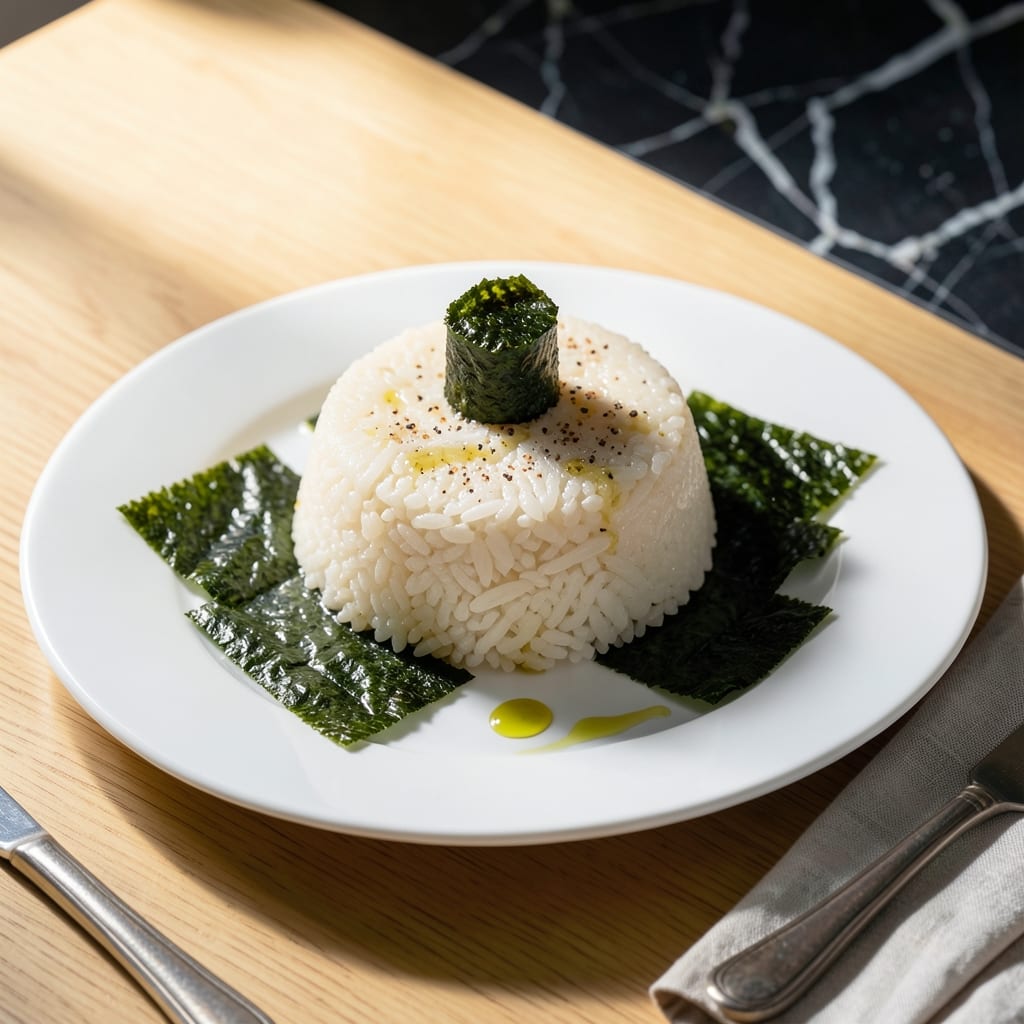
Mastering sushi begins with the rice, and this method delivers the authentic texture that defines Morimoto’s signature rolls.
I’ve perfected this technique to achieve grains that are sticky enough to hold shape yet separate cleanly on the palate. The vinegar seasoning provides that characteristic tang without overpowering the natural rice flavor.
The process requires precision: washing removes excess starch, while proper steaming ensures even cooking. Resting time allows the grains to absorb the vinegar mixture fully.
This foundation transforms simple ingredients into perfect sushi rice that elevates every roll, nigiri, or bowl.
Ingredients for Morimoto Sushi Rice
Authentic sushi rice requires just a few precise ingredients to achieve that signature Morimoto texture and balance.
| Ingredient | Amount | Notes |
|---|---|---|
| Japanese Short-Grain Rice 🍚 | 2 cups | Sushi rice or Calrose variety |
| Rice Vinegar 🍶 | ½ cup | Unseasoned, for acidity balance |
| Granulated Sugar 🍬 | 2 tbsp | Fine white sugar preferred |
| Kosher Salt 🧂 | 1 tsp | Diamond Crystal brand recommended |
| Water 💧 | 2 ¼ cups | Filtered for best texture |
| Nori Sheets 📜 | 4 sheets | Full-size for rolling |
| Sushi-Grade Salmon 🐟 | ½ lb | Fresh, sushi-grade only |
| Sushi-Grade Tuna 🐟 | ½ lb | Fresh, sushi-grade only |
| Wasabi Paste 🌿 | 1 tbsp | Real wasabi preferred |
| Pickled Ginger 🍠 | ¼ cup | Thinly sliced, for garnish |
| Soy Sauce 🫕 | ¼ cup | Low-sodium for dipping |
| Sesame Seeds 🌰 | 1 tbsp | Toasted, for garnish |
The rice is non-negotiable—Japanese short-grain like Koshihikari or Nishiki is essential. Asian markets or Whole Foods carry the best selection. Avoid long-grain varieties (the starch content is all wrong). Water quality matters too; filtered or spring water prevents off-flavors. For the vinegar, Mitsukan or Marukan are trusted brands for unseasoned rice vinegar.
No rice vinegar? Apple cider vinegar at half the amount in a pinch, but the flavor profile shifts. For sugar, superfine baker’s sugar dissolves fastest, but regular granulated works with a quick stir. The salt must be kosher salt—iodized table salt has additives that alter the taste. Sushi-grade fish is mandatory; never use grocery store seafood labeled merely as fresh.
Store uncooked rice in an airtight container in a cool, dark place for up to 6 months. Cooked sushi rice is best used immediately but can be held at room temperature (covered) for 2-3 hours. The pickled ginger and wasabi keep for 1 month refrigerated once opened.
Why You’ll Love This Recipe
- One Pot Wonder: I love that it’s just rice, vinegar, sugar, and salt—no fancy gadgets or last-minute grocery runs.
- Sticky Perfection: The balance of sweet rice vinegar and a pinch of salt makes it irresistibly tender and flavorful.
- Meal Prep Hero: Great for sushi nights, grain bowls, or even as a side with grilled fish. Honestly, it keeps well for days.
Step-by-Step Instructions for Vinegared Sushi Rice
Master the technique that delivers authentic texture and flavor for professional-quality results.
Step 1: Rinse and Soak the Japanese Short-Grain Rice
Place the 2 cups Japanese Short-Grain Rice in a fine-mesh strainer and rinse under cold water until the water runs completely clear. This removes excess starch that would make the rice gummy rather than sticky. I use my hand to gently agitate the grains during rinsing.
After rinsing, transfer the rice to a bowl and cover with 2.25 cups Water. Let it soak for 30 minutes—this ensures even cooking and prevents the grains from cracking during the cooking process. The rice should appear slightly plumped when ready.
Step 2: Cook the Rice to Precise Tenderness
Drain the soaked rice in a fine-mesh strainer, then transfer it to a rice cooker or heavy-bottomed pot. Add fresh 2.25 cups Water and cook according to your rice cooker’s standard setting. If using a pot, bring to a boil, then reduce to low heat, cover, and simmer for 15 minutes.
Remove from heat and let it steam, covered, for an additional 10 minutes. You’ll know it’s done when all the water is absorbed and the surface appears slightly dimpled. The grains should be tender but still retain their shape when pressed between your fingers.
Step 3: Prepare the Seasoning Mixture
While the rice cooks, combine the 0.5 cup Rice Vinegar, 2 tbsp Granulated Sugar, and 1 tsp Kosher Salt in a small saucepan. Heat over medium-low heat just until the sugar and salt dissolve completely—this should take 2-3 minutes.
Don’t let the mixture boil, as this can cause the vinegar to evaporate too quickly and alter the flavor balance. The mixture should be completely clear with no visible sugar crystals. Remove from heat and let cool slightly before using.
Step 4: Fold the Seasoning into the Cooked Rice
Transfer the cooked rice to a large wooden bowl or glass dish. Using a rice paddle or silicone spatula, gently fold in the vinegar mixture with a cutting motion rather than stirring. This preserves the individual grains while evenly distributing the seasoning.
Continue folding for 2-3 minutes until the rice is evenly coated and has a glossy appearance. The rice should be sticky but not mushy, with a subtle sheen from the vinegar mixture. Fan the rice gently while folding if you want to achieve the traditional glossy finish more quickly.
Step 5: Cool and Prepare for Use
Cover the seasoned rice with a damp kitchen towel and let it cool to room temperature. This prevents it from drying out while you prepare the other components. The rice should be slightly warm but not hot when you begin assembling.
Moisten your hands with water before handling the rice to prevent sticking. For sushi rolls, spread about 1 cup of rice evenly over each Nori Sheet, leaving a 1-inch border at the top for sealing. The rice should adhere to the nori without falling apart.
Pro Tips For Making Morimoto Sushi Rice
- Rinse Thoroughly: Wash the rice in 3-4 changes of cold water until it runs nearly clear—I learned this the hard way after my first batch came out gummy from excess starch.
- Heat the Vinegar: Gently warm the rice vinegar, sugar, and salt mixture before folding it into the rice; the heat helps dissolve the sugar completely for even seasoning.
- Skip the Stirring: Resist the urge to stir the rice while it’s cooking—it releases too much starch and turns the grains mushy. Just let it simmer undisturbed.
- Fan While Folding: Use a hand fan or piece of cardboard to cool the rice as you fold in the seasoning—this gives it that signature glossy finish and prevents soggy sushi.
Perfect Pairings for These Flavors
Sake Pairings
I always reach for junmai sake with sushi rice—the clean, crisp profile complements the vinegar’s tang. Try Dassai 39 for a premium experience, or Tyku Junmai for an affordable option. Serve chilled at 45-50°F for best results. 🍶
Japanese Beer Options
Asahi Super Dry or Sapporo Premium cut through the rice’s richness with their light, crisp profiles. The carbonation cleanses your palate between bites. I prefer 12-ounce bottles served ice-cold for the most refreshing pairing.
Green Tea Harmony
A cup of sencha green tea enhances the meal’s authenticity. The subtle grassy notes balance the rice’s sweetness. I brew mine at 160°F for 2 minutes to avoid bitterness. The warmth contrasts beautifully with cool sushi.
Wine Alternatives
For wine lovers, try a dry Riesling from Washington state—the acidity mirrors the rice vinegar. Chablis also works with its mineral notes. Avoid oaky whites or bold reds that overpower the delicate flavors.
Non-Alcoholic Choices
Ramune soda offers a fun, fizzy pairing that kids and adults love. The lychee or original flavors add a sweet contrast. For a healthier option, cold hibiscus tea provides floral notes that elevate the meal. 💛
Nutrition Facts
Frequently Asked Questions
What makes this rice different from regular white rice?
Japanese short-grain rice has higher starch content, creating the sticky texture essential for sushi. Regular white rice lacks this binding quality and falls apart when rolled.
How do I know when the rice is properly seasoned?
Taste a grain—it should have a balanced sweet-tangy flavor without being overpowering. The rice will also appear glossy and slightly translucent when properly folded with the vinegar mixture.
Can I make this without a rice cooker?
Use a heavy pot with a tight lid. Bring to a boil, reduce to low heat, cover, and cook for 15 minutes. Then steam off-heat for 10 minutes.
Why does my rice turn out mushy?
Over-rinsing or over-stirring after cooking breaks the grains. Rinse just until water runs clear, and use a cutting motion when folding in seasoning to preserve texture.

- Mujadara Rice and Lentils Recipe: Earthy Spiced Lentils With Caramelized Onions - November 1, 2026
- Naija Fried Rice Recipe: Street-Style Spice With Veggie Crunch - November 1, 2026
- Mushy Rice Recipe: Fluffy Grains Transformed in Minutes - November 1, 2026