
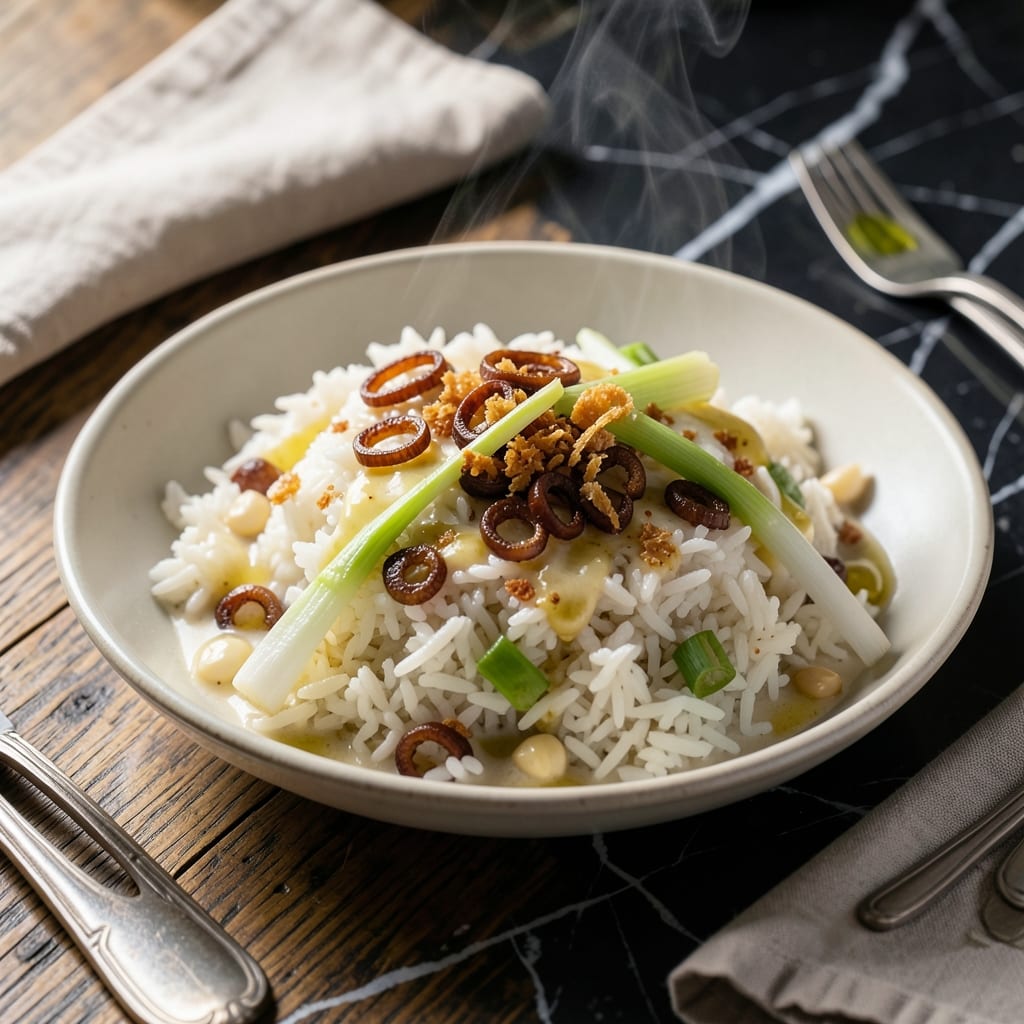
This fragrant rice dish transforms simple ingredients into a tropical culinary experience. The coconut milk creates an incredibly rich, aromatic base that perfectly complements the subtle sweetness of the rice.
I developed this version after tasting traditional nasi kangkang in Malaysia, where it’s often served at celebrations. The key is using the right ratio of coconut to water for that signature creamy texture without becoming mushy.
What emerges is a side dish that’s gently sweet, lightly savory, and infused with the unmistakable aroma of coconut. The rice grains remain separate yet tender, soaking up all the flavor of the cooking liquid.
This pairs beautifully with spicy curries or grilled meats, where its mild sweetness balances bold flavors. The entire process takes less than 30 minutes from start to finish.
Ingredients for Nasi Kangkang Rice
Transform everyday rice with coconut milk and aromatic spices for a dish that tastes like celebration.
| Ingredient | Amount | Notes |
|---|---|---|
| Jasmine Rice 🌾 | 2 cups | Rinsed until water runs clear |
| Coconut Milk 🥥 | 1 ½ cups | Full-fat for creamy texture |
| Water 💧 | 1 ½ cups | Adjust for desired consistency |
| Shallots 🧅 | 2 whole | Finely minced for aroma |
| Garlic Cloves 🧄 | 4 cloves | Minced for depth of flavor |
| Lemongrass Stalks 🌿 | 2 whole | Bruised and cut into 2-inch pieces |
| Ginger Root 🌿 | 1 whole | Peeled and sliced thinly |
| Turmeric Powder 🌶️ | ½ tsp | For golden color and earthiness |
| Salt 🧂 | 1 tsp | Sea salt or kosher preferred |
| Sugar 🍚 | 1 tsp | Balances the savory notes |
| Kaffir Lime Leaves 🍃 | 4 whole | Torn for citrus aroma |
| Pandan Leaves 🌿 | 2 whole | Knotted for fragrant infusion |
| Vegetable Oil 🫒 | 2 tbsp | For sautéing aromatics |
The coconut milk is non-negotiable for authentic flavor—use full-fat canned (like Thai Kitchen or Chaokoh), not the watery carton stuff. Jasmine rice is traditional, but long-grain white works too. For the lemongrass and pandan leaves, Asian grocery stores are your best bet. Fresh is ideal, but frozen pandan leaves (thawed) work in a pinch. The shallots and garlic should be fresh—no pre-minced shortcuts.
No coconut milk? Coconut cream plus water at a 1:1 ratio gets you close. Missing lemongrass? Lemon zest plus a bay leaf offers a similar bright note. Kaffir lime leaves can be swapped with lime zest and a pinch of lime juice. Pandan leaves are harder to substitute, but a drop of pandan extract (found at Asian markets) works if you’re desperate.
Cooked rice keeps well in the fridge for 3-4 days. Store in an airtight container to prevent drying. Reheat with a splash of water or coconut milk to restore moisture. The aromatics (lemongrass, pandan, kaffir lime) can be frozen for up to 3 months if you won’t use them fresh.
Why You’ll Love This Recipe
- One Pot Wonder: I just toss jasmine rice, coconut milk, and a few aromatics into a single pot and let it work its magic.
- Garlic-Infused Comfort: The shallots and garlic fry up golden, then steep in the coconut milk—every bite tastes like a warm hug.
- Feeds a Crowd: I make a big batch on Sunday and portion it out for lunches all week. Honestly, it reheats like a dream.
- Pantry Staples: Between us, I always have these ingredients on hand, so dinner’s ready even when the fridge looks bare.
Step-by-Step Instructions for Coconut-Infused Jasmine Rice
Master this technique to achieve perfectly fragrant rice with balanced coconut flavor and aromatic depth.
Step 1: Prepare and Sauté the Aromatics
Heat the 2 tbsp vegetable oil in a heavy pot over medium heat. Add the 2 whole shallots and sauté for 2-3 minutes until they soften and turn translucent. This builds the flavor foundation for the dish.
Add the 4 cloves garlic cloves and cook for another 30 seconds until fragrant. Be careful not to let the garlic burn, as it will impart a bitter taste. The aroma should be rich and inviting at this stage.
Step 2: Toast the Spices and Herbs
Incorporate the 2 whole lemongrass stalks, 1 whole ginger root, and 0.5 tsp turmeric powder into the pot. Stir constantly for 1 minute to toast the spices, releasing their essential oils and deepening the flavor profile.
Add the 4 whole kaffir lime leaves and 2 whole pandan leaves, pressing them lightly to bruise and release their aromatic compounds. The kitchen should be filled with a complex, intoxicating fragrance at this point.
Step 3: Add Liquids and Jasmine Rice
Pour in the 1.5 cups coconut milk and 1.5 cups water, stirring to combine all the aromatics. Increase heat to medium-high and bring the mixture to a gentle boil. This ensures the liquids are well-infused with the spices and herbs before adding the rice.
Add the 2 cups jasmine rice, 1 tsp salt, and 1 tsp sugar, stirring once to distribute the rice evenly. The sugar balances the savory and herbal notes, while the salt enhances all the flavors. Bring the mixture back to a boil.
Step 4: Cook the Rice to Perfection
Once boiling, reduce the heat to low, cover the pot tightly with a lid, and simmer for 15-18 minutes. Avoid lifting the lid during this time to prevent steam from escaping, which is crucial for even cooking.
The rice is done when all the liquid has been absorbed and the grains are tender. Look for small steam holes forming on the surface and a light, fluffy texture when gently stirred with a fork.
Step 5: Rest and Fluff the Rice
Remove the pot from heat and let it sit covered for an additional 10 minutes. This resting period allows the rice to steam in its own residual heat, ensuring every grain is perfectly cooked and the flavors meld together.
After resting, remove the lemongrass, ginger, kaffir lime leaves, and pandan leaves. Gently fluff the rice with a fork to separate the grains and release the trapped steam. The finished rice should have a vibrant golden hue from the turmeric and a rich, fragrant aroma from the coconut and herbs.
Pro Tips For Making Nasi Kangkang Rice
- Rinse the Rice: Wash the jasmine rice until the water runs clear—this removes excess starch so your nasi kangkang ends up fluffy, not gummy.
- Sauté the Aromatics: Cook the shallots and garlic in a little oil until golden before adding liquids; raw bits will ruin the coconut-infused flavor.
- Balance the Liquids: Use a 1:1 ratio of coconut milk to water for perfect creaminess—I learned this the hard way after a few gluggy batches.
- Simmer Low and Covered: Once it hits a boil, drop to low heat and keep the lid on; peeking releases steam and turns your rice unevenly mushy.
Troubleshooting Perfect Results
Rice Too Dry
If your rice turns out dry, it likely needs more liquid. Add ¼ cup water or coconut milk and cover the pot again. Let it steam for 5 minutes over low heat. I’ve found this revives the texture beautifully. 💡
Mushy Rice
Overcooking or too much liquid causes mushiness. Next time, reduce water to 1¼ cups or cook for 12-15 minutes only. Stirring during cooking breaks the grains—resist the urge!
Weak Coconut Flavor
Use full-fat coconut milk and increase to 2 cups for stronger flavor. Simmer the aromatics in the coconut milk for 5 minutes before adding rice to intensify the infusion.
Bland Taste
Boost flavor by toasting the turmeric and spices for 1-2 minutes before adding liquids. Double the kaffir lime leaves or add 1 tbsp fish sauce for depth. Taste before serving and adjust salt or sugar as needed.
Uneven Cooking
Ensure your pot has a tight-fitting lid to trap steam evenly. If using a thin pot, switch to a heavy-bottomed Dutch oven. Avoid lifting the lid during cooking—this releases steam and disrupts the process. 🔥
Burnt Bottom
Lower the heat to medium-low after adding rice and liquids. Stir once to distribute the rice, then avoid stirring. If using an electric stove, consider a heat diffuser to prevent hot spots.
Nutrition Facts
Frequently Asked Questions
Can I use other rice types besides jasmine?
Long-grain white rice works well, but avoid sticky varieties like sushi rice. The texture may vary slightly, but the flavor will still shine. Jasmine is traditional for its floral aroma.
How do I store leftovers?
Keep in an airtight container in the fridge for up to 4 days. Reheat with a splash of coconut milk to restore moisture and freshness.
What if I can’t find pandan leaves?
A drop of pandan extract works as a substitute. Alternatively, add a bay leaf for depth, though the flavor won’t be identical.
Can I make this in a rice cooker?
Yes! Sauté aromatics first, then transfer everything to the rice cooker. Use the standard 1:1 rice-to-liquid ratio and cook as usual.

- Lump Rice Recipe Sri Lanka: Traditional Island-Style Texture - November 4, 2026
- Laos Sticky Rice Recipe: Traditional Steamed Perfection - November 4, 2026
- Magic Rice Recipe: One-Pot Aromatic Wonder - November 4, 2026