
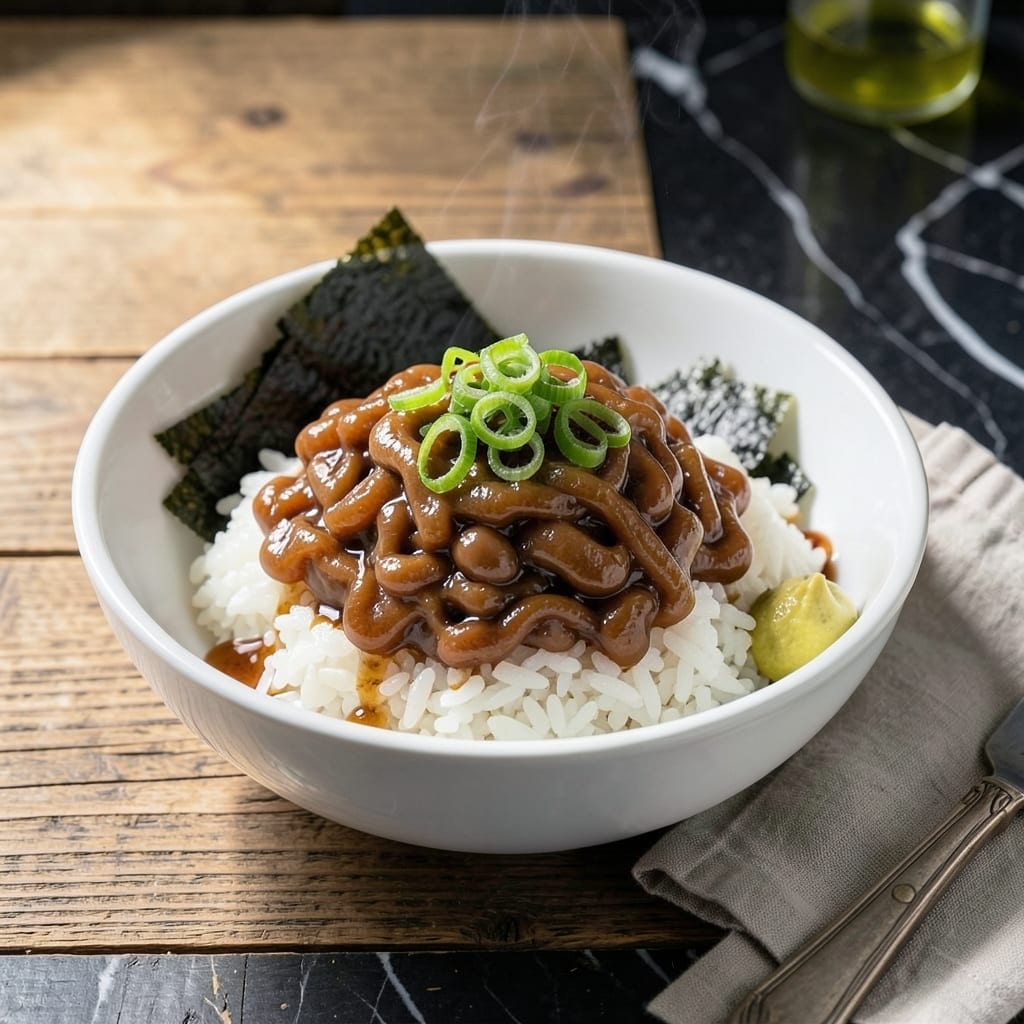
Natto rice holds a special place in Japanese cuisine, offering a unique combination of texture and flavor that many find polarizing yet captivating. I’ve refined this preparation to highlight the dish’s natural umami depth while keeping the process straightforward.
The key lies in properly combining the fermented soybeans with hot rice, allowing the heat to enhance the sticky, stringy consistency without overpowering the taste. A drizzle of soy sauce and a touch of mustard elevate the experience significantly.
What results is a dish that’s both hearty and intricate, with layers of savory richness and a satisfying, slightly chewy texture. It’s a simple meal that packs a bold, authentic punch.
Serve it as a quick breakfast or a light dinner, paired with fresh vegetables or a miso soup for balance.
Ingredients for Natto Rice
Simple ingredients create this bold, fermented Japanese classic with sticky, umami-rich depth.
| Ingredient | Amount | Notes |
|---|---|---|
| Natto Fermented Soybeans 🫛 | 4 pieces | Pre-packaged with sauce and mustard |
| Short-Grain White Rice 🍚 | 2 cups | Uncooked, rinsed until clear |
| Soy Sauce 🫒 | 2 tbsp | Low-sodium preferred for balance |
| Karashi Mustard 🟡 | 1 tsp | Japanese hot mustard, included with natto |
| Green Onions 🧅 | 2 whole | Thinly sliced for garnish |
| Nori Seaweed Sheets 🌊 | 2 sheets | Toasted and cut into strips |
| Sesame Seeds 🌰 | 1 tsp | Toasted for nutty aroma |
| Dashi Stock 🍲 | ½ cup | Vegan dashi (kombu-based) |
| Rice Vinegar 🍶 | 1 tsp | For brightness in dressing |
| Sugar 🍚 | ½ tsp | Optional, balances acidity |
| Vegetable Oil 🫒 | 1 tsp | Neutral flavor, for toasting |
| Cucumber 🥒 | ½ whole | Thinly sliced for freshness |
The natto is non-negotiable—Japanese markets or well-stocked Asian grocery stores typically carry it fresh daily. Look for Mito or Takuan brands for consistent quality. The rice must be short-grain (sushi rice works perfectly) to achieve the proper sticky texture. Vegan dashi is essential here; kombu-based versions avoid animal products while delivering authentic depth.
No karashi mustard? Dijon at half the amount provides similar heat but lacks the traditional flavor. For dashi, vegetable broth with a strip of kombu simmered for 10 minutes works in a pinch. The nori can be substituted with furikake seasoning for a different but complementary flavor profile. Green onions are flexible—scallions or chives both work.
Natto keeps 1 week refrigerated in its original packaging. Prepared natto rice is best eaten immediately but holds for 2 days in the fridge. Toast sesame seeds and nori just before serving to preserve crispness and aroma.
Why You’ll Love This Recipe
- Five-Minute Assembly: I just stir the natto into hot rice, drizzle soy sauce, add a dab of karashi mustard, and sprinkle green onions—done.
- Sticky Umami Bomb: The natto’s funky depth plus the rice’s sweetness and that kick from the mustard hits every taste bud.
- Breakfast or Midnight Snack: Honestly, I’ve eaten this at sunrise and after late-night Netflix binges—it works any hour.
- Penny-Pincher’s Dream: A single pack of natto and a bowl of leftover rice feeds me for two meals without breaking the bank.
Step-by-Step Instructions for Natto Rice
Master this traditional preparation for balanced texture and authentic Japanese flavor.
Step 1: Cook the Short-Grain White Rice
Rinse the 2 cups Short-Grain White Rice under cold water until the water runs clear, removing excess starch. This prevents gummy rice and ensures each grain stays distinct. Use a 1:1.1 rice-to-water ratio in your rice cooker or pot.
Cook according to your appliance’s instructions, typically 20-25 minutes. The rice should be tender with a slight chew, and all water absorbed. Once done, fluff gently with a rice paddle and let it sit covered for 10 minutes to steam. The grains will glisten and hold their shape when properly cooked.
Step 2: Prepare the Natto Fermented Soybeans
Open the package of 4 pieces Natto Fermented Soybeans and transfer them to a small bowl. The natto will be coated with its characteristic slimy film—this is normal and essential for texture. Add the included 1 tsp Karashi Mustard and 2 tbsp Soy Sauce that come with the pre-packaged natto.
Stir vigorously in one direction (traditionally clockwise) for about 30 seconds until the mixture becomes very sticky and glossy. This develops the signature stringy consistency that defines natto. The aroma should be earthy and pungent, a sign of proper fermentation.
Step 3: Toast the Nori and Sesame
Heat a dry skillet over medium heat for 1 minute. Add the 2 sheets Nori Seaweed Sheets one at a time, toasting for 10-15 seconds per side until fragrant and slightly crisp. Remove and cut into thin strips with scissors.
In the same warm skillet, add the 1 tsp Vegetable Oil and 1 tsp Sesame Seeds. Toast for 30-45 seconds, stirring constantly, until the seeds turn golden brown and release a nutty aroma. Transfer both to small bowls for garnishing.
This toasting step intensifies the flavors of both nori and sesame, adding depth to the final dish.
Step 4: Assemble and Garnish
Divide the cooked Short-Grain White Rice among 4 bowls. Top each portion with a piece of the prepared Natto Fermented Soybeans, allowing the sticky strands to drape over the rice. The contrast between the warm rice and cool natto is intentional and traditional.
Drizzle any remaining sauce from the natto package over each serving. Garnish with the toasted Nori Seaweed Sheets strips, Sesame Seeds, and 2 whole Green Onions thinly sliced. Add the 0.5 whole Cucumber, thinly sliced, for freshness.
Step 5: Add the Finishing Dressing
In a small bowl, whisk together the 0.5 cup Dashi Stock, 1 tsp Rice Vinegar, and 0.5 tsp Sugar until the sugar dissolves. This light dressing adds a subtle brightness that balances the natto’s richness.
Spoon 2-3 tablespoons of the dressing over each bowl just before serving. The dressing should pool slightly around the rice without making it soggy. Serve immediately while the rice is still warm, and instruct diners to mix everything thoroughly to coat each grain with the natto’s umami flavor.
Pro Tips For Making Natto Rice
- Warm the Natto: Take the natto out of the fridge 10-15 minutes before mixing—cold natto sticks together and won’t coat the rice as well.
- Use Fresh Rice: Natto works best with warm, freshly cooked short-grain rice; day-old rice dries out and makes the texture uneven.
- Stir Gently, Not Fiercely: After adding soy sauce and mustard, fold the natto into the rice with a light hand to keep the strings stretchy instead of breaking them.
- Prep the Toppings First: Chop your green onions and portion out the mustard and soy sauce before opening the natto pack—once it’s open, the clock is ticking before it gets sticky.
Best Sauces and Condiments for This Dish
Classic Pairings
I always start with the traditional soy sauce and karashi mustard that come with natto. The 2 tbsp soy sauce adds salty depth while the 1 tsp mustard provides the signature spicy kick. This combo enhances the fermented flavor beautifully. 🌟
Dashi-Based Dressing
A light dressing of ½ cup dashi stock, 1 tsp rice vinegar, and ½ tsp sugar brightens the dish. The umami from dashi complements natto’s funk, while vinegar cuts through the richness. Whisk until the sugar dissolves completely.
Spicy Variations
For heat lovers, add 1 tsp sriracha or ½ tsp chili oil to the soy sauce. The warmth balances natto’s earthiness. I also like a sprinkle of shichimi togarashi for complex spice.
Creamy Additions
A drizzle of Japanese mayonnaise (about 1 tbsp per bowl) adds luxurious creaminess. The fat content tames natto’s strong flavor. Mix it in thoroughly to coat each grain of rice.
Fresh Finishes
Thinly sliced cucumber and green onions add crisp freshness. The cool vegetables contrast the warm, sticky natto rice perfectly. I always add these just before serving. 🥗
Nutrition Facts
Frequently Asked Questions
Can I use long-grain rice instead?
Stick with short-grain for authenticity. Long-grain lacks the sticky texture needed to hold the natto’s strands. Sushi rice works perfectly as a substitute.
How do I reduce the strong smell?
Adding 1 tsp rice vinegar to the dressing helps mellow the aroma. Serve immediately after mixing to minimize exposure to air.
What if I don’t have karashi mustard?
Use ½ tsp Dijon mustard as a substitute. It won’t be identical but provides similar heat. Traditional flavor comes from the included packet.
Can I make this ahead of time?
Best eaten fresh, but prepared natto rice keeps for 2 days refrigerated. Store components separately and assemble just before serving.

- Jollof Rice Sauce Recipe: West African Tomato and Spice Infusion - September 25, 2026
- Japanese Rice Soup Recipe: Umami-Rich Comfort in a Bowl - September 25, 2026
- Homemade Cream Of Rice Recipe: Silk-Smooth Breakfast in Minutes - September 25, 2026