
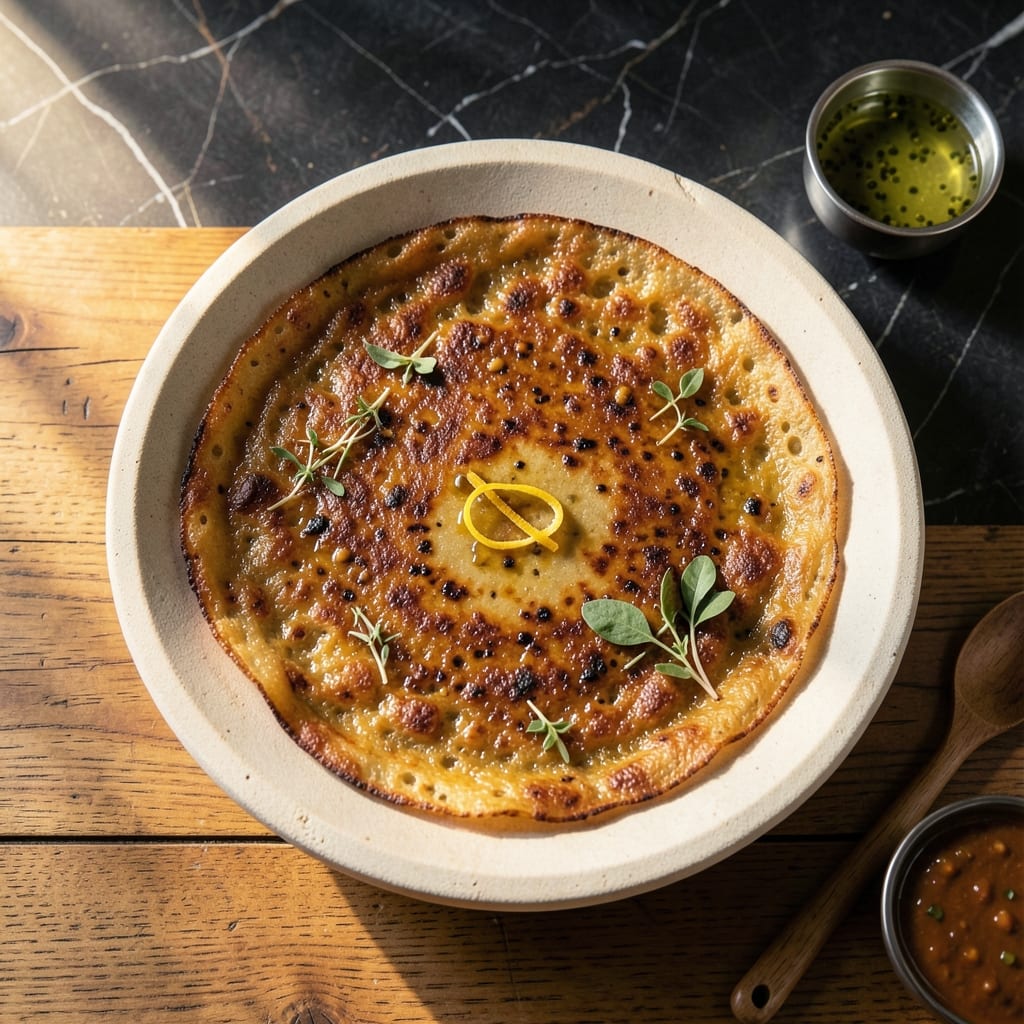
This grain-free dosa delivers the same crispy texture and fermented tang you love, using only lentils and urad dal. The fermentation process creates that signature light, airy batter without a single grain of rice.
The key is soaking the lentils properly and allowing the batter to ferment for at least 8 hours. This develops the complex flavors and ensures the dosa cooks up golden and crisp with a slightly sour note.
You’ll achieve that perfect thin, lacy texture that shatters at the edges while staying flexible enough to fold. The fermentation also makes it easier to digest than traditional versions.
Serve hot with coconut chutney or sambar for a complete meal. This method proves you don’t need rice for authentic dosa flavor and texture.
Ingredients for No Rice Dosa
Just lentils, dal, and a few spices create this crispy fermented wonder with no rice needed.
| Ingredient | Amount | Notes |
|---|---|---|
| Split Pigeon Peas 🌱 | 1 cup | Rinsed and drained well |
| Urad Dal ⚫ | ½ cup | Black gram lentils, rinsed |
| Chana Dal 🟡 | ½ cup | Split chickpea lentils, rinsed |
| Fenugreek Seeds 🌿 | ½ tsp | Optional for fermentation boost |
| Salt 🧂 | 1 ½ tsp | Adjust to taste after fermentation |
| Water 💧 | 3 cups | For soaking and blending |
| Coconut Oil 🥥 | ¼ cup | For cooking dosas |
| Green Chili Peppers 🌶️ | 2 whole | Finely chopped, optional for heat |
| Fresh Ginger 🌿 | 1 tbsp | Grated or minced finely |
| Cumin Seeds 🌿 | 1 tsp | For tempering or batter flavor |
| Fresh Cilantro 🌿 | ¼ cup | Chopped, for garnish |
| Lemon Juice 🍋 | 1 tbsp | Freshly squeezed for tang |
The dal quality matters here. Find urad dal and chana dal at any Indian grocery—Patel Brothers or local South Asian markets usually have the freshest stock. Look for clean, uniform lentils without debris. Fenugreek seeds are tiny but powerful (they boost fermentation), so grab them from the bulk section if you can. Soaking time is non-negotiable—6-8 hours minimum for proper texture.
No urad dal? Substitute with moong dal—texture will differ slightly but still works. Skip fenugreek if you must, but add half a teaspoon of baking soda to help with fermentation. Fresh ginger can be swapped for ground ginger at one-fourth the amount (the fresh stuff is way better though). Coconut oil gives authentic flavor, but any neutral oil works in a pinch.
Batter ferments best in warm spots—70-85°F is ideal. Keeps in the fridge for 3-4 days (the longer it ferments, the tangier it gets). Once cooked, dosas are best hot off the griddle but reheat decently in a toaster oven for 2-3 minutes.
Why You’ll Love This Recipe
- No Soaking Needed: I love that I can skip the overnight soak—just blend the split pigeon peas, urad dal, and chana dal with fenugreek seeds and it’s ready.
- Crispy & Nutty: The mix of dals gives it this incredible, slightly earthy flavor with a golden crust that’s just right with coconut chutney.
- Breakfast or Dinner: Honestly, it’s my go-to for both—quick enough for a weekday breakfast and hearty enough for a lazy Sunday dinner.
- Budget Stretch: A cup of each dal makes a stack of dosas, and leftovers keep well for two days in the fridge.
Step-by-Step Instructions for No Rice Dosa
This method delivers crisp, golden dosas with a rich, fermented flavor using only lentils and peas.
Step 1: Soak the Lentils and Peas
Combine the 1 cup Split Pigeon Peas, 0.5 cup Urad Dal, 0.5 cup Chana Dal, and 0.5 tsp Fenugreek Seeds in a large bowl. Add the 3 cups Water and stir to ensure everything is fully submerged. Cover and let soak for 6-8 hours or overnight.
You’ll know they’re ready when the lentils have doubled in size and the split pigeon peas are soft to the touch. The fenugreek seeds will plump up too, releasing their fermentation-boosting properties. Drain and rinse thoroughly before blending—this removes excess starch and prevents bitterness.
Step 2: Blend into a Smooth Batter
Transfer the soaked lentils, peas, and fenugreek seeds to a high-speed blender. Add the 1 tbsp Fresh Ginger and blend with just enough fresh water to create a smooth, thick batter. Start with ½ cup water and add more as needed—the consistency should resemble pancake batter.
I always blend in batches to avoid overloading the blender, which can lead to uneven texture. The batter should be silky with no visible grit. Transfer to a clean bowl and add the 1.5 tsp Salt, stirring well to combine. The salt enhances fermentation and brings out the natural flavors of the lentils.
Step 3: Ferment the Batter
Cover the bowl with a clean kitchen towel and let it ferment in a warm place for 8-12 hours. I like to place mine in the oven with the light turned on—this creates the perfect environment. You’ll notice the batter rising and developing small bubbles, which means the fermentation is working.
The batter should have a slightly tangy aroma and a frothy texture when it’s ready. If your kitchen is cool, it might take a bit longer, so don’t rush it. The fermentation is what gives these dosas their signature crispness and depth of flavor without rice.
Step 4: Cook the Dosas to Crisp Perfection
Heat a non-stick skillet over medium-high heat and lightly brush it with coconut oil. Pour a ladleful of batter onto the center of the pan and quickly spread it outward in a circular motion with the back of the ladle. Aim for a thin, even layer—about ⅛-inch thick.
Drizzle a little more coconut oil around the edges and cook for 2-3 minutes until the surface looks dry and the edges start to lift. Sprinkle some of the cumin seeds and finely chopped Green Chili Peppers over the top if you like extra flavor. Flip and cook for another 1-2 minutes until golden brown and crisp.
Step 5: Garnish and Serve Warm
Transfer the dosa to a plate and immediately sprinkle with the 0.25 cup Fresh Cilantro and a squeeze of lemon juice. The heat from the dosa will release the cilantro’s aroma, and the lemon juice adds a bright, tangy finish.
Repeat with the remaining batter, adding more coconut oil to the pan as needed. Serve the dosas hot, straight from the pan—they’re best when the edges are still crackling crisp. Pair them with chutney or a simple coconut dip for a complete, grain-free meal.
Pro Tips For Making No Rice Dosa
- Soak Overnight: Split pigeon peas, urad dal, and chana dal need a full 8-10 hours in water to soften enough for smooth grinding—I learned this the hard way after ending up with gritty batter.
- Grind with Cold Water: Use ice-cold water while grinding the soaked dals to prevent the batter from heating up, which can ruin the fermentation. My grandmother swore by this, and she was right.
- Ferment Fully: Let the batter ferment for at least 12 hours in a warm place until it’s slightly bubbly and has a tangy aroma. After rushing this step once, I finally figured out why my dosa wasn’t crisp.
- Cook on Medium Heat: Spread the batter thin on a hot griddle, then cook on medium heat—high heat burns the outside before the inside cooks through. Sounds weird, but it works.
Wine and Beer Pairings for This Recipe
Crisp Lager Pairings
An ice-cold Indian lager like Kingfisher or Taj Mahal cuts through the dosa’s richness beautifully. The light, crisp profile refreshes your palate between bites. I always keep a few chilled for this exact pairing. ✨
Light White Wines
A dry Riesling with citrus notes complements the fermented tang of the batter. The acidity balances the earthy lentil flavors. Sauvignon Blanc works too, especially with a squeeze of lemon on your dosa.
Spiced Craft Beers
For beer lovers, try a Belgian witbier with coriander and orange peel notes. The subtle spice enhances the cumin in the batter. Hoegaarden is my go-to choice for this pairing.
Non-Alcoholic Options
Sparkling water with lime keeps it refreshing without competing flavors. A mango lassi offers a creamy, sweet contrast to the crispy texture. Both work perfectly for a lighter meal.
Chai Tea Surprise
Hot masala chai with cardamom and ginger brings warm spice notes that pair surprisingly well. The sweetness complements the savory dosa. I brew mine with 1 tsp loose-leaf Assam tea for bold flavor. 💛
Coconut Water
Serve chilled coconut water in small glasses for a tropical touch. It echoes the coconut oil used in cooking and adds a natural sweetness. This works especially well for breakfast dosas.
Nutrition Facts
Frequently Asked Questions
Can I use other lentils instead of urad dal?
Yes, moong dal works as a substitute, though texture may differ slightly. It still ferments well and produces crisp dosas.
How do I know when the batter is fermented enough?
Look for a slightly tangy aroma and frothy texture with small bubbles. This typically takes 8-12 hours in a warm spot.
Why isn’t my dosa crispy?
Thin batter and high heat are key. Spread it to ⅛-inch thickness and cook on medium-high heat until golden.
Can I make this batter ahead of time?
It keeps in the fridge for 3-4 days and gets tangier over time. Stir before using.

- Rice Pudding Recipe With Eggs and Milk: Old-Fashioned Custard-Style Comfort - September 30, 2026
- Rice Noodle Sauce Recipe: Bold Umami Depth for Authentic Stir-Fry - September 30, 2026
- Rice Pilaf Recipe: Fragrant Basmati With Toasted Vermicelli - September 30, 2026