
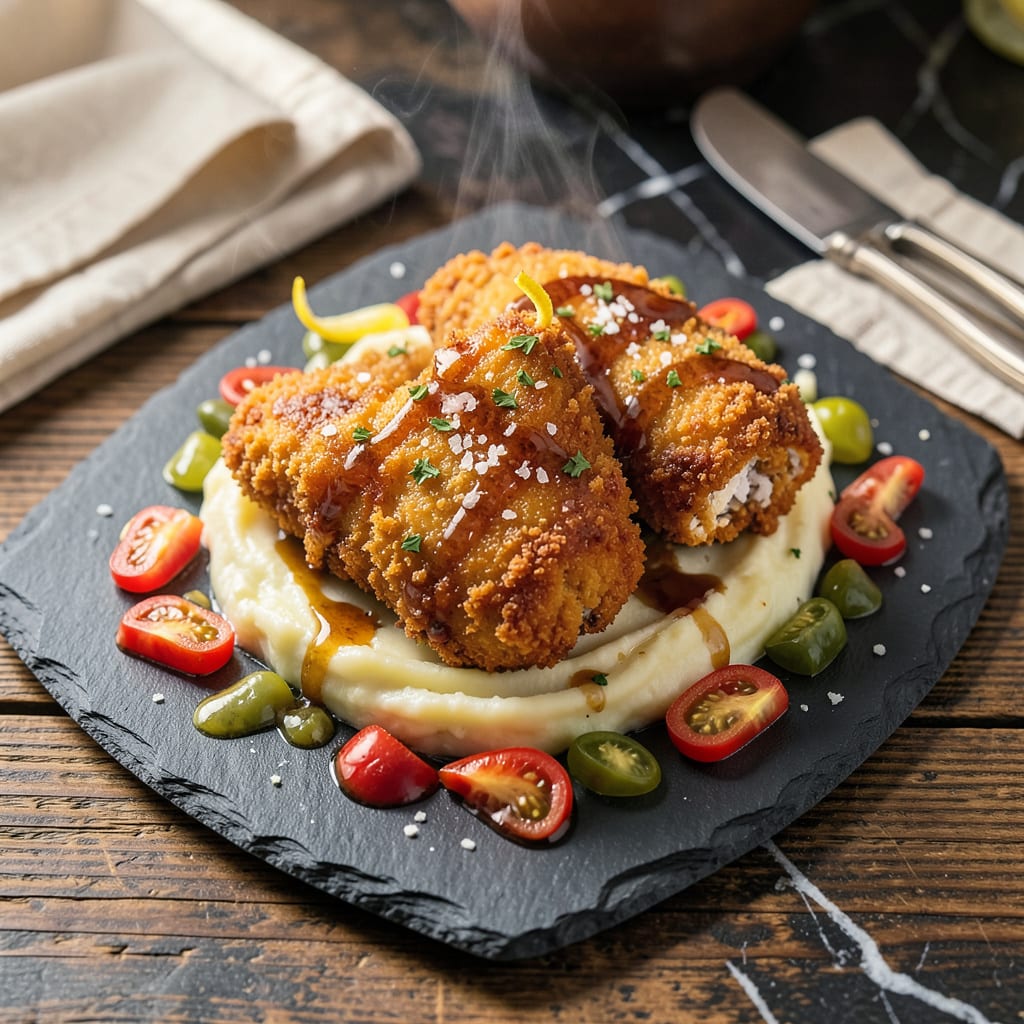
The ideal oil temperature for frying chicken cutlets is 350°F to 375°F. This range ensures a crispy golden crust while cooking the meat through without burning or absorbing excess oil.
This temperature sweet spot isn’t arbitrary—it’s where science meets perfect texture. 🔥 At 350°F, the cutlet’s exterior develops that coveted crunch through the Maillard reaction while the inside reaches a safe 165°F without drying out. I’ve found that dipping below 325°F leads to greasy results, while exceeding 380°F risks burning the breading before the chicken cooks through. The difference between mediocre and restaurant-quality cutlets often comes down to these precise degrees.
What many home cooks overlook is how oil temperature interacts with cutlet thickness. Thinner pieces may crisp up too quickly at 375°F, while thicker ones need that higher end to cook evenly. ✨ My pro tip: Use a clip-on thermometer and adjust your burner gradually—oil recovers faster than you might expect between batches.
💡 In This Article
- Why 350°F Is the Perfect Frying Temp for Chicken Cutlets
- How to Maintain Consistent Oil Temp for Even Frying
Why 350°F Is the Perfect Frying Temp for Chicken Cutlets
At 350°F, something magical happens to your chicken cutlets. This temperature triggers the Maillard reaction—the chemical process where amino acids and reducing sugars create that deep golden-brown crust and complex, nutty flavors. Meanwhile, the chicken’s proteins begin coagulating just enough to lock in juices while the exterior crisps.
It’s a delicate balance: too low, and you’ll steam the meat instead of frying it; too high, and you’ll burn the breading before the center cooks through. 🔥
The science behind this sweet spot involves heat transfer rates. At 350-375°F, oil conducts heat rapidly enough to create that signature crunch in 3-5 minutes per side for standard ½-inch thick cutlets. The oil’s temperature causes moisture in the breading to instantly vaporize, creating microscopic steam pockets that make the crust light and airy.
Thicker cutlets (up to ¾-inch) can handle the upper end of this range, while thinner ones need closer to 350°F to avoid over-browning. ✨
What happens when the oil’s too cool? Below 325°F, the breading absorbs oil like a sponge instead of sealing, leaving you with soggy, greasy cutlets. The chicken also takes longer to cook, giving the proteins more time to squeeze out moisture—resulting in dry meat.
On the flip side, oil above 380°F breaks down chemically, developing off-flavors and producing acrolein (that harsh, burnt smell). The breading will darken too quickly while the interior remains undercooked. 💫
Cutlet thickness dramatically affects your ideal temp. For ¼-inch thin cutlets, aim for 350°F and reduce cooking time to 2-3 minutes per side. Standard ½-inch cutlets thrive at 365°F for 4-5 minutes. Thick ¾-inch pieces need 375°F and 5-6 minutes to ensure the center reaches 165°F without burning the exterior.
The key is matching the heat to the mass—more thickness requires more thermal energy to cook through evenly. ⚡
Pro chefs often use a two-stage frying method for perfect results: start at 375°F for the first 1-2 minutes to set the crust, then reduce to 350°F to finish cooking gently. This technique prevents the “burnt outside, raw inside” problem while maximizing crispiness.
The initial high heat creates a strong crust barrier that prevents oil absorption during the lower-temp finish. 💛
Remember that oil temperature drops when you add cold food. A properly heated 375°F oil bath might dip to 340°F when you add room-temperature cutlets. This is why starting at the higher end of the range (especially for larger batches) helps maintain consistent cooking.
The oil’s recovery time depends on your burner strength—gas typically recovers faster than electric. 🌟
Your oil choice matters too. Peanut oil (smoke point 450°F) handles the 375°F range beautifully, while vegetable oil (smoke point 400°F) works best at the lower end. Canola oil’s neutral flavor and 425°F smoke point make it the most versatile choice for maintaining that perfect 350-375°F window throughout multiple batches.
The right oil helps you hit that crispy, golden sweet spot every time. 💫

- Jollof Rice Sauce Recipe: West African Tomato and Spice Infusion - September 25, 2026
- Japanese Rice Soup Recipe: Umami-Rich Comfort in a Bowl - September 25, 2026
- Homemade Cream Of Rice Recipe: Silk-Smooth Breakfast in Minutes - September 25, 2026