
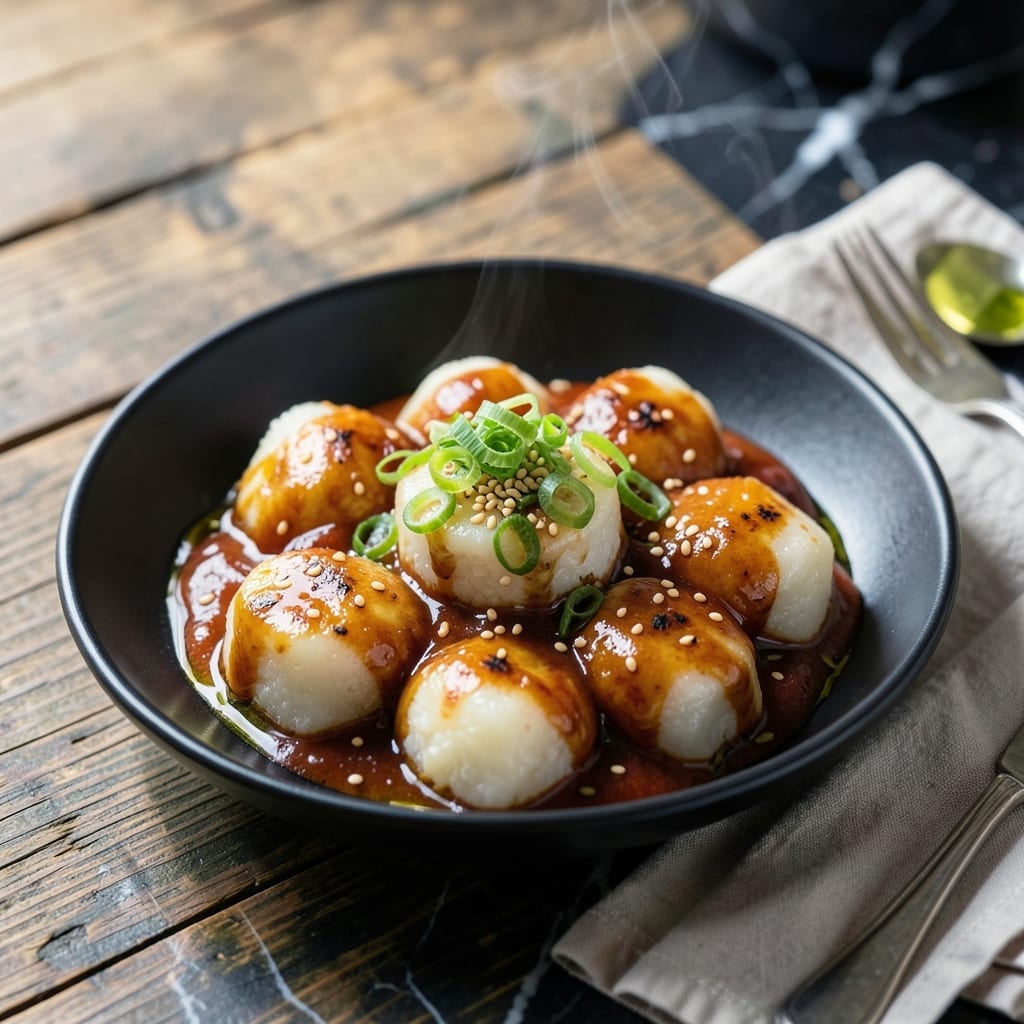
This dish transforms humble rice cakes into a wok-charred masterpiece with bold, spicy-savory flavors.
The secret lies in high-heat cooking that creates crispy edges while keeping the centers tender and chewy. A simple sauce ties everything together with the perfect balance of heat, sweetness, and umami.
I’ve perfected the technique to ensure every bite delivers that signature texture contrast. The rice cakes absorb the sauce beautifully, making each mouthful packed with flavor.
Ready in under 30 minutes, this recipe brings restaurant-quality results to your home kitchen. The process is straightforward, with minimal prep and maximum payoff.
Ingredients for Palia Spicy Rice Cakes
Fresh rice cakes plus bold Korean flavors create this wok-charred dish with perfect texture contrast.
| Ingredient | Amount | Notes |
|---|---|---|
| Korean Rice Cakes 🍚 | 1 lb | Cylindrical tteok, fresh or thawed |
| Gochujang 🌶️ | 3 tbsp | Korean red pepper paste |
| Soy Sauce 🫒 | 2 tbsp | Low-sodium preferred |
| Honey 🍯 | 1 tbsp | Balances heat with sweetness |
| Rice Vinegar 🍶 | 1 tbsp | Adds tangy brightness |
| Sesame Oil 🫒 | 1 tbsp | Toasted for depth |
| Garlic Cloves 🧄 | 4 cloves | Minced for sauce |
| Fresh Ginger 🌿 | 1 tbsp | Grated or minced |
| Green Onions 🧅 | 3 whole | Thinly sliced for garnish |
| Vegetable Oil 🫒 | 2 tbsp | High smoke point for frying |
| Toasted Sesame Seeds 🌰 | 1 tbsp | For garnish and crunch |
| Dried Red Pepper Flakes 🌶️ | ½ tsp | Adjust for heat preference |
| Fish Sauce 🐟 | 1 tsp | Optional umami booster |
| Brown Sugar 🍚 | 1 tsp | For sauce complexity |
The rice cakes are the foundation—look for cylindrical tteok at Korean markets or the freezer section of well-stocked Asian grocers like H Mart. Fresh is ideal, but frozen works too (thaw completely before cooking). The gochujang is non-negotiable for authentic heat and depth; Sempio or Kochukaru are reliable brands. Avoid pre-made sauces—they lack the complexity of freshly combined ingredients.
No gochujang? Sriracha mixed with a bit of miso paste can substitute in a pinch, though the flavor profile won’t be identical. Fish sauce can be omitted for vegetarian versions, but add a splash of soy sauce to compensate. Brown sugar can be swapped with maple syrup, and honey works as a vegan alternative with agave. The sesame oil must be toasted—light sesame oil lacks the required depth.
Rice cakes keep 1 week in the fridge or 3 months frozen. Gochujang stays fresh for 1 year unopened, 6 months after opening. Store sesame oil in a cool, dark place to prevent rancidity. Always bring rice cakes to room temperature before cooking for even charring.
Why You’ll Love This Recipe
- One Pot Wonder: I just dump the rice cakes, gochujang, and soy sauce in a pan with a splash of water and let it work its magic.
- Sweet Heat Balance: The honey and gochujang create this ridiculous sweet-spicy combo that I honestly can’t get enough of.
- Budget Stretcher: A bag of rice cakes and a spoonful of gochujang feeds my whole family for less than takeout.
Step-by-Step Instructions for Spicy Rice Cakes
Master the wok technique for perfectly charred rice cakes with balanced spicy-sweet sauce every time.
Step 1: Prepare the Korean Rice Cakes and Sauce Base
If using frozen rice cakes, thaw the 1 lb Korean Rice Cakes completely in warm water for 10-15 minutes. Drain and cut any long strands into 2-inch pieces for even cooking. This ensures they cook through without becoming mushy.
In a bowl, whisk together 3 tbsp Gochujang, 2 tbsp Soy Sauce, 1 tbsp Honey, 1 tbsp Rice Vinegar, 1 tbsp Sesame Oil, 1 tsp Fish Sauce, and 1 tsp Brown Sugar until smooth. The sauce should be glossy and slightly thick, with the sweetness balancing the heat from the gochujang.
Step 2: Bloom Aromatics in Hot Oil
Heat 2 tbsp Vegetable Oil in a wok or large skillet over medium-high heat until shimmering. Add the minced 4 cloves Garlic Cloves and grated 1 tbsp Fresh Ginger, stirring constantly for 30-45 seconds until fragrant but not browned.
Add 0.5 tsp Dried Red Pepper Flakes and stir for 10 seconds to toast the spices. This blooming process deepens their flavors and infuses the oil with their essence, which will coat the rice cakes beautifully.
Step 3: Char the Rice Cakes to Perfection
Increase the heat to high and add the drained rice cakes to the wok. Stir-fry for 5-7 minutes, pressing down occasionally with a spatula to encourage charring. Listen for the sizzling sound—this indicates the Maillard reaction is creating those desirable crispy edges.
The rice cakes should develop golden-brown char marks and a slightly chewy texture. Avoid overcrowding the wok, as this steams the rice cakes instead of frying them. Work in batches if necessary.
Step 4: Coat and Caramelize with Sauce
Reduce the heat to medium and pour the prepared sauce over the rice cakes. Stir vigorously for 2-3 minutes until every piece is evenly coated and the sauce begins to thicken and caramelize on the edges of the rice cakes.
You’ll notice the sauce transforming from a bright red to a deeper, glossier hue as it reduces. This caramelization is key—it creates a sticky, flavorful glaze that clings to the rice cakes.
Step 5: Garnish and Serve Immediately
Transfer the rice cakes to a serving dish and sprinkle with thinly sliced 3 whole Green Onions and 1 tbsp Toasted Sesame Seeds. The green onions add a fresh, sharp contrast to the rich sauce, while the sesame seeds provide a nutty crunch.
Serve immediately while hot—the rice cakes are best when the sauce is still glistening and the edges are crispy. The contrast of textures and flavors should be vibrant: chewy, crispy, spicy, sweet, and umami all in one bite.
Pro Tips For Making Palia Spicy Rice Cakes
- Soak the Rice Cakes: I learned this the hard way—dry rice cakes stay rock-hard. Soak them in warm water for 15-20 minutes before cooking, or they’ll never absorb that spicy gochujang sauce properly.
- Bloom the Gochujang: Cook the gochujang in a little oil for 1-2 minutes before adding liquids. It deepens the flavor and removes the raw paste taste—sounds weird, but it works.
- Balance the Sweetness: If your sauce tastes one-note, add the honey slowly. I used to dump it all in at once and ended up with candy-coated rice cakes instead of that perfect sweet-spicy balance.
- Simmer, Don’t Boil: Keep the sauce at a gentle simmer once the rice cakes go in. A rolling boil turns them to mush, and nobody wants mushy rice cakes—I skip this when I’m lazy, but the texture suffers.
Troubleshooting palia spicy rice cakes
Sauce Too Thick
If your sauce thickens too much before coating the rice cakes, add 1-2 tbsp water to loosen it. The ideal consistency should coat the back of a spoon but still drip slowly. 💡
Rice Cakes Sticking
Prevent sticking by ensuring your wok is fully hot before adding oil. Use high smoke point oil like avocado or vegetable oil. If they still stick, let them release naturally—don’t force it or they’ll tear.
Uneven Char
For consistent charring, cook rice cakes in single layers without overcrowding. Press down gently with a spatula to maximize contact with the wok. Rotate pieces occasionally for even browning.
Bland Flavor
Boost flavor by adding an extra ½ tsp of fish sauce or 1 tsp soy sauce to the sauce. Taste as you go—Korean flavors should be bold. Fresh lime juice at the end can brighten the dish.
Mushy Texture
Mushy rice cakes usually mean they weren’t dry enough before cooking. Pat them very dry with paper towels after thawing. Also, increase heat to high and stir-fry aggressively. 🔥
Sauce Separating
If the sauce separates, it’s likely the oil and liquids split. Whisk in 1 tsp cornstarch slurry to re-emulsify. Alternatively, remove from heat and stir vigorously for 30 seconds to recombine.
Nutrition Facts
Frequently Asked Questions
Can I use fresh rice cakes instead of frozen?
Fresh rice cakes work perfectly—just skip the thawing step. Pat them dry before cooking to prevent steaming. They may char faster, so keep an eye on them.
What’s the best substitute for gochujang?
In a pinch, mix 2 tbsp sriracha with 1 tsp miso paste for similar heat and depth. The flavor won’t be identical, but it’s a solid backup.
How do I prevent the rice cakes from sticking?
Ensure your wok is very hot before adding oil. Use high smoke point oil and avoid overcrowding. Let them release naturally if they stick.
Can I make this dish less spicy?
Yes! Reduce gochujang to 1 tbsp and skip the red pepper flakes. Add a touch of honey or sugar to balance the remaining heat.

- Jollof Rice Sauce Recipe: West African Tomato and Spice Infusion - September 25, 2026
- Japanese Rice Soup Recipe: Umami-Rich Comfort in a Bowl - September 25, 2026
- Homemade Cream Of Rice Recipe: Silk-Smooth Breakfast in Minutes - September 25, 2026