
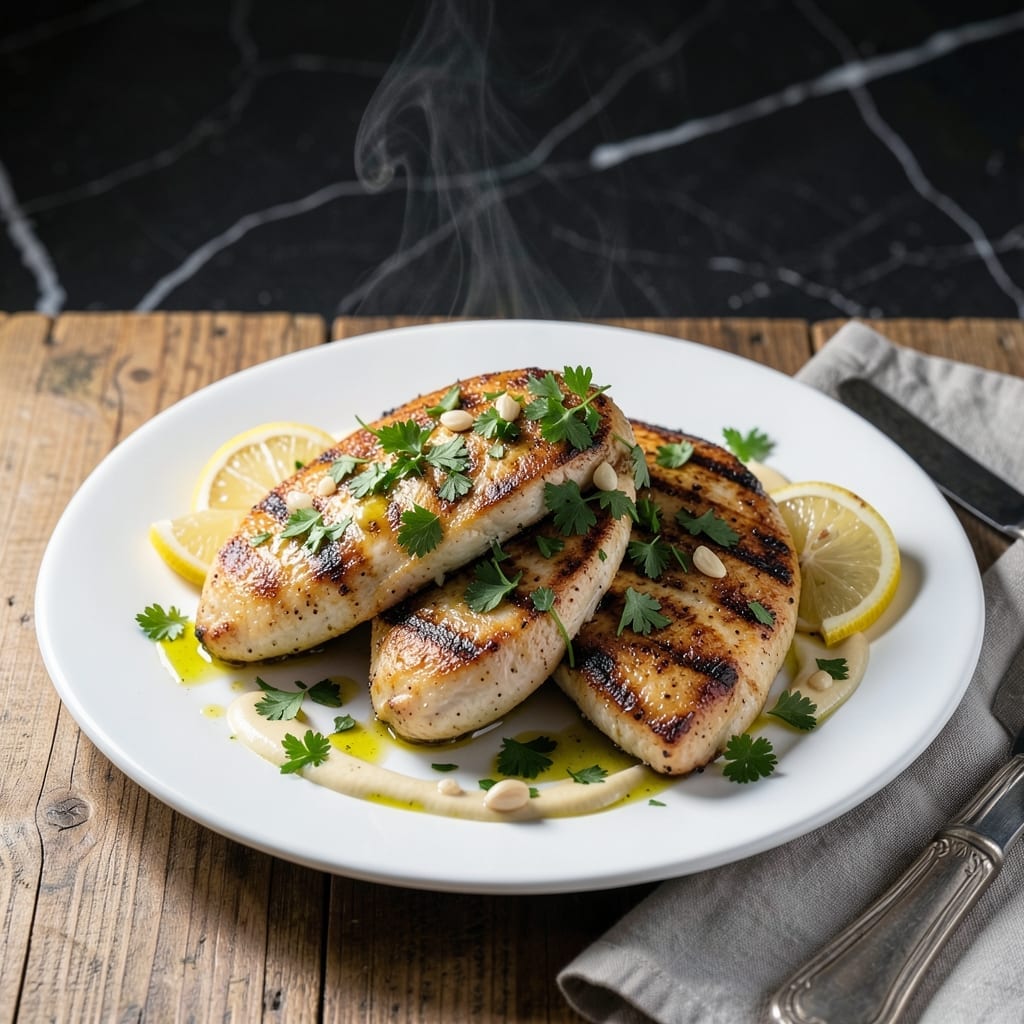
This parsley chicken delivers a burst of fresh herb flavor in every bite, transforming simple ingredients into something extraordinary.
The secret lies in using fresh parsley both as a marinade and garnish, creating layers of bright, aromatic taste that complement the juicy meat perfectly.
With a straightforward cooking method and 30 minutes start to finish, this dish proves that restaurant-quality results are possible at home with minimal effort.
You’ll end up with tender, flavorful chicken that pairs beautifully with rice or vegetables, making it ideal for busy weeknights.
Ingredients for Parsley Chicken
Fresh parsley and simple proteins create this herb-infused dish with restaurant-quality results at home.
| Ingredient | Amount | Notes |
|---|---|---|
| Boneless Skinless Chicken Breasts 🍗 | 1 ½ lb | Pounded to even thickness |
| Fresh Flat-Leaf Parsley 🌿 | 1 cup | Chopped, stems removed |
| Extra-Virgin Olive Oil 🫒 | ¼ cup | Divided for cooking and marinade |
| Garlic Cloves 🧄 | 4 cloves | Minced finely |
| Lemon 🍋 | 1 whole | Zested and juiced |
| Dijon Mustard 🟡 | 1 tbsp | Smooth variety preferred |
| Honey 🍯 | 1 tbsp | For balancing acidity |
| Kosher Salt 🧂 | 1 tsp | Plus more to taste |
| Freshly Ground Black Pepper 🌶️ | ½ tsp | Coarse grind preferred |
| Dried Oregano 🌿 | ½ tsp | Crushed between fingers |
| Chicken Broth 🥣 | ½ cup | Low-sodium preferred |
| Unsalted Butter 🧈 | 2 tbsp | For finishing sauce |
The parsley is non-negotiable for that bright, fresh flavor. Whole Foods or your local farmers market will have the best bunches—look for vibrant green leaves with no wilting. Chicken breasts should be uniform in thickness (pounding ensures even cooking). For the olive oil, California Olive Ranch or Colavita are reliable brands with good flavor without being overpowering.
No fresh parsley? Dried parsley at one-third the amount works in a pinch, but fresh is ideal. Out of Dijon? Whole-grain mustard adds texture but changes the flavor slightly. Lemon can be swapped with lime for a different citrus note. The honey balances the acidity—maple syrup is a fine substitute if you prefer. Low-sodium broth prevents the dish from becoming too salty.
Marinated chicken keeps 2 days in the fridge (cook within 24 hours for best texture). Cooked dish stores 4-5 days refrigerated. The parsley garnish is best added fresh—don’t store the dish with it already mixed in.
Why You’ll Love This Recipe
- One Pan Wonder: I just toss the chicken, parsley, garlic, and lemon on a sheet pan and let the oven do the work.
- Bright and Zesty: The lemon and fresh parsley give it that fresh, vibrant kick that makes every bite pop.
- Weeknight Hero: Honestly, it’s my go-to for busy evenings—ready before the kids start asking what’s for dinner.
- Budget Stretcher: Boneless chicken breasts stay affordable, and a little parsley goes a long way for big flavor.
Step-by-Step Instructions for Parsley Chicken
Here’s the method. Straightforward, tested, works every time.
Step 1: Prepare and Marinate the Chicken
Place the 1.5 lb boneless skinless chicken breasts between two sheets of plastic wrap and pound to an even ½-inch thickness using a meat mallet. This ensures uniform cooking and prevents dry spots in thicker areas.
In a bowl, whisk together 0.25 cup extra-virgin olive oil, the zest and juice of 1 whole lemon, 1 tbsp Dijon mustard, 1 tbsp honey, 1 tsp kosher salt, 0.5 tsp freshly ground black pepper, and 0.5 tsp dried oregano. Stir in 1 cup chopped fresh flat-leaf parsley and 4 minced garlic cloves.
Add the chicken to the marinade, ensuring all pieces are fully coated. Let it sit at room temperature for 15-20 minutes to allow the flavors to penetrate the meat without making it mushy.
Step 2: Sear the Chicken to Golden Perfection
Heat a large skillet over medium-high heat. Remove the chicken from the marinade (reserve the marinade) and pat it dry with paper towels—this is crucial for achieving a proper sear. Add the chicken to the hot skillet and cook for 4-5 minutes per side until golden brown and nearly cooked through.
The chicken should release easily from the pan when it’s ready to flip. Don’t move it too soon, or it won’t develop that beautiful crust. Transfer the chicken to a plate and tent with foil to keep warm.
Step 3: Create the Herb-Infused Pan Sauce
Reduce the heat to medium and pour the reserved marinade into the skillet. Add 0.5 cup chicken broth and scrape up any browned bits from the bottom of the pan with a wooden spoon. This deglazing step captures all the concentrated chicken flavor.
Simmer for 3-4 minutes until the liquid reduces slightly and begins to thicken. Stir in 2 tbsp unsalted butter and continue simmering for 1-2 minutes until the sauce coats the back of a spoon. The butter adds a silky richness that ties everything together.
Step 4: Finish and Serve
Return the chicken to the skillet and spoon the sauce over the top. Let it simmer for 2-3 minutes to heat through and allow the flavors to meld. The chicken should reach an internal temperature of 165°F if checked with a meat thermometer.
Garnish with any remaining fresh flat-leaf parsley and serve immediately. The sauce should be glossy and fragrant, with the bright acidity of the lemon balancing the richness of the butter. Each bite will deliver tender, juicy chicken infused with herbal notes and a hint of sweetness from the honey.
Pro Tips For Making Parsley Chicken
- Pound the Chicken: Boneless breasts cook unevenly if left thick—pound them to an even ½-inch so the center doesn’t stay raw while the edges dry out.
- Use Stems Too: Don’t toss the parsley stems; finely chop them along with the leaves for extra flavor in the marinade.
- Skip Cold Chicken: I learned this the hard way—let the chicken sit at room temperature for 15 minutes before cooking so it cooks through without turning rubbery.
- Zest the Lemon: Sounds weird, but it works: add the lemon zest to the olive oil and garlic before brushing it on the chicken for a brighter taste.
Serving Suggestions for This Recipe
Plating with Elegance
Arrange the chicken on a warm platter, spooning the glossy parsley sauce over the top. I like to fan 2 pieces per serving for visual appeal, overlapping them slightly. The bright green parsley garnish adds that final touch of freshness. 🌟
Starch Pairings
Jasmine rice or creamy mashed potatoes soak up the herb-infused sauce beautifully. For a lighter option, try quinoa or couscous. I often serve with 1 cup cooked per person to balance the meal.
Vegetable Sides
Steamed asparagus or roasted broccoli complement the lemon notes perfectly. A simple arugula salad with lemon vinaigrette echoes the dish’s brightness. I toss 4 cups greens with 1 tbsp olive oil and ½ lemon’s juice.
Bread Options
A crusty baguette or garlic bread is perfect for mopping up every last bit of sauce. Warm sourdough slices work too. I always keep a loaf handy when serving this dish.
Garnish Creatively
Beyond parsley, try lemon wedges or toasted pine nuts for texture. A sprinkle of red pepper flakes adds subtle heat. I love the pop of color from cherry tomatoes scattered around the plate.
Family-Style Service
For a cozy meal, serve everything in the skillet at the table. Let everyone help themselves to chicken and sauce. This works great for 4-6 people and makes for a memorable dining experience. 💛
Nutrition Facts
Frequently Asked Questions
Can I use dried parsley instead of fresh?
Yes, but use 1/3 the amount since dried is more concentrated. Fresh parsley provides the best bright, herbal flavor, but dried works in a pinch. Just rehydrate it slightly in the marinade for better results.
How do I prevent the chicken from drying out?
Pound the breasts to an even ½-inch thickness and don’t overcook. Remove from heat when it reaches 160°F, as it’ll rise to 165°F while resting. The butter in the sauce also helps keep it moist.
What if I don’t have Dijon mustard?
Substitute with 1 tbsp whole-grain mustard for texture or yellow mustard for a milder taste. The mustard adds depth, so don’t skip it entirely.

- Jollof Rice Sauce Recipe: West African Tomato and Spice Infusion - September 25, 2026
- Japanese Rice Soup Recipe: Umami-Rich Comfort in a Bowl - September 25, 2026
- Homemade Cream Of Rice Recipe: Silk-Smooth Breakfast in Minutes - September 25, 2026