
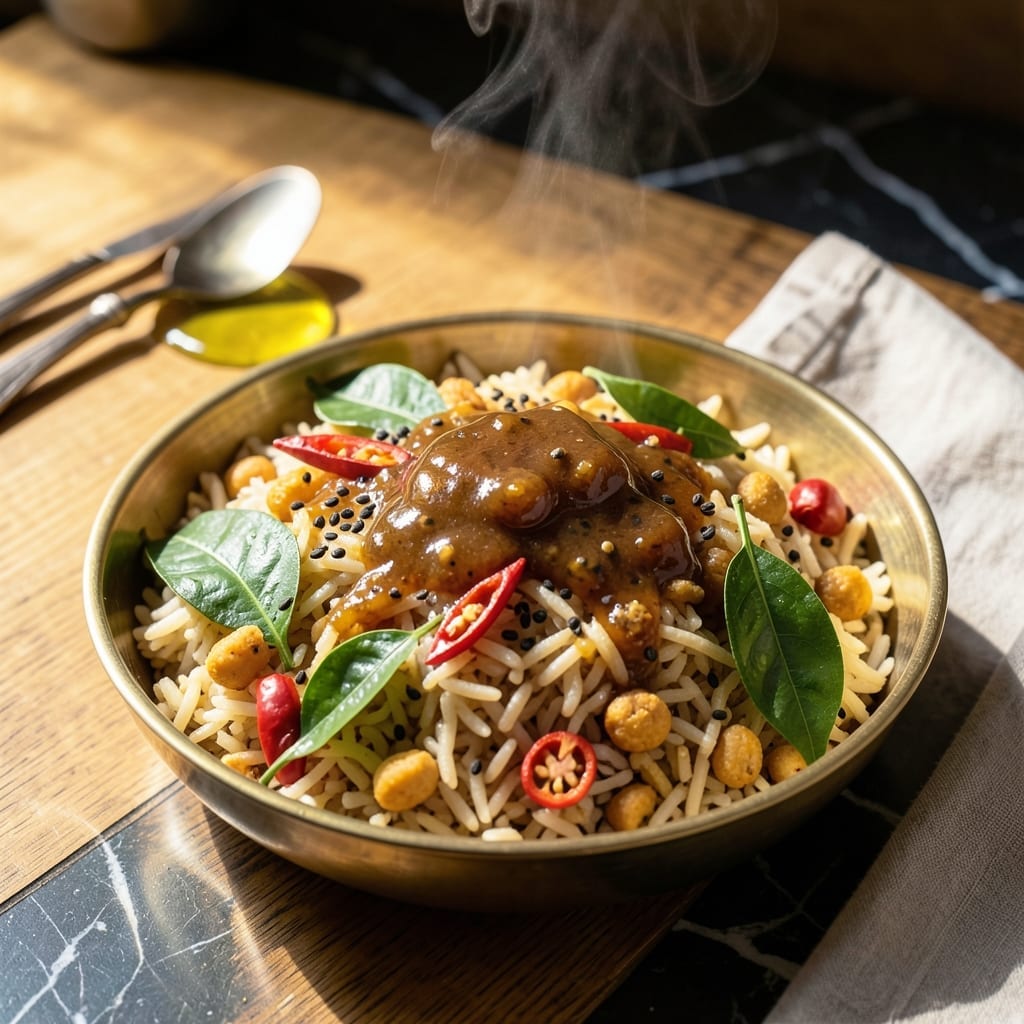
This South Indian specialty transforms simple rice into a vibrant, tangy masterpiece that’s impossible to resist. The secret lies in the perfect balance of tamarind’s sharpness and spices that awaken every bite.
I’ve refined this method to ensure the rice stays fluffy while absorbing the bold tamarind-infused flavors. The tempering of mustard seeds, curry leaves, and turmeric creates an aromatic base that defines this dish.
What you’ll get is a restaurant-quality meal with layers of sour, spicy, and savory notes. It’s a dish that tastes even better the next day as the flavors deepen.
Serve it with yogurt or papad for a complete experience. Here’s how to make it right.
Ingredients for Puli Rice
Transform simple rice with tamarind and spices for a bold South Indian feast.
| Ingredient | Amount | Notes |
|---|---|---|
| Basmati Rice 🍚 | 2 cups | Rinsed until water runs clear |
| Tamarind Pulp 🍈 | ½ cup | Soaked in warm water |
| Mustard Seeds 🌿 | 1 tsp | Black or yellow variety |
| Curry Leaves 🍃 | 10 pieces | Fresh preferred for aroma |
| Dried Red Chilies 🌶️ | 3 whole | Broken into pieces |
| Chana Dal 🌾 | 1 tbsp | Split chickpea lentils |
| Urad Dal 🌾 | 1 tbsp | Split black gram lentils |
| Turmeric Powder 🧂 | ½ tsp | Ground, for color and earthiness |
| Asafoetida 🌿 | ¼ tsp | Hing, a pinch for depth |
| Peanuts 🥜 | ¼ cup | Raw or roasted, unsalted |
| Vegetable Oil 🫒 | 3 tbsp | Neutral flavor for tempering |
| Green Chilies 🌶️ | 2 whole | Slit lengthwise for heat |
| Salt 🧂 | 1 tsp | Adjust to taste |
| Fresh Cilantro 🌿 | ¼ cup | Chopped, for garnish |
The tamarind is non-negotiable here—look for seedless pulp at Indian grocery stores like Patel Brothers or Bharat Bazaar. Fresh curry leaves are ideal (find them in the freezer section at specialty markets), but dried work in a pinch. Mustard seeds should be fresh and fragrant; if they smell dusty, they’re too old. The dals (chana and urad) add the authentic texture—don’t skip them.
No tamarind pulp? Lemon juice with a splash of vinegar mimics the tang (use half the amount). Substitute cashews for peanuts if allergies are a concern. Fresh ginger can stand in for asafoetida if unavailable. Green chilies can be adjusted—reduce or omit for less heat. The rice must be basmati; jasmine lacks the structure.
Store tamarind pulp in the fridge for up to 6 months. The tempering spices keep in airtight containers for 1 year. Cooked puli rice stays fresh for 3-4 days in the fridge. Flavors deepen overnight, so it’s even better the next day.
Why You’ll Love This Recipe
- One Pot Magic: I love that everything cooks together—just basmati rice, tamarind pulp, and a quick tempering of mustard seeds and curry leaves.
- Tangy Comfort: That perfect sour kick from tamarind balanced with the warmth of dried red chilies hits different every time.
- Feeds a Crowd: Between us, this recipe stretches effortlessly for potlucks or lazy Sundays when everyone’s hungry.
- Budget Keeper: Honestly, a bag of basmati and a little tamarind pulp go a long way for multiple meals.
Step-by-Step Instructions for Tamarind-Infused South Indian Rice
Master this traditional method for perfectly balanced tangy rice with authentic South Indian flavors.
Step 1: Prepare and Cook the Rice
Rinse the 2 cups Basmati Rice thoroughly under cold water until the water runs clear. This removes excess starch and prevents the grains from sticking together. I typically rinse it 3-4 times to ensure complete clarity.
Transfer the rinsed rice to a pot with 4 cups water and cook until the grains are 70% done—they should still have a slight bite. Drain the rice immediately in a colander and set aside. This partial cooking ensures the grains absorb the tamarind flavor without turning mushy.
Step 2: Extract and Prepare the Tamarind Pulp
Soak the 0.5 cup Tamarind Pulp in 1 cup warm water for 10 minutes to soften it completely. Mash the pulp with your fingers to dissolve it fully, then strain the mixture through a fine-mesh sieve to remove any seeds or fibers.
You should have about 1 cup of smooth tamarind juice. Set this aside—it forms the tangy base of your dish. The concentration of tamarind can vary, so taste it now and adjust the salt later if needed.
Step 3: Temper the Spices for Maximum Flavor
Heat the 3 tbsp Vegetable Oil in a heavy-bottomed pot over medium heat. Add the 1 tsp Mustard Seeds and wait for them to splutter—this takes about 30-45 seconds. Immediately add the 1 tbsp Chana Dal, 1 tbsp Urad Dal, 0.25 cup Peanuts, 3 whole Dried Red Chilies, and 10 pieces Curry Leaves.
Stir constantly for 2-3 minutes until the dals turn light golden brown and the peanuts are fragrant. Add the 2 whole Green Chilies, 0.25 tsp Asafoetida, and 0.5 tsp Turmeric Powder, then sauté for another 30 seconds until the turmeric releases its aroma.
Step 4: Combine All Elements and Finish Cooking
Pour the extracted tamarind juice into the pot along with the 1 tsp Salt. Bring the mixture to a gentle boil, then reduce the heat to low. Add the partially cooked rice and stir gently to combine, ensuring the grains are well coated with the tamarind-spice mixture.
Cover the pot and cook for 8-10 minutes, stirring occasionally, until the rice is fully tender and has absorbed all the liquid. The final texture should be moist but not soupy, with each grain distinct yet infused with the tangy, spiced tamarind flavor.
Step 5: Rest and Garnish Before Serving
Remove the pot from heat and let the rice rest, covered, for 5 minutes. This allows the flavors to meld together beautifully. Gently fluff the rice with a fork to separate the grains.
Transfer to a serving dish and garnish with the 0.25 cup Fresh Cilantro. The bright green cilantro adds a fresh contrast to the rich, tangy flavors. Serve warm with yogurt or papadums for a complete South Indian meal.
Pro Tips For Making Puli Rice
- Soak the Rice: Rinse and soak basmati rice for 20-30 minutes before cooking—it prevents the grains from breaking and guarantees fluffy, separate pulses in your puli rice.
- Bloom the Mustard: Heat oil until it shimmers, then add mustard seeds and let them pop fully before adding curry leaves and chilies; this releases their full aroma into the dish.
- Balance the Tamarind: I learned this the hard way—soak tamarind pulp in warm water for 10 minutes to extract maximum flavor, then strain to remove fibers that can make the rice bitter.
- Toast the Spices: Lightly dry-roast dried red chilies before grinding to deepen their flavor—sounds like extra work, but it actually changes the outcome of your puli rice.
Flavor Customization for This puli rice
Sweet and Sour
For a sweeter take, add 2 tbsp jaggery or brown sugar to the tamarind juice before mixing it with the rice. This balances the tang with a caramelized depth. I love how this version tastes with roasted cashews instead of peanuts. 💛
Extra Spicy
Increase the heat by adding 1 tbsp red chili powder or 1 tsp cayenne pepper to the tempering. For fresh heat, include 1 finely chopped green chili extra. The spice level will be intense but perfectly balanced by the tamarind’s sourness.
Nutty Crunch
Swap peanuts for ¼ cup cashews or almonds for a richer, buttery crunch. Toast them in 1 tsp ghee before adding to the tempering for extra aroma. This adds a luxurious touch that elevates the dish for special occasions.
Herb Infusion
Enhance the freshness by adding 2 tbsp chopped mint leaves along with cilantro at the end. The mint’s coolness contrasts beautifully with the tangy-spicy flavors. I often use this variation in summer for a lighter feel.
Citrus Twist
For a bright, zesty flavor, add 1 tbsp lemon juice to the tamarind mixture. This amplifies the sourness and adds a refreshing note. Pair it with a pinch of chaat masala for a tangy, chaat-inspired version. ✨
Coconut Richness
Stir in ¼ cup grated coconut (fresh or desiccated) with the rice during the final cooking stage. This adds a subtle sweetness and texture that’s especially popular in coastal South Indian variations. Toast the coconut lightly first for extra depth.
Nutrition Facts
Frequently Asked Questions
Can I use lemon juice instead of tamarind?
Yes, but use half the amount of lemon juice mixed with a splash of vinegar. It won’t have the same depth but provides a similar tang. Adjust salt carefully as lemon can be sharper.
Why is my rice mushy?
Overcooking the rice before adding tamarind is the most common cause. Cook it only 70% initially, then finish with the tamarind mixture. Use 1:2 rice-to-water ratio for perfect texture.
How do I store leftovers?
Keep in an airtight container in the fridge for up to 4 days. Flavors intensify overnight! Reheat with a splash of water to restore moisture.
Can I make this without curry leaves?
Yes, but the authentic flavor will be milder. Substitute with 1 tsp dried curry leaf powder or a pinch of asafoetida for depth. Fresh leaves are ideal for aroma.

- Jollof Rice Sauce Recipe: West African Tomato and Spice Infusion - September 25, 2026
- Japanese Rice Soup Recipe: Umami-Rich Comfort in a Bowl - September 25, 2026
- Homemade Cream Of Rice Recipe: Silk-Smooth Breakfast in Minutes - September 25, 2026