
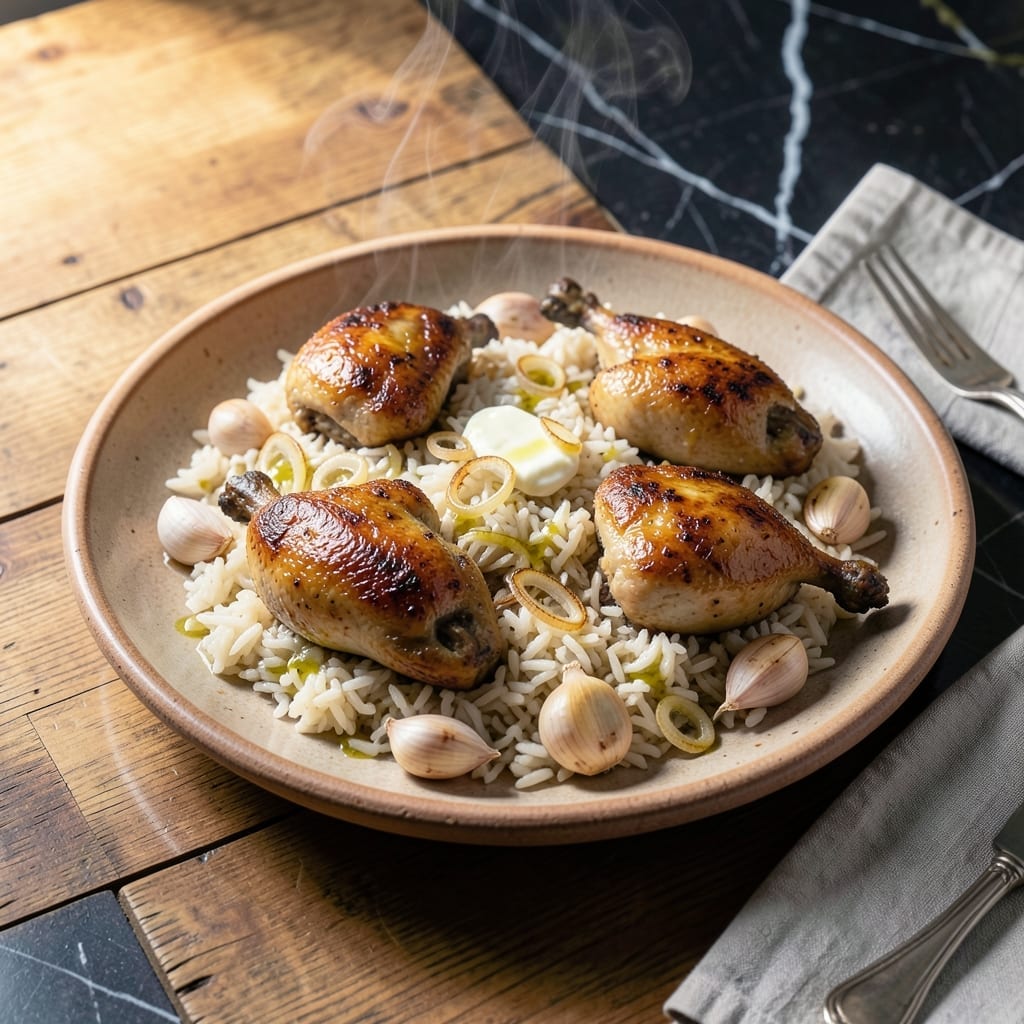
This dish brings refined wild game flavor to your table with minimal effort. I’ve perfected the balance between tender quail and perfectly cooked rice, creating a meal that feels special without demanding complexity.
The quail is seared to develop a golden crust, then finished in the oven to ensure juicy, flavorful meat. Meanwhile, the rice absorbs rich pan drippings, resulting in grains that are fluffy and infused with savory depth.
What makes this recipe stand out is its simplicity—no advanced techniques, just precise timing and attention to detail. The result is a dish that’s elegant enough for guests but approachable for any home cook.
Serve it with a side of greens or roasted vegetables for a complete, satisfying meal.
Ingredients for Quail and Rice
Elegant game bird paired with fluffy rice requires just these refined ingredients.
| Ingredient | Amount | Notes |
|---|---|---|
| Quail 🐦 | 4 whole | Semi-boneless, skin-on preferred |
| Long-Grain White Rice 🍚 | 1 ½ cups | Rinsed until water runs clear |
| Chicken Stock 🥣 | 2 ½ cups | Low-sodium preferred for control |
| Unsalted Butter 🧈 | 3 tbsp | Divided for searing and rice |
| Shallots 🧅 | 2 whole | Finely minced for even distribution |
| Garlic Cloves 🧄 | 3 cloves | Minced to fine paste |
| Fresh Thyme Sprigs 🌿 | 4 whole | Leaves stripped from stems |
| Dry White Wine 🍷 | ½ cup | Sauvignon Blanc or Pinot Grigio |
| Diamond Crystal Kosher Salt 🧂 | 1 ½ tsp | Divided for seasoning stages |
| Freshly Ground Black Pepper 🌶️ | 1 tsp | Coarse grind preferred |
| Olive Oil 🫒 | 2 tbsp | Neutral flavor for searing |
| Fresh Flat-Leaf Parsley 🌿 | ¼ cup | Chopped, for garnish |
| Bay Leaf 🍃 | 1 whole | Removed before serving |
The quail quality is paramount. Source from specialty butchers like D’Artagnan or Snake River Farms for consistent size and freshness. Semi-boneless birds simplify serving while maintaining presentation. Look for skin that’s unbroken and moist, not dried out. The rice should be long-grain—jasmine or basmati provide the perfect fluffy texture to absorb the rich pan drippings.
No white wine? Substitute with additional chicken stock and 1 tsp lemon juice for acidity. Fresh shallots can be replaced with yellow onion at a 1:1 ratio, though the flavor will be slightly more pungent. If thyme isn’t available, rosemary at half the quantity works well, but remove the woody stems. The butter can be swapped for duck fat if you have it on hand.
Quail keeps in the refrigerator for 1-2 days before cooking—longer and the meat can toughen. The finished dish holds well, covered, for 30 minutes at room temperature. Leftovers (if any) refrigerate for 3 days but are best reheated gently in a skillet with a splash of stock.
Why You’ll Love This Recipe
- I’ll be real: one quail per person feels fancy, but the rice makes it fill the table without breaking the bank.
- One Pot Wonder: I love that everything cooks together—the quail, rice, and shallots soak up the chicken stock in a single pan.
- Rich and Comforting: The butter and shallots create this deep, savory flavor that makes the quail taste absolutely indulgent.
- Weeknight Friendly: Honestly, it’s ready before the kids finish arguing over who sets the table.
Step-by-Step Instructions for Quail and Rice
Master this refined technique for tender quail nestled atop fragrant, perfectly cooked rice.
Step 1: Sear the Quail to Golden Perfection
Pat the 4 whole Quail completely dry with paper towels. Season inside and out with ½ tsp Diamond Crystal Kosher Salt and ½ tsp Freshly Ground Black Pepper. Heat 2 tbsp Olive Oil in a large, heavy skillet over medium-high heat until shimmering.
Add 1 tbsp Unsalted Butter and let it melt. Place the quail in the pan, skin-side down, and sear undisturbed for 4-5 minutes until the skin renders and turns deep golden brown. Flip and sear the other side for 3-4 minutes. Transfer to a plate.
Step 2: Build the Aromatic Rice Base
In the same skillet, reduce heat to medium. Add the 2 whole Shallots and cook for 2 minutes until softened. Stir in the 3 cloves Garlic Cloves, Fresh Thyme Sprigs, and 1 whole Bay Leaf, cooking for 30 seconds until fragrant.
Add the 1.5 cups Long-Grain White Rice and stir to coat in the fat and aromatics. Toast for 2 minutes until the rice becomes slightly translucent at the edges. This step ensures each grain absorbs maximum flavor.
Step 3: Deglaze and Simmer the Rice
Pour in the 0.5 cup Dry White Wine and scrape up any browned bits from the bottom of the pan. Let it simmer for 2 minutes until the liquid reduces by half. This deglazing captures all the concentrated flavors from searing the quail.
Add the 2.5 cups Chicken Stock, remaining 2 tbsp Unsalted Butter, and remaining 1 tsp Diamond Crystal Kosher Salt and ½ tsp Freshly Ground Black Pepper. Stir well and bring to a gentle simmer.
Step 4: Cook the Rice and Finish the Quail
Return the quail to the skillet, nesting them into the rice. Cover and reduce heat to low. Cook undisturbed for 20 minutes until the rice absorbs all the liquid and becomes tender and fluffy.
Turn off the heat and let it rest, covered, for 5 minutes. This final rest allows the rice to steam and the quail to finish cooking gently. The rice should be tender with no crunch, and the quail should reach an internal temperature of 165°F.
Step 5: Garnish and Serve
Remove the Bay Leaf and Fresh Thyme Sprigs before serving. Sprinkle with the 0.25 cup Fresh Flat-Leaf Parsley for a burst of fresh color and flavor. The parsley adds a bright contrast to the rich, savory dish.
Serve immediately, with each portion featuring a quail atop a bed of the fragrant rice. The rice should be light and separate, not sticky, and infused with the deep flavors of the quail and aromatics.
Pro Tips For Making Quail And Rice
- Brown the Quail Well: Sear the quail in butter over medium-high heat until deeply golden—about 3-4 minutes per side. I learned this the hard way: under-browning means bland meat, even with a good stock.
- Toast the Rice: Before adding liquid, cook the rice in butter with minced shallots for 2 minutes until nutty and translucent. This step actually changes the outcome, giving the dish a rich, layered flavor.
- Use Warm Stock: Pour in chicken stock straight from the fridge and the rice will take forever to cook evenly. Warm it first—just hot to the touch is enough.
- Rest Before Serving: Let the quail rest 5 minutes under foil after cooking. Skip this and all the juices will end up on the plate, not in the meat.
Regional Styles of These Flavors
French Influence
In Provence, this dish often includes herbes de Provence and a splash of pastis for anise notes. The quail is marinated for 2 hours in white wine with garlic and herbs before cooking. I love how the anise subtly complements the gamey quail. 🌿
Spanish Paella Style
Valencia’s version uses bomba rice and saffron for color and aroma. The quail is cooked with chorizo and bell peppers, creating a vibrant one-pan meal. A paella pan ensures even heat distribution.
Middle Eastern Flavors
In Lebanon, you’ll find quail with cinnamon, allspice, and pine nuts. The rice is often cooked with vermicelli noodles toasted in butter until golden. I add a pinch of sumac for tang.
Southern US Twist
Down South, quail is often cooked with creole seasoning and Andouille sausage. The rice is replaced with dirty rice, made with chicken livers and the holy trinity of onions, bell peppers, and celery. 🔥
Italian Risotto Approach
In Northern Italy, quail is braised and served atop creamy risotto made with Arborio rice and white wine. The dish is finished with Parmigiano-Reggiano and a drizzle of truffle oil.
Moroccan Tagine Style
Slow-cooked in a tagine with apricots, almonds, and ras el hanout spice blend. The rice is often replaced with couscous, which soaks up the fragrant, spiced broth beautifully.
Nutrition Facts
Frequently Asked Questions
Can I use chicken instead of quail?
Yes, but adjust cooking time. Use 4 bone-in chicken thighs and increase searing to 6-7 minutes per side. The rice cooking time remains the same.
What if my rice is undercooked?
Add ¼ cup hot stock, cover, and cook on low heat for 5-8 minutes. Avoid stirring to keep grains intact. Check moisture before adding more liquid.
How do I prevent dry quail?
Don’t overcook! Remove from heat at 160°F—it’ll rise to 165°F while resting. Baste with pan juices during cooking to retain moisture.
Can I make this ahead?
Cook rice and quail separately, then combine when reheating. Store in the fridge for up to 2 days. Reheat gently in a skillet with 2 tbsp stock.

- Jollof Rice Sauce Recipe: West African Tomato and Spice Infusion - September 25, 2026
- Japanese Rice Soup Recipe: Umami-Rich Comfort in a Bowl - September 25, 2026
- Homemade Cream Of Rice Recipe: Silk-Smooth Breakfast in Minutes - September 25, 2026