
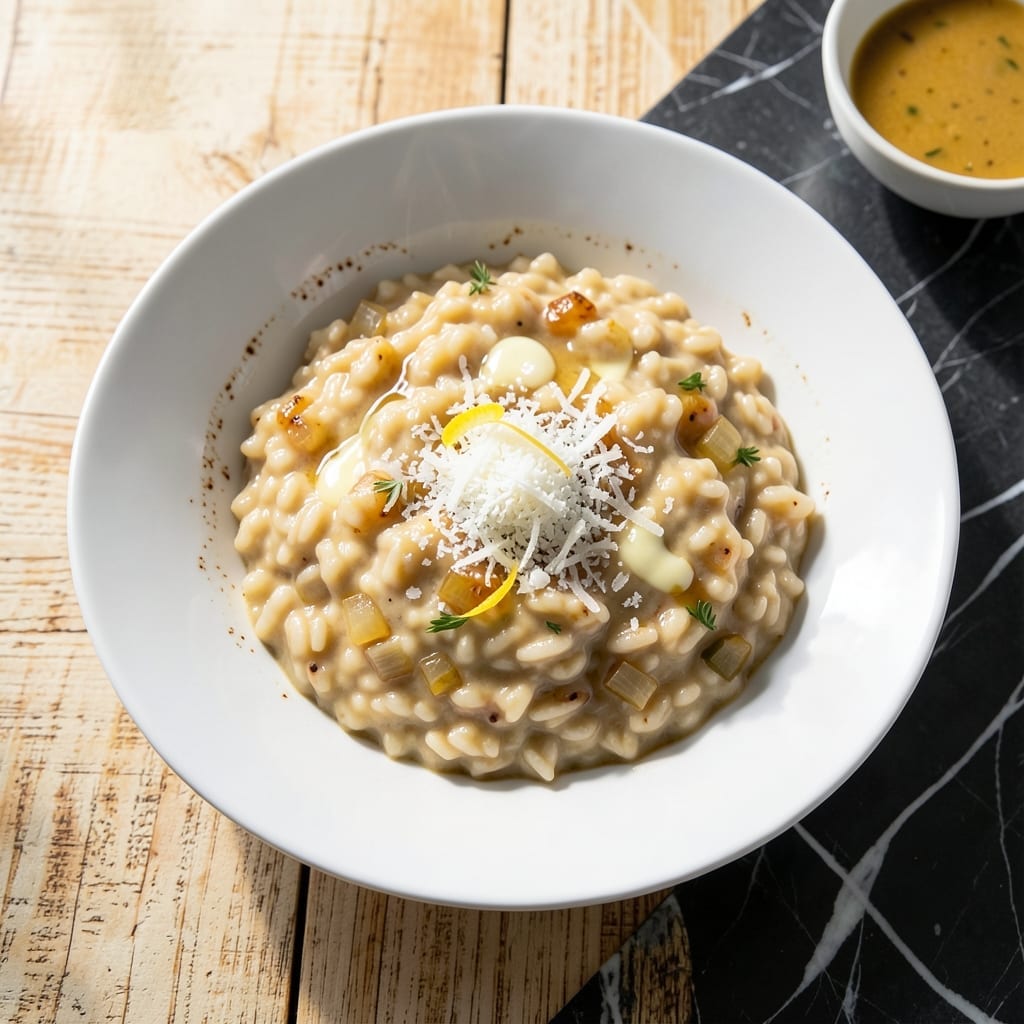
There’s an art to achieving perfectly creamy risotto that my grandmother taught me in Sicily. This method transforms simple ingredients into a luxurious dish with minimal effort.
Arborio rice slowly absorbs warm broth, releasing starch that creates the signature silky texture. Stirring constantly ensures even cooking and prevents sticking, while a splash of white wine adds depth.
The final touch of cold butter and parmesan creates an emulsion that makes each bite velvety smooth. This recipe delivers professional results without restaurant complexity.
Master this technique and you’ll have a dish that impresses every time. The process is as rewarding as the finished product.
Ingredients for Right Rice Risotto
Simple pantry staples transform into luxurious risotto with Sicilian technique and patience.
| Ingredient | Amount | Notes |
|---|---|---|
| Arborio Rice 🌾 | 1 ½ cups | Short-grain for creamy texture |
| Vegetable Broth 🥣 | 6 cups | Warm, divided in additions |
| Dry White Wine 🍷 | ½ cup | Crisp variety like Pinot Grigio |
| Unsalted Butter 🧈 | 4 tbsp | Cold, cut into cubes |
| Parmesan Cheese 🧀 | ¾ cup | Freshly grated from wedge |
| Yellow Onion 🧅 | 1 whole | Finely diced for base |
| Garlic Cloves 🧄 | 3 cloves | Minced for aromatic depth |
| Extra-Virgin Olive Oil 🫒 | 2 tbsp | For sautéing vegetables |
| Sea Salt 🧂 | 1 tsp | Fine grain, divided to taste |
| Freshly Ground Black Pepper 🌶️ | ½ tsp | Adjust to preference |
| Fresh Parsley 🌿 | ¼ cup | Chopped, for garnish |
The Arborio rice is non-negotiable—look for Italian imports at specialty grocers like Eataly or well-stocked supermarkets. The grain’s high starch content creates that signature creaminess. For the wine, any dry white works, but avoid cooking wines with added salt. The Parmesan should be a Parmigiano-Reggiano wedge—pre-grated lacks the texture and depth needed for the final emulsion.
No white wine? Substitute with additional warm broth and a splash of lemon juice. Vegetable broth can be swapped for chicken if dietary restrictions aren’t a concern. For a richer finish, add a spoonful of mascarpone or cream cheese with the butter. The onion can be shallots if you prefer a milder flavor—use three large shallots instead of one yellow onion.
Risotto is best served immediately but can be held 10-15 minutes with a pat of butter on top. Leftover risotto makes excellent arancini—form into balls, bread, and fry. Store cooked risotto in the fridge for up to 3 days, though the texture changes upon reheating.
Why You’ll Love This Recipe
- One Pot Wonder: I stir everything in a single pan—Arborio, broth, wine—and it practically cooks itself while I set the table.
- Creamy Comfort: That first bite with the buttery rice and sharp Parmesan melting on my tongue? Worth every stir.
- Feeds a Crowd: I make a big batch for Sunday dinner, then pack leftovers for lunch all week—it reheats like a dream.
- Budget Friendly: A pound of Arborio, a splash of wine, and basic pantry staples stretch into a meal that feels fancy.
Step-by-Step Instructions for Creamy Arborio Risotto
Master this technique and you will achieve the perfect creamy texture that defines authentic risotto.
Step 1: Sauté Aromatics in Olive Oil and Butter
Heat the 2 tbsp Extra-Virgin Olive Oil in a large, heavy-bottomed pan over medium heat. Add the finely diced Yellow Onion and cook for 4-5 minutes until translucent and soft, stirring frequently to prevent browning.
Add the 3 cloves Garlic Cloves and cook for 30 seconds until fragrant. Stir in 2 tbsp Unsalted Butter until melted. This base layer builds the flavor foundation that makes risotto so rich and satisfying.
Step 2: Toast the Arborio Rice
Add the 1.5 cups Arborio Rice to the pan and stir to coat every grain with the oil and butter mixture. Toast the rice for 2-3 minutes until the edges become translucent and you hear a subtle nutty aroma.
This toasting step is critical—it creates a starch barrier on the rice grains that helps them absorb liquid slowly while maintaining their shape. The rice should look pearly and slightly glossy when properly toasted.
Step 3: Deglaze with Dry White Wine
Pour in the 0.5 cup Dry White Wine and stir constantly until the liquid has almost completely evaporated, about 2-3 minutes. The wine should bubble vigorously as it deglazes the pan, lifting all the flavorful browned bits.
Wait until the pan is nearly dry before adding the first ladle of broth. You will see the rice grains start to plump slightly as they absorb the wine. This step removes any raw starch flavor and adds a bright, acidic note that balances the richness.
Step 4: Gradually Add Warm Vegetable Broth
Begin adding the 6 cups Vegetable Broth, one ladle at a time (about ½ cup each addition), stirring constantly. Wait until each addition is mostly absorbed before adding the next, maintaining a gentle simmer throughout.
This gradual addition, typically taking 18-22 minutes total, is what creates the signature creamy texture. The rice should be al dente with a slight bite in the center when properly cooked. Taste frequently after the first 15 minutes to monitor progress.
Season with 1 tsp Sea Salt and 0.5 tsp Freshly Ground Black Pepper as you add the broth, adjusting to taste. The risotto is ready when it has a creamy consistency but still flows slightly when stirred.
Step 5: Finish with Butter and Parmesan
Remove the pan from heat and stir in the remaining 2 tbsp Unsalted Butter and 0.75 cup Parmesan Cheese. This final step, called manticatura, is what gives risotto its luxurious, velvety texture.
Vigorously stir the risotto for 1-2 minutes to fully incorporate the butter and cheese. The mixture should become glossy and pull slightly away from the sides of the pan. Garnish with 0.25 cup Fresh Parsley and serve immediately while still creamy and fluid.
Pro Tips For Making Right Rice Risotto
- Toast the Rice: Cook the Arborio in butter for 2-3 minutes before adding wine—this builds a nutty base that carries the whole dish.
- Warm the Broth: Keep your vegetable broth simmering in a pot nearby; cold broth shocks the rice and slows cooking way down.
- Skip the Rinse: Arborio’s starch is what makes risotto creamy, so resist the urge to wash it—just use it straight from the bag.
- Finish with Cold Butter: Stir in a pat of cold unsalted butter at the end for a glossy, rich finish that hot butter just can’t deliver.
Troubleshooting Great right rice risotto
Mushy Rice
If your risotto turns mushy, you likely added too much broth at once or didn’t stir enough. The rice grains need to absorb liquid gradually. I find that maintaining a gentle simmer and stirring constantly helps prevent this issue.
Undercooked Rice
When the risotto seems done but the rice is still crunchy, you need more time or liquid. Add ½ cup warm broth and continue cooking for another 3-5 minutes. Taste frequently to catch this early.
Too Thick
If your risotto becomes too thick before the rice is cooked, stir in ¼ cup warm broth at a time until you reach the right consistency. The texture should flow slightly when stirred, not sit like porridge. 💡
Not Creamy
The secret to creaminess is the final butter and parmesan emulsion. If your risotto lacks this, vigorously stir in 1 tbsp cold butter and ¼ cup parmesan off the heat. This should create that luxurious texture my grandmother always achieved.
Burnt Bottom
Burnt risotto happens when the heat is too high or you’re not stirring enough. Use a heavy-bottomed pan and maintain medium-low heat. If you notice browning, immediately lower the temperature and stir more frequently.
Bland Flavor
If your risotto tastes bland, it likely needs more salt or acid. Stir in ½ tsp sea salt and a splash of lemon juice. Remember, the broth should be well-seasoned too, as it’s the primary flavor builder. 🌟
Nutrition Facts
Frequently Asked Questions
Why is Arborio rice essential for this dish?
Arborio’s high starch content releases slowly, creating the signature creamy texture. Other grains won’t achieve the same velvety finish or hold up to the slow cooking process.
Can I use a different type of broth?
Yes! Chicken or mushroom broth work well for added depth. Just ensure it’s warm and well-seasoned, as broth is the primary flavor builder in risotto.
What if I don’t have white wine?
Skip it and use additional warm broth with a splash of lemon juice. The acidity mimics wine’s role in balancing richness.
How do I fix risotto that’s too thick?
Stir in ¼ cup warm broth at a time until it flows slightly when stirred. The texture should be creamy, not stiff.

- Jollof Rice Sauce Recipe: West African Tomato and Spice Infusion - September 25, 2026
- Japanese Rice Soup Recipe: Umami-Rich Comfort in a Bowl - September 25, 2026
- Homemade Cream Of Rice Recipe: Silk-Smooth Breakfast in Minutes - September 25, 2026