
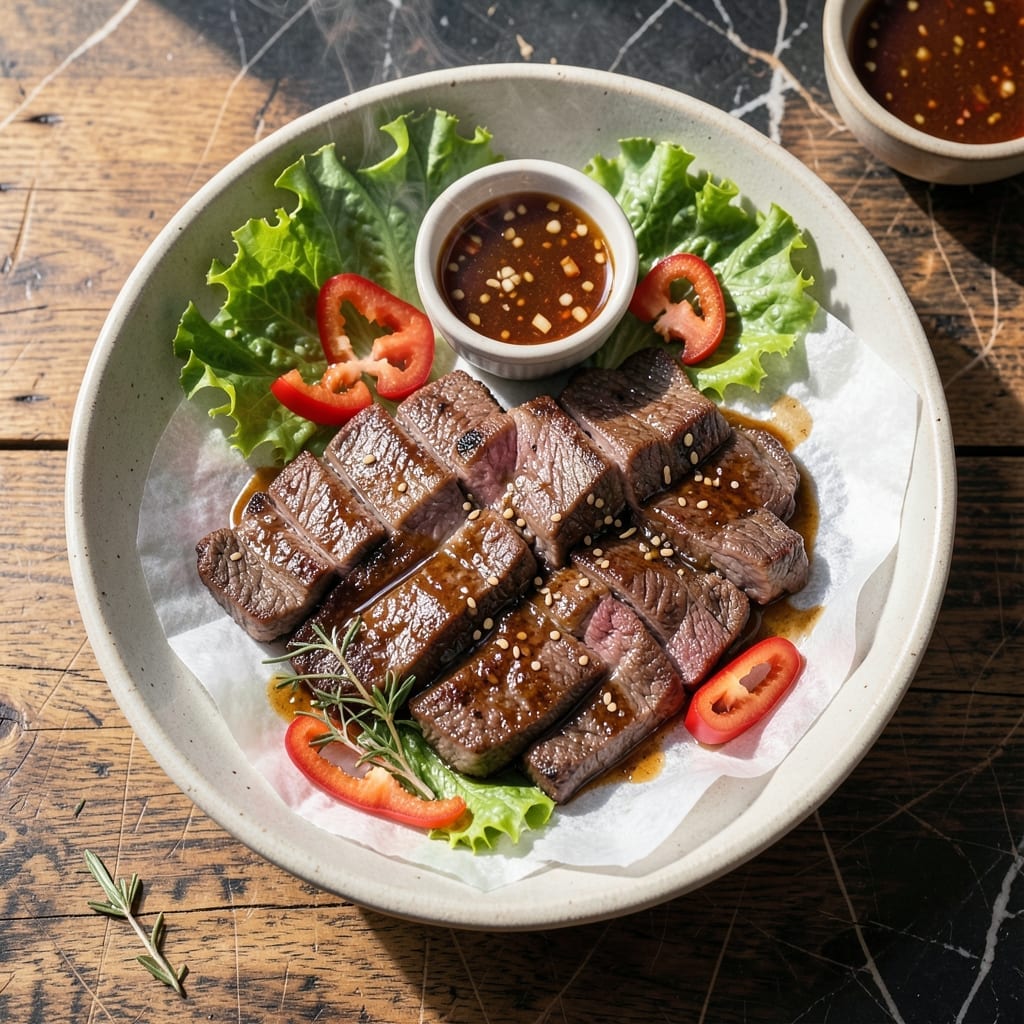
This recipe transforms fresh rice paper into crispy, flavor-packed Korean BBQ wraps that stand out from traditional spring rolls.
I developed this method to create a satisfying texture contrast between the tender marinated beef and the delicate, shatteringly crispy rice paper wrapper.
The secret lies in quick-frying the assembled wraps to achieve that perfect crunch while keeping the filling juicy and aromatic.
Each bite delivers bold Korean BBQ flavors wrapped in a light, airy package that’s surprisingly sturdy. The result is a dish that’s as impressive to serve as it is to eat.
Ingredients for Korean Bbq Rice Paper
Transform simple rice paper and marinated beef into restaurant-quality crispy Korean BBQ wraps with these ingredients.
| Ingredient | Amount | Notes |
|---|---|---|
| Rice Paper Wrappers 🍚 | 12 sheets | Spring roll size, about 8.5 inches diameter |
| Ribeye Steak 🥩 | 1 lb | Thinly sliced against the grain |
| Soy Sauce 🫙 | ⅓ cup | Low-sodium preferred for balance |
| Brown Sugar 🍚 | 3 tbsp | Packed, for caramelized sweetness |
| Sesame Oil 🫒 | 1 tbsp | Toasted for nutty aroma |
| Garlic Cloves 🧄 | 4 cloves | Minced finely for even flavor |
| Fresh Ginger 🌿 | 1 tbsp | Grated, skin removed first |
| Gochujang 🌶️ | 2 tbsp | Korean chili paste for depth |
| Rice Vinegar 🍶 | 1 tbsp | For acidity to cut richness |
| Green Onions 🧅 | 4 whole | Thinly sliced, white and green parts |
| Carrot 🥕 | 1 whole | Julienned for crunch and color |
| Cucumber 🥒 | 1 whole | Seedless variety, julienned |
| Vegetable Oil 🫒 | 2 cups | For frying, neutral flavor required |
| Sesame Seeds 🌰 | 1 tbsp | Toasted, for garnish and crunch |
| Lettuce Leaves 🥬 | 8 whole | Butter or romaine, for lining |
The beef is critical here. Ribeye offers the perfect marbling for juicy, flavorful results—avoid lean cuts like sirloin that dry out. Asian markets often carry pre-sliced beef for hot pot, which saves time. For rice paper, spring roll-sized sheets (8.5-inch diameter) provide the right surface area for ample filling. Look for brands like Three Ladies or Spring Home in the international aisle.
No ribeye? Flank steak or short ribs work well too—just slice thinly against the grain. Gochujang is non-negotiable for authentic flavor, but in a pinch, sriracha mixed with a bit of miso can substitute. For gluten-free, swap soy sauce for tamari. The vegetables can be adjusted: try bell peppers, mushrooms, or bean sprouts for added texture and color.
Assemble wraps just before frying to prevent sogginess. Leftovers? Not ideal—rice paper loses its crispness when stored. Best eaten fresh, but you can prep fillings 1 day ahead. Store unopened rice paper in a cool, dry place for 6-12 months.
Why You’ll Love This Recipe
- No Cook Wrappers: I just soak the rice paper in warm water for 10 seconds—no boiling, no fuss. The ribeye does all the heavy lifting.
- Sweet-Savory Magic: That brown sugar and soy sauce combo caramelizes on the steak, and the sesame oil ties it all together. Honestly, I lick the bowl clean.
- Weeknight Rescue: Between us, I’ve served this for lazy Fridays and impressed dinner guests. Same recipe, zero stress.
- Budget Stretcher: Ribeye feels fancy, but I make it go further by slicing thin and pairing with cheap rice paper. Leftovers? Even better the next day.
Step-by-Step Instructions for Korean BBQ Rice Paper Wraps
Master the technique for achieving perfectly crispy wraps with authentic Korean flavors every time.
Step 1: Marinate the Ribeye for Maximum Flavor
In a bowl, whisk together the 0.33 cup soy sauce, 3 tbsp brown sugar, 1 tbsp sesame oil, 4 cloves garlic cloves (minced), 1 tbsp fresh ginger (grated), 2 tbsp gochujang, and 1 tbsp rice vinegar until the sugar dissolves. This marinade delivers the signature sweet, savory, and spicy profile.
Add the 1 lb ribeye steak (thinly sliced against the grain) to the marinade, ensuring every piece is thoroughly coated. Let it marinate at room temperature for 20-30 minutes—this allows the flavors to penetrate the meat without breaking it down too much.
Step 2: Prepare and Soft-Hydrate the Rice Paper
Fill a shallow dish with warm water. Submerge one rice paper wrapper at a time for 5-7 seconds until pliable but still slightly firm. Over-soaking makes them too fragile to handle, so work quickly but carefully.
Lay the hydrated wrapper on a clean, damp towel to prevent sticking. You’ll need 12 sheets rice paper wrappers total, but hydrate only a few at a time to maintain control. The wrappers should be soft enough to fold without tearing but not so wet they fall apart.
Step 3: Quick-Fry the Marinated Steak
Heat 2 cups vegetable oil in a deep skillet over medium-high heat until it reaches 350°F. Working in batches to avoid crowding, carefully add the marinated ribeye slices. Fry for 2-3 minutes until the edges are crispy and golden brown and the meat is cooked through.
Use a slotted spoon to transfer the cooked steak to a paper towel-lined plate to drain excess oil. The meat should be tender inside with a crisp exterior—this contrast is key to the dish’s appeal. Keep the oil hot between batches to maintain consistent frying temperature.
Step 4: Assemble and Wrap with Fresh Vegetables
Lay a lettuce leaf on a flat surface—this adds freshness and a crisp texture. Place a hydrated rice paper wrapper on top, then add a portion of fried ribeye. Top with julienned carrot, julienned cucumber, and thinly sliced green onions for color and crunch.
Fold the sides of the rice paper inward, then roll tightly from the bottom up, similar to a burrito. The 8 whole lettuce leaves not only add structure but also balance the rich flavors. Repeat with the remaining 12 sheets rice paper wrappers and filling.
Step 5: Garnish and Serve Immediately
Sprinkle the finished wraps with 1 tbsp sesame seeds for added texture and visual appeal. Serve immediately while the rice paper is still slightly crisp and the steak is warm. The contrast of temperatures and textures—crunchy exterior, tender meat, and fresh vegetables—defines this dish.
These wraps are best enjoyed fresh, as the rice paper tends to soften over time. Pair with additional gochujang or soy sauce for dipping if desired.
Pro Tips For Making Korean Bbq Rice Paper
- Soak Wrappers Briefly: Dip rice paper in warm water for 5-7 seconds max—any longer and they turn to mush before you can even fill them. I learned this the hard way after ruining half a pack by over-soaking.
- Slice Against Grain: Cut the ribeye thinly against the grain for tender bites that don’t chew like rubber. Sounds obvious, but I used to rush this part and wondered why my wraps felt tough.
- Skip Cold Steak: Let the ribeye sit at room temp for 20 minutes before cooking—cold meat seizes up and stays chewy. My grandmother swore by this, and she was right.
- Warm the Marinade: Mix soy sauce, brown sugar, and sesame oil in a bowl of warm water first to dissolve the sugar fully. It’s a small step, but it prevents grainy, uneven flavor in the meat.
Regional Styles of korean bbq rice paper
Seoul Street Food Style
In bustling Seoul markets, vendors serve similar wraps with bulgogi-marinated beef and kimchi for extra tang. The beef is often grilled on a flat-top rather than fried, creating a smoky char. I’ve found that adding 1 tbsp toasted sesame seeds to the marinade mimics this authentic flavor. 🌟
Busan Spicy Version
Coastal Busan favors a spicier profile with extra gochujang—try adding 1 additional tbsp to the marinade. They also include thinly sliced jalapeños for heat. The wraps are typically smaller, using 6-inch rice paper for bite-sized portions.
Jeonju Royal Cuisine
Jeonju’s refined approach uses ribeye or sirloin cut into paper-thin slices for elegance. The marinade often includes 1 tsp grated Asian pear for natural tenderizing. Serve on a bed of butter lettuce with edible flowers for presentation.
Fusion Korean-Mexican
For a modern twist, blend Korean and Mexican flavors by adding 1 tsp cumin and 1 tsp smoked paprika to the marinade. Top with avocado slices and a drizzle of lime crema. This fusion style became popular in Los Angeles food trucks. 🔥
Vegetarian Korean Style
Swap beef for marinated tofu or mushrooms, using the same marinade. Add shredded purple cabbage and bean sprouts for crunch. The technique remains identical, but the filling offers a lighter, plant-based alternative.
Quick Weeknight Hack
Short on time? Use pre-sliced beef for shabu-shabu from Asian markets. Marinate for just 10 minutes while prepping veggies. Skip the lettuce lining and serve with a side of quick-pickled radishes for acidity.
Nutrition Facts
Frequently Asked Questions
Can I use chicken instead of beef?
Yes! Use 1 lb boneless chicken thighs, sliced thinly. Marinate for 1 hour for best flavor. Chicken cooks faster, so reduce frying time to 1-2 minutes.
Why did my rice paper tear when wrapping?
Over-soaking makes rice paper too fragile. Dip for only 5-7 seconds until pliable but still firm. Work on a damp towel to prevent sticking.
How do I keep wraps crispy longer?
Place finished wraps on a wire rack, not a plate. This allows air circulation to prevent steam buildup. Serve within 15 minutes for best texture.
What dipping sauce pairs best?
Mix 2 tbsp gochujang with 1 tbsp soy sauce, 1 tsp rice vinegar, and 1 tsp honey. Thin with water if needed.

- Jollof Rice Sauce Recipe: West African Tomato and Spice Infusion - September 25, 2026
- Japanese Rice Soup Recipe: Umami-Rich Comfort in a Bowl - September 25, 2026
- Homemade Cream Of Rice Recipe: Silk-Smooth Breakfast in Minutes - September 25, 2026