
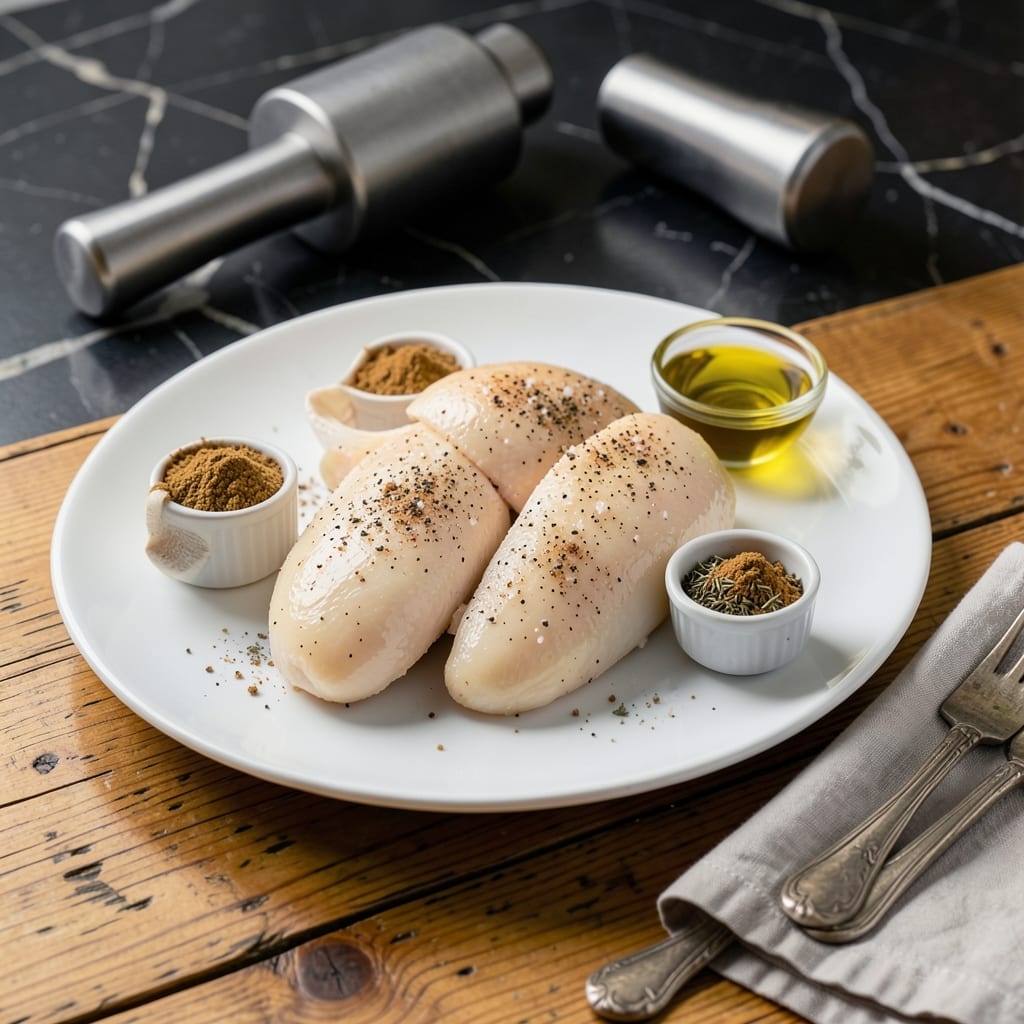
This guide provides essential techniques for safely preparing chicken from raw to perfectly cooked. Proper handling and precise cooking temperatures ensure both safety and flavor in every dish.
I developed this method after seeing too many cases of improperly prepared poultry. The key is maintaining 165°F internal temperature to eliminate bacteria while preserving moisture and tenderness.
The process begins with careful prep and ends with juicy, fully cooked chicken that works in countless meals. Whether roasting, grilling, or sautéing, these fundamentals apply.
Pair with your favorite sides for a complete, safe, and delicious meal experience.
Ingredients for Raw Chicken
Safe handling starts with quality ingredients and proper prep for this dish.
| Ingredient | Amount | Notes |
|---|---|---|
| Boneless Skinless Chicken Breasts 🍗 | 1 ½ lb | Pounded to even thickness |
| Kosher Salt 🧂 | 1 tsp | Diamond Crystal preferred |
| Freshly Ground Black Pepper 🌶️ | ½ tsp | Coarse grind for texture |
| Garlic Powder 🧄 | 1 tsp | Not garlic salt substitute |
| Onion Powder 🧅 | 1 tsp | Fresh ground preferred |
| Dried Thyme 🌿 | ½ tsp | Crushed between fingers |
| Smoked Paprika 🌶️ | ½ tsp | Adds depth of flavor |
| Olive Oil 🫒 | 2 tbsp | Divided for cooking and finishing |
| Unsalted Butter 🧈 | 1 tbsp | For basting option |
| Fresh Lemon Juice 🍋 | 1 tbsp | Brightens final dish |
| Chicken Stock 🍲 | ½ cup | Low-sodium preferred |
| Fresh Parsley 🌿 | 2 tbsp | Chopped for garnish |
The chicken itself is non-negotiable here. Air-chilled, never previously frozen gives you the best texture and moisture retention. I always grab mine from Whole Foods or a trusted butcher—look for pieces that are pink (not gray), with no strong odor. Pounding to even thickness ensures even cooking, which is critical for hitting that 165°F without drying out the thinner parts.
No chicken stock? Water with a bouillon cube works in a pinch. Swap garlic powder for fresh minced garlic at double the amount—just know it burns faster. Smoked paprika missing? Regular paprika plus a pinch of cayenne gets you close. The butter is optional but adds richness—skip it if avoiding dairy. Fresh parsley can be dried at one-third the quantity.
Raw chicken keeps 1-2 days max in the fridge—use or freeze immediately. Store in the coldest part, sealed tight to prevent cross-contamination. Cooked leftovers? They’re safe for 3-4 days refrigerated or 3 months frozen. Always thaw in the fridge, never on the counter.
Why You’ll Love This Recipe
- No-Fuss Prep: I just toss the chicken breasts with salt, pepper, and those powders—no chopping, no fuss.
- Garlic-Onion Punch: The combo of garlic and onion powder gives it that deep, savory kick without being overpowering.
- Weeknight Hero: Honestly, it’s my go-to for busy evenings when I need dinner fast but still flavorful.
- Budget Stretcher: One pack of chicken breasts makes multiple meals, and the spices are already in my pantry.
Step-by-Step Instructions for Safe Chicken Cooking
Here’s the method I use for perfectly cooked chicken with maximum flavor and safety.
Step 1: Prep and Season the Chicken Breasts
Place the 1.5 lb boneless skinless chicken breasts between plastic wrap and pound to an even ½-inch thickness using a meat mallet. This ensures even cooking throughout each piece. You’ll notice the color lightens slightly when properly pounded.
Pat the chicken completely dry with paper towels—this is crucial for achieving a good sear. Season both sides evenly with the 1 tsp kosher salt, 0.5 tsp freshly ground black pepper, 1 tsp garlic powder, 1 tsp onion powder, 0.5 tsp dried thyme, and 0.5 tsp smoked paprika. Press the spices gently into the meat so they adhere.
Step 2: Sear the Chicken to Golden Perfection
Heat 1 tbsp olive oil in a large skillet over medium-high heat until shimmering but not smoking. Add the chicken breasts in a single layer without crowding. Cook undisturbed for 5-6 minutes until the edges appear white and the bottom develops a deep golden-brown crust.
Here’s the thing—resist the urge to move the chicken around. You’ll know it’s ready to flip when it releases easily from the pan. Flip and cook for another 4-5 minutes. For extra richness, add the 1 tbsp unsalted butter during the last minute and baste the chicken with the foaming butter.
Step 3: Create a Simple Pan Sauce
Transfer the chicken to a plate and tent with foil to keep warm. In the same skillet, reduce heat to medium and add the remaining 1 tbsp olive oil. Pour in the 0.5 cup chicken stock, scraping up all the browned bits from the bottom of the pan with a wooden spoon.
Let the liquid simmer for 2-3 minutes until reduced by about half. Stir in the 1 tbsp fresh lemon juice—this brightens all the flavors. Taste and adjust seasoning if needed. The sauce should coat the back of a spoon lightly.
Step 4: Rest and Serve
Return the chicken to the skillet and spoon the pan sauce over the top. Let it rest in the warm sauce for 3-4 minutes—this allows the juices to redistribute throughout the meat. You’ll see the chicken absorb some of the sauce, making it even more flavorful.
Garnish with the 2 tbsp fresh parsley and serve immediately. The chicken should be tender and juicy with a beautiful golden crust. Each serving should have some of the pan sauce spooned over the top for maximum flavor in every bite.
Pro Tips For Making Raw Chicken
- Pound the Breasts: Use a rolling pin or meat mallet to even out the thickness to ½ inch—this guarantees they cook through without drying out the thin edges. I learned this the hard way after pulling half-raw, half-dry chicken off the grill one too many times.
- Season Twice: Hit the chicken with kosher salt right after pounding, then again with garlic and onion powder just before cooking. Sounds excessive, but the first salt draws out moisture that the second layer can actually stick to.
- Skip Cold Chicken: Let the breasts sit at room temperature for 15-20 minutes before cooking—cold meat seizes up and cooks unevenly. I was skeptical until I tried it and finally got juicy chicken every time.
- Use a Thermometer: Pull the chicken at 155°F and let it rest to 165°F—no more guessing. After overcooking one too many dry, sad breasts, I now keep a thermometer in my pocket while cooking.
Regional Styles of This Recipe
Southern Style
In the South, we love our chicken with bold flavors. I season mine with extra smoked paprika and a pinch of cayenne pepper for heat. The key is a buttermilk marinade overnight—it tenderizes and adds that signature tang. 🔥
Mediterranean Approach
For a lighter take, I marinate the chicken in olive oil, lemon zest, and fresh herbs like oregano and rosemary. Grill or bake at 375°F until golden. Serve with a fresh Greek salad and warm pita.
Asian Inspiration
I swap the spices for a mix of soy sauce, ginger, and garlic. Stir-fry the chicken in sesame oil until cooked through, then finish with a drizzle of honey and sprinkle of sesame seeds. The flavor is out of this world.
Texas BBQ Rub
A dry rub with brown sugar, chili powder, and cumin gives a smoky, sweet crust. I sear the chicken in a hot cast-iron skillet, then finish in the oven at 350°F until it reaches 165°F internally.
French Herb Butter
I mix softened butter with tarragon, parsley, and shallots, then stuff it under the skin before roasting. This creates a juicy, herb-infused dish that’s elegant and simple. It’s a classic for a reason. ✨
Latin American
For a Latin twist, I use a achiote paste marinade with citrus juices and cumin. Grill the chicken and serve with avocado slices and lime wedges. This style is vibrant and full of zesty flavors.
Nutrition Facts
Frequently Asked Questions
How do I know when the chicken is fully cooked?
Use a meat thermometer to check the internal temperature reaches 165°F. The juices should run clear, and the meat should no longer appear pink inside.
Can I use bone-in chicken instead of boneless?
Yes, but cooking time will increase to about 12-15 minutes per side. Bone-in stays juicier, so adjust heat to medium to avoid burning the outside before the inside cooks through.
What if my chicken sticks to the pan?
This usually means the pan wasn’t hot enough or you tried to flip too soon. Heat the oil until shimmering, then wait until the chicken releases easily before turning.
How can I make the pan sauce thicker?
Simmer the sauce uncovered for an extra 1-2 minutes. For a richer texture, stir in a small pat of cold butter at the end. It adds gloss and body instantly.

- Jollof Rice Sauce Recipe: West African Tomato and Spice Infusion - September 25, 2026
- Japanese Rice Soup Recipe: Umami-Rich Comfort in a Bowl - September 25, 2026
- Homemade Cream Of Rice Recipe: Silk-Smooth Breakfast in Minutes - September 25, 2026