
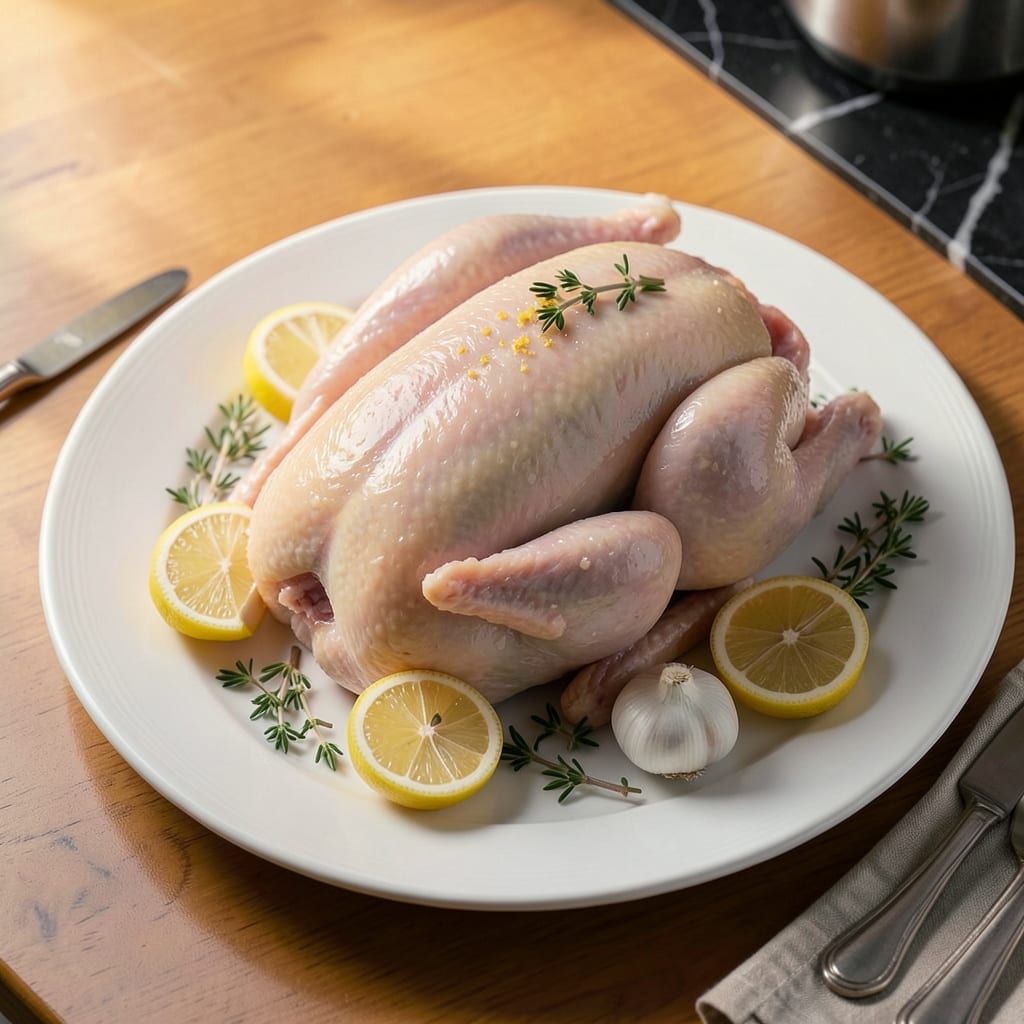
Raw chicken should never sit at room temperature for more than 2 hours (1 hour if above 90°F). Beyond this, dangerous bacteria like Salmonella and Campylobacter multiply rapidly, risking foodborne illness.
This isn’t just about spoilage—it’s about food safety at a microbial level. 🔥 The USDA calls the 40°F-140°F range the “danger zone” because bacteria can double every 20 minutes in this temperature window. Chicken’s high protein and moisture content create the perfect breeding ground for pathogens, which is why it’s riskier than red meats. I always recommend using a food thermometer to verify your fridge stays below 40°F—even small temperature fluctuations can significantly shorten safe storage times.
💡 In This Article
- Why Room Temperature Accelerates Bacterial Growth in Raw Chicken
- Safe Handling Tips for Raw Chicken Before and After Cooking
Why Room Temperature Accelerates Bacterial Growth in Raw Chicken
The 40°F-140°F range is what food scientists call the “danger zone” for a critical reason. At these temperatures, bacteria like Salmonella and Campylobacter enter their exponential growth phase. USDA research shows these pathogens can double in number every 20-30 minutes when chicken sits between these temperatures.
Unlike red meats, chicken’s high moisture content (about 75% water) creates an ideal environment for bacterial proliferation. 🔥
Chicken’s neutral pH (around 6.5-7.0) further accelerates this process. Most bacteria thrive in neutral to slightly acidic environments, and chicken provides the perfect balance. Compare this to beef, which has a lower pH (around 5.5), making it slightly less hospitable to bacterial growth.
The surface area of ground chicken or cut pieces also increases exposure to oxygen, which many foodborne pathogens require for rapid reproduction. ✨
What makes this particularly dangerous is how quickly these bacteria can reach infectious doses. A single Salmonella cell can multiply to over 1 million cells in just 6-8 hours at room temperature. The USDA’s 2-hour limit (or 1-hour above 90°F) isn’t arbitrary—it’s based on the time it takes for bacteria to reach potentially harmful levels.
This is why I always recommend using a probe thermometer to verify your fridge maintains 38-40°F consistently. 🌡️
The protein-rich environment of chicken also provides ample nutrients for bacterial growth. Unlike plant-based foods that might contain natural antimicrobial compounds, raw chicken offers no such protection. Studies show that Campylobacter can increase by 100-fold in just 2 hours at 77°F.
This rapid multiplication explains why chicken is responsible for more foodborne illness outbreaks than any other protein source in the U.S. ⚡
Temperature abuse doesn’t just affect the surface—it penetrates deep into the meat. A whole chicken left at room temperature will have its internal temperature rise much faster than you might expect.
Research from the University of Georgia found that a 5-pound chicken can reach the danger zone internally in less than 90 minutes when left at 70°F room temperature. This is why the size and cut of your chicken pieces matter significantly in food safety calculations. 💫
Even brief exposures add up cumulatively. Each minute chicken spends in the danger zone contributes to bacterial growth. The USDA’s guidelines account for this cumulative effect, which is why they recommend strict time limits rather than flexible guidelines.
Remember that bacteria don’t just grow—they also produce toxins that can cause illness even if the bacteria themselves are later killed during cooking. 💥

- Jollof Rice Sauce Recipe: West African Tomato and Spice Infusion - September 25, 2026
- Japanese Rice Soup Recipe: Umami-Rich Comfort in a Bowl - September 25, 2026
- Homemade Cream Of Rice Recipe: Silk-Smooth Breakfast in Minutes - September 25, 2026