
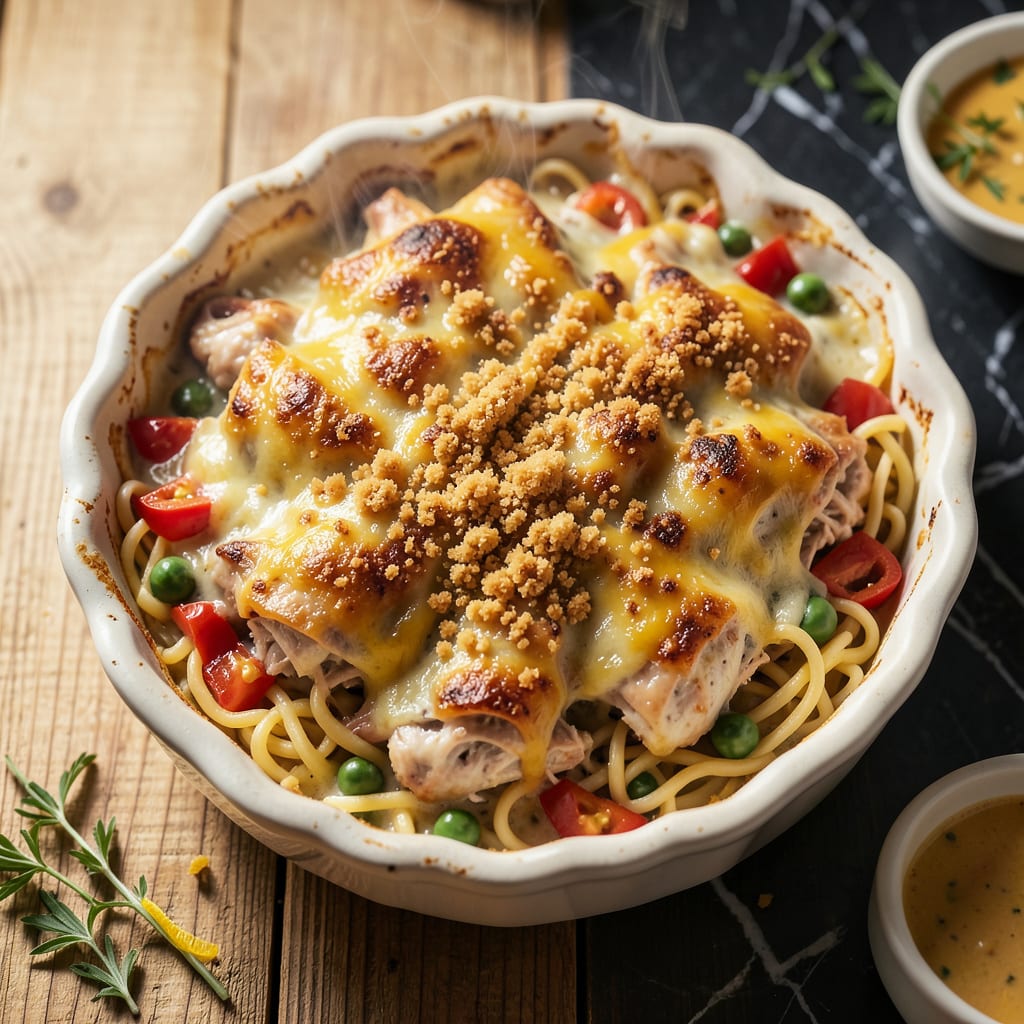
Preheat your oven to 350°F (175°C), cover the casserole with foil to prevent drying, and bake for 20-30 minutes until heated through to 165°F internally. Uncover the last 5 minutes for crispiness if desired.
This method ensures your leftovers taste just as delicious as the first serving by maintaining moisture and texture. 🔥 The 350°F temperature is the sweet spot—hot enough to revive flavors without turning the chicken rubbery, while the foil acts like a steam chamber to prevent dryness. I always check the center with a thermometer because visual cues can be deceiving, especially with dense casseroles that may look done on the surface but still be cool inside.
What most people overlook is the final 5-minute uncovered step, which transforms a soggy top into a golden, crispy layer. ✨ This works particularly well for casseroles with breadcrumb or cheese toppings that need that extra crunch. For meal prep, I recommend slightly underbaking the casserole initially, so it reheats perfectly without overcooking.
💡 In This Article
- Why Oven Temperature Matters for Reheating Chicken Casserole
- Pro Tips for Perfectly Reheated Chicken Casserole
Why Oven Temperature Matters for Reheating Chicken Casserole
The 350°F setting isn’t arbitrary—it’s the Goldilocks zone for protein reheating. At this temperature, heat penetrates evenly through the casserole’s layers without causing the chicken fibers to contract violently, which happens above 375°F and results in that dreaded rubbery texture.
🔥 The science lies in how collagen in chicken begins breaking down around 160°F, but needs gentle, sustained heat to maintain tenderness during reheating.
Lower temperatures (300-325°F) might seem safer, but they create a different problem: uneven heating. The outer edges reach safe temperatures while the center lingers in the danger zone (40-140°F) where bacteria thrive. Meanwhile, cranking the oven to 400°F+ causes the proteins to seize up instantly, squeezing out moisture like a wrung sponge.
That’s why 350°F hits the sweet spot—hot enough for food safety but gentle enough to preserve texture.
Here’s what’s actually happening inside your casserole: The starches in any pasta or rice components reabsorb released moisture at this temperature, while the fat in cheese or cream redistributes rather than separating. ✨ This prevents the “weeping” effect you see when reheating too aggressively.
The 165°F internal target isn’t just about killing bacteria—it’s the point where collagen fully gelatinizes, making the chicken juicy rather than stringy.
Your dish material plays a role too. Glass conducts heat more slowly than ceramic, which means a glass dish might need an extra 5 minutes at 350°F to reach the same internal temperature.
I always place my casserole on the middle rack where heat circulates most evenly—too high and the top burns before the center warms; too low and you’ll get a soggy bottom from reflected heat.
What most people don’t realize is that carryover cooking adds about 5-10°F after removal. That’s why pulling it at 160°F often results in perfect 165°F doneness after resting. 💫 This principle is especially crucial for dense casseroles where the center continues cooking long after the edges feel hot to the touch.
For food safety nerds: The USDA’s 165°F recommendation accounts for a 7-log10 reduction in salmonella—meaning it destroys 99.99999% of bacteria. At 350°F, your casserole reaches this temperature in the center without the outer layers overcooking, assuming proper coverage with foil for the first 20-25 minutes of reheating.
The final 5-minute uncovered phase isn’t just for crispiness—it allows excess steam to escape, preventing that unpleasant “boiled” texture in your toppings. ⚡ This step is particularly transformative for breadcrumb toppings, which go from soggy to golden in minutes thanks to the Maillard reaction kicking in at surface temperatures above 300°F.

- Jollof Rice Sauce Recipe: West African Tomato and Spice Infusion - September 25, 2026
- Japanese Rice Soup Recipe: Umami-Rich Comfort in a Bowl - September 25, 2026
- Homemade Cream Of Rice Recipe: Silk-Smooth Breakfast in Minutes - September 25, 2026