
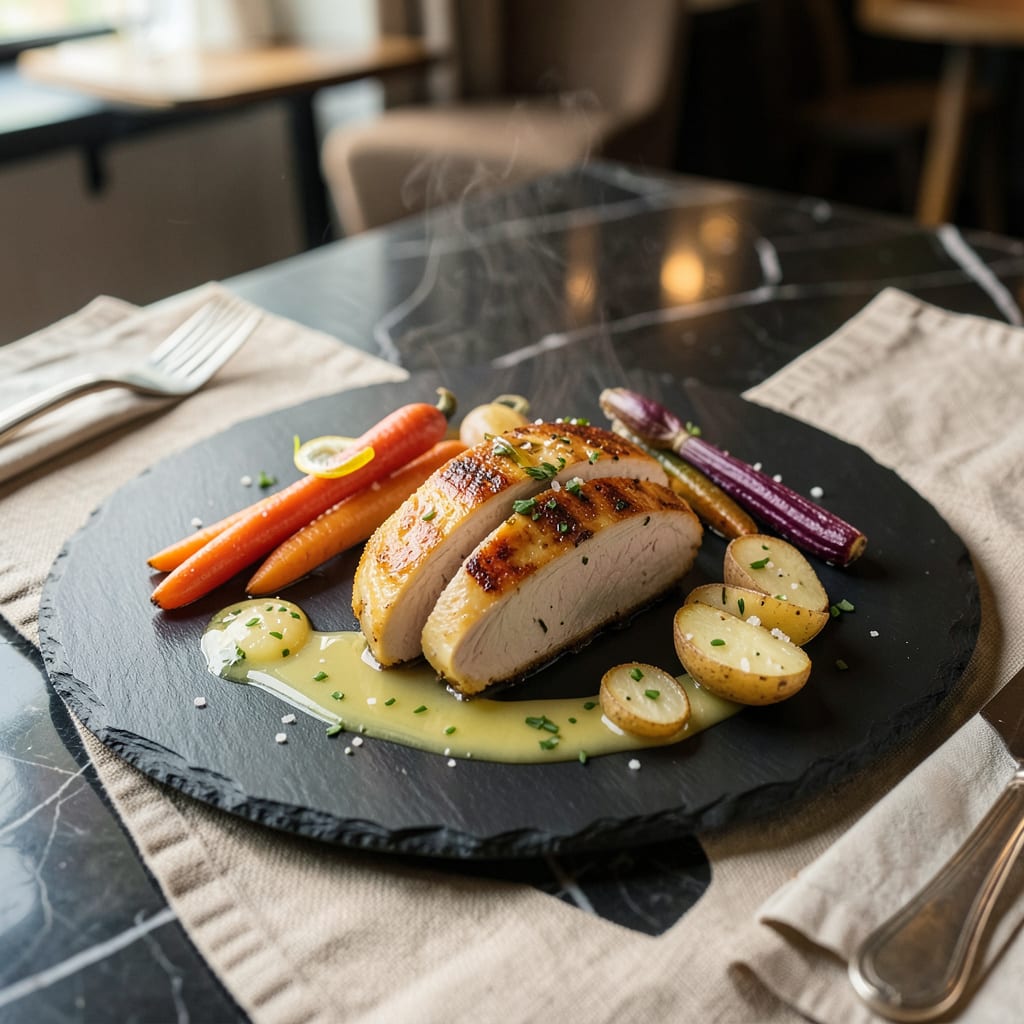
The vein-like structure in chicken breast is actually a blood vessel or tendon, not a true vein. It’s safe to eat but often removed for better texture and appearance in cooked dishes.
This fibrous strand plays an important role in the bird’s anatomy—it’s part of the muscle structure that helps with movement and blood circulation. 🔥 What most home cooks don’t realize is that these tendons become tougher as the chicken matures, which is why younger birds often have more tender meat. I’ve found that removing it before cooking gives you a more uniform texture, especially when preparing dishes where presentation matters like stir-fries or grilled entrees.
The process is simpler than many think, though it does require a bit of practice to master. ✨ Using just a sharp knife or kitchen shears, you can easily lift and trim this connective tissue without damaging the surrounding meat. What’s interesting is that professional chefs often leave it intact for slow-cooked dishes where the tendon breaks down completely during long cooking times.
💡 In This Article
- Anatomy of Chicken Breast Veins and Tendons
- Step-by-Step Guide to Removing Chicken Breast Tendons
Anatomy of Chicken Breast Veins and Tendons
This fibrous strand you’re seeing isn’t actually a vein at all—it’s a combination of a blood vessel and a tendon that serves critical functions in the chicken’s anatomy. The blood vessel (typically the brachial artery) delivers oxygen-rich blood to the pectoral muscles, while the tendon connects these powerful flight muscles to the bird’s skeleton.
Together, they form what appears as a single “vein-like” structure running through the breast meat.
What makes this structure so noticeable is its composition. The tendon portion is made of dense collagen fibers that can be up to 3x tougher than the surrounding muscle tissue.
When raw, it appears as a white or translucent strand about 1-3mm thick, but becomes more pronounced after cooking—especially in older birds where the collagen has had more time to develop. 🔥 This is why heritage breed chickens often have more visible tendons than commercial broilers raised for rapid growth.
The biological purpose becomes clear when you consider how chickens move. These tendons act like bungee cords, storing and releasing elastic energy with each wing flap. The blood vessels run parallel to ensure the fast-twitch muscle fibers get continuous oxygen during flight.
What we perceive as a single “vein” is actually this efficient packaging of circulatory and muscular systems working in tandem—nature’s way of maximizing both power and endurance in a flying bird.
You’ll notice significant variation between individual chickens. Birds that were more active during life (free-range or pasture-raised) typically develop thicker, more pronounced tendons due to increased muscle use. Conversely, commercially raised chickens often have less developed tendons because their movement is restricted.
The tendon’s thickness also correlates with the bird’s age—younger chickens (4-6 weeks) have barely noticeable strands, while mature birds (12+ weeks) can have tendons that are surprisingly tough when cooked. ✨
From a culinary perspective, this structure behaves differently than the surrounding meat during cooking. While chicken breast muscle fibers begin to denature and tenderize at 140°F, the collagen in the tendon doesn’t break down until 160-180°F—and even then, it becomes chewy rather than melting like the collagen in slow-cooked cuts.
This temperature difference explains why the tendon can remain rubbery in quickly cooked dishes like stir-fries, while becoming more palatable in braised or slow-roasted preparations.
The tendon’s location isn’t random—it runs along the deep pectoral muscle, which is the most worked muscle group in the chicken. This placement allows it to distribute force evenly during wing movements.
When you remove it, you’re actually separating two distinct muscle groups: the larger pectoralis major (what we typically eat as chicken breast) and the smaller pectoralis minor underneath. 💫 This separation is why properly trimmed chicken breasts sometimes appear to have a natural “seam” when cooked.
What most home cooks don’t realize is that this structure contains more myoglobin (a protein that stores oxygen in muscle tissue) than the surrounding meat. This gives the tendon a slightly darker color when raw and can cause it to turn grayish-brown when cooked—another reason many prefer to remove it for visual appeal.
The myoglobin content also means the tendon has a faintly more “minerally” taste compared to the clean flavor of the breast meat, which can be noticeable in delicately seasoned dishes.

- Jollof Rice Sauce Recipe: West African Tomato and Spice Infusion - September 25, 2026
- Japanese Rice Soup Recipe: Umami-Rich Comfort in a Bowl - September 25, 2026
- Homemade Cream Of Rice Recipe: Silk-Smooth Breakfast in Minutes - September 25, 2026