
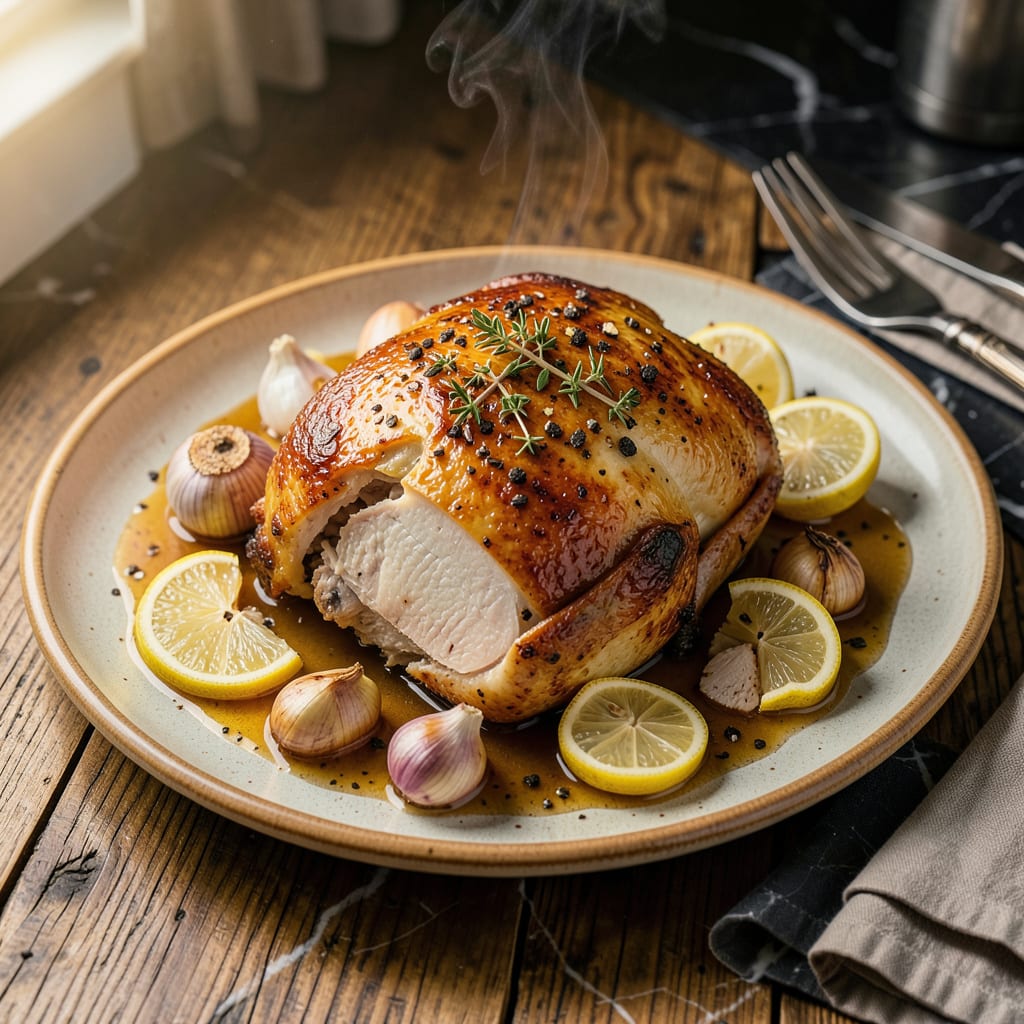
Reheat roasted chicken in a 350°F oven for 15-20 minutes with broth or butter to retain moisture, or microwave at 50% power in short bursts with a damp paper towel. Avoid overcooking to prevent dryness.
The key to keeping your leftovers tender lies in controlling heat exposure and moisture balance. 🔥 When you gently reheat chicken with added liquid—whether it’s broth in the oven or a damp towel in the microwave—you’re essentially creating a mini steaming environment. This technique helps counteract the natural drying effects that occur when proteins are reheated, which is why I always recommend checking internal temperature with a meat thermometer to avoid crossing the 165°F threshold.
What many people overlook is how different cuts respond to reheating methods. Dark meat like thighs can handle slightly longer oven times, while breasts benefit from shorter microwave bursts. The liquid you choose matters too—chicken broth adds flavor, while butter gives richness without diluting the seasoning. ✨
💡 In This Article
- Why Roasted Chicken Dries Out When Reheated
- Best Tools and Tricks for Perfectly Reheated Chicken
Why Roasted Chicken Dries Out When Reheated
When you first roast chicken, the proteins in the muscle fibers coil and tighten at around 140-165°F, squeezing out moisture. During reheating, these already-tightened proteins contract further, pushing out even more liquid—this is called syneresis. The fat that once kept the meat juicy also redistributes, often pooling at the surface or evaporating.
What’s left is a network of dry, dense protein strands that feel tough and chewy.
The oven and microwave affect this process differently. In a 350°F oven, heat penetrates gradually, giving moisture more time to escape as steam unless you create a barrier (like covering with foil or adding broth).
Microwaves, however, excite water molecules directly, causing rapid internal heating that can turn surface moisture into steam almost instantly—this is why microwaved chicken often feels rubbery. The key difference? Oven heat is conductive (outside-in), while microwaves use dielectric heating (inside-out).
Here’s what most people miss: the original cooking method matters. If your chicken was roasted at 425°F until perfectly crispy, those surface proteins are already maximally contracted. Reheating at the same high temp accelerates moisture loss. 🔥 That’s why I recommend lowering the oven to 325-350°F—it gentles the process.
For microwaves, 50% power in 30-second bursts gives moisture time to redistribute instead of escaping as steam.
Dark meat (thighs, drumsticks) handles reheating better than breasts because of its higher fat content (10-12% vs. 3-5% in white meat) and more connective tissue. That fat acts as a built-in moisture barrier, while collagen in connective tissue melts into gelatin when reheated slowly, adding juiciness.
White meat, with its leaner structure, loses moisture faster—this is why breasts often need extra liquid (like 1/4 cup broth in the baking dish) to compensate.
The texture change you notice isn’t just dryness—it’s also about protein structure. When chicken cools after initial cooking, the proteins form a gel-like matrix that traps juices. Reheating melts this matrix, and without proper moisture control, those juices leak out permanently.
✨ That’s why resting reheated chicken for 5 minutes before serving helps: it lets the proteins reabsorb some moisture, similar to how freshly cooked meat benefits from resting.
Even the type of liquid you add makes a difference. Broth or stock contains soluble proteins that can rebind with the chicken’s proteins, while water just evaporates. Butter or olive oil coats the surface, creating a temporary seal.
Acidic liquids (like 1 tbsp lemon juice) can actually help by breaking down some protein bonds, making the meat feel tenderer—this is the same principle behind marinating.
Pro tip: If your chicken is already dry before reheating, try this restaurant trick—brush it with a thin layer of mayonnaise before oven reheating. The emulsified fat and egg proteins create a moisture-retaining crust that crisp up beautifully at 375°F.
💫 It sounds unusual, but chefs use this method to revive dried-out proteins in professional kitchens.

- Jollof Rice Sauce Recipe: West African Tomato and Spice Infusion - September 25, 2026
- Japanese Rice Soup Recipe: Umami-Rich Comfort in a Bowl - September 25, 2026
- Homemade Cream Of Rice Recipe: Silk-Smooth Breakfast in Minutes - September 25, 2026