
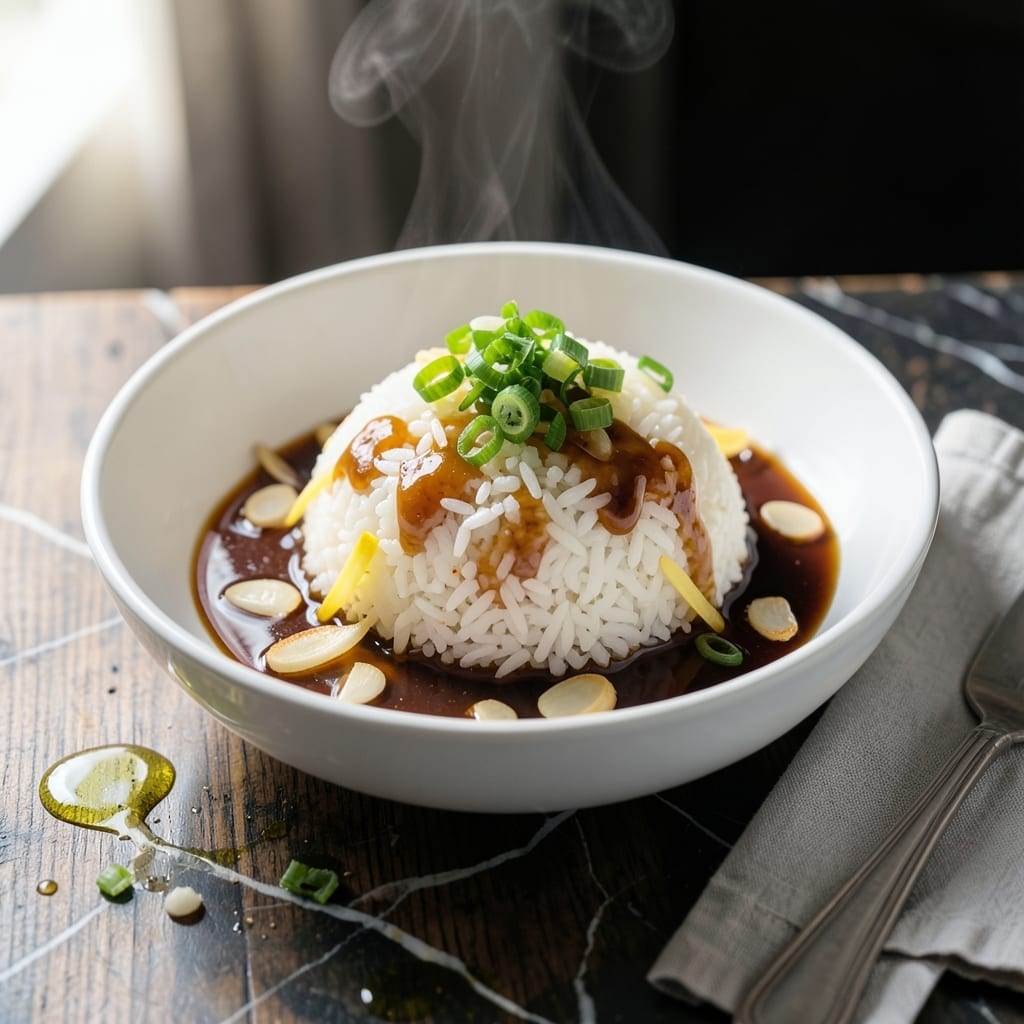
I developed this recipe during my takeout-heavy days, when I craved restaurant-style flavor at home. This method transforms plain rice into a simple yet deeply satisfying dish with minimal effort.
By cooking rice directly in soy sauce, every grain absorbs rich umami flavor without overpowering. The technique requires no special skills, just precise timing and the right rice-to-liquid ratio.
What emerges is perfectly cooked rice with a subtle golden hue and savory depth that pairs beautifully with any protein or vegetable. It’s become my go-to for quick, flavorful meals.
The beauty lies in its versatility—serve as a base for stir-fries or enjoy on its own. This dish proves that simple ingredients can create extraordinary results.
Ingredients for Rice and Soy Sauce
A handful of pantry staples come together for this umami-packed dish you’ll crave daily.
| Ingredient | Amount | Notes |
|---|---|---|
| Jasmine Rice 🌾 | 2 cups | Rinsed until water runs clear |
| Low-Sodium Soy Sauce 🫒 | 1 ½ cups | Divided for cooking and finishing |
| Water 💧 | 2 ½ cups | Filtered preferred |
| Garlic Cloves 🧄 | 4 cloves | Minced finely |
| Fresh Ginger 🌿 | 1 tbsp | Grated or minced |
| Green Onions 🧅 | 4 whole | Thinly sliced, green parts only |
| Sesame Oil 🫒 | 2 tsp | Toasted variety for depth |
| Neutral Oil 🫒 | 1 tbsp | Avocado or vegetable oil |
| Salt 🧂 | ½ tsp | Optional, adjust to taste |
| White Pepper 🌶️ | ¼ tsp | Ground, for subtle heat |
| Sugar 🍚 | 1 tsp | Balances soy sauce saltiness |
| Toasted Sesame Seeds 🌰 | 1 tbsp | For garnish |
The rice is everything here. Jasmine gives you that sticky, fragrant base—short-grain works too but avoid long-grain, it stays too dry. I grab mine from Trader Joe’s or the bulk bins at Whole Foods (cheaper and you can buy just what you need). For soy sauce, Kikkoman or Tamari are my go-tos. Skip the pre-minced ginger in jars—it’s never as bright as fresh.
No jasmine rice? Basmatis or sushi rice will do (adjust water by 2 tbsp less). Out of fresh ginger? Ground ginger at half the amount works in a pinch. Green onions can be swapped for chives or shallots—same family, similar vibe. Want it gluten-free? Tamari or coconut aminos instead of soy sauce. The sesame oil is worth the splurge—Kadoya brand is my favorite.
Cooked rice keeps 4-5 days in the fridge, and honestly tastes better the next day. Freeze for up to 3 months (portion first for easy reheating). The garnishes—sesame seeds and green onions—are best added fresh, so keep those separate until serving.
Why You’ll Love This Recipe
- One Pot Wonder: I just dump jasmine rice, water, and a splash of soy sauce in a pot with minced garlic and ginger—no babysitting required.
- Umami Bomb: The garlic and ginger bloom in the soy sauce, turning plain rice into something deep and savory.
- Pairs With Everything: I serve it under stir-fries, next to roasted veggies, or even with a fried egg on top for breakfast.
- Leftovers for Days: It keeps beautifully, and honestly, I think it tastes even better the next day straight from the fridge.
Step-by-Step Instructions for Rice and Soy Sauce
This method transforms basic ingredients into a flavor-packed dish with minimal effort.
Step 1: Rinse and Cook the Jasmine Rice
Place the 2 cups jasmine rice in a fine-mesh strainer and rinse under cold water until the water runs completely clear. This removes excess starch and prevents the rice from turning gummy when cooked.
Transfer the rinsed rice to a medium saucepan. Add the 2.5 cups water and bring to a boil over high heat. Once boiling, reduce to low heat, cover, and simmer for 15 minutes until the water is absorbed and the rice is tender. Remove from heat and let it sit covered for 5 minutes to steam.
Step 2: Infuse the Aromatics
While the rice cooks, heat the 1 tbsp neutral oil in a small skillet over medium heat. Add the 4 cloves minced garlic and 1 tbsp grated fresh ginger, stirring constantly for 30-45 seconds until fragrant but not browned.
Here’s the thing—burnt garlic turns bitter, so keep the heat moderate and stay attentive. The moment it starts to sizzle and release its aroma, it’s ready. Remove from heat and set aside.
Step 3: Season the Rice with Soy Sauce Mixture
In a small bowl, whisk together 1.5 cups low-sodium soy sauce, 2 tsp sesame oil, 1 tsp sugar, 0.5 tsp salt, and 0.25 tsp white pepper until the sugar dissolves. Stir in the garlic-ginger mixture.
Pour the soy sauce mixture evenly over the cooked rice. Use a rice paddle or fork to gently fold everything together, ensuring each grain is coated. The rice should glisten with the sauce but not be soggy—if it looks too wet, let it sit for 2-3 minutes to absorb the excess.
Step 4: Finish and Garnish
Transfer the rice to a serving bowl or individual plates. Drizzle any remaining soy sauce mixture from the pan over the top. Sprinkle with the 4 whole thinly sliced green onions and 1 tbsp toasted sesame seeds for a fresh, nutty finish.
Real talk: the green onions add a bright contrast to the rich umami, so don’t skip them. Serve immediately while the rice is hot and the flavors are at their peak. This dish pairs perfectly with grilled proteins or steamed vegetables.
Pro Tips For Making Rice And Soy Sauce
- Rinse the Rice: Always rinse jasmine rice until the water runs clear—I learned this the hard way after ending up with gummy, sticky grains more than once.
- Bloom the Aromatics: Sauté minced garlic and ginger in a little oil for 30 seconds before adding soy sauce; it pulls out their flavor and keeps them from tasting raw.
- Use Less Water: Cut the water by about 10% from your usual rice ratio since soy sauce adds moisture, or you’ll wind up with a mushy pot.
- Finish with Steam: Once the rice is cooked, let it sit covered for 5 minutes off the heat—this gives the grains time to firm up and soak up any leftover soy sauce.
Flavor Customization for These Flavors
Spicy Kick
Add ½ tsp red pepper flakes or 1 tbsp sriracha to the soy sauce mixture before combining with rice. I also love 1 tsp gochujang for deeper heat. Honestly, this small adjustment transforms the dish into something exciting. 🌶️
Sweet and Savory
Increase the sugar to 2 tsp or add 1 tbsp honey for a sweeter profile. A drizzle of hoisin sauce after cooking adds complexity. This works especially well with grilled chicken or pork.
Citrus Brightness
Stir in 1 tbsp lime juice or zest of 1 orange at the end for a fresh twist. The acidity cuts through the richness beautifully. I discovered this trick when I accidentally added too much soy sauce once.
Herb Infusion
Add 2 tbsp chopped cilantro or 1 tbsp Thai basil along with the green onions. For a more subtle herb note, try 1 tsp dried oregano in the cooking liquid. These additions bring restaurant-quality depth.
Umami Boost
Mix in 1 tbsp mushroom powder or 1 tsp fish sauce (use vegan fish sauce for plant-based). A sprinkle of furikake before serving adds texture and extra umami. This is my secret for impressing dinner guests. 💛
Texture Variations
For crunch, top with ½ cup crushed peanuts or fried shallots. Soft-boiled eggs add creaminess. I often serve this with both for a complete texture experience.
Nutrition Facts
Frequently Asked Questions
Can I use brown rice instead of jasmine?
Yes, but adjust the water to 3 cups and simmer for 40-45 minutes. Brown rice needs more liquid and time. The texture will be chewier but still flavorful.
Why rinse the rice first?
Rinsing removes excess starch so grains stay separate, not sticky. It prevents gummy rice and ensures even soy sauce absorption. Takes just 1-2 minutes under cold water.
Can I make this gluten-free?
Easily! Swap soy sauce for tamari or coconut aminos. Both deliver similar umami without gluten. Check labels to confirm they’re certified gluten-free.

- Rice Pudding Recipe With Eggs and Milk: Old-Fashioned Custard-Style Comfort - September 30, 2026
- Rice Noodle Sauce Recipe: Bold Umami Depth for Authentic Stir-Fry - September 30, 2026
- Rice Pilaf Recipe: Fragrant Basmati With Toasted Vermicelli - September 30, 2026