
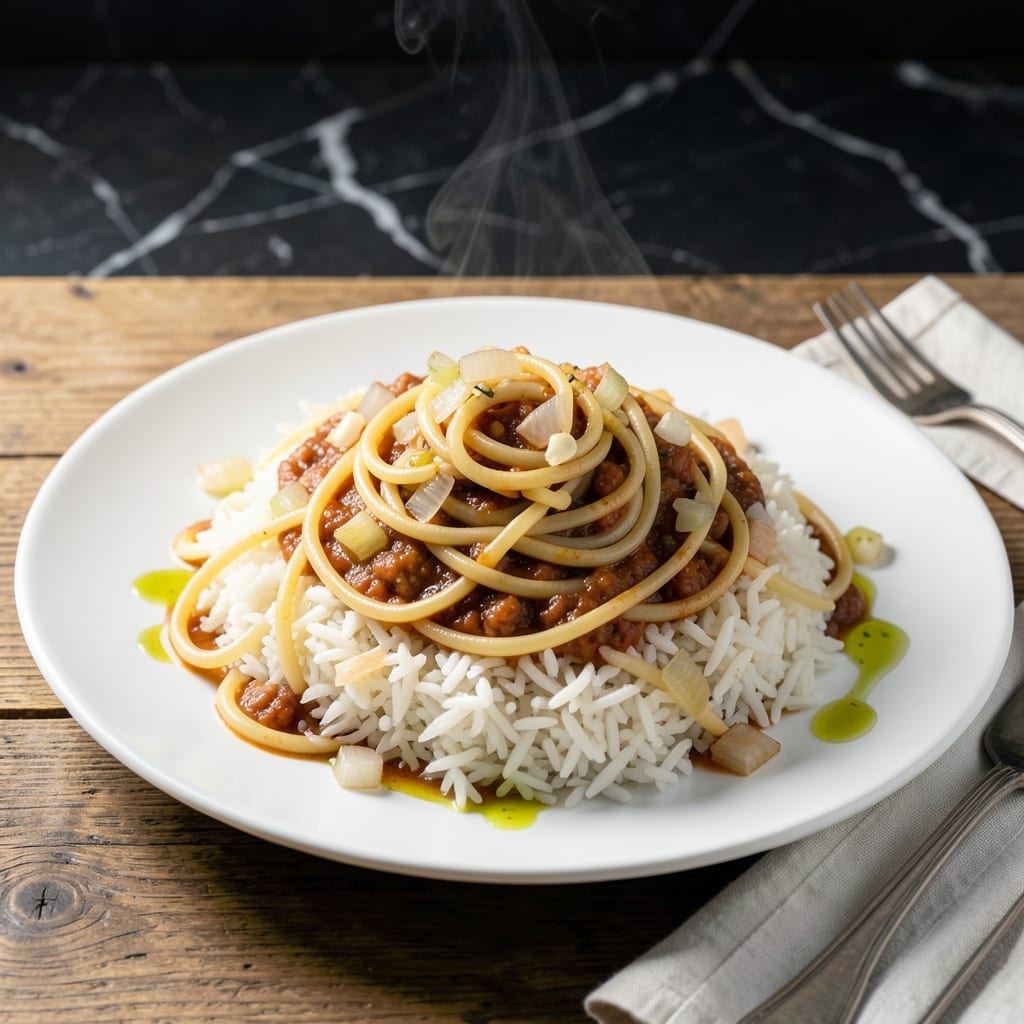
This dish brings together two beloved textures in a single, satisfying plate. The combination of fluffy rice and al dente spaghetti creates a hearty base that’s both comforting and unique.
With simple ingredients and straightforward steps, you’ll achieve a balanced meal that’s perfect for any night of the week. The key lies in cooking each component just right to maintain their distinct characteristics.
Ingredients for Rice and Spaghetti
Simple ingredients create this hearty, texture-rich dish with fluffy rice and al dente spaghetti.
| Ingredient | Amount | Notes |
|---|---|---|
| Long-Grain White Rice 🍚 | 1 ½ cups | Uncooked, rinsed before use |
| Spaghetti 🍝 | 8 oz | Dry, broken in half |
| Olive Oil 🫒 | 3 tbsp | Divided for cooking |
| Garlic Cloves 🧄 | 4 cloves | Minced finely |
| Onion 🧅 | 1 whole | Medium, finely diced |
| Chicken Broth 🍲 | 3 cups | Low-sodium preferred |
| Diced Tomatoes 🍅 | 1 can | 14.5 oz, undrained |
| Tomato Paste 🍅 | 2 tbsp | For depth of flavor |
| Dried Oregano 🌿 | 1 tsp | Crushed between fingers |
| Dried Basil 🍃 | 1 tsp | For Italian flair |
| Salt 🧂 | 1 ½ tsp | Divided for seasoning |
| Black Pepper 🌶️ | ½ tsp | Freshly ground preferred |
| Parmesan Cheese 🧀 | ½ cup | Freshly grated for topping |
| Fresh Parsley 🌿 | ¼ cup | Chopped, for garnish |
The rice and pasta quality matters here. Long-grain white rice gives the best fluffy texture—avoid instant or minute rice. For spaghetti, any dry pasta brand works, but Barilla or De Cecco hold their shape well. The chicken broth should be low-sodium so you can control the seasoning. I find Swanson or Progresso consistently reliable at most grocery stores.
No chicken broth? Vegetable broth works fine, or use water with an extra teaspoon of salt. Fresh tomatoes can replace canned in a pinch (about 3 medium tomatoes, diced). The herbs can be fresh—use triple the amount. If you’re missing tomato paste, a tablespoon of ketchup (seriously) works in an emergency. The Parmesan is optional but adds nice depth.
Cooked rice and pasta keep separately in the fridge for up to 5 days in airtight containers. This dish actually tastes better the next day as the flavors meld. Freezes well for up to 3 months—just thaw in the fridge overnight before reheating.
Why You’ll Love This Recipe
- One Pot Magic: I toss everything in a single pot—rice, spaghetti, garlic, onion—and let it do its thing. Honestly, cleanup is a breeze.
- Garlic-Infused Bite: The sizzling garlic in olive oil gives every forkful a rich, savory depth that’s ridiculously good.
- Feeds a Hungry Crowd: Between us, this stretches far—ideal for Sunday family dinners or when friends drop by unannounced.
- Budget-Friendly Staples: Long-grain rice and spaghetti are pantry heroes. I’ll be real: it’s filling, cheap, and tastes like a million bucks.
Step-by-Step Instructions for Rice and Spaghetti
Here’s the method. Straightforward, tested, works every time.
Step 1: Sauté Aromatics and Toast the Rice
Heat 1 tbsp of the olive oil in a large pot over medium heat. Add the finely diced onion and cook for 3-4 minutes until translucent and soft. Stir in the minced garlic cloves and cook for 30 seconds until fragrant—don’t let it brown.
Add the 1.5 cups long-grain white rice to the pot and stir for 1-2 minutes until the grains are lightly toasted and smell nutty. This step enhances the rice’s flavor and prevents a mushy texture. Season with ½ tsp of the salt and ¼ tsp of the black pepper.
Step 2: Build the Flavor Base for Rice and Pasta
Pour in the 2 tbsp tomato paste and stir to coat the rice and aromatics. Cook for 1 minute to deepen its flavor. Add the 1 can diced tomatoes (with juices), 1 tsp dried oregano, 1 tsp dried basil, and the remaining 1 tsp salt and ¼ tsp black pepper.
Stir in the 3 cups chicken broth and bring to a boil. Once boiling, reduce the heat to low, cover the pot, and let it simmer for 15 minutes while you prepare the spaghetti.
Step 3: Cook the Spaghetti Separately
In a separate large pot, bring water to a boil and add the 8 oz spaghetti (broken in half). Cook according to package instructions until al dente, about 8-9 minutes. Reserve ½ cup of the pasta water before draining.
Drain the spaghetti and toss with 1 tbsp of the olive oil to prevent sticking. Set aside until the rice is ready. This keeps the pasta from clumping while you finish the dish.
Step 4: Finish the Rice and Combine
After the rice has simmered for 15 minutes, add the cooked spaghetti to the pot. Stir everything together gently, adding a splash of the reserved pasta water if the mixture seems dry. Cover and let it sit for 5 minutes to allow the flavors to meld.
The rice should be tender and fluffy, and the spaghetti should be coated in the rich, tomato-infused broth. Taste and adjust seasoning if needed.
Step 5: Serve with Fresh Garnishes
Transfer the rice and spaghetti to serving plates. Drizzle with the remaining 1 tbsp olive oil and top with ½ cup parmesan cheese and ¼ cup chopped fresh parsley. The cheese melts slightly from the heat, and the parsley adds a fresh pop of color.
Serve immediately while hot. Each bite should deliver the chewy texture of spaghetti alongside the soft, flavorful rice, tied together with the savory tomato and herb-infused broth.
Pro Tips For Making Rice And Spaghetti
- Toast the Rice: Cook the rice in olive oil for 2-3 minutes before adding liquid—this prevents mushiness and adds a nutty depth. I learned this the hard way after too many sticky batches.
- Salt the Pasta Water: Use at least 1 tablespoon of salt per 4 quarts of water for the spaghetti. Sounds like a lot, but it actually changes the outcome—bland pasta ruins the whole dish.
- Don’t Overcrowd the Garlic: Sauté the garlic and onion separately if your pan isn’t wide enough. Steer clear of piling them in—burnt garlic tastes bitter and lingers unpleasantly.
- Use the Same Pot: Cook the spaghetti first, then use the starchy pasta water to boil the rice—it saves time and adds richness. My grandmother swore by this, and she was right.
Wine and Beer Pairings for These Flavors
Italian Wine Picks
A crisp Pinot Grigio from Veneto cuts through the tomato richness beautifully. I love Santa Margherita for its bright citrus notes. For red lovers, a light Chianti Classico like Banfi offers earthy balance without overpowering the dish. 🍷
California Favorites
Try a buttery Chardonnay from Kendall-Jackson—its creamy texture complements the fluffy rice. For red, a fruity Zinfandel like Ravenswood pairs wonderfully with the tomato base.
Beer Pairings
A light Italian lager like Peroni cleanses the palate between bites. For craft options, a wheat beer such as Blue Moon adds a citrusy contrast to the savory flavors. Avoid heavy stouts that will clash with the dish. 🍺
Non-Alcoholic Options
Sparkling water with lemon enhances the meal’s freshness. I also enjoy San Pellegrino Aranciata—its orange citrus notes brighten the tomato and herb flavors. Serve chilled for best results.
Nutrition Facts
Frequently Asked Questions
Can I use brown rice instead of white?
Yes, but adjust the cooking time. Brown rice needs 40-45 minutes and 1 extra cup of liquid. Start it first, then cook the spaghetti separately to avoid overcooking.
Why cook the spaghetti separately?
Cooking them together can turn the rice mushy. Separate cooking ensures al dente spaghetti and fluffy rice. Combine at the end for perfect texture.
Can I make this dish ahead of time?
Prepare both components, store separately in airtight containers, and combine when reheating. Add a splash of water or broth to refresh the flavors.

- Gambia Jollof Rice Recipe: West African One-Pot Spice Fusion - October 5, 2026
- Cream of Wild Rice Soup Recipe Minnesota: Northwoods Creaminess With Foraged Grains - October 5, 2026
- Frozen Cauliflower Fried Rice Recipe: Quick Low-Carb Wok Magic - October 5, 2026