
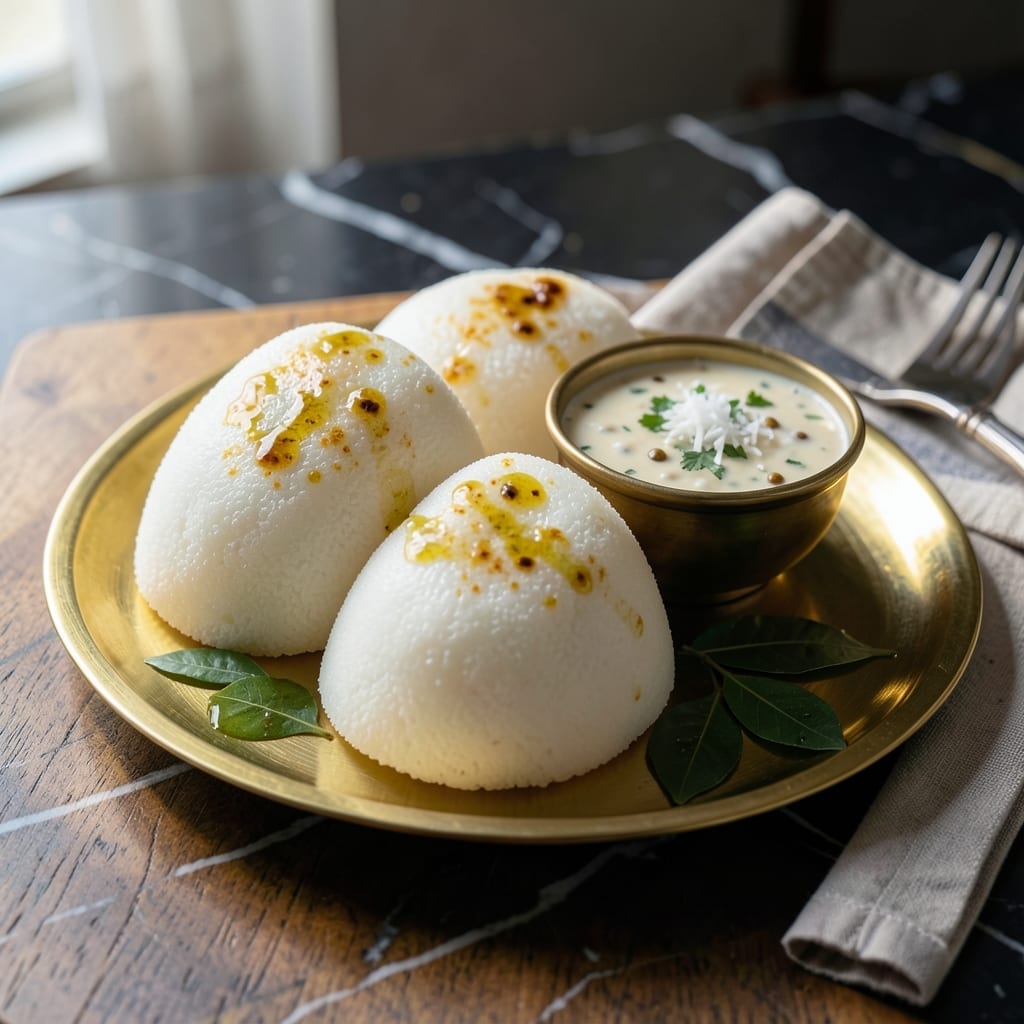
South Indian breakfasts don’t get more iconic than these fluffy steamed rice cakes. This traditional method yields soft, pillowy idlis with a slightly tangy flavor from natural fermentation.
The process requires patience but minimal hands-on time. A simple batter of rice and urad dal ferments overnight, developing its characteristic lightness and subtle sourness.
Steaming creates the perfect texture—airy inside with a slightly chewy exterior. The result is a versatile dish that pairs beautifully with chutneys and sambar.
This vegetarian staple transforms basic ingredients into something extraordinary through time-honored technique.
Ingredients for Rice Idli
Simple rice and lentils transform into pillow-soft steamed cakes through natural fermentation overnight.
| Ingredient | Amount | Notes |
|---|---|---|
| Parboiled Rice 🌾 | 2 cups | Or use idli rice for authenticity |
| Urad Dal 🌱 | ¾ cup | Whole, skinless black gram |
| Fenugreek Seeds 🌿 | ½ tsp | Aids fermentation process |
| Salt 🧂 | 1 ½ tsp | Adjust to taste after fermentation |
| Water 💧 | 4 cups | For soaking and grinding |
| Coconut Chutney 🥥 | 1 cup | Traditional accompaniment |
| Sambar 🥣 | 2 cups | Lentil-based vegetable stew |
| Vegetable Oil 🫒 | 1 tsp | For greasing idli molds |
| Curry Leaves 🍃 | 10 pieces | Optional, for enhanced flavor |
| Cumin Seeds 🌿 | ½ tsp | For tempering sambar |
| Mustard Seeds 🌿 | ½ tsp | For tempering sambar |
| Dried Red Chilies 🌶️ | 2 whole | For tempering, adjust to taste |
The urad dal quality is non-negotiable for authentic idlis. Indian grocery stores like Patel Brothers or Subzi Mandi carry the best whole, skinless variety—avoid split dal. Parboiled rice (or idli rice) provides the right texture. Brands like Double Horse or 24 Mantra are reliable. The fenugreek seeds, though small in quantity, are essential for proper fermentation and that characteristic tang.
No urad dal? Whole mung beans can substitute but yield a denser texture. Short on time? Pre-made idli batter from Trader Joe’s or Indian markets works in a pinch (add fenugreek seeds to improve flavor). The rice-to-dal ratio can be adjusted to 3:1 for slightly firmer idlis. For gluten-free needs, ensure all ingredients are certified.
Fermented batter keeps 2-3 days refrigerated. Steamed idlis are best fresh but can be refrigerated for 2 days—reheat by steaming for 5 minutes. The coconut chutney and sambar pairings keep 3-4 days in the fridge. Freezing idlis works but texture changes slightly upon thawing.
Why You’ll Love This Recipe
- Minimal Effort: Soaking the dal and rice overnight is the hardest part—after that, it’s just blend, ferment, steam.
- Flavor Bomb: That slight tang from fermentation with the earthy urad dal and fenugreek? I make extra just to eat them plain.
- Breakfast to Dinner: I serve these fluffy pillows with coconut chutney for breakfast, then repurpose leftovers as upma for dinner.
Step-by-Step Instructions for Rice Idli
Master the technique for achieving soft, fluffy idlis with perfect fermentation every time.
Step 1: Soak and Prepare the Batter Base
Rinse the 2 cups parboiled rice and 0.75 cup urad dal separately under cold running water until the water runs clear. This removes excess starch and prevents a sour taste in the final product.
Combine the urad dal with 0.5 tsp fenugreek seeds in one bowl and the parboiled rice in another. Add 2 cups water to each and soak for 4-6 hours. The dal should double in volume and the rice should soften but retain its shape.
Drain both thoroughly before grinding—any residual water will dilute the batter and compromise texture. The dal should be ground first to a smooth, fluffy consistency, using up to 1 cup water as needed during the process.
Step 2: Grind and Ferment the Batter
Transfer the soaked dal to a wet grinder or high-powered blender. Grind with 1 cup water in 20-30 second bursts, scraping down the sides as needed, until completely smooth and airy. The batter should be thick but pourable.
Next, grind the soaked parboiled rice using the remaining 1 cup water. This should result in a slightly coarser texture than the dal. Combine both batters in a large vessel, add the 1.5 tsp salt, and mix well with your hands in a circular motion for 2-3 minutes to incorporate air.
Cover with a clean cloth and let ferment in a warm place for 8-12 hours or until the batter rises and develops a slightly tangy aroma. The volume should increase by about 50%.
Step 3: Steam the Idlis to Perfection
Once fermented, give the batter a gentle stir. It should have a frothy top and a slightly effervescent quality. If the batter is too thick, add 1-2 tablespoons water to achieve a consistency similar to pancake batter.
Grease the idli molds with 1 tsp vegetable oil using a brush or your fingers, ensuring all surfaces are lightly coated. Pour the batter into each mold, filling them to about 3/4 capacity. This allows room for expansion during steaming.
Steam in a preheated steamer for 10-12 minutes on medium-high heat. The idlis are done when a toothpick inserted in the center comes out clean and the tops appear matte rather than glossy. Do not overcrowd the steamer; leave space between stacks for even heat circulation.
Step 4: Serve with Traditional Accompaniments
Remove the idli stand from the steamer and let cool for 2-3 minutes before unmolding. Run a wet spoon around the edges if they stick. The idlis should be spongy to the touch and have a uniform, pale color.
Serve hot with 1 cup coconut chutney and 2 cups sambar. For an enhanced experience, temper the sambar with 1 tsp vegetable oil, 0.5 tsp mustard seeds, 0.5 tsp cumin seeds, 2 whole dried red chilies, and 10 pieces curry leaves for added aroma and depth.
Pro Tips For Making Rice Idli
- Soak Overnight: I learned this the hard way—parboiled rice and urad dal need a good 6-8 hours in water to soften properly, or your idlis will turn out dense and gummy.
- Grind Urad First: Always grind the urad dal and fenugreek seeds first until light and fluffy, then add rice—this ensures the batter ferments evenly and rises well.
- Skip Cold Water: Use lukewarm water for grinding; cold water slows fermentation and can leave your batter too thick, making the idlis hard instead of soft.
- Ferment Fully: After mixing, let the batter sit for 8-12 hours in a warm spot—rushing this step gives you flat, sour-less idlis that won’t puff up in the steamer.
Flavor Customization for These Flavors
Spiced Variations
Add ½ tsp grated ginger and 2 green chilies to the batter for a zesty kick. This simple tweak transforms the flavor profile while keeping the traditional texture. I love how the heat balances the tangy fermentation.
Herbal Infusions
Mix in 2 tbsp chopped cilantro or 1 tbsp grated coconut to the batter before steaming. The cilantro adds freshness, while coconut enhances the South Indian essence. Both work beautifully without overpowering the dish.
Colorful Additions
For visual appeal, fold in ½ cup grated carrots or ¼ cup finely chopped spinach after fermentation. These add subtle sweetness or earthiness. The carrots also give a lovely orange hue to your idlis.
Crispy Twist
After steaming, pan-fry idlis in 1 tsp oil until golden brown for a crispy exterior. This method creates a delightful contrast to the soft interior. Serve with a sprinkle of chaat masala for extra zing. 🔥
Sweet Version
Turn idlis into a dessert by steaming with 2 tbsp jaggery mixed into the batter. The caramelized sugar creates a mild sweetness that pairs wonderfully with a drizzle of coconut milk after cooking.
Mini Idli Bites
Use mini idli molds for perfect bite-sized portions. These cook faster (8-10 minutes) and are ideal for parties. I find they disappear twice as fast as regular ones at gatherings.
Nutrition Facts
Frequently Asked Questions
Why does the batter need to ferment overnight?
Fermentation develops the tangy flavor and airy texture. The natural process breaks down starches, making the idlis light and fluffy. Skipping this step results in dense, flat cakes.
Can I use regular rice instead of parboiled?
Yes, but parboiled rice gives the best texture. Regular white rice may yield slightly stickier idlis. For authenticity, use idli rice if available.
How do I know when the idlis are done?
They’re ready when a toothpick comes out clean and the tops look matte. Steaming for 10-12 minutes on medium-high heat ensures even cooking.
What if my idlis turn out hard?
Hard idlis usually mean insufficient fermentation or over-steaming. Ensure the batter rises 50% and steam for no longer than 12 minutes.

- Jollof Rice Sauce Recipe: West African Tomato and Spice Infusion - September 25, 2026
- Japanese Rice Soup Recipe: Umami-Rich Comfort in a Bowl - September 25, 2026
- Homemade Cream Of Rice Recipe: Silk-Smooth Breakfast in Minutes - September 25, 2026