
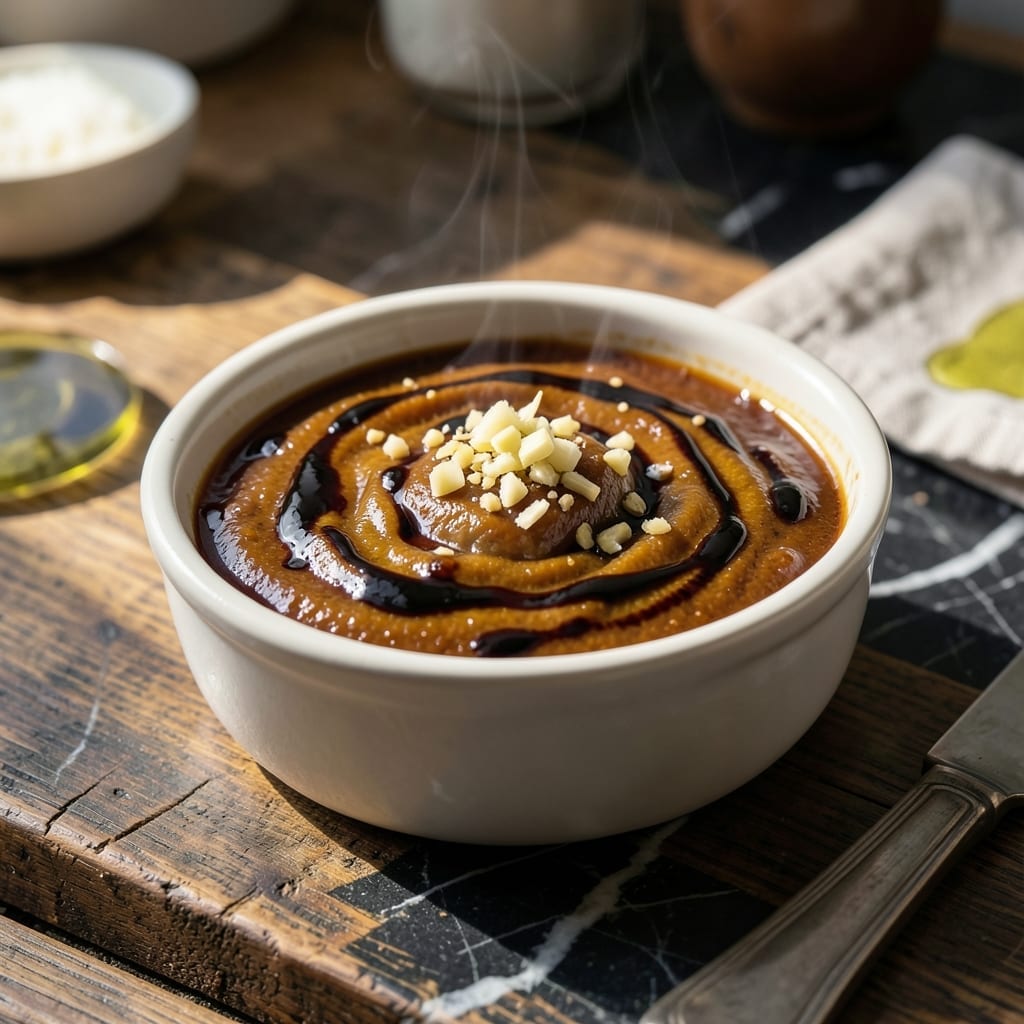
This sweet-savory dip transforms humble rice noodle rolls into a Cantonese restaurant experience at home. I developed this recipe after testing countless versions to capture that authentic balance of umami, sweetness and depth.
The secret lies in a precise combination of soy sauces, hoisin and a touch of sesame oil. Unlike store-bought versions, this homemade sauce delivers restaurant-quality flavor without preservatives or artificial ingredients.
You’ll achieve a glossy, well-balanced dip that clings perfectly to each bite of chewy noodle roll. The aroma alone will transport you to a bustling dim sum parlor.
Make a batch and store it in the fridge for up to a week—it only gets better as the flavors meld.
Ingredients for Rice Noodle Roll Sauce
Nine simple ingredients create this glossy, restaurant-quality Cantonese dip you’ll crave.
| Ingredient | Amount | Notes |
|---|---|---|
| Light Soy Sauce 🫒 | ⅓ cup | Essential for umami base |
| Dark Soy Sauce 🫒 | 2 tbsp | Adds depth and color |
| Hoisin Sauce 🥫 | ¼ cup | Sweet and tangy backbone |
| Oyster Sauce 🫒 | 1 tbsp | Optional for extra depth |
| Sesame Oil 🫒 | 2 tsp | Toasted variety for aroma |
| Granulated Sugar 🍚 | 1 tbsp | Balances saltiness perfectly |
| Rice Vinegar 🫒 | 1 tbsp | Adds necessary acidity |
| Minced Garlic 🧄 | 1 tbsp | Freshly minced preferred |
| Water 💧 | ¼ cup | Adjusts consistency as needed |
The soy sauces are non-negotiable here. Pearl River Bridge or Lee Kum Kee brands are what you’ll find in authentic Cantonese kitchens (look for them at H Mart or 99 Ranch). Dark soy adds that deep caramel color and molasses-like richness—don’t skip it. Hoisin should be thick and glossy, not the watery stuff. I grab mine from Trader Joe’s when I’m in a pinch, but Asian markets carry superior versions.
No oyster sauce? Vegetarian oyster sauce works perfectly. Swap rice vinegar for apple cider vinegar at the same amount if that’s what you’ve got. The sugar can be brown sugar or honey—just adjust to taste. Fresh garlic is ideal, but jarred minced garlic at half the amount saves time. Want it thicker? Reduce the water. Thinner? Add a splash more.
This sauce keeps beautifully in a sealed jar for 1 week in the fridge. The flavors actually deepen over time, so making it a day ahead is ideal. Freeze extras in ice cube trays for 3 months—perfect for quick dim sum nights.
Why You’ll Love This Recipe
- 5-Minute Mix: I just dump these sauces together—no cooking, no fuss. Honestly, it’s faster than waiting for takeout.
- Umami Bomb: That combo of hoisin and oyster sauce? Ridiculously good with the deep, salty kick from dark soy.
- Dips or Drizzles: I use it for rice noodle rolls, but it’s just as solid on dumplings or stir-fried veggies.
- Pantry Staples: All five ingredients live in my cupboard for months, so I’m never scrambling last-minute.
Step-by-Step Instructions for Cantonese Rice Noodle Roll Dip
This authentic method delivers the perfect balance of sweet, savory, and umami flavors every time.
Step 1: Bloom the Aromatics in Oil
Heat a small saucepan over medium-low heat and add the 2 tsp Sesame Oil. When the oil shimmers, add the 1 tbsp Minced Garlic and stir constantly for 30-45 seconds until the garlic turns fragile and golden but hasn’t browned.
This step is crucial—blooming the minced garlic in toasted sesame oil releases its pungent aromatics and creates the flavor foundation. If the garlic browns, it will turn bitter, so watch it closely and remove from heat immediately if it starts to darken too quickly.
Step 2: Combine the Sauce Base
To the garlic-sesame oil mixture, add the 0.33 cup Light Soy Sauce, 2 tbsp Dark Soy Sauce, 0.25 cup Hoisin Sauce, and 1 tbsp Oyster Sauce. Stir well to combine, allowing the mixture to come to a gentle simmer.
The light soy sauce provides the essential umami base, while the dark soy sauce adds depth and that characteristic deep color. The hoisin contributes sweetness and complexity, and the oyster sauce adds an extra layer of savory richness. Let this simmer for 2 minutes to meld the flavors.
Step 3: Balance the Flavors
Stir in the 1 tbsp Granulated Sugar and 1 tbsp Rice Vinegar. The sugar balances the saltiness of the soy sauces, while the rice vinegar adds the necessary acidity to brighten the sauce and cut through the richness.
Here’s the thing—taste the sauce now. It should have a harmonious balance of sweet, salty, and tangy. If it tastes too sharp, add a pinch more sugar. If it needs more depth, a splash more hoisin will do the trick. Let it simmer for another 2 minutes to incorporate these additions fully.
Step 4: Adjust Consistency and Finish
Gradually whisk in the 0.25 cup Water, a little at a time, until the sauce reaches your desired consistency. For rice noodle rolls, you want it thick enough to cling but still pourable—it should coat the back of a spoon but drip slowly.
Remove from heat and let the sauce cool to room temperature. As it cools, it will thicken slightly. I like to transfer it to a small bowl or jar at this point. The flavors will deepen as it sits, so if you can, let it rest for 30 minutes before using to allow everything to marry together perfectly.
Pro Tips For Making Rice Noodle Roll Sauce
- Heat the Oils First: Always warm the sesame oil and sauces together for 30 seconds on low heat—it blends the flavors and removes any raw edge from the sesame oil.
- Balance the Soy Sauces: Use a 2:1 ratio of light to dark soy sauce for depth without overpowering saltiness. I learned this the hard way after my first batch tasted like a salt lick.
- Skip the Boiling: Never let the sauce boil or the sugars in hoisin and oyster sauce will caramelize too fast, making it bitter. A gentle simmer is all it needs.
- Add Sesame Oil Last: Stir in the sesame oil at the very end, off the heat, to preserve its delicate aroma. Sounds fussy, but it actually changes the outcome.
Wine and Beer Pairings for This Recipe
Crisp Whites
A dry Riesling with its bright acidity cuts through the richness of this dip beautifully. The citrus notes complement the sauce’s sweetness while cleansing your palate. I love a German Kabinett for its perfect balance of fruit and minerality. 🍷
Light Beers
A crisp pilsner or lager works wonderfully here. The effervescence lifts the sauce’s depth while the mild bitterness balances the sweetness. Tsintgtao beer is my go-to for an authentic Cantonese pairing.
Sparkling Options
For a non-alcoholic choice, try a dry sparkling water with a squeeze of lime. The bubbles cleanse your palate between bites, just like a good wine would. I keep San Pellegrino in my fridge for this exact purpose.
Fruity Whites
A lightly oaked Chardonnay with apple and pear notes enhances the sauce’s complexity. Avoid heavily oaked versions—they can overpower the delicate balance. Kendall-Jackson Vintner’s Reserve is a reliable choice at most grocery stores.
Asian Lagers
Sapporo or Asahi beers offer a clean, crisp profile that pairs naturally with Cantonese flavors. Their light body doesn’t compete with the sauce, making each bite of noodle roll taste fresh. I always have a few in my Boston apartment fridge.
Nutrition Facts
Frequently Asked Questions
Can I make this sauce ahead of time?
The flavors deepen after 24 hours in the fridge. Store in an airtight container for up to 1 week or freeze for 3 months.
What if I don’t have dark soy sauce?
Use all light soy sauce and add 1 tsp molasses or 1 tsp brown sugar for color and depth. The flavor will be slightly lighter but still delicious.
Why does my sauce taste too salty?
Balance it with 1 tsp honey or 1 tsp sugar and a splash of rice vinegar. Taste and adjust gradually.
Can I use a different vinegar?
Yes, apple cider vinegar works well at the same amount. Avoid balsamic—it’s too strong and will overpower the sauce.

- Rice Pudding Recipe With Eggs and Milk: Old-Fashioned Custard-Style Comfort - September 30, 2026
- Rice Noodle Sauce Recipe: Bold Umami Depth for Authentic Stir-Fry - September 30, 2026
- Rice Pilaf Recipe: Fragrant Basmati With Toasted Vermicelli - September 30, 2026