
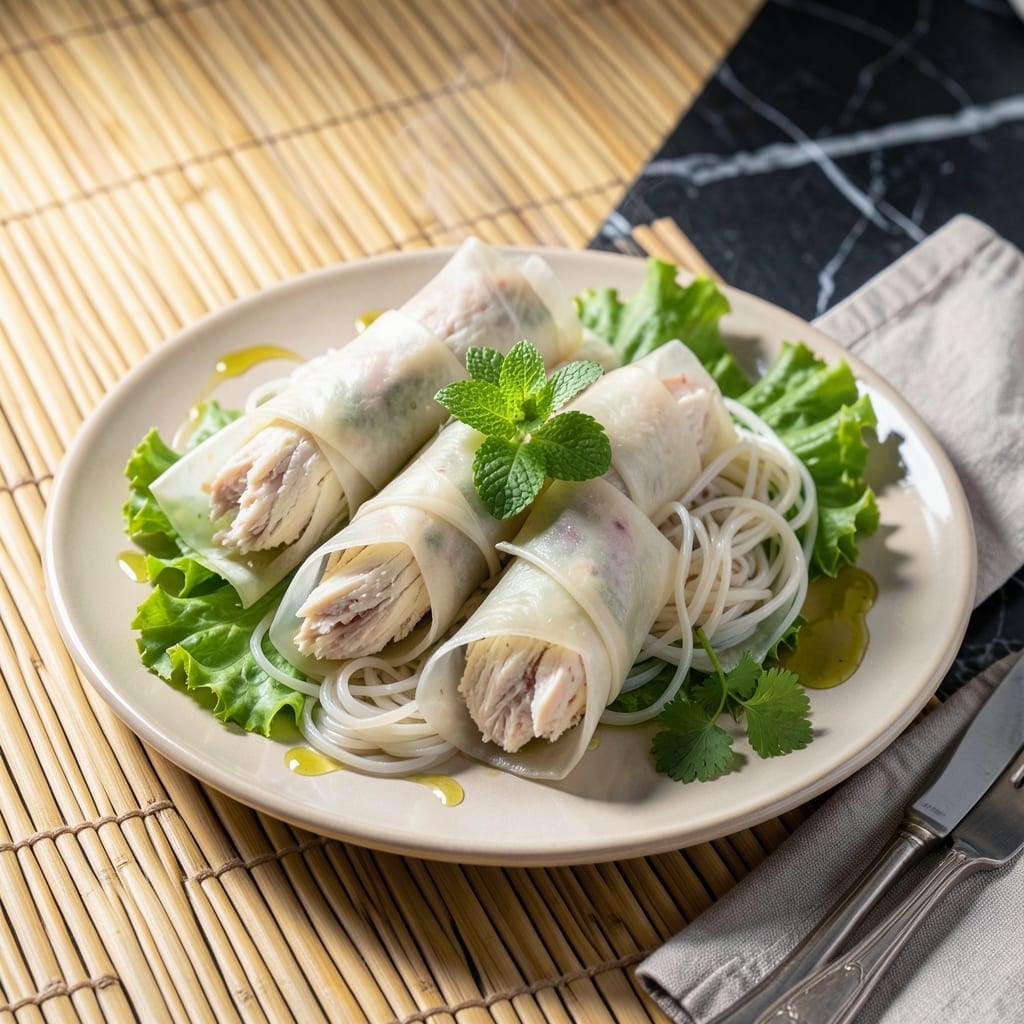
Vietnamese fresh spring rolls represent a perfect balance of texture and flavor, with rice paper wrapping crisp vegetables and tender chicken. This dish showcases the elegance of Southeast Asian cuisine through its light yet satisfying composition.
The chicken is poached until tender, then shredded to fill the delicate rice paper rolls alongside fresh herbs, vermicelli noodles, and crisp lettuce. Each bite delivers a harmonious mix of savory, fresh, and slightly sweet elements.
What makes this creation special is its versatility—serve as an appetizer or light main course. The dipping sauce, typically a peanut or hoisin-based blend, elevates every mouthful with its rich, umami depth.
The result is a dish that’s as visually stunning as it is delicious, bringing restaurant-quality flavors to your home kitchen.
Ingredients for Rice Paper and Chicken
Delicate rice paper meets fresh herbs and tender chicken for these vibrant rolls. Nothing exotic, just good stuff.
| Ingredient | Amount | Notes |
|---|---|---|
| Rice Paper Wrappers 🍚 | 12 sheets | 8-inch diameter, spring roll type |
| Boneless Chicken Breast 🍗 | 1 lb | Poached and shredded fine |
| Rice Vermicelli Noodles 🍜 | 4 oz | Thin rice sticks, cooked |
| Butter Lettuce 🥬 | 1 whole | Leaves separated, crisp |
| Fresh Mint Leaves 🌿 | ½ cup | Loosely packed, stems removed |
| Fresh Cilantro 🌿 | ½ cup | Stems removed, roughly chopped |
| Fresh Thai Basil 🌿 | ¼ cup | Optional but recommended |
| English Cucumber 🥒 | 1 whole | Julienned into matchsticks |
| Carrot 🥕 | 1 whole | Julienned or grated |
| Red Bell Pepper 🌶️ | 1 whole | Thinly sliced into strips |
| Hoison Sauce 🥫 | ½ cup | For dipping sauce base |
| Creamy Peanut Butter 🥜 | ¼ cup | Smooth, natural preferred |
| Lime 🍋 | 1 whole | Juiced, about 2 tbsp |
| Garlic Clove 🧄 | 1 clove | Minced for sauce |
| Sriracha 🔥 | 1 tbsp | Adjust to spice preference |
The rice paper is everything—look for spring roll wrappers at Asian markets or the international aisle at Whole Foods. Brands like Three Ladies Spring Roll are reliable. For the chicken, bone-in, skin-on breasts stay juicier during poaching than boneless. I always grab mine from Trader Joe’s (their organic is a solid deal). The vermicelli should be thin—avoid the thicker rice noodles meant for pad thai.
No hoisin? Substitute 1:1 with oyster sauce (vegetarian version works too). Out of Thai basil? Regular basil plus a little mint gets you close. The peanut butter can be crunchy if that’s what you have, but smooth mixes into the sauce better. For a nut-free version, sunflower seed butter works in a pinch. The lime juice is non-negotiable though—don’t skip it. (Frozen works in a pinch).
Assemble rolls within 2 hours of prepping fillings to keep everything crisp. Store wrapped tightly in damp paper towels for 1 day max. The dipping sauce keeps for 5 days in the fridge. Best served fresh, but leftovers reheat poorly—eat them cold or at room temp.
Why You’ll Love This Recipe
- No Cook Wraps: I just soak the rice paper and stuff with prepped ingredients—no stove time needed.
- Fresh Crunch: That butter lettuce and mint combo? Ridiculously crisp and refreshing in every bite.
- Picnic Ready: Honestly, these travel like a dream—pack them for lunches or park picnics without the mess.
- Budget Stretcher: A little chicken and noodles go far, and rice paper is dirt cheap at the Asian market.
Step-by-Step Instructions for Vietnamese-Inspired Fresh Spring Rolls
These light, fresh rolls come together beautifully with a little patience and the right technique.
Step 1: Prepare the Filling Components
Start by poaching the 1 lb Boneless Chicken Breast in simmering water for 12-15 minutes until fully cooked through. Remove it from the water and let it cool slightly before shredding it finely with two forks. The chicken should be moist and easy to pull apart.
While the chicken cooks, soak the 4 oz Rice Vermicelli Noodles in hot water for 5-7 minutes until softened but still slightly firm. Drain and rinse under cold water to stop the cooking process. Use kitchen shears to snip the noodles into shorter, more manageable lengths.
Step 2: Prep the Fresh Vegetables and Herbs
Julienne the 1 whole English Cucumber and the 1 whole Carrot into thin matchsticks. Slice the 1 whole Red Bell Pepper into narrow strips. Separate the leaves of the 1 whole Butter Lettuce, keeping them whole and crisp.
Remove stems from the 0.5 cup Fresh Mint Leaves and the 0.25 cup Fresh Thai Basil. Roughly chop the 0.5 cup Fresh Cilantro. Arrange all these components on a large platter or in small bowls for easy access during assembly.
Step 3: Soften the Rice Paper Wrappers
Fill a shallow dish with warm water. One at a time, submerge each Rice Paper Wrapper for 5-10 seconds until pliable but still slightly firm. Remove it from the water and lay it flat on a clean kitchen towel. Here’s the thing—over-soaking makes them too delicate to work with.
You’ll notice the wrapper continues to soften as it sits. This is normal. Have all your fillings ready to go before you start this process, as the wrappers can become sticky and difficult to handle if left too long.
Step 4: Assemble the Spring Rolls
Place a softened wrapper on your work surface. Add a piece of butter lettuce near the bottom third, then layer with a small amount of noodles, shredded chicken, and a selection of vegetables and herbs. Be careful not to overfill—about ¼ cup total of filling per roll works best.
Fold the bottom edge up over the filling, then fold in the sides, and roll tightly upward, similar to a burrito. The rice paper will stick to itself as you roll. Place each finished roll seam-side down on a serving platter.
Step 5: Prepare the Dipping Sauce
In a small bowl, whisk together the 0.5 cup Hoison Sauce, 0.25 cup Creamy Peanut Butter, juice from the 1 whole Lime, minced 1 clove Garlic Clove, and 1 tbsp Sriracha. Adjust the consistency with a little warm water if needed.
The sauce should be smooth and slightly thick, coating the back of a spoon. Taste and adjust seasoning if necessary. Serve the spring rolls immediately with the dipping sauce on the side.
Pro Tips For Making Rice Paper And Chicken
- Soak Rice Paper Briefly: Dip each wrapper in warm water for 5-8 seconds—any longer and they’ll tear when you try to fill them. I learned this the hard way after ruining half a pack by over-soaking.
- Slice Chicken Thinly: Cut the boneless chicken breast into ¼-inch strips so it cooks quickly and stays tender in the final roll. Sounds obvious, but uneven pieces make wrapping a nightmare.
- Skip Cold Noodles: Rinse the rice vermicelli in hot water for 1 minute after boiling to remove excess starch—this keeps them from clumping together in the rolls.
- Use Two Lettuce Leaves: Layer two butter lettuce leaves per roll for extra crunch and to prevent the rice paper from sticking to your fingers. My grandmother swore by this, and she was right.
Common Mistakes When Making This Dish
Over-Soaking Wrappers
One of the most common mistakes I see is soaking the rice paper wrappers for too long. They only need 5-10 seconds in warm water to become pliable. Any longer and they turn into a fragile, sticky mess that’s nearly impossible to work with. Trust me, I learned this the hard way in my early kitchen experiments. 💪
Overfilling the Rolls
It’s tempting to pack in as much filling as possible, but resist the urge. Use about ¼ cup total of filling per roll. Overfilling makes rolling difficult and can cause the delicate wrappers to tear. The key is a tight, neat roll with just enough filling to deliver flavor in every bite.
Using Thick Noodles
Stick to thin rice vermicelli noodles—thick ones meant for pad thai won’t work here. The thin variety cooks quickly (just 5-7 minutes in hot water) and provides the perfect texture. I always snip them into shorter lengths with kitchen shears for easier rolling.
Poaching Chicken Too Long
Poach the 1 lb chicken breast for 12-15 minutes only. Overcooking dries it out, making it tough and stringy instead of tender. Remove it from the water as soon as it’s done, then shred while still warm. This keeps the meat juicy and flavorful.
Skipping the Prep
Have all your fillings prepped and organized before you start softening the wrappers. The rice paper continues to soften as it sits, and if you’re scrambling to prep ingredients, you’ll end up with a gummy, unworkable mess. I lay everything out on a large platter for easy access.
Ignoring Freshness
These rolls are best served immediately after assembly. If you must store them, wrap tightly in damp paper towels and refrigerate for no more than 2 hours. The textures start to deteriorate quickly, and the herbs lose their vibrancy. 🌟
Nutrition Facts
Frequently Asked Questions
Can I use cooked rotisserie chicken instead?
Shred 2 cups of rotisserie chicken and skip poaching. Just ensure it’s not too dry. This saves 15 minutes of prep time while keeping great flavor.
What if my rice paper tears while rolling?
Don’t panic! Patch small tears with a bit of dry wrapper moistened with water. To prevent this, avoid overfilling and keep wrappers slightly firm when rolling. Practice makes perfect.
How do I keep rolls fresh for a party?
Cover assembled rolls with a damp towel and plastic wrap. They’ll stay fresh for 2 hours at room temperature. For longer, refrigerate but serve within 4 hours for best texture.
Can I make these rolls ahead of time?
Prep fillings up to 1 day ahead, but assemble rolls no more than 2 hours before serving. The rice paper dries out and herbs lose crispness if made too early.

- Jollof Rice Sauce Recipe: West African Tomato and Spice Infusion - September 25, 2026
- Japanese Rice Soup Recipe: Umami-Rich Comfort in a Bowl - September 25, 2026
- Homemade Cream Of Rice Recipe: Silk-Smooth Breakfast in Minutes - September 25, 2026