
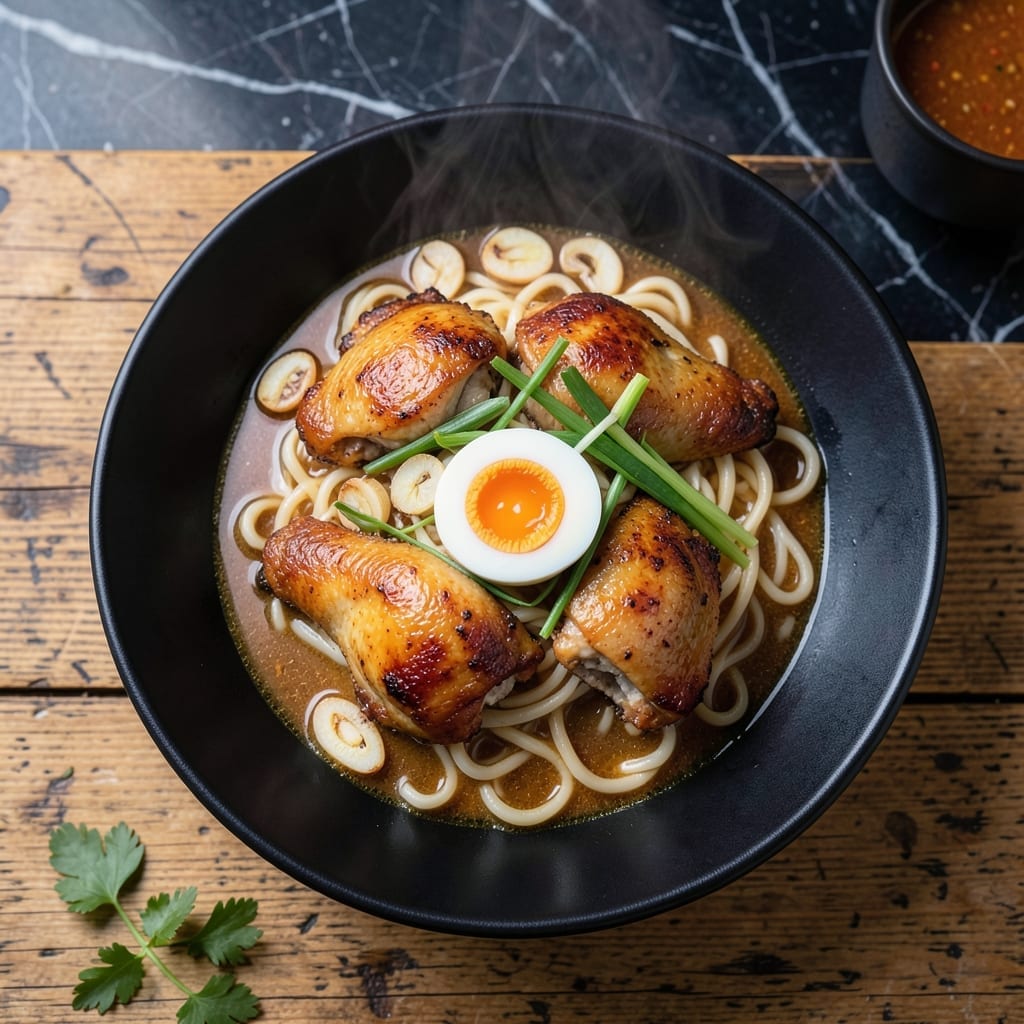
This roasted chicken ramen delivers tender meat and deep umami flavor in every bowl. The secret lies in slow-roasting the chicken to preserve moisture while building a rich broth from the drippings.
I developed this method to combine traditional ramen techniques with home kitchen practicality. The chicken roasts at a steady 375°F until golden, then its juices form the base of the savory broth.
You’ll get perfectly cooked noodles swimming in a silky, aromatic broth with slices of juicy chicken. Each component comes together to create a restaurant-quality dish at home.
The process is straightforward but yields complex flavors that make this ramen unforgettable. Here’s how to make it.
Ingredients for Roasted Chicken Ramen
Pantry staples meet a few fresh finds for this cozy bowl of goodness.
| Ingredient | Amount | Notes |
|---|---|---|
| Chicken Thighs 🍗 | 1 ½ lb | Boneless, skin-on preferred |
| Ramen Noodles 🍜 | 4 packages | Discard seasoning packets |
| Chicken Stock 🥣 | 6 cups | Low-sodium preferred |
| Soy Sauce 🫒 | ¼ cup | For umami depth |
| Garlic Cloves 🧄 | 6 cloves | Minced for broth |
| Fresh Ginger 🌿 | 1 tbsp | Grated or minced |
| Green Onions 🧅 | 4 whole | Sliced, white and green parts separated |
| Soft-Boiled Eggs 🥚 | 4 whole | Optional topping (6-7 minutes cook time) |
| Shiitake Mushrooms 🍄 | 4 oz | Fresh or dried, sliced |
| Sesame Oil 🫒 | 1 tbsp | For finishing broth |
| Rice Vinegar 💧 | 1 tbsp | For brightness |
| Sugar 🧂 | 1 tsp | Balances acidity |
| Salt 🧂 | 1 tsp | Adjust to taste |
| Black Pepper 🌶️ | ½ tsp | Freshly ground |
| Nori Sheets 🌊 | 2 sheets | For garnish, cut into strips |
The chicken is everything here. Thighs stay juicier than breasts during roasting—look for skin-on to get that crispy top layer (the good stuff, not the pre-cut kind). Whole Foods or Trader Joe’s usually have great quality. For the stock, low-sodium lets you control the salt. I always keep a few boxes of Kallo or Imagine on hand for this exact reason.
No ramen noodles? Udon or soba work in a pinch (just adjust cook time). Fresh shiitakes add meaty texture, but cremini mushrooms at half the amount get you close. Skip the eggs if you’re short on time—though I won’t lie, they’re worth the extra minute. Soy sauce is non-negotiable, but if you’re gluten-free, tamari is your best bet. The ginger can be from a jar (don’t skip this part).
Broth keeps 4-5 days in the fridge, freezes for 3 months. Cook noodles fresh when serving—nobody likes mushy ramen. I portion leftovers into containers so lunches are sorted (trust me on the full-fat version).
Why You’ll Love This Recipe
- One Pan Wonder: I just toss chicken thighs, garlic, and soy sauce on a sheet pan, roast, then add ramen and stock—minimal cleanup, maximum flavor.
- Umami Bomb: The soy sauce and garlic caramelize on the chicken, then infuse the stock with this rich, savory depth that coats every noodle.
- My Go-To Weeknight: Between us, this is my Tuesday night lifesaver when I need something hearty but don’t want to think too hard.
- Stretches Far: One batch makes enough for dinner plus leftovers for lunch the next day, and it’s way cheaper than takeout.
Step-by-Step Instructions for Roasted Chicken Ramen
Here’s the method. Straightforward, tested, works every time.
Step 1: Roast the Chicken Thighs to Juicy Perfection
Preheat your oven to 400°F. Pat the 1.5 lb Chicken Thighs dry with paper towels to ensure crispy skin. Season both sides with 1 tsp Salt and 0.5 tsp Black Pepper, pressing the seasoning into the skin so it adheres well.
Place the thighs skin-side up on a wire rack set over a baking sheet. Roast for 25-30 minutes until the skin is golden brown and the internal temperature reaches 165°F. The juices should run clear when pierced. Let them rest for 5 minutes before slicing.
Step 2: Simmer the Umami-Packed Broth
While the chicken roasts, combine 6 cups Chicken Stock, 0.25 cup Soy Sauce, 6 cloves Garlic Cloves, 1 tbsp Fresh Ginger, 4 oz Shiitake Mushrooms, 1 tsp Sugar, and the white parts of the 4 whole Green Onions in a large pot.
Bring to a boil, then reduce heat to medium-low and simmer for 15-20 minutes until the mushrooms are tender and the broth is fragrant. Strain the broth to remove solids, if desired, or leave them in for extra texture. This step builds the deep umami base that defines the dish.
Step 3: Cook the Ramen Noodles and Assemble the Bowls
Add the 4 packages Ramen Noodles to the simmering broth and cook for 3-4 minutes until the noodles are tender but still have a slight bite. Discard the seasoning packets as directed in the ingredients. Stir in 1 tbsp Sesame Oil and 1 tbsp Rice Vinegar to finish the broth.
Divide the noodles and broth among four bowls. Top each serving with sliced roasted chicken, the green parts of the Green Onions, and 2 sheets Nori Sheets cut into strips. The nori adds a subtle oceanic note that complements the rich broth beautifully.
Step 4: Add Toppings and Serve Immediately
Peel and halve the 4 whole Soft-Boiled Eggs and place one half on top of each bowl. The yolk should be runny, adding a creamy texture to the dish. Garnish with extra green onions if desired.
Serve immediately while hot. The contrast of the tender chicken, chewy noodles, silky broth, and creamy egg yolk creates a perfect bite every time. This dish is all about layering textures and flavors, so dig in while everything is at its peak.
Pro Tips For Making Roasted Chicken Ramen
- Roast Thighs First: Get the chicken thighs in the oven at 425°F for 25-30 minutes until crispy—this builds deep flavor for the broth and saves you from soggy skin in the ramen.
- Toast the Noodles: After boiling the ramen noodles, drain and toss them in a dry pan for 1-2 minutes to remove excess moisture. I learned this the hard way—soggy noodles ruin the texture.
- Brown the Garlic: Sauté the garlic cloves in a little oil until golden before adding the stock—it adds a nutty depth that raw garlic just can’t match.
- Skip the Packet: Ditch the seasoning packet from the ramen and use soy sauce instead. It’s saltier than you think, and the flavor is cleaner.
Troubleshooting This Recipe
Broth Too Bland
If your broth lacks depth, don’t panic. I fix this by adding 1-2 tbsp soy sauce and a splash of rice vinegar to brighten flavors. A pinch of sugar balances the acidity. Simmer for another 5 minutes to meld the flavors. 💡
Noodles Mushy
Noodles overcook quickly in hot broth. Cook them separately in boiling water for 2-3 minutes, then add to bowls and ladle hot broth over them. This keeps them firm. I use barley noodles as they hold up better than standard ramen.
Chicken Dry
Dry chicken ruins the dish. Brine the thighs in ¼ cup salt dissolved in 4 cups water for 30 minutes before roasting. Also, don’t skip the resting time—5-10 minutes lets juices redistribute. The skin should stay crispy while the meat stays juicy.
Egg Yolk Not Runny
For perfect soft-boiled eggs, use room temperature eggs and boil for exactly 6 minutes. Plunge into ice water immediately to stop cooking. I find older eggs peel easier than fresh ones. The yolk should be creamy, not firm.
Broth Too Salty
If you over-salt the broth, add 1 cup water or unsalted stock to dilute. A splash of rice vinegar can help balance the saltiness. Taste as you go—I always start with low-sodium stock to control the seasoning better.
Mushrooms Tough
Slicing shiitakes thinly ensures they cook through in the broth. If using dried, soak them in hot water for 15 minutes first. Fresh mushrooms should be sautéed for 2-3 minutes before adding to the broth for extra tenderness.
Nutrition Facts
Frequently Asked Questions
Can I use chicken breast instead of thighs?
You can, but thighs stay juicier during roasting. If using breasts, reduce roasting time to 20-22 minutes at 400°F and brine first to prevent dryness.
How do I make this gluten-free?
Swap regular soy sauce for tamari and use gluten-free ramen noodles. Check all labels, as some chicken stocks contain gluten.
Can I prep the broth ahead?
The broth keeps for 4-5 days refrigerated or 3 months frozen. Reheat before adding noodles to prevent mushiness.
What if my eggs crack while boiling?
Add 1 tbsp vinegar to the water to help eggs hold their shape. Use room-temperature eggs and lower them gently with a spoon.

- Jollof Rice Sauce Recipe: West African Tomato and Spice Infusion - September 25, 2026
- Japanese Rice Soup Recipe: Umami-Rich Comfort in a Bowl - September 25, 2026
- Homemade Cream Of Rice Recipe: Silk-Smooth Breakfast in Minutes - September 25, 2026