
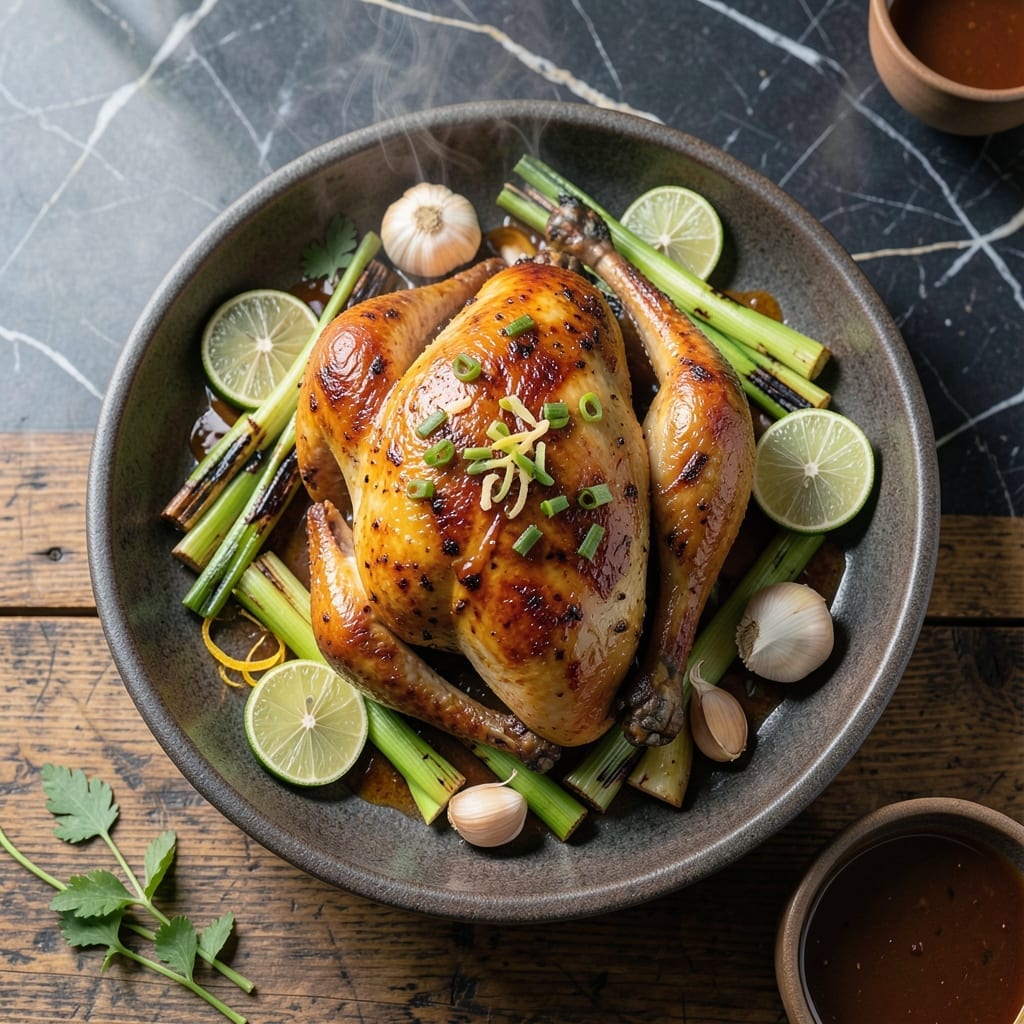
There’s something transformative about roasting chicken with lemongrass—its citrusy aroma fills the kitchen as the bird turns golden brown in the oven. This method delivers crispy skin and juicy meat with minimal effort.
The secret lies in infusing the chicken with fresh lemongrass and citrus during roasting. I’ve refined this technique to ensure every bite carries fragrant, bright notes without overpowering the natural flavor of the chicken.
You’ll end up with tender, aromatic meat and skin so crispy it shatters with each bite. The citrus and lemongrass create a perfume that’s irresistible, making this dish feel special yet approachable.
Serve it with roasted vegetables or a fresh salad for a complete meal. Let’s get started.
Ingredients for Lemongrass Roast Chicken
Whole chicken and fresh aromatics create a fragrant, golden-brown centerpiece for any meal.
| Ingredient | Amount | Notes |
|---|---|---|
| Whole Chicken 🍗 | 4 lb | Giblets removed, patted dry |
| Fresh Lemongrass Stalks 🌿 | 4 whole | Bruised, cut into 3-inch pieces |
| Fresh Ginger 🌿 | 2 whole | Peeled, sliced into coins |
| Garlic Cloves 🧄 | 6 cloves | Smashed, unpeeled |
| Lime 🍋 | 1 whole | Zested, juiced, halves reserved |
| Fish Sauce 🐟 | 2 tbsp | Vietnamese or Thai variety |
| Light Brown Sugar 🍚 | 1 tbsp | Packed for caramelization |
| Soy Sauce 🫒 | 1 tbsp | Low-sodium preferred |
| Unsalted Butter 🧈 | 4 tbsp | Melted for basting |
| Scallions 🧅 | 4 whole | White and green parts separated |
| Fresh Cilantro 🌿 | ½ cup | Chopped, for garnish |
| Kosher Salt 🧂 | 1 ½ tsp | Diamond Crystal preferred |
| Black Pepper 🌶️ | 1 tsp | Freshly ground preferred |
| Vegetable Oil 🫒 | 1 tbsp | Neutral flavor for roasting |
The chicken is the star—opt for a 4-pound bird with smooth, unblemished skin. Asian grocery stores often carry the best lemongrass, but Whole Foods or well-stocked supermarkets work too. Look for firm, pale yellow stalks with tightly layered leaves. Ginger should be plump and heavy for its size, with taut skin. Avoid shriveled or sprouting roots (a sign of age).
No fish sauce? Soy sauce plus a pinch of sugar mimics the depth, though it lacks the funk. Lemongrass not available? Use lime zest plus a bay leaf for a different but still bright aroma. Out of fresh ginger? Ground ginger at one-quarter the amount works, but fresh is superior. For a milder flavor, reduce the fish sauce to 1 tablespoon and add extra lime juice.
Roast the chicken immediately after seasoning—don’t let it sit, or the salt will draw out too much moisture. Leftovers keep in the fridge for 3-4 days and reheat well. The lemongrass and ginger can be frozen for up to 3 months (peel and slice the ginger first).
Why You’ll Love This Recipe
- One Pan Wonder: I toss everything in a roasting pan—chicken, bruised lemongrass, ginger slices, and lime halves—then let the oven do the work.
- Citrus-Kissed Perfection: The lime and lemongrass give it this bright, zesty kick that makes every bite feel fresh, not heavy.
- Meal Prep MVP: I make this Sunday and we eat off it for days—shred for tacos, slice for salads, or just reheat as-is.
- Budget-Friendly Feast: A whole chicken and a handful of aromatics feed my family for less than takeout, with way better flavor.
Step-by-Step Instructions for Lemongrass Roast Chicken
Master this technique for perfectly crisp skin and aromatic, citrus-infused meat throughout.
Step 1: Prepare the Aromatic Marinade Base
In a small bowl, combine the 2 tbsp Fish Sauce, 1 tbsp Light Brown Sugar, and 1 tbsp Soy Sauce. Stir until the sugar dissolves completely—this creates the foundation for your citrus-herb paste. The fish sauce adds umami depth while the sugar promotes caramelization.
Add the lime zest and juice from the 1 whole Lime to the mixture. The acidity brightens the flavors and helps tenderize the meat. Set this marinade aside while you prepare the remaining aromatics for maximum flavor infusion.
Step 2: Create the Herb Paste and Season the Chicken
Finely mince the 4 whole Scallions (white parts only), the peeled 2 whole Fresh Ginger, and the 6 cloves Garlic Cloves (peeled). Combine these with the marinade to form a thick paste. I use a mortar and pestle for ideal texture, but a mini food processor works equally well.
Pat the 4 lb Whole Chicken completely dry with paper towels—this is critical for achieving crispy skin. Season the cavity and exterior with 1.5 tsp Kosher Salt and 1 tsp Black Pepper. Gently separate the skin from the breast meat and rub half the herb paste underneath. Spread the remaining paste over the exterior of the bird.
Step 3: Prepare the Lemongrass and Begin Roasting
Bruise the 4 whole Fresh Lemongrass Stalks with the flat side of your knife and cut them into 3-inch pieces. Stuff half of these pieces along with the reserved lime halves into the chicken cavity. This infuses the meat with fragrance from within as it roasts.
Place the remaining lemongrass pieces in a roasting pan. Position the chicken breast-side up on top of the lemongrass, which will serve as a natural rack. Drizzle the 1 tbsp Vegetable Oil over the chicken and rub to coat evenly. This creates the initial barrier for crispy skin development.
Step 4: Roast with Butter Basting
Preheat your oven to 425°F. Roast the chicken for 30 minutes before beginning to baste. Melt the 4 tbsp Unsalted Butter and carefully baste the chicken every 10-12 minutes thereafter. The butter enhances browning and adds richness to the skin.
Continue roasting until the skin is deep golden brown and an instant-read thermometer inserted into the thickest part of the thigh (without touching bone) registers 165°F, about 1 hour to 1 hour 15 minutes total. The juices should run clear when the thickest part of the thigh is pierced.
Step 5: Rest and Garnish for Service
Transfer the chicken to a cutting board and tent loosely with foil. Let it rest for 15 minutes—this allows the juices to redistribute throughout the meat for maximum moisture. The internal temperature will rise to 170-175°F during this period, ensuring perfect doneness.
Remove the lemongrass and lime from the cavity before carving. Garnish with the chopped 0.5 cup Fresh Cilantro and the green parts of the 4 whole Scallions, sliced thinly. Serve the chicken with the pan juices spooned over the top for an elegant presentation.
Pro Tips For Making Lemongrass Roast Chicken
- Preheat the Oven: I learned this the hard way—start your oven at 425°F (220°C) for at least 20 minutes before roasting to guarantee even cooking and crispy skin.
- Bruise the Lemongrass: Smash the lemongrass stalks with the side of your knife before stuffing them in the chicken—it releases way more aroma than leaving them whole.
- Don’t Skip the Rest: After pulling the chicken out, let it rest for 10-15 minutes under foil before carving, or all those juices will end up on the cutting board.
- Zest the Lime First: Grate the lime zest directly into your marinade or under the skin—it packs more flavor than just using the juice, and it’s one less step later.
Dietary Considerations for These Flavors
Gluten-Free Friendly
This dish is naturally gluten-free as written, making it safe for anyone with celiac disease or gluten sensitivity. Just ensure your soy sauce is certified gluten-free—I use Tamari as my go-to brand. Always double-check labels to avoid hidden gluten in sauces. 💪
Dairy-Free Adaptation
For a dairy-free version, simply swap the 4 tbsp Unsalted Butter for olive oil or melted coconut oil. The skin will still crisp up beautifully, though it may lack that rich buttery flavor. I’ve found avocado oil works particularly well for high-heat roasting.
Low-Carb Option
This recipe fits perfectly into a low-carb or keto diet with minimal adjustments. The only sugar comes from the 1 tbsp Light Brown Sugar in the marinade, which can be replaced with 1 tsp erythritol or omitted entirely. The fish sauce and soy sauce contain negligible carbs.
Allergen Awareness
The primary allergens here are in the fish sauce (fish) and soy sauce (soy). For a fish-free version, use coconut aminos instead of fish sauce. If avoiding soy, opt for a soy-free tamari or coconut aminos as a substitute for the soy sauce.
Paleo Modifications
To make this Paleo-friendly, replace the 1 tbsp Light Brown Sugar with 1 tbsp coconut sugar or honey. Ensure your soy sauce is replaced with coconut aminos. The rest of the ingredients are already Paleo-compliant, making this an easy switch.
Sodium Considerations
If watching your sodium intake, use low-sodium soy sauce and reduce the fish sauce to 1 tbsp. You can boost flavor with extra lime juice or fresh herbs like Thai basil. I often add a pinch of MSG for umami without the salt. ✨
Nutrition Facts
Frequently Asked Questions
Can I use dried lemongrass instead of fresh?
Fresh is ideal, but you can substitute with 1 tbsp dried lemongrass soaked in warm water for 15 minutes. The flavor won’t be as vibrant, but it’ll still work.
How do I know when the chicken is done?
Use a meat thermometer—it’s done at 165°F in the thickest part of the thigh. The juices should run clear, and the skin should be golden brown.
Can I roast this in a toaster oven?
Only if it fits comfortably with space for heat circulation. A 4 lb chicken may be too large, and uneven cooking could result. A standard oven is best.
What if my skin isn’t crispy?
Pat the chicken very dry before roasting and baste less frequently. For extra crispiness, broil for 2-3 minutes at the end.

- Jollof Rice Sauce Recipe: West African Tomato and Spice Infusion - September 25, 2026
- Japanese Rice Soup Recipe: Umami-Rich Comfort in a Bowl - September 25, 2026
- Homemade Cream Of Rice Recipe: Silk-Smooth Breakfast in Minutes - September 25, 2026