
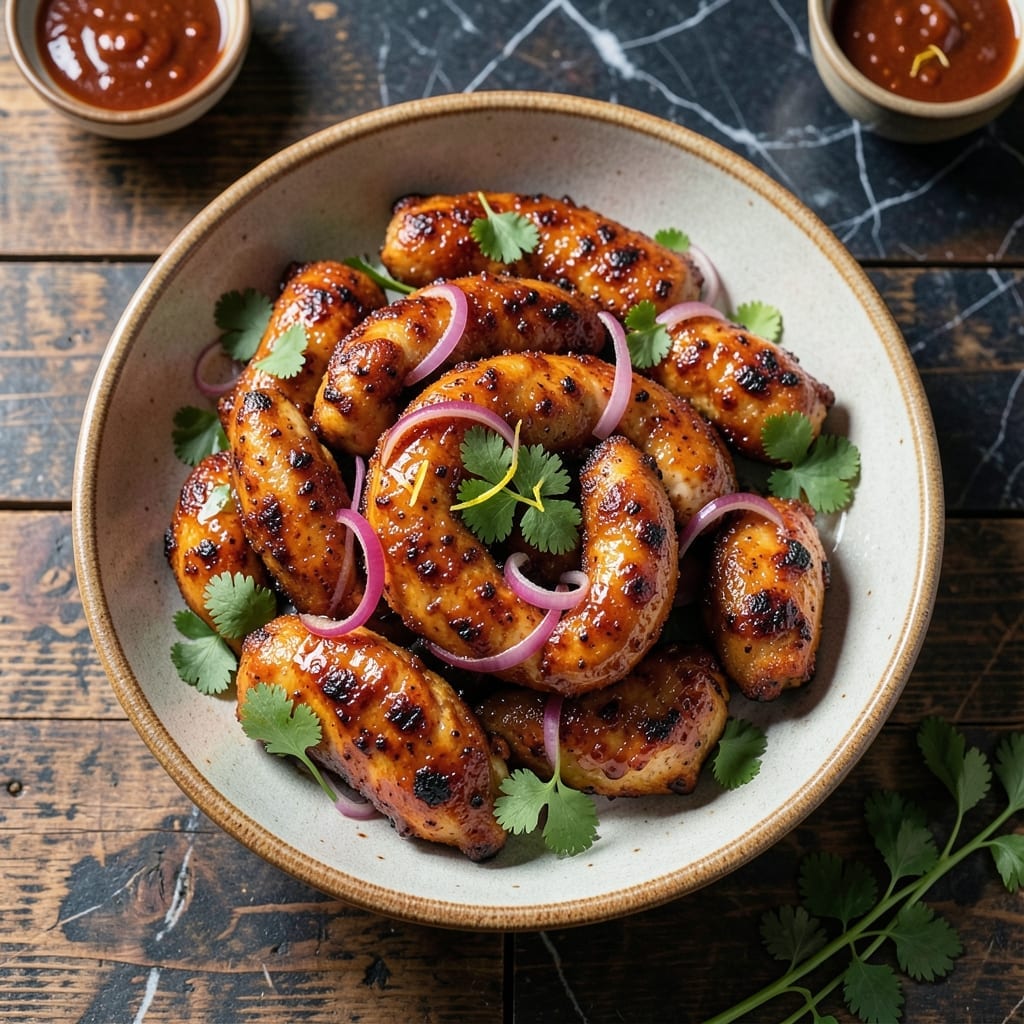
There’s a reason barbecue chicken tenders remain a crowd favorite—they deliver tender, smoky flavor without the fuss of firing up the grill.
This recipe uses a simple dry rub and sauce to replicate that classic low-and-slow taste in your oven or stovetop. I’ve tested countless methods, and this one consistently produces juicy meat with a caramelized glaze.
The key is a quick sear to lock in moisture, followed by a gentle finish in the sauce. No special equipment needed—just patience and a good thermometer.
Serve these tenders with pickles and cornbread for a meal that feels like a backyard cookout, any day of the week.
Ingredients for Barbecue Chicken Tenders
Pantry staples and a quick grocery run. Nothing exotic, just bold flavors.
| Ingredient | Amount | Notes |
|---|---|---|
| Chicken Tenders 🍗 | 1 ½ lb | Boneless, skinless, uniform size |
| Brown Sugar 🧈 | ¼ cup | Light or dark variety |
| Smoked Paprika 🌶️ | 1 tbsp | For deep smoky flavor |
| Garlic Powder 🧄 | 1 tsp | Freshly ground preferred |
| Onion Powder 🧅 | 1 tsp | Balances sweetness |
| Salt 🧂 | 1 tsp | Kosher or sea salt |
| Black Pepper 🌶️ | ½ tsp | Freshly ground |
| Olive Oil 🫒 | 2 tbsp | For searing tenders |
| Barbecue Sauce 🍯 | 1 ½ cups | Quality store-bought or homemade |
| Apple Cider Vinegar 💧 | 1 tbsp | For tangy brightness |
| Worcestershire Sauce 🍶 | 1 tsp | Adds umami depth |
| Cornstarch 🌾 | 1 tbsp | For thickening sauce |
The chicken is the star here. Look for uniform tenders—they cook more evenly and look better on a platter. I grab mine from Costco for bulk savings, but any grocery store will have them pre-cut. The smoked paprika is non-negotiable for that authentic grill flavor—Penzeys has the best quality if you’re stocking your spice cabinet. Don’t skip the searing step; it’s what locks in that juiciness everyone loves (worth the extra minute).
No smoked paprika? Regular paprika plus a pinch of liquid smoke gets you close. Swap the brown sugar for maple syrup in a pinch. The barbecue sauce can be any brand you like—Sweet Baby Ray’s is a crowd-pleaser, but I’ve had great results with Stubb’s too. If you’re avoiding added sugar, use a low-sugar variety and boost the vinegar slightly. The tenders work with chicken breast strips if you can’t find tenders.
Leftovers keep 3-4 days in the fridge, or freeze for up to 3 months. Reheat in the oven for best texture—microwaving can make them soggy. I always make a double batch; they disappear fast (trust me on this one).
Why You’ll Love This Recipe
- One Pan Wonder: I toss the tenders with the spices, pop them in the oven, and clean up is just a quick wipe of the pan.
- Smoky Sweet Balance: The brown sugar caramelizes while the smoked paprika adds that deep, campfire-like flavor I crave.
- Weeknight Hero: Honestly, it’s my Tuesday dinner MVP—ready before the kids start asking what’s for dinner.
- Budget Stretcher: A pound of tenders feeds my family of four with leftovers for lunch the next day.
Step-by-Step Instructions for Barbecue Chicken Tenders
Here’s the method that delivers restaurant-quality results with minimal effort.
Step 1: Season and Coat the Chicken Tenders
In a large bowl, combine the 1.5 lb chicken tenders with 0.25 cup brown sugar, 1 tbsp smoked paprika, 1 tsp garlic powder, 1 tsp onion powder, 1 tsp salt, and 0.5 tsp black pepper. Toss until every piece is evenly coated with the spice mixture.
I’ve found that massaging the seasonings into the meat helps them adhere better and creates more flavorful results. Let the tenders sit for 10 minutes while you prepare the rest of the ingredients—this short marination time makes a noticeable difference in flavor penetration.
Step 2: Sear the Tenders for Maximum Flavor
Heat the 2 tbsp olive oil in a large skillet over medium-high heat until it shimmers but doesn’t smoke. Add the seasoned chicken tenders in a single layer, working in batches if necessary to avoid crowding the pan.
Sear for 3-4 minutes per side until golden brown and just cooked through. You’re looking for a deep caramelization on the surface that’ll complement the barbecue sauce. Don’t move the tenders around too much—let them develop that beautiful crust.
Step 3: Create the Barbecue Glaze
In a separate bowl, whisk together the 1.5 cups barbecue sauce, 1 tbsp apple cider vinegar, 1 tsp Worcestershire sauce, and 1 tbsp cornstarch until smooth. The cornstarch will thicken the sauce into a glossy glaze that clings perfectly to the chicken.
Real talk: the vinegar and Worcestershire are non-negotiable here. They add the brightness and depth that turns good barbecue sauce into something spectacular. Pour this mixture over the cooked tenders in the skillet.
Step 4: Simmer and Coat Evenly
Reduce heat to medium-low and simmer the tenders in the sauce for 3-4 minutes, turning occasionally, until the sauce has thickened and each piece is thoroughly coated. You’ll notice the sauce transforming from thin to a beautiful, glossy lacquer that clings to every tender.
Keep an eye on it—once the sauce reaches the right consistency, it’ll thicken quickly. If it gets too thick too soon, add a splash of water and stir to maintain the perfect glaze consistency.
Step 5: Rest and Serve
Transfer the barbecue chicken tenders to a serving platter and let them rest for 2-3 minutes. This brief rest allows the sauce to set slightly and the juices to redistribute in the meat, ensuring each bite is as tender as the last.
Serve immediately while still hot. The tenders should have that signature sticky, slightly caramelized exterior with juicy, perfectly seasoned meat inside. Any leftovers reheat beautifully in a 350°F oven for 10-12 minutes.
Pro Tips For Making Barbecue Chicken Tenders
- Pat Dry First: I learned this the hard way—wiping the chicken tenders with a paper towel before seasoning guarantees the spices stick and you get that perfect crust, not a soggy mess.
- Bloom the Spices: Toast the smoked paprika, garlic powder, and onion powder in a dry pan for 30 seconds before mixing with brown sugar. Sounds weird, but it wakes up the flavors.
- Skip the Overcrowding: After burning three batches, I finally figured out that leaving space between tenders on the pan lets them caramelize instead of steam.
- Rest Before Serving: Give the tenders 5 minutes off the heat under loose foil—my grandmother swore by this, and she was right. The juices redistribute and the sauce clings better.
Common Mistakes When Making This Dish
Overcrowding the Pan
Never dump all 1.5 lb chicken tenders into the skillet at once. Crowding lowers the temperature, causing steaming instead of searing. Work in batches—this ensures each piece gets that golden-brown crust that locks in juices. 🔥
Skipping the Rest
Those 2-3 minutes of resting time after cooking aren’t optional. Skipping this step lets all the delicious juices escape, leaving you with dry meat. I learned this the hard way early in my career at The Smoky Pig.
Patience here makes the difference between good and great.
Sauce Too Thin
If your glaze isn’t thickening, you likely forgot the 1 tbsp cornstarch. It’s the secret to that perfect, clingy consistency. Whisk it into cold sauce first to avoid lumps, then heat gently.
Underseasoning the Rub
The dry rub needs bold flavors to stand up to the barbecue sauce. Don’t skimp on the smoked paprika or brown sugar—they create the base flavor profile. I always taste my rub mix before applying it to the chicken.
High Heat Scorching
Keep the heat at medium-high for searing, not screaming hot. Too high and you’ll burn the outside before the inside cooks. The tenders should sizzle, not smoke aggressively.
Dry Chicken Fix
If your tenders turn out dry, try brining them first in ¼ cup salt dissolved in 4 cups water for 30 minutes. This extra step guarantees moisture, especially with leaner cuts. ✨
Nutrition Facts
Frequently Asked Questions
What’s the best way to prevent dry chicken?
Don’t overcook—pull tenders when they reach 165°F internally. Brining for 30 minutes in salted water first adds extra insurance against dryness.
Can I use chicken breasts instead of tenders?
Yes! Cut breasts into 1-inch strips for even cooking. They may take 1-2 minutes longer per side to reach the same doneness.
How do I make the sauce thicker?
Mix 1 tbsp cornstarch with cold water before adding to the sauce. Simmer until it reaches your desired consistency.

- Jollof Rice Sauce Recipe: West African Tomato and Spice Infusion - September 25, 2026
- Japanese Rice Soup Recipe: Umami-Rich Comfort in a Bowl - September 25, 2026
- Homemade Cream Of Rice Recipe: Silk-Smooth Breakfast in Minutes - September 25, 2026