
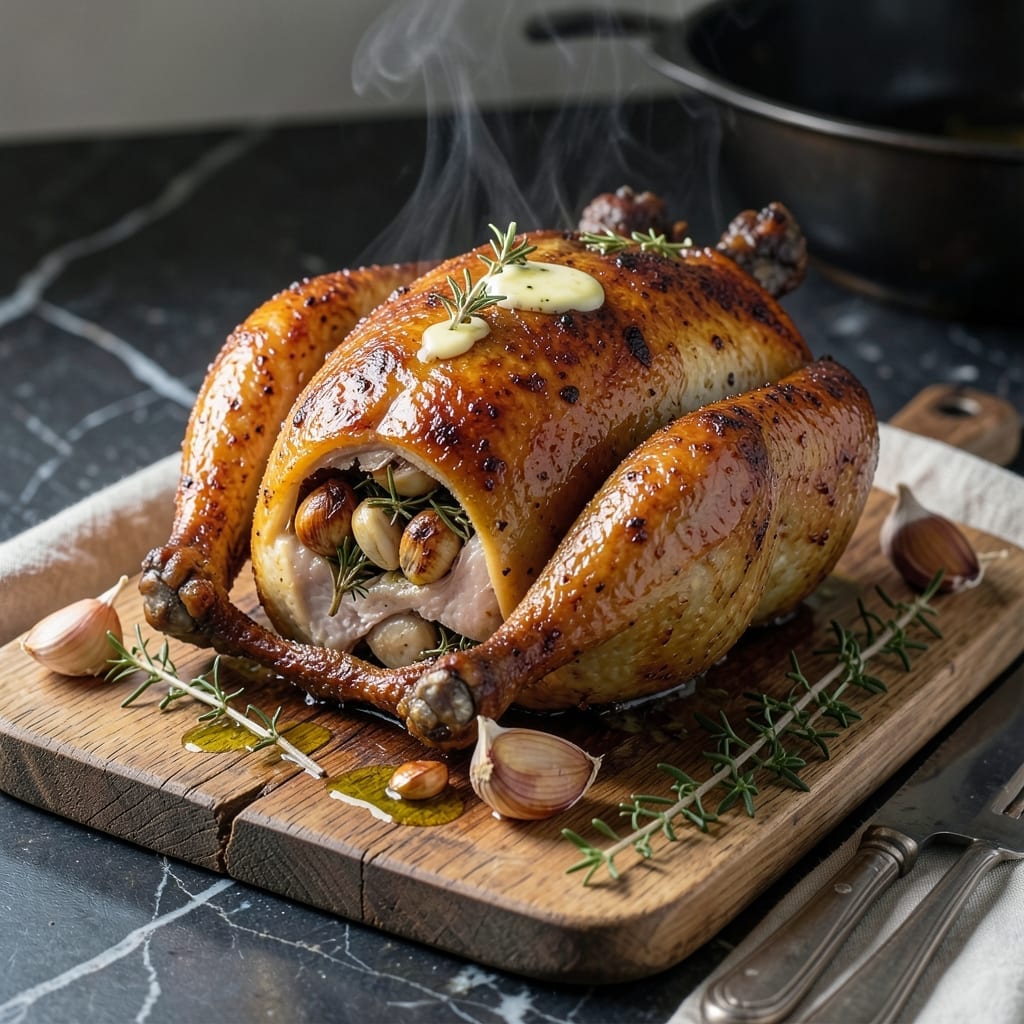
Achieving perfectly roasted chicken at home is simpler than most home cooks realize. This proven method guarantees juicy meat beneath golden crisp skin without complicated techniques.
The key lies in proper preparation and consistent oven heat. A 450°F oven works magic on the skin while the meat stays tender and flavorful. The process requires patience but rewards with restaurant-quality results.
You’ll find the technique straightforward yet precise, with each step building toward that ideal balance of textures. The visual transformation alone makes the effort worthwhile.
This approach works for any whole chicken, making it a reliable foundation for countless meals. The method delivers on its promise every time.
Ingredients for Roasted Chicken Recipe Video
A whole chicken, fresh herbs, and a few pantry staples deliver restaurant-quality results at home.
| Ingredient | Amount | Notes |
|---|---|---|
| Whole Chicken 🍗 | 3 ½ lb | Fresh or thawed, patted dry inside and out |
| Unsalted Butter 🧈 | ½ cup | Softened to room temperature |
| Kosher Salt 🧂 | 1 ½ tbsp | Diamond Crystal preferred for even distribution |
| Black Pepper 🌶️ | 1 tsp | Freshly ground coarse black pepper |
| Garlic Cloves 🧄 | 6 cloves | Peeled and smashed for maximum flavor |
| Fresh Thyme Sprigs 🌿 | 4 sprigs | Or 1 tbsp dried thyme leaves |
| Fresh Rosemary Sprigs 🌿 | 4 sprigs | Or 1 tbsp dried rosemary leaves |
| Lemon 🍋 | 1 whole | Halved, for cavity and basting |
| Yellow Onion 🧅 | 1 whole | Quartered, for aromatic base |
| Carrots 🥕 | 4 whole | Peeled and cut into large chunks |
| Celery Stalk 🌿 | 2 stalks | Cut into large chunks |
| Olive Oil 🫒 | 1 tbsp | For vegetable coating |
| Chicken Stock 🥣 | ½ cup | Low-sodium preferred for basting |
The chicken quality is paramount. Opt for a 3.5 to 4-pound bird—smaller cooks faster but can dry out, larger takes longer to reach safe temperature. Whole Foods or local butchers offer excellent fresh options, but most supermarkets carry suitable birds. Look for skin that’s smooth and slightly moist, not wrinkled or gray. If brining, use Diamond Crystal kosher salt as its coarse texture dissolves evenly without over-salting.
Out of fresh thyme or rosemary? Dried herbs work at one-third the quantity—just rub them between your fingers to release the oils. No whole chicken? Bone-in, skin-on chicken thighs can be used with adjusted cooking time. The butter can be replaced with high-quality olive oil for a lighter flavor, though the skin may not brown as deeply. Garlic powder at 1 teaspoon can substitute for fresh cloves in a pinch.
Store fresh herbs wrapped in damp paper towels in the fridge for up to 5 days. The chicken should be cooked within 2 days of purchase, or frozen for up to 9 months. Leftovers keep well, refrigerated, for 3-4 days and make excellent sandwiches or salads.
Why You’ll Love This Recipe
- One Pan Wonder: I toss everything on a single sheet pan—chicken, butter, garlic—and let the oven do the work.
- Buttery Garlic Magic: The butter and garlic seep under the skin, making every bite ridiculous. My kids fight over the crispy edges.
- Weeknight Hero: It’s my go-to for Sunday dinner or a lazy Tuesday. Honestly, it fits any day.
- Leftovers Gold: One roasted chicken means sandwiches, salads, or tacos for days. I stretch it into three meals, easy.
Step-by-Step Instructions for Roasted Chicken
Achieve crisp golden skin and tender meat with this professional method every time.
Step 1: Prepare and Season the Whole Chicken
Pat the 3.5 lb Whole Chicken completely dry inside and out with paper towels. This critical step removes surface moisture that would otherwise steam the skin instead of crisping it. Season the cavity generously with 1.5 tbsp Kosher Salt and 1 tsp Black Pepper.
Rub the exterior with the 0.5 cup Unsalted Butter, working it under the skin where possible. Stuff the cavity with 6 cloves Garlic Cloves, 4 sprigs Fresh Thyme Sprigs, 4 sprigs Fresh Rosemary Sprigs, and both halves of the 1 whole Lemon. This aromatic foundation infuses the meat with flavor as it roasts.
Step 2: Prepare the Aromatic Vegetable Base
In a large roasting pan, combine the 1 whole Yellow Onion (quartered), 4 whole Carrots (peeled and cut into large chunks), and 2 stalks Celery Stalk (cut into large chunks). Toss with 1 tbsp Olive Oil to prevent sticking and promote caramelization.
These vegetables create a natural roasting rack that elevates the chicken, allowing hot air to circulate underneath. Their moisture also helps maintain even heat distribution in the oven. Arrange them in a single layer to maximize surface contact with the pan.
Step 3: Roast at High Temperature
Place the chicken breast-side up on the vegetable bed. Position the pan in a preheated 425°F oven. Roast undisturbed for 1 hour to 1 hour 15 minutes, depending on your oven’s calibration. The high initial temperature ensures rapid browning and crisp skin development.
Baste the chicken with the 0.5 cup Chicken Stock every 20 minutes after the first 30 minutes of cooking. This adds moisture to the oven environment while building layers of flavor on the skin. The chicken is done when the internal temperature reaches 165°F in the thickest part of the thigh.
Step 4: Rest and Serve
Transfer the chicken to a cutting board, leaving the vegetables in the pan to continue roasting if desired. Tent loosely with foil and rest for 15-20 minutes. This crucial period allows the juices to redistribute throughout the meat, ensuring each serving remains moist and flavorful.
Carve the chicken and arrange on a platter surrounded by the roasted vegetables. The skin should be a deep golden brown with an audible crispness, while the meat underneath remains tender and juicy. Serve immediately while hot for the optimal eating experience.
Pro Tips For Making Roasted Chicken Recipe Video
- Dry the Skin: Pat the chicken completely dry with paper towels before seasoning—this is non-negotiable for crispy skin. I learned this the hard way after serving soggy-skinned chicken to guests once too often.
- Room Temp Start: Let the chicken sit out for 30-45 minutes before roasting. It cooks more evenly this way, and I was skeptical until I tried it—now I never skip this step.
- Butter Under Skin: Work about half the softened unsalted butter under the skin covering the breasts and thighs. This makes a real difference in moisture and flavor, way more than just rubbing it on top.
- Rest Before Carving: Give it a solid 15 minutes under foil after roasting. I used to rush this part and wondered why my chicken was dry—now I know better.
Serving Suggestions for This Dish
Platter Presentation
Arrange your roasted chicken as the centerpiece on a large wooden board. Surround it with the caramelized onion, carrots, and celery from the pan. Their golden-brown edges add rustic charm. I love how the colors pop against dark wood. 💛
Garnishing Touches
Squeeze roasted lemon halves from the cavity over the chicken just before serving. Scatter fresh thyme or rosemary sprigs on the platter for a fragrant, restaurant-style finish. The citrus brightens the rich flavors beautifully.
Sauce Pairing
Offer a simple pan sauce made from the roasting juices. Skim off excess fat, then simmer the remaining liquid with ¼ cup chicken stock for 3-4 minutes. Spoon this over individual servings for extra moisture and depth.
Side Dish Ideas
A crisp green salad with lemon vinaigrette cuts through the richness. Or serve with buttery mashed potatoes to soak up all those delicious juices. Both options balance the meal perfectly.
Family-Style Service
Place the whole chicken on the table and let everyone carve their own pieces. This creates a warm, communal dining experience. I always keep a sharp carving knife and serving spoon nearby for easy portioning.
Bread Addition
Warm crusty bread or dinner rolls are perfect for mopping up any leftover pan juices. Toast them lightly and serve in a basket lined with a linen napkin for an extra touch. ✨
Nutrition Facts
Frequently Asked Questions
What oven temperature works best?
Start with 425°F for crispy skin and even cooking. This high heat creates a perfect Maillard reaction while keeping the interior juicy. Adjust down to 375°F if the skin browns too quickly.
How do I know when it’s done?
Use a meat thermometer—it’s ready at 165°F in the thickest part of the thigh. The juices should run clear, not pink. Rest for 15-20 minutes before carving to retain moisture.
Can I use a different pan?
A heavy roasting pan is ideal, but a rimmed baking sheet works in a pinch. Avoid glass dishes—they don’t conduct heat as evenly. Always use a rack or vegetables to elevate the bird.
Why is my skin not crispy?
Pat the chicken completely dry before roasting and avoid overcrowding the pan. Baste with fat during cooking and finish at 425°F for the final 10 minutes.

- Jollof Rice Sauce Recipe: West African Tomato and Spice Infusion - September 25, 2026
- Japanese Rice Soup Recipe: Umami-Rich Comfort in a Bowl - September 25, 2026
- Homemade Cream Of Rice Recipe: Silk-Smooth Breakfast in Minutes - September 25, 2026