
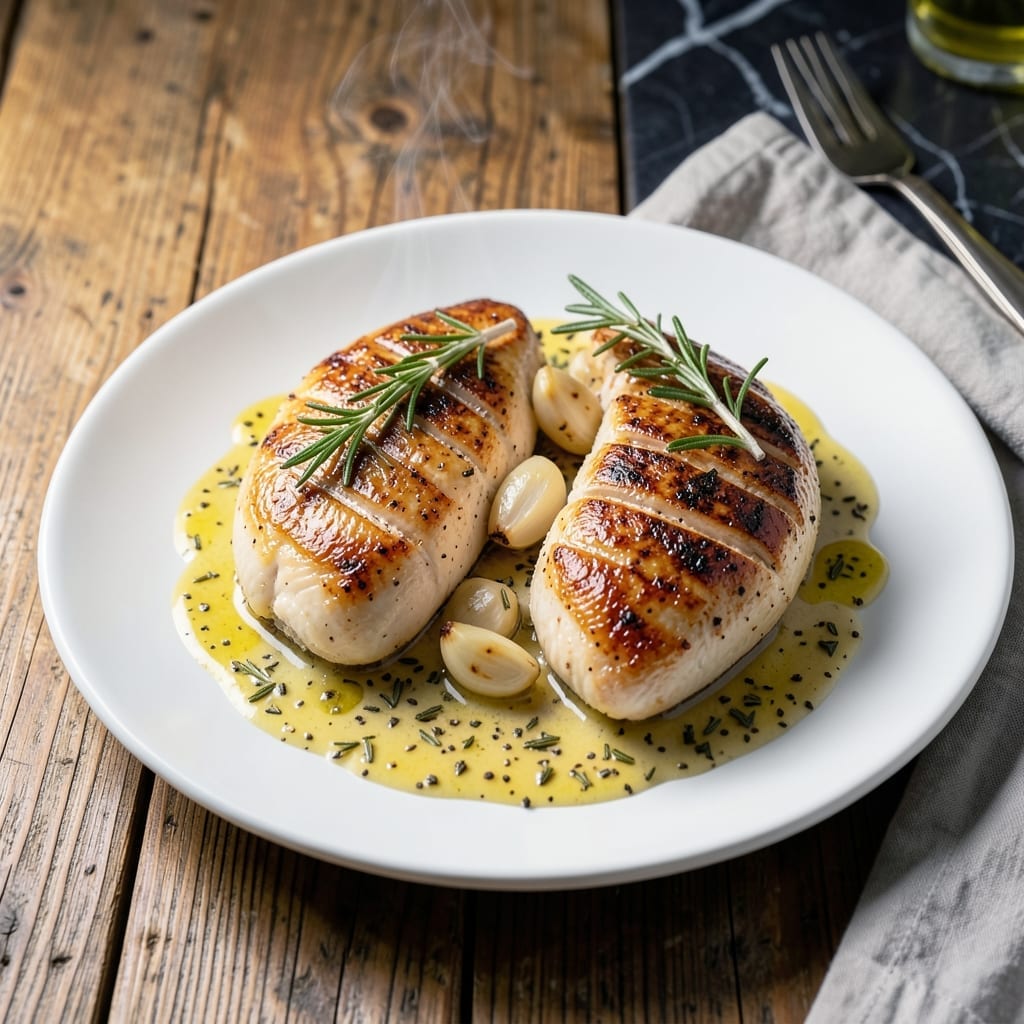
This rosemary chicken breast delivers herb-infused flavor with minimal effort and maximum impact. The fresh rosemary creates an aromatic crust that locks in moisture, ensuring every bite stays juicy and tender.
With just 30 minutes from start to finish, this dish proves that weekday dinners can be both simple and sophisticated. A quick sear followed by oven finishing guarantees perfectly cooked chicken every time.
The result is golden-brown breast meat with a fragrant rosemary aroma that fills your kitchen. The herb’s piney notes complement the chicken’s natural richness without overpowering it.
Serve with roasted vegetables or mashed potatoes to complete the meal. This method works for both boneless and bone-in cuts with equally impressive results.
Ingredients for Rosemary Chicken Breast
Simple ingredients create an aromatic, restaurant-quality chicken dish with ease.
| Ingredient | Amount | Notes |
|---|---|---|
| Boneless, Skinless Chicken Breasts 🍗 | 1 ½ lb | Pounded to even thickness |
| Fresh Rosemary Sprigs 🌿 | 4 whole | Stems removed, finely chopped |
| Olive Oil 🫒 | 3 tbsp | Divided for searing and finishing |
| Unsalted Butter 🧈 | 2 tbsp | For basting and richness |
| Garlic Cloves 🧄 | 4 cloves | Minced for aromatic base |
| Kosher Salt 🧂 | 1 ½ tsp | Diamond Crystal preferred |
| Freshly Ground Black Pepper 🌶️ | 1 tsp | Coarse grind for texture |
| Dijon Mustard 🟡 | 1 tbsp | For tangy depth in crust |
| Lemon Zest 🍋 | 1 tsp | From 1 medium lemon |
| Chicken Stock 🍲 | ½ cup | Low-sodium preferred |
| All-Purpose Flour 🌾 | ¼ cup | For light dredging |
| Shallot 🧅 | 1 whole | Finely diced for subtle onion flavor |
The chicken quality is paramount here. Boneless, skinless breasts from Whole Foods or a trusted butcher ensure tenderness. Pound them to an even 1-inch thickness for consistent cooking. Fresh rosemary is non-negotiable—look for vibrant green sprigs with no wilting. Trader Joe’s often has the best selection at reasonable prices.
No fresh rosemary? Dried rosemary at one-third the amount works in a pinch, but the flavor won’t be as bright. Swap chicken stock for vegetable stock if needed. The Dijon can be replaced with whole-grain mustard for a rustic twist. For extra richness, brown the butter slightly before basting.
Store fresh rosemary wrapped in damp paper towels for up to 1 week. Chicken should be cooked within 2 days of purchase. Leftovers keep 3-4 days refrigerated or freeze for 3 months in airtight containers.
Why You’ll Love This Recipe
- I’ll be real: it tastes even better the next day. Cold in a sandwich or reheated, the flavors just deepen.
- One Pan Wonder: I sear the chicken in butter and olive oil, then let the rosemary and garlic do their magic—minimal mess, maximum flavor.
- Garlic-Rosemary Magic: The aroma of fresh rosemary and garlic sizzling in butter is ridiculous. Honestly, the smell alone makes my mouth water.
- Weeknight Hero: It’s my go-to for busy evenings—pairs just as well with mashed potatoes as it does a simple salad.
Step-by-Step Instructions for Rosemary Chicken Breast
This method ensures perfectly cooked, herb-infused chicken with a golden crust every time.
Step 1: Prepare and Season the Chicken
Begin by pounding the 1.5 lb boneless, skinless chicken breasts to an even ½-inch thickness between plastic wrap. This guarantees uniform cooking. Season both sides generously with the 1.5 tsp kosher salt and 1 tsp freshly ground black pepper.
In a shallow dish, whisk together the 0.25 cup all-purpose flour, 1 tbsp Dijon mustard, and 1 tsp lemon zest. Lightly dredge each breast in the mixture, shaking off any excess. This creates a flavorful, crisp crust while keeping the meat tender.
Step 2: Sear the Chicken to Golden Perfection
Heat 2 tbsp olive oil in a large skillet over medium-high heat until shimmering. Add the chicken and cook undisturbed for 5-6 minutes per side, until the crust is deep golden brown and the chicken releases easily from the pan. Avoid moving the pieces prematurely to ensure proper browning.
During the last 2 minutes of cooking, add the 2 tbsp unsalted butter to the pan. As it melts, spoon it over the chicken repeatedly to baste. This adds richness and enhances the browning process.
Step 3: Build the Rosemary-Garlic Pan Sauce
Transfer the chicken to a plate and tent with foil to keep warm. In the same skillet, reduce heat to medium and add the remaining 1 tbsp olive oil. Sauté the finely diced shallot for 2 minutes until translucent.
Add the minced 4 cloves garlic cloves and chopped fresh rosemary sprigs, cooking for 1 minute until fragrant. Pour in the 0.5 cup chicken stock and scrape up any browned bits from the bottom of the pan. Simmer for 3-4 minutes until slightly reduced.
Step 4: Finish and Serve
Return the chicken to the skillet, spooning the rosemary-garlic sauce over the top. Cook for an additional 1-2 minutes to allow the flavors to meld. The internal temperature should reach 165°F for perfect doneness.
Transfer to a serving platter and drizzle with any remaining pan sauce. The chicken should have a golden, herb-flecked crust with juicy, tender meat inside. Serve immediately while hot, accompanied by the aromatic sauce.
Pro Tips For Making Rosemary Chicken Breast
- Pound the Breasts: I learned this the hard way—uneven chicken breasts cook unevenly. Pound them to an even ¾-inch thickness so the rosemary and garlic flavors hit every bite, and nothing dries out.
- Bloom the Rosemary: Warm the olive oil and butter first, then add the rosemary sprigs for 30 seconds before the chicken goes in. Sounds weird, but it works: the heat releases the herbs’ oils for way more flavor.
- Skip the Overcrowding: Resist the urge to cram all the chicken in one pan—it steams instead of sears. Cook in batches if needed; the fond left behind is pure flavor for your sauce.
- Rest Before Serving: Give it a solid 5-10 minutes under foil after cooking. I used to rush this part and wondered why my chicken was dry, even with all that butter and rosemary.
Common Mistakes When Making This Recipe
Overcrowding the Pan
Never cook all 1.5 lb chicken breasts at once in a standard skillet. Overcrowding lowers the pan temperature, causing the chicken to steam instead of sear. I cook in batches if needed, keeping finished pieces warm under foil. This ensures that golden-brown crust you’re after.
Skipping the Pounding
Uneven thickness leads to uneven cooking. I always pound the breasts to ½-inch thickness between plastic wrap. This guarantees the chicken cooks through without drying out the thinner parts. A meat mallet or rolling pin works equally well.
Rushing the Sear
Let the chicken cook undisturbed for the full 5-6 minutes per side. Moving it too soon prevents proper browning. I only flip once when the crust releases easily from the pan. Patience here creates that restaurant-quality sear.
Neglecting the Rest
Always let the chicken rest for 5-10 minutes after cooking. This allows the juices to redistribute throughout the meat. If you cut into it immediately, all those flavorful juices will end up on your cutting board. 💡
Using Dull Rosemary
Old or woody rosemary loses its aromatic punch. I only use fresh rosemary sprigs with vibrant green needles. If you must use dried, reduce the amount by two-thirds and rehydrate it in warm water for 10 minutes first.
Forgetting the Sauce
Don’t discard those browned bits in the pan! That’s where the flavor is. I always deglaze with the 0.5 cup chicken stock to create a quick pan sauce. It takes just 3-4 minutes but makes a huge difference in the final dish.
Nutrition Facts
Frequently Asked Questions
Can I use dried rosemary instead of fresh?
Yes, but use 1/3 the amount and rehydrate in warm water for 10 minutes first. Fresh rosemary provides the best flavor, but dried works in a pinch.
How do I know when the chicken is done?
The internal temperature should reach 165°F. Use a meat thermometer for accuracy. The juices should also run clear when pierced with a knife.
What can I substitute for Dijon mustard?
Whole-grain mustard works well for a rustic twist. For a milder taste, use 1 tbsp yellow mustard with 1/2 tsp honey.
How do I keep the chicken from drying out?
Pound the breasts to even thickness and avoid overcooking. Letting it rest for 5-10 minutes after cooking helps retain moisture.

- Jollof Rice Sauce Recipe: West African Tomato and Spice Infusion - September 25, 2026
- Japanese Rice Soup Recipe: Umami-Rich Comfort in a Bowl - September 25, 2026
- Homemade Cream Of Rice Recipe: Silk-Smooth Breakfast in Minutes - September 25, 2026