
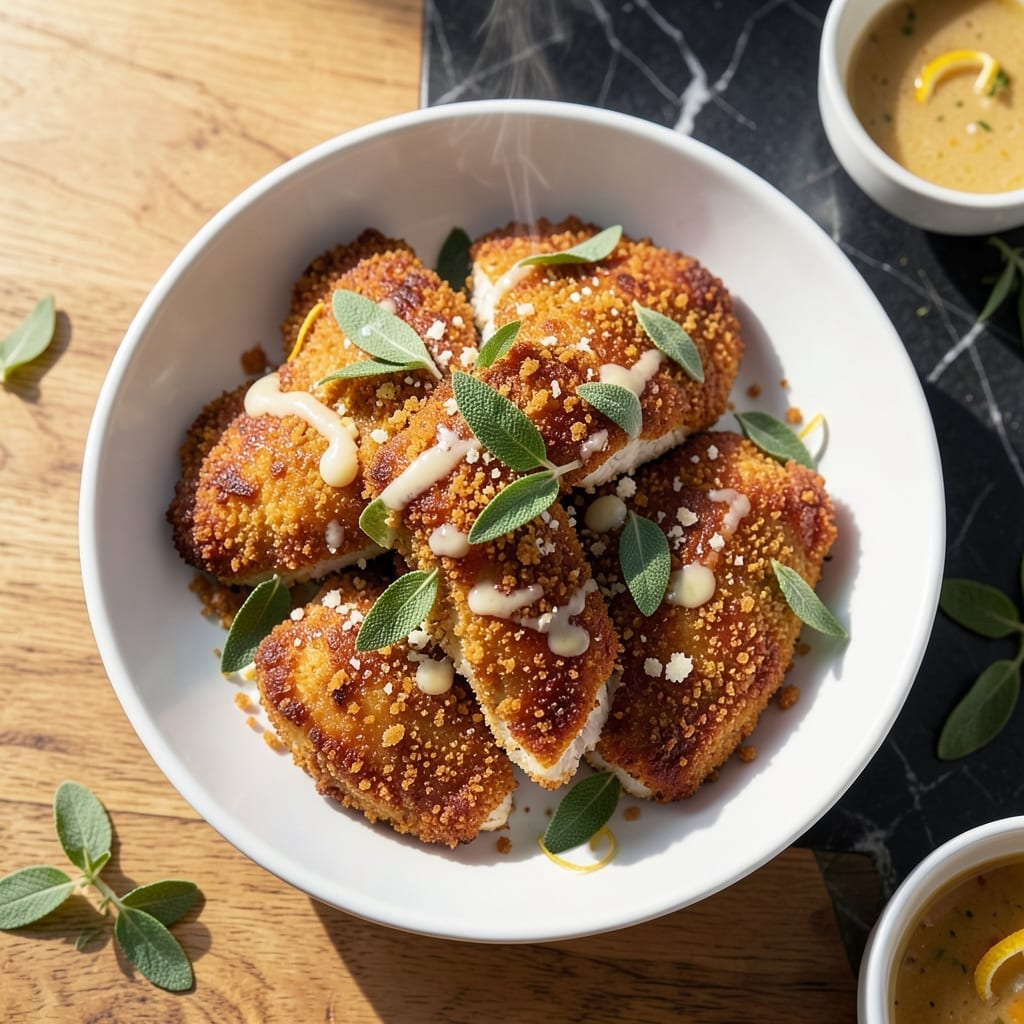
This sage chicken delivers a juicy center with a golden herbed crust that’s hard to resist. The fresh sage creates an aromatic depth that transforms simple ingredients into something extraordinary.
I’ve perfected this method to ensure the chicken stays tender while the crust gets crisp. A quick sear locks in moisture, and a finish in the oven guarantees even cooking without drying it out.
The result is a dish that looks and tastes like it came from a fine dining kitchen. The sage brings earthy warmth, while the crust adds satisfying texture to every bite.
Serve it with roasted vegetables or a light salad for a complete meal. Here’s how to make it at home.
Ingredients for Sage Chicken
Fresh sage, crispy panko, and tender chicken make this dish unforgettable with simple ingredients.
| Ingredient | Amount | Notes |
|---|---|---|
| Boneless Skinless Chicken Breasts 🍗 | 1 ½ lb | Pounded to even thickness |
| Fresh Sage Leaves 🌿 | ½ cup | Finely chopped for crust |
| All-Purpose Flour 🌾 | ½ cup | For dredging chicken |
| Large Eggs 🥚 | 2 whole | Beaten for egg wash |
| Panko Breadcrumbs 🍞 | 1 ½ cups | For crispy crust texture |
| Parmesan Cheese 🧀 | ½ cup | Freshly grated from block |
| Garlic Cloves 🧄 | 3 cloves | Minced for flavor base |
| Olive Oil 🫒 | ½ cup | Divided for searing and baking |
| Unsalted Butter 🧈 | 3 tbsp | Melted for breadcrumb mixture |
| Kosher Salt 🧂 | 1 tsp | Plus more to taste |
| Ground Black Pepper 🌶️ | ½ tsp | Freshly ground preferred |
| Dijon Mustard 🟡 | 1 tbsp | For binding crust |
| Fresh Lemon Juice 🍋 | 1 tbsp | For brightness at end |
The chicken is the foundation here. Boneless, skinless breasts stay juicy when pounded to even thickness—about 1/2 inch works best. Most supermarkets carry them pre-trimmed, but butcher counters at Whole Foods or Publix will cut them to order. For the sage, look for fresh bunches with vibrant green leaves—avoid any with black spots or wilting.
No fresh sage? Dried rubbed sage at one-third the amount works, but the flavor won’t be as bright. Panko not available? Regular breadcrumbs are fine, though the crust won’t be as crisp. The Parmesan can be swapped for Pecorino Romano (saltier, so reduce by half), or Grated Romano from a block. Skip the pre-grated—it doesn’t melt right.
The breaded chicken keeps 2-3 days in the fridge, but it’s best fresh from the oven. You can prep the crust mixture 1 day ahead—store it covered in the fridge. Leftovers reheat best in a 350°F oven for 10-12 minutes (microwave makes the crust soggy).
Why You’ll Love This Recipe
- Weeknight Hero: I can bread and bake this while my coffee’s still warm—panko and sage do all the heavy lifting.
- Crispy Earthy Bite: That first crunch gives way to juicy chicken, and the fresh sage adds this warm, herby depth I can’t get enough of.
- Feeds the Crew: Honestly, it’s my go-to for picky eaters and dinner parties alike. Everyone just digs in.
- Leftovers? Yes Please: The chicken stays tender even reheated, so I pack it for lunch the next day without a second thought.
Step-by-Step Instructions for Sage Chicken
Master this technique for golden, crispy crusts and perfectly juicy chicken every time.
Step 1: Prepare and Pound the Chicken
Begin by pounding the 1.5 lb boneless skinless chicken breasts to an even ½-inch thickness using a meat mallet. Place each piece between plastic wrap to prevent tearing. This ensures even cooking and prevents dry spots.
Pat the chicken dry with paper towels, then season both sides with 1 tsp kosher salt and ½ tsp ground black pepper. I always use freshly ground pepper for the best flavor. Let the seasoned chicken rest for 10 minutes to allow the salt to penetrate.
Step 2: Create the Sage Breadcrumbs Mixture
In a shallow bowl, combine the 1.5 cups panko breadcrumbs, ½ cup finely chopped fresh sage leaves, ½ cup freshly grated parmesan cheese, and 3 minced garlic cloves. Stir in 3 tbsp melted unsalted butter and 1 tbsp dijon mustard until evenly coated.
The mixture should look moist but still crumbly. The sage provides an earthy aroma, while the parmesan adds a salty depth. If it seems too dry, add a touch more butter, but don’t make it soggy.
Step 3: Dredge and Coat the Chicken
Set up a breading station with three shallow dishes. Place the ½ cup all-purpose flour in the first dish. In the second, beat the 2 large eggs with 1 tbsp fresh lemon juice until frothy. The third dish holds your sage breadcrumb mixture.
Dredge each chicken breast in flour, shaking off excess, then dip in the egg wash, letting excess drip off. Press firmly into the breadcrumb mixture, coating both sides completely. The pressure ensures the crust adheres well during cooking.
Step 4: Sear and Bake to Perfection
Heat ¼ cup olive oil in a large oven-safe skillet over medium-high heat. When shimmering, add the breaded chicken and sear for 3-4 minutes per side until golden brown and crispy. Don’t move the pieces until ready to flip to avoid tearing the crust.
Transfer the skillet to a preheated 375°F oven and bake for 10-12 minutes until the chicken reaches an internal temperature of 165°F. The crust should be deep golden and the chicken juicy when pierced.
Step 5: Rest and Serve
Remove the chicken from the skillet and let it rest on a wire rack for 5 minutes. This allows the juices to redistribute for maximum tenderness. Drizzle with the remaining ¼ cup olive oil from the pan for extra flavor.
Serve immediately while the crust is still crispy. Each piece should have a golden, herb-flecked exterior with moist, tender meat inside. The sage aroma will be most pronounced when served fresh from the oven.
Pro Tips For Making Sage Chicken
- Pound the Chicken: Boneless breasts cook unevenly—pound them to an even ½-inch thickness so the coating crisps before the meat dries out. I learned this the hard way after too many dry, overcooked pieces.
- Bruise the Sage: Rub fresh sage leaves between your palms before chopping to release the oils. Sounds weird, but it works—the aroma and flavor will be noticeably stronger.
- Skip the Overcrowding: Fry in batches with at least an inch between pieces, or the breading steams instead of crisps. After burning three batches, I finally figured out patience is non-negotiable here.
- Warm the Oil: Get the oil shimmering but not smoking before adding the chicken—about 350°F. My grandmother swore by this, and she was right: it prevents greasy, soggy breading.
Creative Variations of This Dish
Brown Butter Variation
Swap the 3 tbsp melted butter with browned butter for a nutty depth. Cook the butter over medium heat until it turns golden and smells toasty, then cool slightly before mixing with breadcrumbs. This adds a rich caramel note that pairs beautifully with sage. 🔥
Lemon Sage Twist
Add zest of 1 lemon to your breadcrumb mixture along with the sage. The citrus brightens the earthy herb and cuts through the richness. I also like to finish each piece with an extra sprinkle of lemon zest for a pop of color and flavor.
Spicy Sage Kick
For heat, mix ½ tsp red pepper flakes or 1 tsp cayenne into the breadcrumb blend. The spice contrasts wonderfully with the fresh sage. If you love bold flavors, try adding 1 finely chopped jalapeño to the mixture as well.
Parmesan Free Option
Omit the parmesan cheese and replace it with ½ cup grated Pecorino Romano for a saltier, sharper bite. For a dairy-free version, use nutritional yeast at the same volume. The crust will still be crispy, with a slightly different but equally delicious flavor profile.
Gluten Free Adaptation
Use gluten-free panko (like Kikkoman’s) and swap the all-purpose flour for cornstarch or almond flour in the dredging stage. The texture will be just as crispy, and no one will notice the difference.
Herb Blend Upgrade
Combine the sage with 1 tbsp fresh thyme and 1 tbsp fresh rosemary for a more complex herb profile. This mix works especially well for holiday meals or when you want to impress guests with layered flavors.
Nutrition Facts
Frequently Asked Questions
Can I use dried sage instead of fresh?
Yes, but use 1/3 the amount since dried is more concentrated. The flavor will be less bright, so add a pinch of lemon zest to compensate.
How do I keep the crust from getting soggy?
Rest the chicken on a wire rack after baking, not a plate. This allows air to circulate and maintains crispiness. Serve within 10 minutes for best texture.
What’s the best way to pound the chicken evenly?
Place each breast between plastic wrap and use a meat mallet. Aim for ½-inch thickness throughout. This prevents dry spots and ensures even cooking.
Can I make this ahead of time?
Prep the crust mixture 1 day ahead and store it covered in the fridge. Bread the chicken up to 2 hours before cooking, but bake just before serving.

- Jollof Rice Sauce Recipe: West African Tomato and Spice Infusion - September 25, 2026
- Japanese Rice Soup Recipe: Umami-Rich Comfort in a Bowl - September 25, 2026
- Homemade Cream Of Rice Recipe: Silk-Smooth Breakfast in Minutes - September 25, 2026