
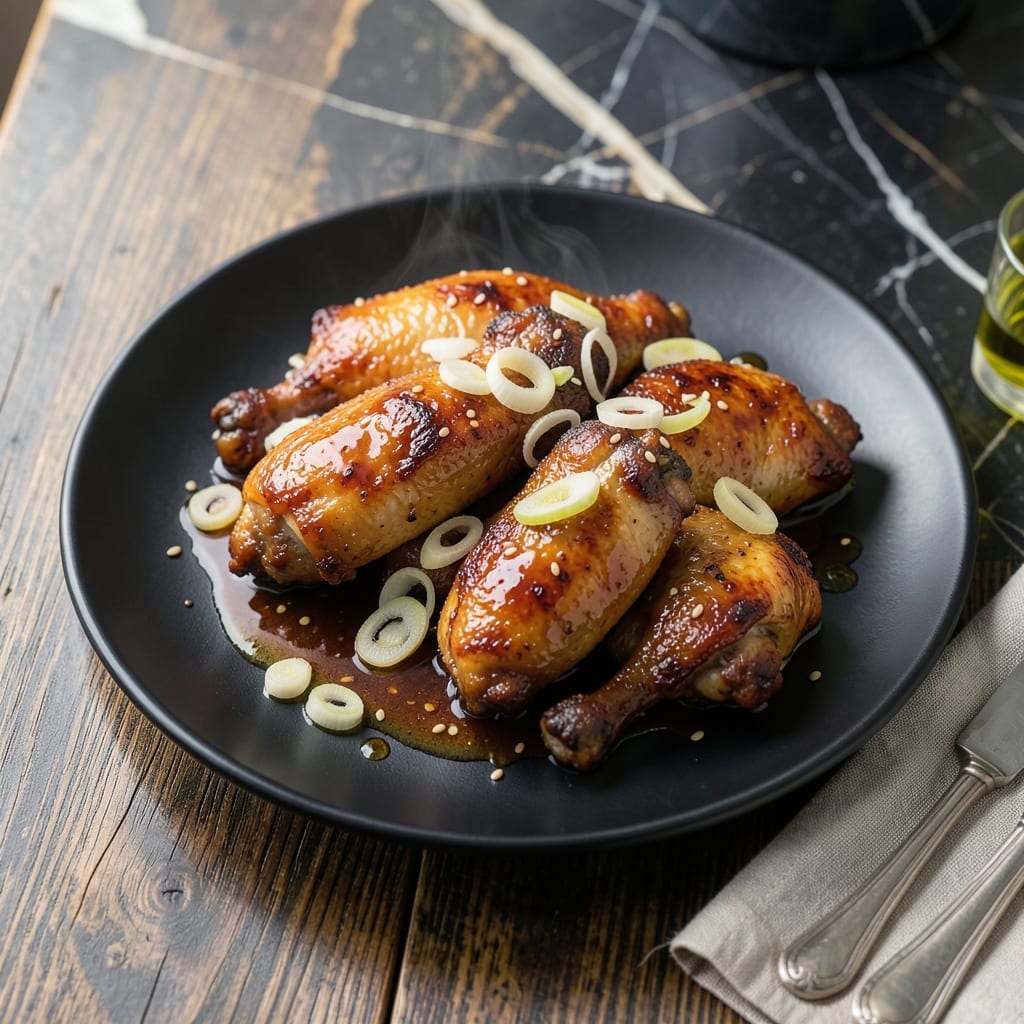
Hawaiian shoyu chicken delivers a perfect balance of sweet and savory that’s hard to resist. This dish transforms simple ingredients into a tender, glazed masterpiece with minimal effort.
The marinade blends soy sauce, brown sugar, and garlic for a rich, umami-packed flavor. Cooking it low and slow ensures the chicken absorbs every drop of that sticky glaze.
What emerges is juicy, fall-off-the-bone meat coated in a shiny, caramelized sauce. It’s a crowd-pleaser that feels special but comes together with ease.
Serve with steamed rice to soak up every last bit of that irresistible sauce.
Ingredients for Shoyu Chicken
Simple, flavorful ingredients transform into a tender, glazed Hawaiian masterpiece with ease.
| Ingredient | Amount | Notes |
|---|---|---|
| Chicken Thighs 🍗 | 2 ½ lb | Boneless, skinless, trimmed |
| Soy Sauce 🫒 | ¾ cup | Low-sodium preferred for balance |
| Brown Sugar 🍚 | ¾ cup | Light or dark, packed |
| Garlic Cloves 🧄 | 6 cloves | Minced for maximum flavor |
| Fresh Ginger 🌿 | 1 tbsp | Peeled and grated |
| Rice Vinegar 🍶 | ¼ cup | Balances sweetness and salt |
| Green Onions 🧅 | 4 whole | Thinly sliced for garnish |
| Vegetable Oil 🫒 | 2 tbsp | For searing chicken |
| Sesame Oil 🫒 | 1 tsp | Toasted, for finishing |
| Black Pepper 🌶️ | ½ tsp | Freshly ground preferred |
| Red Pepper Flakes 🔥 | ¼ tsp | Optional for subtle heat |
The chicken thighs are non-negotiable for that fall-off-the-bone texture—boneless, skinless from a butcher or pre-packaged works best. Whole Foods or Costco have quality options. Soy sauce is the backbone, so use a reputable brand like Kikkoman or Yamasa. Brown sugar adds caramelization—light or dark both work, but avoid raw sugar as it doesn’t dissolve as smoothly.
No brown sugar? White sugar plus 1 tbsp molasses mimics the depth. Short on soy sauce? Tamari at a 1:1 ratio (gluten-free if needed). Fresh ginger is key, but ground ginger at half the amount in a pinch. Green onions can be swapped with shallots for a milder bite. The rice vinegar balances the sweetness—apple cider vinegar works too.
Marinate the chicken for up to 24 hours for best results. Cooked shoyu chicken keeps in the fridge for 4-5 days or freezes for 3 months. Reheat gently to preserve the glaze’s shine and stickiness.
Why You’ll Love This Recipe
- One Pan Wonder: I just toss the chicken thighs with soy sauce, brown sugar, and minced garlic, then let the oven do the work.
- Sweet-Savory Magic: The brown sugar caramelizes with the soy sauce to create this sticky, finger-licking glaze that coats every bite.
- Feeds a Crowd: I make a big batch on Sunday and we’re set for lunches all week—tastes even better reheated.
- Budget Keeper: Chicken thighs stay cheap, and the ginger and garlic stretch the flavor without stretching my wallet.
Step-by-Step Instructions for Hawaiian-Style Sweet and Savory Glaze
Master the technique for this island classic with balanced sweet-salty depth and glossy finish.
Step 1: Sear the Chicken Thighs to Golden Perfection
Heat the 2 tbsp vegetable oil in a large skillet over medium-high heat until shimmering. Pat the 2.5 lb chicken thighs dry with paper towels to ensure a proper sear—this prevents steaming and creates that coveted caramelized crust.
Season both sides with the 0.5 tsp black pepper and a pinch of the 0.25 tsp red pepper flakes for subtle heat. Add the chicken to the skillet in a single layer, working in batches if necessary to avoid crowding. Sear undisturbed for 4-5 minutes per side until deep golden brown and the fat renders slightly. The chicken doesn’t need to cook through at this stage—just develop color and flavor.
Step 2: Build the Shoyu Glaze with Aromatics
While the chicken sears, combine the 0.75 cup soy sauce, 0.75 cup brown sugar, 0.25 cup rice vinegar, minced 6 cloves garlic cloves, and grated 1 tbsp fresh ginger in a bowl. Whisk until the brown sugar dissolves completely—this ensures even distribution in the final glaze.
Pour this mixture into the skillet once all chicken has been seared and returned to the pan. The liquid should come about halfway up the thighs. Bring to a gentle simmer over medium heat. The sugar will start to thicken slightly as it reduces, creating that signature sticky, glossy texture.
Step 3: Simmer Until Thickened and Chicken is Tender
Reduce heat to medium-low and let the chicken simmer in the glaze for 15-20 minutes. Turn the pieces occasionally to coat evenly. You’ll know it’s ready when the sauce reduces by about half and clings to the chicken, and the meat reaches an internal temperature of 165°F.
The glaze should be thick enough to coat the back of a spoon but still pourable. If it reduces too quickly, add a splash of water and lower the heat. The rice vinegar balances the sweetness of the brown sugar, while the soy sauce provides that deep umami base characteristic of authentic shoyu chicken.
Step 4: Finish with Sesame Oil and Green Onions
Remove the skillet from heat and drizzle the 1 tsp sesame oil over the chicken. This adds a nutty aroma that complements the sweet-savory profile. Toss gently to distribute the oil throughout the glaze.
Thinly slice the 4 whole green onions and sprinkle them over the top as a fresh, vibrant garnish. The residual heat will soften them slightly without cooking away their bright, oniony bite. Let the dish rest for 5 minutes to allow the flavors to meld and the sauce to thicken further before serving.
Pro Tips For Making Shoyu Chicken
- Sear Skin First: Crank the heat to medium-high and get that chicken skin crispy before adding the sauce—I learned this the hard way after ending up with soggy skin too many times.
- Slice the Ginger: Fresh ginger releases way more flavor when sliced into thin coins rather than left whole, so take the extra 2 minutes to do it right.
- Skip the Boil: Simmer the sauce gently instead of boiling it hard, or the brown sugar will caramelize too fast and turn bitter.
- Rest Before Serving: Let the chicken sit in the sauce for 5-10 minutes off the heat after cooking—it soaks up way more flavor than if you serve it straight from the pan.
Pro Cooking Tips for This Recipe
Perfect Searing Technique
Pat the 2.5 lb chicken thighs completely dry before searing—this is non-negotiable for that golden crust. Use medium-high heat and 2 tbsp vegetable oil in a heavy skillet, like my Lodge cast iron. Don’t crowd the pan, or the chicken will steam instead of brown. 🔥
Glaze Consistency Control
Whisk the 0.75 cup brown sugar thoroughly into the warm soy mixture to prevent graininess. Simmer at medium heat until it coats the back of a spoon but still drizzles easily. If it thickens too fast, add 2 tbsp water to loosen.
Low and Slow Simmer
After searing, reduce to medium-low heat and simmer for 15-20 minutes. Turn the chicken occasionally to ensure even coating. The internal temp should hit 165°F—use a ThermoWorks instant-read thermometer for accuracy.
Sauce Thickness Test
The glaze should cling to the chicken but still be pourable. If it’s too thin after 15 minutes, simmer uncovered for 3-5 more minutes. The rice vinegar keeps it balanced, so don’t rush this step.
Resting for Best Results
Let the chicken rest for 5 minutes off heat before serving. This allows the juices to redistribute and the glaze to set slightly. Drizzle with 1 tsp sesame oil right before plating for that final aromatic touch. 💛
Nutrition Facts
Frequently Asked Questions
Can I use chicken breast instead of thighs?
Thighs work best because they stay juicy during cooking. Breast meat dries out faster, but if you must, reduce simmering time to 10-12 minutes and monitor internal temp closely.
How do I make the sauce thicker?
Simmer uncovered for 3-5 extra minutes after the chicken is done. For a quicker fix, mix 1 tsp cornstarch with water and stir into the glaze at the end.
Can I prepare this ahead of time?
Marinate the chicken for up to 24 hours in the fridge. Cooked shoyu chicken keeps well for 4-5 days and reheats beautifully.
What if my sauce is too salty?
Balance it by adding 1-2 tbsp brown sugar or a splash of rice vinegar. Taste as you go to avoid overcorrecting.

- Jollof Rice Sauce Recipe: West African Tomato and Spice Infusion - September 25, 2026
- Japanese Rice Soup Recipe: Umami-Rich Comfort in a Bowl - September 25, 2026
- Homemade Cream Of Rice Recipe: Silk-Smooth Breakfast in Minutes - September 25, 2026