
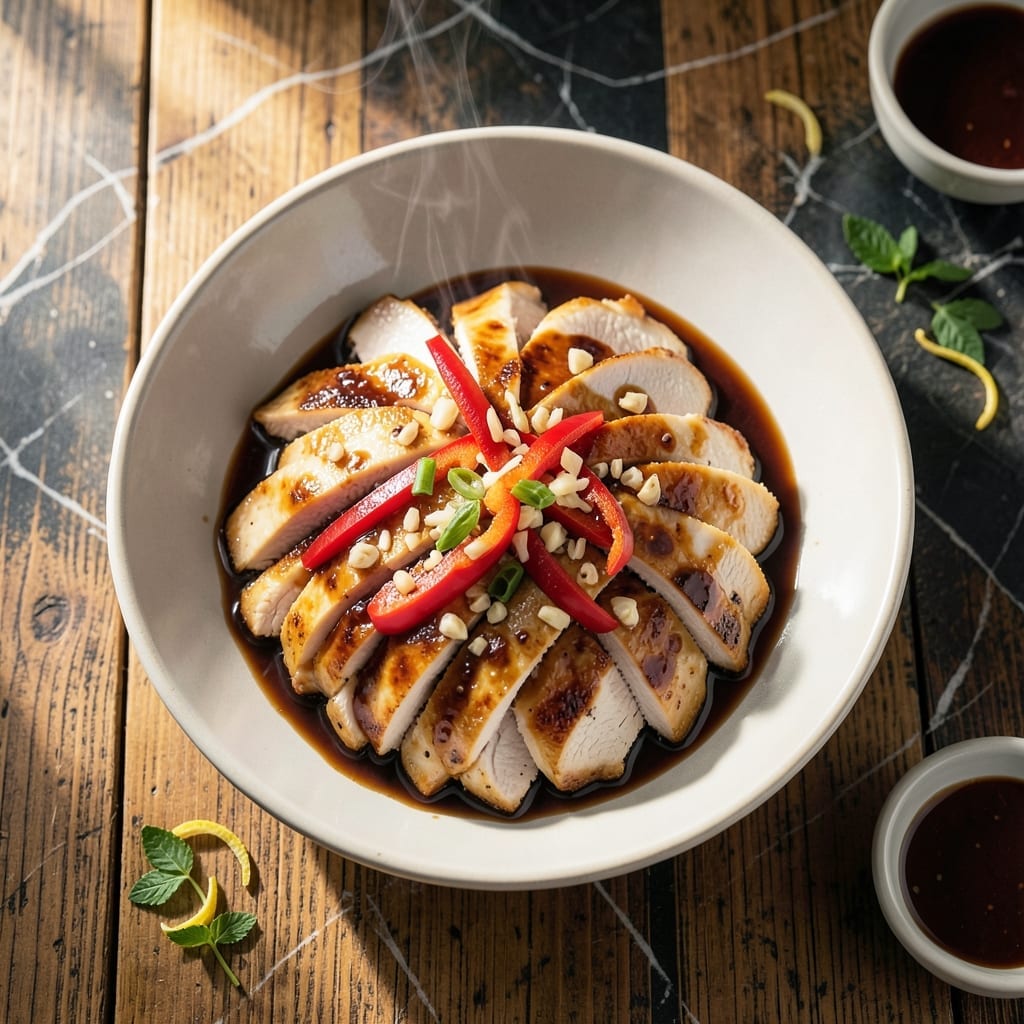
This wok-seared chicken delivers tender strips with a lightly crisped exterior, every time. I developed this method after years of struggling with dry, rubbery results that ruined too many stir-fry dinners.
The secret lies in quick cooking over high heat and a simple marinade that keeps the meat juicy. Slicing the chicken against the grain ensures each piece stays tender and easy to chew.
You’ll have perfectly cooked strips ready in 15 minutes, with a texture that rivals your favorite takeout. The high-heat sear locks in flavor while creating a subtle char.
Serve over rice, in wraps, or straight from the pan. This technique works for any Asian-inspired dish.
Ingredients for Sliced Chicken
Pantry staples and fresh aromatics create these juicy, wok-seared strips with minimal effort.
| Ingredient | Amount | Notes |
|---|---|---|
| Boneless Skinless Chicken Breasts 🍗 | 1 ½ lb | Sliced thin against the grain |
| Soy Sauce 🫒 | 3 tbsp | Low-sodium preferred for balance |
| Rice Vinegar 🍶 | 1 tbsp | Or apple cider vinegar |
| Sesame Oil 🫒 | 1 tsp | Toasted variety for depth |
| Garlic Cloves 🧄 | 4 cloves | Minced finely for even distribution |
| Fresh Ginger 🌿 | 1 tbsp | Peeled and grated |
| Brown Sugar 🍚 | 1 tbsp | Light or dark works |
| Cornstarch 🌾 | 2 tbsp | For velveting the chicken |
| Neutral Oil 🛢️ | 3 tbsp | High smoke point for wok searing |
| Kosher Salt 🧂 | ½ tsp | Adjust to taste after cooking |
| Ground Black Pepper 🌶️ | ½ tsp | Freshly ground preferred |
| Green Onions 🧅 | ½ cup | Thinly sliced for garnish |
| Red Pepper Flakes 🌶️ | ½ tsp | Optional for heat |
The chicken is everything here. Boneless, skinless breasts stay lean and cook fast—avoid pre-cut strips (they dry out). Costco has great quality for bulk buys, but any supermarket brand works. For the marinade, low-sodium soy sauce lets you control the saltiness. The sesame oil? Kadoya brand is my go-to (find it in the Asian aisle or H Mart).
No rice vinegar? Apple cider vinegar or lime juice work in a pinch. Out of fresh ginger? Ground ginger at half the amount saves the day (just add it to the marinade). The cornstarch is non-negotiable—it’s what gives that tender, velvety texture. If you’re gluten-free, tapioca starch is a 1:1 swap. Skip the brown sugar? A drizzle of honey later works too.
Marinate the chicken for at least 20 minutes (or overnight for deeper flavor). Cooked strips keep 3-4 days in the fridge—reheat gently to avoid drying out. Freeze uncooked marinated chicken for up to 3 months (thaw before cooking).
Why You’ll Love This Recipe
- One Pan Wonder: This comes together in a single skillet—just slice, sear, and sauce.
- Garlic Bomb Flavor: The garlic and sesame oil combo hits that umami sweet spot every time.
- Weeknight MVP: I throw this together on busy evenings and it’s ready before the rice finishes.
- Leftovers Champion: Honestly, it tastes even better the next day in a wrap or over noodles.
Step-by-Step Instructions for Wok-Seared Chicken Strips
Here’s my foolproof method for perfectly tender chicken with restaurant-style texture every time.
Step 1: Velvet the Chicken for Maximum Tenderness
Slice the 1.5 lb Boneless Skinless Chicken Breasts thinly against the grain into ¼-inch thick strips. This shortens the muscle fibers for a melt-in-your-mouth texture. Toss the strips in a bowl with the 2 tbsp Cornstarch, 0.5 tsp Kosher Salt, and 0.5 tsp Ground Black Pepper until evenly coated.
Add the 3 tbsp Soy Sauce and 1 tbsp Rice Vinegar, then mix gently. The cornstarch creates a protective barrier that locks in moisture while the soy mixture adds flavor. Let this sit for 10 minutes while you prep the remaining ingredients—the cornstarch will absorb some liquid and create a slightly sticky coating.
Step 2: Prepare the Aromatic Sauce Base
In a small bowl, combine the minced 4 cloves Garlic Cloves, grated 1 tbsp Fresh Ginger, 1 tbsp Brown Sugar, and 1 tsp Sesame Oil. The brown sugar will caramelize slightly during cooking, adding depth to the sauce while balancing the saltiness of the soy.
Have the 0.5 cup Green Onions and 0.5 tsp Red Pepper Flakes ready to add later. I keep the green onions separate until the end to preserve their bright color and crisp texture. The red pepper flakes can be adjusted to taste—this amount adds warmth without overwhelming heat.
Step 3: Wok-Sear the Chicken in Batches
Heat 1 tbsp Neutral Oil in a wok or large skillet over high heat until it shimmers but doesn’t smoke. Add a third of the chicken strips in a single layer, being careful not to crowd the pan. Crowding steams the chicken instead of searing it, which ruins the texture we’re after.
Let the chicken sear undisturbed for 1-2 minutes until the bottoms turn golden brown. Flip and cook for another 1 minute until just cooked through. The cornstarch coating should create a lightly crisp exterior. Transfer to a plate and repeat with the remaining chicken, adding more Neutral Oil as needed between batches.
Step 4: Build the Sauce and Finish
After removing the last batch of chicken, reduce heat to medium. Add the garlic-ginger mixture to the wok and stir constantly for 30 seconds until fragrant. Be careful not to let it burn—burnt garlic turns bitter quickly.
Return all the chicken to the wok and toss to coat in the aromatic oil. Add a splash of water if the mixture seems dry. Cook for another 30 seconds until everything is heated through and glossy. The chicken should be tender with a silky sauce clinging to each piece.
Remove from heat, sprinkle with the green onions and red pepper flakes, and serve immediately over rice or noodles. The residual heat will soften the green onions slightly while keeping their fresh crunch.
Pro Tips For Making Sliced Chicken
- Slice Against the Grain: Cut the chicken breasts into thin strips against the grain for the most tender texture. I learned this the hard way—chewy chicken is no one’s idea of a good meal.
- Velvet the Chicken: Toss the sliced chicken with 1 teaspoon of soy sauce and 1 teaspoon of cornstarch before cooking. Sounds weird, but it works: the coating keeps the meat juicy and helps it brown better.
- Skip the Overcrowding: Cook the chicken in batches if needed—dumping it all in at once steams instead of sears. After burning three batches, I finally figured out that patience pays off here.
- Bloom the Garlic: Cook the minced garlic in sesame oil for just 10-15 seconds until fragrant before adding the chicken. My grandmother swore by this, and she was right: it adds depth without bitterness.
Serving Suggestions for This Dish
Rice Bowls
Serve these strips over steaming jasmine rice with a drizzle of extra sauce. I love adding steamed broccoli and carrot matchsticks for color and crunch. A soft-boiled egg on top takes it to the next level. 💛
Wrap It Up
Warm flour tortillas or butter lettuce leaves make perfect vessels. Add shredded cabbage, cucumber slices, and a spoonful of peanut sauce. The cool crunch of fresh veggies balances the warm, savory chicken beautifully.
Noodle Dishes
Toss the chicken with lo mein noodles or rice noodles for a quick stir-fry. Add bell peppers and snap peas for extra texture. A splash of oyster sauce enhances the umami depth.
Salad Topper
Slice the chicken thin and serve over mixed greens with mandarin oranges and candied pecans. A light sesame-ginger vinaigrette ties everything together. The sweet and savory contrast is addictive.
Appetizer Bites
Serve the strips on toothpicks with a side of sweet chili sauce for dipping. Garnish with extra green onions and sesame seeds. These disappear fast at parties. ✨
Soup Addition
Add the cooked chicken to hot and sour soup or wonton soup for a protein boost. The chicken absorbs the broth flavors beautifully. I like to finish with a drizzle of chili oil.
Nutrition Facts
Frequently Asked Questions
Why slice against the grain?
Slicing against the grain shortens the muscle fibers, making each piece more tender and easier to chew. This technique works for any cut, but it’s especially important for chicken breast to prevent a stringy texture.
Can I use thighs instead of breasts?
Yes! Chicken thighs stay juicier and are more forgiving with cooking times. Reduce the searing time to 45-60 seconds per side since thighs cook faster. Their higher fat content adds extra flavor.
How do I prevent the chicken from sticking?
Make sure your wok or pan is very hot before adding oil, and don’t move the chicken for the first 1-2 minutes. The cornstarch coating creates a natural barrier. If sticking occurs, your heat isn’t high enough.
What if my chicken turns out dry?
Overcooking is the main culprit. Chicken breast is done at 165°F internal temperature. Use a meat thermometer for accuracy, and remove from heat immediately once reached. Resting for 2-3 minutes helps redistribute juices.

- Jollof Rice Sauce Recipe: West African Tomato and Spice Infusion - September 25, 2026
- Japanese Rice Soup Recipe: Umami-Rich Comfort in a Bowl - September 25, 2026
- Homemade Cream Of Rice Recipe: Silk-Smooth Breakfast in Minutes - September 25, 2026