
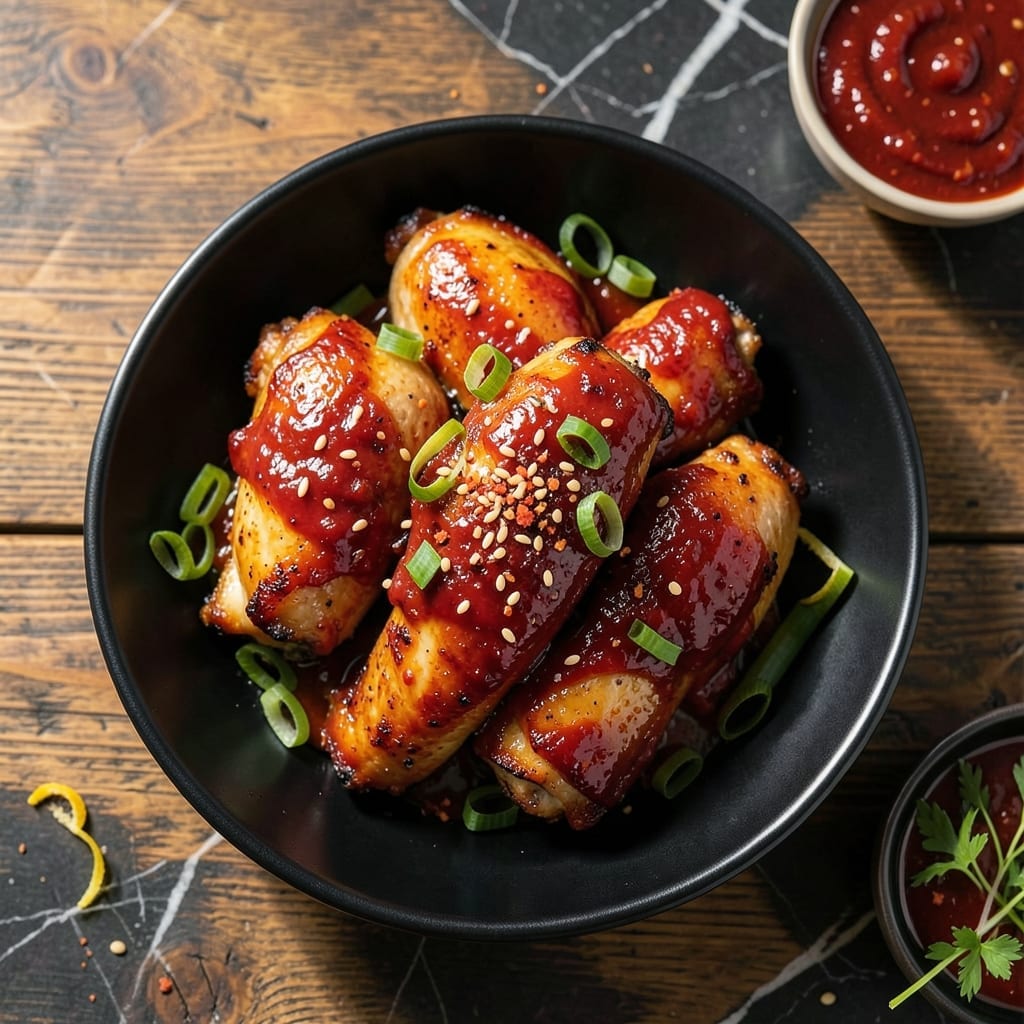
This gochujang chicken delivers restaurant-quality flavor with a perfect balance of heat and sweetness. The Korean chili paste creates a caramelized glaze that clings beautifully to each piece.
I developed this method to ensure tender meat with a sticky, glossy finish. The sauce reduces to a rich, complex coating that transforms simple chicken into something extraordinary.
The dish comes together in 30 minutes with minimal effort. High heat helps create that signature caramelization while keeping the meat juicy and flavorful.
Serve with steamed rice to soak up every last drop of the bold sauce. This recipe will become your new weeknight favorite.
Ingredients for Gochujang Chicken
Transform simple chicken into restaurant-quality dish with bold Korean flavors and caramelized depth.
| Ingredient | Amount | Notes |
|---|---|---|
| Boneless Skinless Chicken Thighs 🍗 | 1 ½ lb | Trimmed of excess fat |
| Gochujang 🌶️ | ½ cup | Korean red chili paste |
| Soy Sauce 🫒 | ¼ cup | Low-sodium preferred |
| Honey 🍯 | 3 tbsp | For balancing heat |
| Rice Vinegar 💧 | 2 tbsp | Adds tangy brightness |
| Garlic Cloves 🧄 | 4 cloves | Minced for maximum flavor |
| Fresh Ginger 🌿 | 1 tbsp | Finely grated |
| Sesame Oil 🫒 | 1 tbsp | Toasted for depth |
| Brown Sugar 🧈 | 2 tbsp | Light or dark works |
| Cornstarch 🌾 | 1 tbsp | For thickening sauce |
| Vegetable Oil 🫒 | 2 tbsp | High smoke point oil |
| Green Onions 🧅 | 3 whole | Thinly sliced for garnish |
| Sesame Seeds 🌰 | 1 tbsp | Toasted for garnish |
| Red Pepper Flakes 🔥 | ½ tsp | Adjust to heat preference |
The gochujang is non-negotiable here—look for Sempio or Annie Chun’s brands at H Mart or the Asian section of Whole Foods. Chicken thighs stay juicier than breasts under the high heat needed for caramelization. For the best texture, use free-range thighs with good marbling (the fat renders down beautifully). Fresh ginger and garlic make a noticeable difference over the jarred versions.
No gochujang? Sriracha plus miso paste (2:1 ratio) gets you in the ballpark. Honey can be swapped for maple syrup or agave at equal amounts. For a gluten-free version, use tamari instead of soy sauce. The brown sugar can be omitted if you prefer less sweetness, but it helps balance the heat. Low-sodium soy sauce prevents the dish from becoming too salty.
The sauce thickens as it cools—best served immediately for that signature glossy finish. Leftovers keep for 4 days in the fridge, though the sauce may separate slightly. Reheat gently to maintain the caramelized texture. Freezes well for up to 3 months if stored airtight.
Why You’ll Love This Recipe
- One Pan Wonder: I toss everything in a skillet and let the gochujang, honey, and soy sauce work their magic while I set the table.
- Sweet-Spicy Fix: That sticky, caramelized glaze from the gochujang and honey hits all the right notes—sweet with just enough heat.
- Meal Prep MVP: I make a double batch on Sunday, and it reheats beautifully for lunches all week.
- Budget Stretcher: Boneless thighs stay juicy and cost half what breasts do, and a little gochujang goes a long way.
Step-by-Step Instructions for Gochujang Chicken
Master the technique for achieving caramelized, spicy-sweet chicken with a glossy, restaurant-quality finish.
Step 1: Prepare the Chicken and Make the Glaze
Pat the 1.5 lb Boneless Skinless Chicken Thighs dry with paper towels, trimming any excess fat. This ensures better searing and sauce adhesion. In a bowl, whisk together the 0.5 cup Gochujang, 0.25 cup Soy Sauce, 3 tbsp Honey, 2 tbsp Rice Vinegar, 4 cloves minced Garlic Cloves, 1 tbsp Fresh Ginger, 1 tbsp Sesame Oil, 2 tbsp Brown Sugar, and 0.5 tsp Red Pepper Flakes until smooth.
The glaze should be thick but pourable. The Brown Sugar and Honey balance the heat from the Gochujang, while the Rice Vinegar adds the necessary tang to cut through the richness.
Step 2: Sear the Chicken for Depth of Flavor
Heat 2 tbsp Vegetable Oil in a large skillet over medium-high heat until shimmering. Add the chicken thighs in a single layer, ensuring they’re not crowded. Sear undisturbed for 5-6 minutes per side until deep golden brown and cooked through to 165°F internally.
Resist the urge to move the thighs too soon—proper browning develops the Maillard reaction, which adds complex, savory depth to the dish. The fond (browned bits) left in the pan will later enhance the sauce.
Step 3: Coat and Caramelize the Chicken
Reduce heat to medium and pour the glaze over the seared chicken. Stir to coat each piece thoroughly, then simmer for 3-4 minutes, flipping occasionally, until the sauce thickens and clings to the thighs in a glossy, caramelized layer.
The Honey and Brown Sugar in the glaze will reduce and create a sticky, lacquered finish. If the sauce reduces too quickly, add a splash of water to loosen it. The goal is a balance between thick enough to coat and fluid enough to drizzle.
Step 4: Thicken the Sauce and Finish
Transfer the chicken to a plate. In the same skillet, sprinkle the 1 tbsp Cornstarch into the remaining sauce and stir vigorously. Cook for 1-2 minutes until the sauce thickens to a syrupy consistency that coats the back of a spoon.
Return the chicken to the skillet and toss to coat evenly in the thickened sauce. This final step ensures every bite is saturated with the rich, spicy-sweet glaze. The Cornstarch stabilizes the sauce, preventing it from separating or becoming greasy.
Step 5: Garnish and Serve
Slice the 3 whole Green Onions thinly and sprinkle over the chicken along with the 1 tbsp Sesame Seeds. The Green Onions add a fresh, crisp contrast to the bold flavors, while the Sesame Seeds provide a nutty crunch and visual appeal.
Serve immediately over steamed rice to soak up the extra sauce. The dish should have a vibrant red sheen with visible caramelization at the edges, and the chicken should be tender and juicy with a sticky, finger-licking glaze.
Pro Tips For Making Gochujang Chicken
- Sear Thighs First: Brown the chicken thighs in a hot pan for 3-4 minutes per side before adding the sauce. I learned this the hard way—skipping this step leaves the meat pale and the sauce watery.
- Thin the Honey: Warm the honey for 10 seconds in the microwave or mix it with a splash of rice vinegar before adding to the gochujang. Sounds weird, but it blends into the sauce way better than cold, thick honey.
- Skip the Boil: Simmer the sauce gently after adding it to the chicken, but never let it hit a rolling boil—the gochujang can turn bitter and the honey will caramelize too fast.
- Rest Before Serving: Let the chicken sit in the sauce off heat for 5 minutes after cooking. My grandmother swore by this, and she was right: the flavors sink in and the meat stays juicy.
Essential Equipment for This Dish
Skillet Selection
I always reach for my 12-inch stainless steel skillet—it distributes heat evenly and develops the perfect fond for your sauce. A cast iron skillet works too, but requires extra attention to prevent hot spots. Avoid nonstick for this recipe; you need those browned bits. 🔥
Thermometer Matters
An instant-read thermometer is non-negotiable for nailing the 165°F internal temperature. I use the ThermoWorks ThermoPop—it’s fast, accurate, and under $30. Don’t guess with chicken; safety first.
Mixing Bowls
A medium glass or stainless bowl (about 4-cup capacity) is ideal for whisking your glaze. I prefer Pyrex because it’s heatproof if you need to warm the mixture. Avoid plastic—it can absorb odors from the gochujang.
Whisk It Right
A flat whisk helps emulsify the glaze ingredients better than a fork. The OXO Good Grips whisk has the perfect weight and balance. You’ll notice the difference when your sauce clings beautifully to the chicken.
Serving Essentials
Have tongs ready for flipping the thighs—they give better control than a spatula. I keep a small silicone brush nearby to baste the chicken with extra glaze. These small tools make the process smoother.
Cleanup Helper
A bench scraper is my secret weapon for getting every last bit of caramelized sauce off the skillet. The Ateco 4-inch model fits perfectly in most pans. It’s also great for dividing portions when serving. 💡
Nutrition Facts
Frequently Asked Questions
Can I use chicken breasts instead of thighs?
Thighs stay juicier, but breasts work if pounded to even 1/2-inch thickness. Cook to 165°F and reduce searing time to 4-5 minutes per side to prevent dryness.
How spicy is this dish?
Moderate heat from gochujang and red pepper flakes. Reduce flakes to 1/4 tsp for mild or add 1 tsp for extra kick. The sweetness balances the heat well.
What if my sauce won’t thicken?
Simmer longer on medium heat or mix 1 tsp cornstarch with 1 tbsp water before stirring in. Avoid high heat which can cause burning.
Can I make this ahead of time?
Prepare glaze up to 2 days ahead. Cook chicken fresh for best texture. Reheat leftovers gently with a splash of water to restore sauce consistency.

- Jollof Rice Sauce Recipe: West African Tomato and Spice Infusion - September 25, 2026
- Japanese Rice Soup Recipe: Umami-Rich Comfort in a Bowl - September 25, 2026
- Homemade Cream Of Rice Recipe: Silk-Smooth Breakfast in Minutes - September 25, 2026