
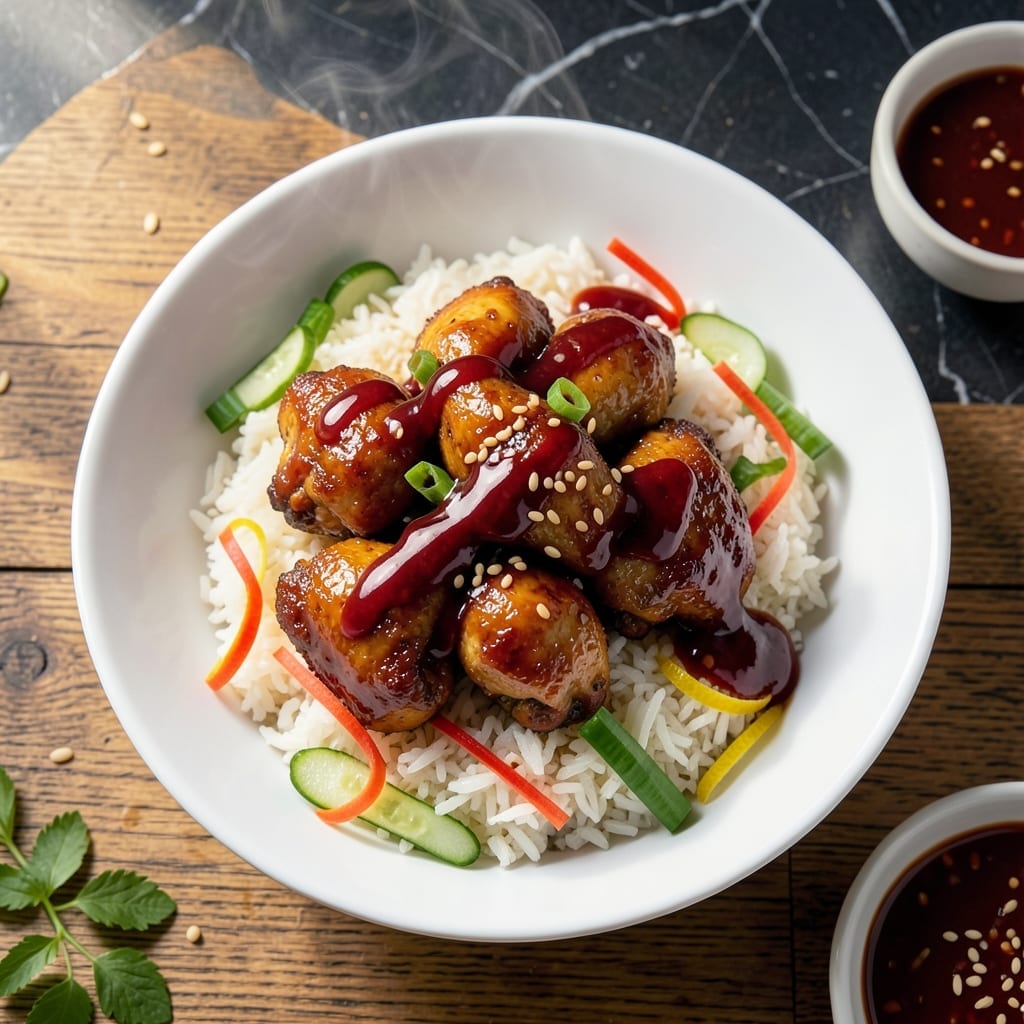
This wok-tossed bowl delivers bold flavors in every bite, combining tender chicken with spicy seasonings and perfectly cooked rice. I’ve refined this method over years of professional cooking to ensure consistent results.
The key is high-heat cooking to achieve caramelized chicken and a sauce that clings to each grain of rice. Simple ingredients come together quickly for a dish that feels restaurant-quality without the fuss.
You’ll end up with a satisfying meal that balances heat, savory depth, and textural contrast. The chicken stays juicy, the rice absorbs the sauce, and every component holds its own.
Perfect for a weeknight dinner or meal prep, this bowl adapts easily to your preferred level of spice. Here’s how to make it right.
Ingredients for Spicy Chicken Rice Bowl
Tender chicken, bold spices, and fluffy rice make this dish restaurant-quality at home.
| Ingredient | Amount | Notes |
|---|---|---|
| Boneless Skinless Chicken Thighs 🍗 | 1 ½ lb | Cut into bite-sized pieces |
| Jasmine Rice 🍚 | 2 cups | Uncooked, rinsed before cooking |
| Soy Sauce 🫒 | ⅓ cup | Low-sodium preferred |
| Gochujang 🌶️ | 2 tbsp | Korean chili paste for heat |
| Honey 🍯 | 2 tbsp | Balances spice with sweetness |
| Rice Vinegar 💧 | 1 tbsp | Adds tangy brightness |
| Sesame Oil 🫒 | 1 tbsp | Toasted for depth |
| Garlic Cloves 🧄 | 4 cloves | Minced finely |
| Fresh Ginger 🌿 | 1 tbsp | Grated for zing |
| Green Onions 🧅 | 4 whole | Thinly sliced for garnish |
| Red Bell Pepper 🌶️ | 1 whole | Sliced thin for crunch |
| Carrot 🥕 | 1 whole | Julienned for texture |
| Vegetable Oil 🫒 | 2 tbsp | High smoke point for wok cooking |
| Sesame Seeds 🌾 | 1 tbsp | Toasted for garnish |
| Kosher Salt 🧂 | 1 tsp | Adjust to taste |
The chicken is non-negotiable here—thighs stay juicier than breasts under high heat. Look for skinless, boneless at Whole Foods or Costco for best quality. Jasmine rice is ideal (that fragrant, sticky kind), but long-grain white works in a pinch. Gochujang is the heat source—find it in the Asian aisle or at H Mart. Don’t skip the fresh ginger; it brightens the whole dish.
No gochujang? Sriracha plus a pinch of sugar gets you close. Fresh ginger can be ground ginger at half the amount, but fresh is worth it. Honey swaps easily for maple syrup or agave. For extra crunch, add snap peas or broccoli. The rice vinegar matters—don’t use white vinegar; it’s too harsh. Seasoned rice vinegar adds subtle sweetness if you prefer.
Prep ingredients before cooking—mise en place is key for wok speed. Stores in the fridge for 3-4 days (reheat gently to keep chicken tender). Freezes well for 1 month without the garnishes. Toast sesame seeds just before serving to keep them crisp.
Why You’ll Love This Recipe
- One Pan Wonder: I toss the chicken and rice together with the sauce and let the oven do the work—minimal cleanup, maximum flavor.
- Sweet Heat Balance: The gochujang brings the heat while honey and soy sauce create this sticky, savory-sweet glaze that clings to every bite.
- Meal Prep Hero: I make a big batch on Sunday and it reheats beautifully for lunches all week—no soggy leftovers here.
- Budget Friendly: Chicken thighs stay juicy and cost less than breasts, and jasmine rice stretches the meal without breaking the bank.
Step-by-Step Instructions for Spicy Chicken Rice Bowl
Master the wok technique and layer flavors systematically for bold, balanced results.
Step 1: Prepare and Par-Cook the Jasmine Rice
Rinse the 2 cups Jasmine Rice under cold water until the water runs clear to remove excess starch. This prevents the grains from clumping together during cooking. Use a 1:1.25 rice-to-water ratio in a pot and bring to a boil over high heat.
Once boiling, reduce to low heat, cover, and simmer for 15 minutes. After 15 minutes, remove from heat and let it sit covered for an additional 10 minutes. The rice should be tender but still slightly firm—it will finish cooking when tossed with the chicken and sauce later.
Step 2: Marinate and Cook the Chicken Thighs
Cut the 1.5 lb Boneless Skinless Chicken Thighs into bite-sized pieces and place them in a bowl. Add 0.33 cup Soy Sauce, 2 tbsp Gochujang, 2 tbsp Honey, 1 tbsp Rice Vinegar, 1 tbsp Sesame Oil, 4 cloves Garlic Cloves (minced), and 1 tbsp Fresh Ginger (grated). Mix until the chicken is evenly coated.
Heat 1 tbsp Vegetable Oil in a wok over medium-high heat until shimmering. Add half the chicken in a single layer to avoid crowding. Cook for 5-6 minutes until golden brown and cooked through, then transfer to a plate. Repeat with the remaining chicken and 1 tbsp Vegetable Oil.
Step 3: Stir-Fry the Vegetables
In the same wok, add the sliced 1 whole Red Bell Pepper and julienned 1 whole Carrot. Stir-fry for 3-4 minutes until the vegetables soften but retain their crispness. The bell pepper should brighten in color, and the carrot should just begin to bend when pressed.
Return all the cooked chicken to the wok and toss with the vegetables. Add the par-cooked 2 cups Jasmine Rice and stir-fry for 2-3 minutes to combine everything evenly. The rice will absorb the remaining sauce and finish cooking in the wok.
Step 4: Finish and Garnish
Taste and adjust seasoning with 1 tsp Kosher Salt if needed. The flavors should be bold and balanced—spicy from the gochujang, sweet from the honey, and umami from the soy sauce. Drizzle with any remaining marinade from the bowl if desired.
Transfer to serving bowls and garnish with thinly sliced 4 whole Green Onions and 1 tbsp Sesame Seeds. The green onions add a fresh, sharp contrast, while the sesame seeds provide a nutty crunch. Serve immediately while hot.
Pro Tips For Making Spicy Chicken Rice Bowl
- Sear Chicken First: Get your chicken thighs golden brown in a hot pan before adding the sauce—this locks in juices and prevents them from steaming in the gochujang mixture.
- Rinse the Rice: Wash your jasmine rice until the water runs clear to remove excess starch, so it stays fluffy and doesn’t turn into a sticky clump in your bowl.
- Balance the Sauce: Gochujang can overpower, so mix it with soy sauce and honey first—2 parts gochujang to 1 part honey and 1 part soy keeps the spice in check without losing depth.
- Rest the Chicken: Let the cooked chicken rest for 5 minutes before slicing, or all those delicious juices will end up on the cutting board instead of in your rice bowl.
Flavor Customization for This spicy chicken rice bowl
Mild Heat Version
For a gentler spice level, reduce gochujang to 1 tbsp and add 1 extra tbsp honey. This balances the heat while keeping the depth of flavor. I use this approach when cooking for kids or sensitive palates. 🌶️
Extra Spicy Kick
Double the gochujang to 4 tbsp and add 1 tsp red pepper flakes to the marinade. For serious heat lovers, I also stir in 1 tbsp sriracha at the end. This version packs a punch that builds gradually.
Sweet and Spicy
Increase honey to 3 tbsp and add 1 tbsp brown sugar to the marinade. The extra sweetness enhances the caramelization on the chicken. I love how this creates a sticky, glossy coating on each piece.
Umami Boost
Add 1 tbsp oyster sauce and 1 tsp fish sauce to the marinade for deeper savory notes. These ingredients amplify the dish’s complexity without overpowering the spice. I learned this trick from my time in Charleston markets.
Vegetable Variations
Swap the red bell pepper for snap peas or bok choy for different textures. Add 1 cup sliced mushrooms when stir-frying for an earthy depth. Each vegetable brings its own character to the bowl.
For extra crunch, toss in ½ cup chopped peanuts at the end. This adds a nutty element that contrasts beautifully with the spicy chicken.
Nutrition Facts
Frequently Asked Questions
Can I use chicken breast instead of thighs?
You can, but thighs stay juicier. If using breasts, reduce cooking time to 4-5 minutes to prevent dryness. Brining the chicken first helps maintain moisture.
How do I make it less spicy for kids?
Cut the gochujang to 1 tbsp and add 1 extra tbsp honey. This keeps the flavor while reducing heat. Serve with a side of plain rice to balance.
Can I prepare this ahead of time?
Store cooked components separately in the fridge for up to 3-4 days. Reheat gently in a wok with a splash of water to restore moisture before serving.
What if I don’t have gochujang?
Use 2 tbsp sriracha plus 1 tsp sugar as a substitute. It won’t be identical but provides similar heat and sweetness. Adjust to taste.

- Jollof Rice Sauce Recipe: West African Tomato and Spice Infusion - September 25, 2026
- Japanese Rice Soup Recipe: Umami-Rich Comfort in a Bowl - September 25, 2026
- Homemade Cream Of Rice Recipe: Silk-Smooth Breakfast in Minutes - September 25, 2026