
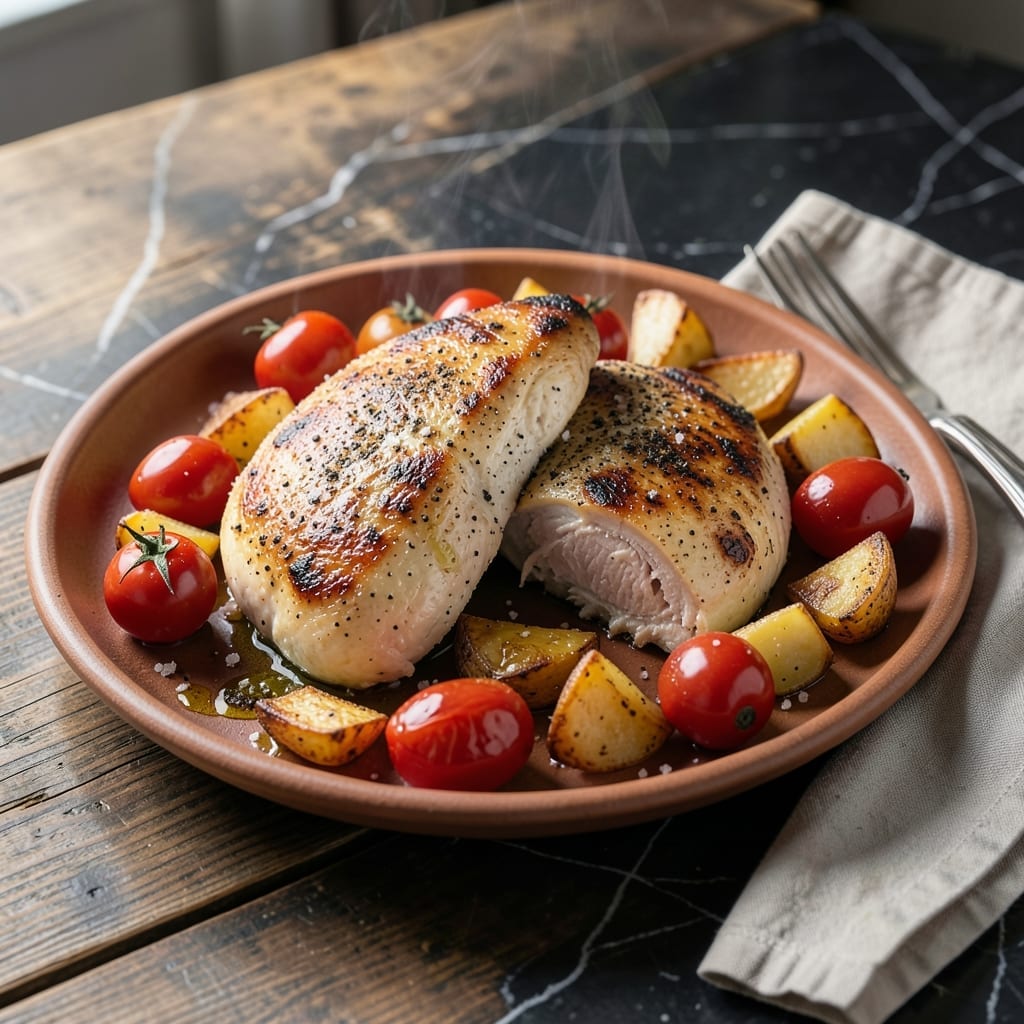
Achieving moist, flavorful chicken breast on the stovetop is simpler than you think. This proven method delivers consistent results every time, with no dry or rubbery outcomes.
The key is proper heat control and timing. Searing the chicken first creates a golden crust, while finishing at lower heat ensures the inside stays juicy. A simple seasoning blend enhances the natural flavor without overpowering it.
You’ll end up with tender, perfectly cooked chicken that works as a main dish or in salads, wraps, and more. The technique is reliable and adaptable to different seasonings and sauces.
Ready in under 20 minutes, this is the go-to method for weeknight dinners. Here’s how to make it.
Ingredients for Stovetop Chicken Breast
Pantry spices and fresh chicken breasts come together for perfectly cooked stovetop results.
| Ingredient | Amount | Notes |
|---|---|---|
| Boneless Skinless Chicken Breasts 🍗 | 1 ½ lb | Pounded to even thickness |
| Kosher Salt 🧂 | 1 ½ tsp | Diamond Crystal preferred |
| Freshly Ground Black Pepper 🌶️ | 1 tsp | Coarse grind recommended |
| Garlic Powder 🧄 | 1 tsp | Not garlic salt |
| Onion Powder 🧅 | 1 tsp | Fresh ground preferred |
| Smoked Paprika 🌶️ | ½ tsp | Sweet or hot variety |
| Dried Thyme 🍃 | ½ tsp | Crushed between fingers |
| Extra-Virgin Olive Oil 🫒 | 2 tbsp | Divided for searing and finishing |
| Unsalted Butter 🧈 | 1 tbsp | For basting during cooking |
| Fresh Rosemary Sprigs 🌿 | 2 whole | Optional for aromatics |
| Fresh Thyme Sprigs 🍃 | 2 whole | Optional for aromatics |
| Lemon Juice 🍋 | 1 tbsp | Freshly squeezed |
The chicken quality is paramount. Air-chilled, organic breasts from Whole Foods or Trader Joe’s yield superior texture and moisture retention. Pounding to an even thickness ensures uniform cooking—use a meat mallet or rolling pin. For the seasoning blend, Penzeys offers exceptional spices, but standard grocery store brands work if fresh. Look for vibrant color and strong aroma as quality indicators.
No smoked paprika? Regular paprika plus a pinch of cayenne gets you close. Short on fresh herbs? Dried at one-third the amount works for rosemary and thyme. The olive oil can be any neutral oil in a pinch, but extra-virgin adds depth. Unsalted butter is essential for basting—salted can make the seasoning unbalanced. The lemon juice can be white wine vinegar at half the amount.
Store raw chicken in its original packaging on the bottom shelf of the fridge—use within 2 days or freeze for 9 months. Cooked chicken keeps 4 days refrigerated. For best results, let it rest 5 minutes before slicing (worth the extra minute).
Why You’ll Love This Recipe
- One Pan Wonder: I love that this cooks entirely on the stovetop with just a skillet—no oven, no extra dishes.
- Garlic Kissed: The garlic and onion powder give it a savory depth that’s way more exciting than plain chicken.
- Meal Prep Hero: I make a big batch on Sunday and it stays juicy for salads, wraps, or quick dinners all week.
- Budget Stretcher: Boneless, skinless chicken breasts are affordable, and this recipe turns them into something worth savoring.
Step-by-Step Instructions for Stovetop Chicken Breast
Master the technique for perfectly cooked chicken every time with this reliable stovetop method.
Step 1: Prep and Season the Chicken
Begin by pounding the 1.5 lb boneless skinless chicken breasts to an even ¾-inch thickness using a meat mallet. This ensures uniform cooking and prevents dry, overdone edges while the center finishes.
Pat the chicken thoroughly dry with paper towels—this is non-negotiable for achieving a proper sear. Season both sides generously with the 1.5 tsp kosher salt, 1 tsp freshly ground black pepper, 1 tsp garlic powder, 1 tsp onion powder, 0.5 tsp smoked paprika, and 0.5 tsp dried thyme. The spices should adhere evenly to the surface.
Step 2: Sear the Chicken to Golden Perfection
Heat 1 tbsp of the extra-virgin olive oil in a large, heavy skillet over medium-high heat until it shimmers but doesn’t smoke. Add the chicken breasts and cook undisturbed for 5-6 minutes until the edges are deep golden brown and the meat releases easily from the pan.
Resist the urge to move the chicken—this allows a proper crust to form. Flip once and add the remaining 1 tbsp extra-virgin olive oil, 1 tbsp unsalted butter, 2 whole fresh rosemary sprigs, and 2 whole fresh thyme sprigs to the pan. Tilt the skillet slightly and spoon the foaming butter over the chicken repeatedly for 1-2 minutes to baste.
Step 3: Finish Cooking and Rest
Reduce the heat to medium and continue cooking for another 4-5 minutes, basting occasionally, until the internal temperature reaches 160°F in the thickest part. The chicken should feel firm to the touch but still slightly springy.
Transfer the chicken to a cutting board or warm plate and let it rest for 5-10 minutes. This critical step allows the juices to redistribute, ensuring moist, tender meat. Tent loosely with foil to keep warm.
Step 4: Serve with Pan Juices
Discard the herb sprigs from the skillet and pour in the 1 tbsp lemon juice. Swirl to combine with the residual butter and oil, scraping up any browned bits from the bottom of the pan. This creates a bright, flavorful pan sauce.
Slice the chicken against the grain into ½-inch thick pieces and arrange on a serving platter. Drizzle the pan juices over the top just before serving to add moisture and depth of flavor. The result should be juicy, tender, and packed with savory, aromatic notes.
Pro Tips For Making Stovetop Chicken Breast
- Pound Even Thickness: Use a rolling pin or heavy pan to pound the chicken breasts to an even ¾-inch thickness—I learned this the hard way after too many dry, overcooked edges on thick parts.
- Hot Pan, Dry Meat: Pat the chicken completely dry with paper towels and heat the pan until water droplets dance on the surface. Sounds weird, but it works: this guarantees a golden crust instead of steamed chicken.
- Skip the Overcrowding: Cook the chicken in batches if needed—resist the urge to squeeze it all in, or it’ll steam instead of sear, and you’ll end up with rubbery meat.
- Rest Before Slicing: Let the chicken rest under foil for 5-10 minutes after cooking. I skip this when I’m lazy, but the dish is noticeably juicier when I don’t.
Best Sauces and Condiments for This Dish
Herb-Forward Sauces
I love a fresh chimichurri with this chicken—blend 1 cup parsley, ¼ cup cilantro, 3 garlic cloves, ¼ cup olive oil, 2 tbsp red wine vinegar, and ½ tsp red pepper flakes for a bright, herby kick. The acidity cuts through the richness perfectly.
Creamy Classics
A simple garlic aioli takes 2 minutes to whip up. Mix ½ cup mayo, 1 minced garlic clove, 1 tbsp lemon juice, and ½ tsp Dijon mustard. For extra richness, stir in 1 tbsp of the pan juices from your chicken. 💛
Tangy and Sweet
For a sweet-heat combo, try honey mustard glaze. Whisk 3 tbsp honey, 2 tbsp Dijon mustard, and 1 tbsp apple cider vinegar. Simmer for 2-3 minutes until slightly thickened, then drizzle over sliced chicken. The glaze caramelizes beautifully under a broiler for 1-2 minutes.
Mediterranean Flair
A quick tzatziki adds cool contrast. Combine 1 cup Greek yogurt, ½ cup grated cucumber (squeezed dry), 1 tbsp olive oil, and 1 tsp dried dill. Serve chilled alongside warm chicken for a refreshing bite.
Spicy Kick
For heat lovers, sriracha-lime sauce is my go-to. Mix ¼ cup sriracha, 2 tbsp lime juice, 1 tbsp soy sauce, and 1 tbsp honey. The tangy, spicy, sweet balance complements the smoky notes from the paprika. 🔥
Simple Pan Sauce
Use the fond in your skillet—add ¼ cup chicken broth and 1 tbsp butter, simmer for 2 minutes, then finish with 1 tsp fresh thyme. This silky sauce takes almost no effort and packs serious flavor.
Nutrition Facts
Frequently Asked Questions
What’s the ideal thickness for even cooking?
Pound to an even ¾-inch thickness for consistent results. This prevents dry edges while the center finishes cooking through.
How do I know when it’s done?
Use a meat thermometer: 160°F in the thickest part signals it’s ready. The chicken should feel firm but still springy to the touch.
Why rest the chicken before slicing?
Resting for 5-10 minutes lets juices redistribute, ensuring moist, tender meat. Skipping this step risks dry chicken on your plate.
Can I skip pounding the chicken?
Not recommended. Uneven thickness leads to overcooked edges and undercooked centers. Pounding takes 2 minutes and guarantees better results.

- Jollof Rice Sauce Recipe: West African Tomato and Spice Infusion - September 25, 2026
- Japanese Rice Soup Recipe: Umami-Rich Comfort in a Bowl - September 25, 2026
- Homemade Cream Of Rice Recipe: Silk-Smooth Breakfast in Minutes - September 25, 2026