
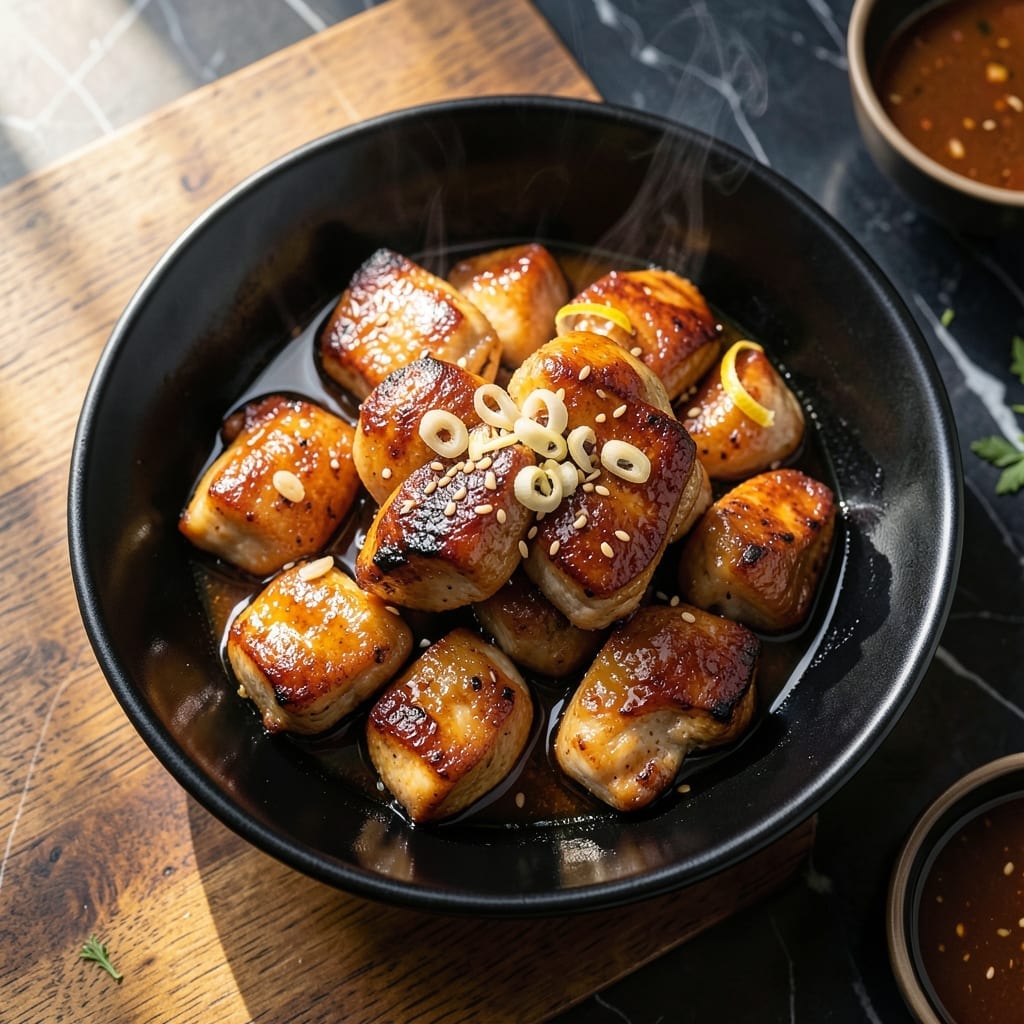
There’s a reason teppanyaki chicken remains a restaurant favorite—it delivers consistent juicy results with bold, savory flavors. This method brings that hibachi experience home with simple techniques and accessible ingredients.
The key is high heat and quick cooking, which locks in moisture while creating a caramelized exterior. A simple soy-based sauce enhances the chicken without overpowering its natural taste.
What you’ll achieve is tender, flavorful chicken with that signature teppanyaki glaze. The process is straightforward, yet the results taste anything but ordinary.
Serve with steamed rice and vegetables for a complete meal that impresses every time.
Ingredients for Teppanyaki Chicken
High heat, bold flavors, and juicy chicken define this hibachi-inspired dish with accessible ingredients.
| Ingredient | Amount | Notes |
|---|---|---|
| Boneless Skinless Chicken Thighs 🍗 | 1 ½ lb | Cut into bite-sized pieces |
| Soy Sauce 🥢 | ⅓ cup | Low-sodium preferred for balance |
| Mirin 🍶 | ¼ cup | Sweet rice wine essential |
| Sake 🍶 | 2 tbsp | Dry Japanese rice wine |
| Granulated Sugar 🍚 | 1 tbsp | Balances soy’s saltiness |
| Fresh Garlic Cloves 🧄 | 3 cloves | Minced finely for sauce |
| Fresh Ginger 🌿 | 1 tbsp | Grated, no fibers |
| Vegetable Oil 🫒 | 2 tbsp | High smoke point for searing |
| Unsalted Butter 🧈 | 1 tbsp | Finishing touch for richness |
| Green Onions 🧅 | 3 whole | Thinly sliced for garnish |
| Sesame Seeds 🌰 | 1 tsp | Toasted for nutty aroma |
| Steamed White Rice 🍚 | 2 cups | Cooked, for serving |
| Mixed Vegetables 🥦 | 2 cups | Zucchini, mushrooms, onions suggested |
The chicken is everything. Boneless, skinless thighs stay juicier than breasts under teppanyaki’s high heat—Costco or Whole Foods carry quality options. Look for even thickness to ensure consistent cooking. For the sauce, Kikkoman soy sauce and real mirin (not aji-mirin) deliver authentic depth. Most Asian markets stock these, but Trader Joe’s has solid alternatives if you’re in a pinch.
No mirin? Mix 1 tbsp sugar + 2 tbsp water per 1 tbsp needed. Sake can be swapped for dry sherry, though the flavor profile shifts slightly. Fresh ginger and garlic are non-negotiable for that bright, aromatic base—pre-minced jarred versions lack the punch. The vegetables are flexible: asparagus, bell peppers, or snap peas all work beautifully. Just cut them uniformly for even cooking.
Sauce keeps 1 week refrigerated in a sealed jar. Cooked chicken holds 3-4 days but loses texture the longer it sits. For meal prep, store components separately and combine when reheating. Sesame seeds toast in 30 seconds—watch them closely (they burn fast).
Why You’ll Love This Recipe
- One Pan Magic: I toss everything in a hot skillet and let the soy, mirin, and sake do the work.
- Sweet-Savory Perfection: The sugar caramelizes with the sauce, coating the chicken in this glossy, finger-licking glaze.
- Weeknight Hero: Honestly, it’s my Tuesday lifesaver—ready before the rice cooker dings.
- Budget Stretcher: Thighs stay juicy and cost half what breasts do, and leftovers taste even better cold the next day.
Step-by-Step Instructions for Hibachi-Style Teppanyaki Chicken
Master the technique for consistently juicy, flavorful chicken with authentic Japanese flair.
Step 1: Marinate the Chicken for Maximum Flavor
Cut the 1.5 lb boneless skinless chicken thighs into bite-sized pieces for even cooking and better sauce absorption. In a bowl, whisk together the 0.33 cup soy sauce, 0.25 cup mirin, 2 tbsp sake, and 1 tbsp granulated sugar until the sugar fully dissolves.
Add the chicken pieces to the marinade, ensuring each piece is fully coated. I let it marinate for at least 30 minutes at room temperature, or up to 4 hours refrigerated. This step ensures the meat stays tender and absorbs the umami-rich flavors that define this dish.
Step 2: Sear the Chicken to Lock in Juices
Heat the 2 tbsp vegetable oil in a large skillet or griddle over medium-high heat until it shimmers. Remove the chicken from the marinade (reserve the marinade) and arrange the pieces in a single layer without crowding the pan. Sear undisturbed for 3-4 minutes until the edges develop a deep golden-brown crust.
Flip the pieces and sear for another 3-4 minutes until cooked through and the internal temperature reaches 165°F. The high heat creates a caramelized exterior while keeping the inside impossibly juicy. Transfer the chicken to a plate and set aside.
Step 3: Create the Glossy Teppanyaki Sauce
In the same skillet, reduce heat to medium and add the 3 cloves minced fresh garlic cloves and 1 tbsp grated fresh ginger. Sauté for 1 minute until fragrant, being careful not to let the garlic burn. Pour in the reserved marinade and simmer for 2-3 minutes until slightly thickened.
Stir in the 1 tbsp unsalted butter until melted and fully incorporated. The butter adds a rich, velvety finish to the sauce. Taste and adjust seasoning if needed, though the balance of sweet, salty, and umami should already be perfect.
Step 4: Combine and Finish with Garnishes
Return the seared chicken to the skillet and toss to coat evenly in the sauce. Cook for an additional 1-2 minutes to allow the flavors to meld together. The chicken should be glossy and deeply coated, with the sauce clinging to every piece.
Transfer the chicken to a serving platter and garnish with the 3 whole thinly sliced green onions and 1 tsp toasted sesame seeds. Serve immediately over the 2 cups steamed white rice with the 2 cups mixed vegetables on the side for a complete, restaurant-worthy meal.
Pro Tips For Making Teppanyaki Chicken
- Sear Before Saucing: Get a good crust on those thighs first—about 3-4 minutes per side on high heat—before adding the soy-mirin-sake mix. I learned this the hard way after my chicken boiled in the sauce instead of caramelizing.
- Pound the Thighs: Use the flat side of your knife to gently pound the thighs to an even ½-inch thickness. Sounds weird, but it works—no more dry edges and raw centers.
- Reduce the Sauce First: Simmer the soy, mirin, sake, and sugar for 2-3 minutes before adding the chicken. This thickens it just enough so it clings instead of pooling.
- Rest Before Slicing: Give the chicken a solid 5 minutes under foil after cooking. Skipping this makes the juices run, and nobody wants dry teppanyaki chicken.
Best Sauces and Condiments for This Recipe
Classic Teppanyaki Sauce
The sauce you create during cooking forms the perfect glaze, but I always keep extra for dipping. Its balance of soy sauce, mirin, and sake creates that authentic sweet-savory profile. The butter finish adds a luxurious sheen that makes the dish restaurant-worthy. 🔥
Spicy Mayo Dipping
Mix ½ cup mayonnaise with 1 tbsp sriracha and 1 tsp lime juice for a creamy, spicy contrast to the rich chicken. I use Kewpie mayonnaise for an extra umami boost. This pairing adds a modern twist while respecting the dish’s Japanese roots.
Goma Dare Option
For a nutty complement, try goma dare (sesame dressing). Blend 3 tbsp tahini, 2 tbsp soy sauce, 1 tbsp rice vinegar, and 1 tsp sugar with ¼ cup water. Drizzle lightly over the chicken before serving. ✨
Pickled Ginger
Thinly sliced pickled ginger (gari) cleanses the palate between bites. You’ll find it in the sushi section of most grocery stores. Its refreshing acidity cuts through the richness of the dish beautifully.
Yum Yum Sauce
This hibachi restaurant staple works surprisingly well with teppanyaki. Combine ½ cup mayo, 2 tbsp tomato paste, 1 tbsp melted butter, 1 tsp garlic powder, and ½ tsp paprika. Serve on the side for dipping.
Nutrition Facts
Frequently Asked Questions
Can I use chicken breast instead of thighs?
Yes, but thighs stay juicier due to higher fat content. If using breasts, reduce cooking time to 2-3 minutes per side to prevent dryness.
What if I don’t have mirin?
Substitute with 1 tbsp sugar + 2 tbsp water per 1 tbsp mirin. The sweetness mimics mirin’s role in balancing the soy sauce.
How do I know when it’s done?
Use a meat thermometer—chicken is safe at 165°F internally. The juices should run clear with no pink in the center.
Can I make this ahead of time?
Cooked chicken keeps 3-4 days refrigerated, but the texture is best fresh. Reheat gently in a skillet with a splash of water.

- Jollof Rice Sauce Recipe: West African Tomato and Spice Infusion - September 25, 2026
- Japanese Rice Soup Recipe: Umami-Rich Comfort in a Bowl - September 25, 2026
- Homemade Cream Of Rice Recipe: Silk-Smooth Breakfast in Minutes - September 25, 2026