
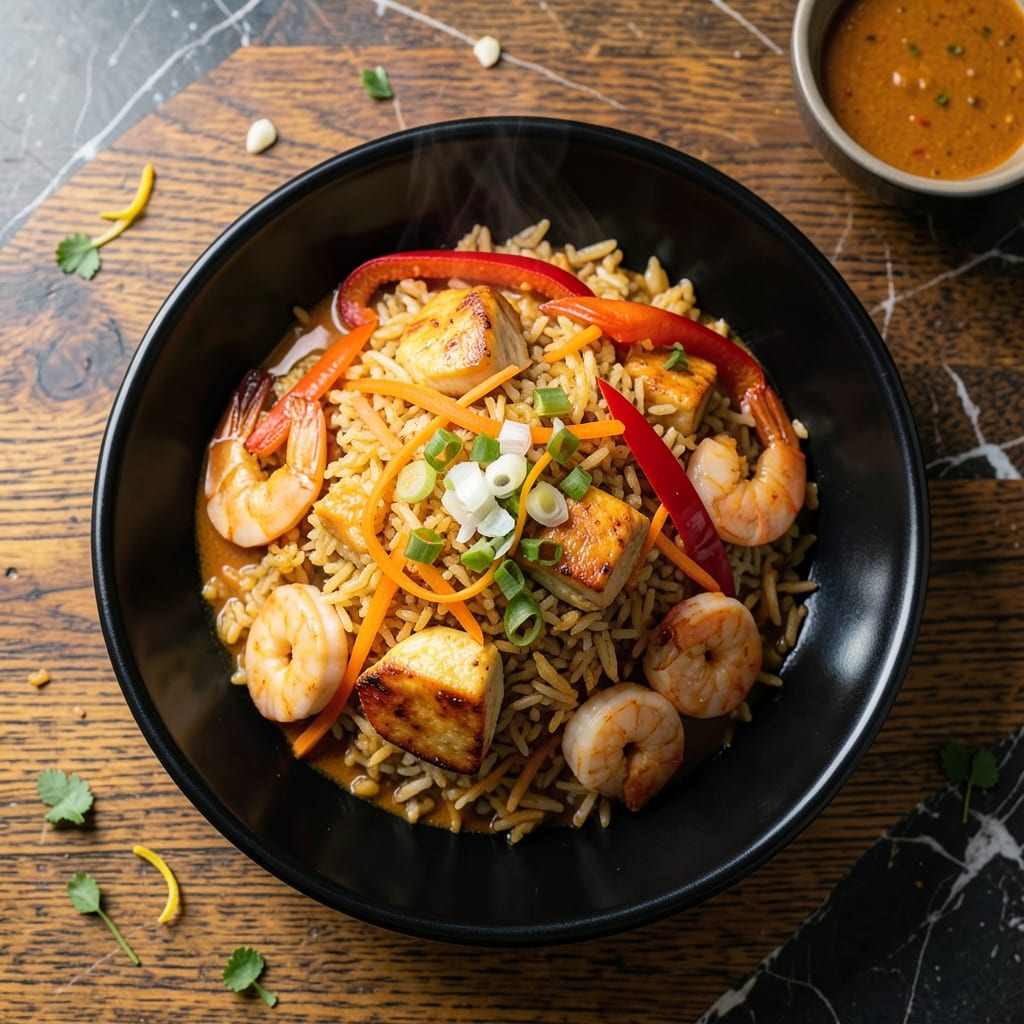
This dish transforms leftover rice into a flavor-packed meal with authentic Thai aromas. After testing multiple versions, I developed this method to balance bold curry paste with creamy coconut milk.
The wok-fried technique creates a dish where each grain stays separate while absorbing rich, complex flavors. Protein options like chicken or shrimp make it hearty enough for dinner.
Expect vibrant colors, enticing aromas, and a perfect balance of spicy, sweet, and savory in every bite. The coconut milk adds a velvety finish that ties all the flavors together.
Serve with lime wedges and fresh cilantro for a restaurant-quality experience at home. This recipe delivers on both taste and presentation.
Ingredients for Thai Curry Fried Rice
A handful of fresh ingredients and pantry staples create this aromatic, restaurant-worthy dish.
| Ingredient | Amount | Notes |
|---|---|---|
| Cooked Jasmine Rice 🍚 | 4 cups | Day-old, chilled for best texture |
| Red Curry Paste 🌶️ | 2 tbsp | Thai brand preferred for authenticity |
| Coconut Milk 🥥 | 1 cup | Full-fat for creaminess |
| Chicken Breast 🍗 | 1 lb | Boneless, skinless, diced small |
| Shrimp 🦐 | ½ lb | Peeled, deveined, optional protein |
| Red Bell Pepper 🌶️ | 1 whole | Diced for color and crunch |
| Carrots 🥕 | 2 whole | Julienned or finely diced |
| Green Onions 🧅 | 4 whole | Sliced thin, whites and greens separated |
| Garlic Cloves 🧄 | 3 cloves | Minced for maximum flavor |
| Fresh Cilantro 🌿 | ½ cup | Chopped for garnish |
| Lime 🍈 | 1 whole | Cut into wedges for serving |
| Fish Sauce 🐟 | 1 tbsp | Essential for umami depth |
| Soy Sauce 🫒 | 1 tbsp | Low-sodium preferred |
| Brown Sugar 🍚 | 1 tsp | Balances heat and salt |
| Vegetable Oil 🫒 | 2 tbsp | High smoke point for wok frying |
The curry paste is non-negotiable for authenticity. Maesri or Thai Kitchen brands are reliable and widely available at Whole Foods or Asian markets. For coconut milk, Thai Kitchen or Chaokoh deliver the right creaminess without watery separation. Use day-old rice—freshly cooked grains turn mushy. Chicken and shrimp should be uniform in size so everything cooks evenly in the wok.
Swapping proteins? Tofu or edamame work beautifully for a vegetarian version. No red curry paste? Green or yellow paste at half the amount changes the flavor but still delivers. Fish sauce can be replaced with soy sauce plus a squeeze of lime (not ideal, but passable). The brown sugar can be coconut sugar or palm sugar—both add that caramel note.
Leftovers keep 3-4 days in the fridge, though the rice dries out slightly. Reheat in a skillet with a splash of water to restore moisture. For meal prep, store components separately and combine when reheating. Freezing isn’t ideal—textures change too much.
Why You’ll Love This Recipe
- One Pan Wonder: I toss everything together in a single skillet—rice, shrimp, chicken, and that rich coconut milk—so cleanup is a breeze.
- Flavor Explosion: The red curry paste gives it this deep, aromatic kick that makes every bite taste like it’s straight from a Bangkok street stall.
- Meal Prep Hero: Honestly, it reheats like a dream, so I make a big batch on Sunday and lunch is sorted for days.
- Budget Stretcher: A little chicken and shrimp go a long way with rice as the base, so it’s filling without breaking the bank.
Step-by-Step Instructions for Thai Curry Fried Rice
This method ensures bold, balanced flavors with every bite. The wok stays hot, the rice stays separate.
Step 1: Prep Ingredients for Rapid Cooking
Dice the 1 lb Chicken Breast into ½-inch pieces. Peel and devein the 0.5 lb Shrimp if using. Dice the 1 whole Red Bell Pepper and julienne the 2 whole Carrots into thin strips. Mince the 3 cloves Garlic Cloves and slice the 4 whole Green Onions, keeping whites and greens separate.
Measure the 2 tbsp Red Curry Paste, 1 cup Coconut Milk, 1 tbsp Fish Sauce, 1 tbsp Soy Sauce, and 1 tsp Brown Sugar. Chop the 0.5 cup Fresh Cilantro and cut the 1 whole Lime into wedges. Having everything ready prevents burning the curry paste later.
Step 2: Bloom Aromatics in High Heat
Heat a wok or large skillet over high heat until smoking hot. Add 1 tbsp Vegetable Oil and swirl to coat. Add the minced garlic and stir-fry for 15-20 seconds until fragrant but not browned.
Push the garlic to one side and add the 2 tbsp Red Curry Paste to the center. Stir vigorously for 30-45 seconds until the paste darkens slightly and releases its oils. This blooming step intensifies the curry flavor. If it sticks, add the remaining 1 tbsp Vegetable Oil.
Step 3: Cook Proteins and Vegetables
Add the diced chicken to the wok and stir-fry for 3-4 minutes until the pieces turn opaque and are 80% cooked through. Push the chicken to the edges and add the shrimp, cooking for 1-2 minutes per side until they turn pink.
Stir in the red bell pepper, carrots, and green onion whites. Cook for 2-3 minutes until the vegetables soften slightly but retain a crisp bite. The wok should be sizzling—if it’s not, increase the heat.
Step 4: Combine Rice and Curry Sauce
Add the 4 cups Cooked Jasmine Rice, breaking up any clumps with your spatula. Stir-fry for 2 minutes to heat through. Pour the 1 cup Coconut Milk evenly over the rice and stir to distribute.
Add the 1 tbsp Fish Sauce, 1 tbsp Soy Sauce, and 1 tsp Brown Sugar. Stir-fry for another 3-4 minutes until the rice is uniformly coated and the coconut milk has mostly absorbed. The rice should be glossy and fragrant.
Step 5: Finish and Garnish
Remove from heat and stir in the green onion greens. Taste and adjust seasoning if needed. Divide into bowls and top with the fresh cilantro. Serve with lime wedges on the side for a bright, citrusy finish.
The final dish should have distinct, tender chicken and shrimp, crisp vegetables, and rice grains that are separate yet infused with the rich, aromatic curry flavor. Each bite delivers a balance of heat, creaminess, and umami.
Pro Tips For Making Thai Curry Fried Rice
- Use Cold Rice: Always start with day-old, cold jasmine rice—it fries up fluffy and separate instead of mushy. I learned this the hard way after ruining two batches with fresh, sticky rice.
- Bloom the Paste: Cook the red curry paste in coconut milk for 2-3 minutes before adding anything else. Sounds weird, but it works: this deepens the flavor way more than just tossing it all in at once.
- Skip the Overcrowding: Fry the chicken and shrimp in batches if needed—overloading the pan steams them instead of searing. Your future self will thank you when the meat actually browns.
- Finish with Lime: Hit it with a squeeze of lime juice right before serving. My grandmother swore by this, and she was right: it cuts through the richness and wakes up all the flavors.
Dietary Considerations for This Dish
Gluten-Free Friendly
This dish is naturally gluten-free as written, making it perfect for anyone avoiding wheat. Just double-check your curry paste and soy sauce labels—some brands add wheat as a thickener. I always use Tamari instead of regular soy sauce for my gluten-sensitive friends.
Dairy-Free Delight
The recipe uses coconut milk instead of dairy, so it’s completely dairy-free. This also makes it safe for those with lactose intolerance. The coconut milk adds that creamy texture without any cow’s milk products.
Vegetarian Adaptation
Swap the chicken and shrimp for extra-firm tofu or edamame to make this vegetarian. Press and cube 14 oz tofu for the best texture. I’ve tested this version multiple times—it’s just as flavorful and satisfying. 💪
Vegan Option
To make it fully vegan, use tofu or edamame and replace fish sauce with soy sauce plus lime juice. The dish loses none of its bold Thai flavors. I’ve served this to vegan friends, and they never miss the animal products.
Shellfish Allergy Note
If you or guests have a shellfish allergy, simply omit the shrimp. The dish is just as delicious with only chicken or a plant-based protein. Always check your curry paste too—some contain shrimp paste.
Lower Sodium Version
Use low-sodium soy sauce and reduce fish sauce to ½ tbsp. You can boost flavor with extra lime juice and fresh herbs. I find this adjustment works well without sacrificing taste.
Nutrition Facts
Frequently Asked Questions
Can I use fresh rice instead of day-old?
Day-old rice works best because it’s drier and fries up fluffier. Fresh rice is too moist and can turn mushy. If you must use fresh, spread it on a tray and refrigerate for 1-2 hours first.
How spicy is this dish?
The heat depends on your curry paste brand. Maesri is mild, while others can be fiery. For less heat, use 1 tbsp paste instead of 2 tbsp. Balance with extra coconut milk.
What if my curry paste burns?
Lower the heat immediately and add a splash of coconut milk to deglaze. Burning happens fast over high heat, so keep stirring. Next time, bloom the paste more gently.
Can I add other vegetables?
Try snap peas, broccoli, or mushrooms. Cut them small and add with the bell peppers. Avoid watery veggies like zucchini—they’ll make the dish soggy.

- Jollof Rice Sauce Recipe: West African Tomato and Spice Infusion - September 25, 2026
- Japanese Rice Soup Recipe: Umami-Rich Comfort in a Bowl - September 25, 2026
- Homemade Cream Of Rice Recipe: Silk-Smooth Breakfast in Minutes - September 25, 2026