
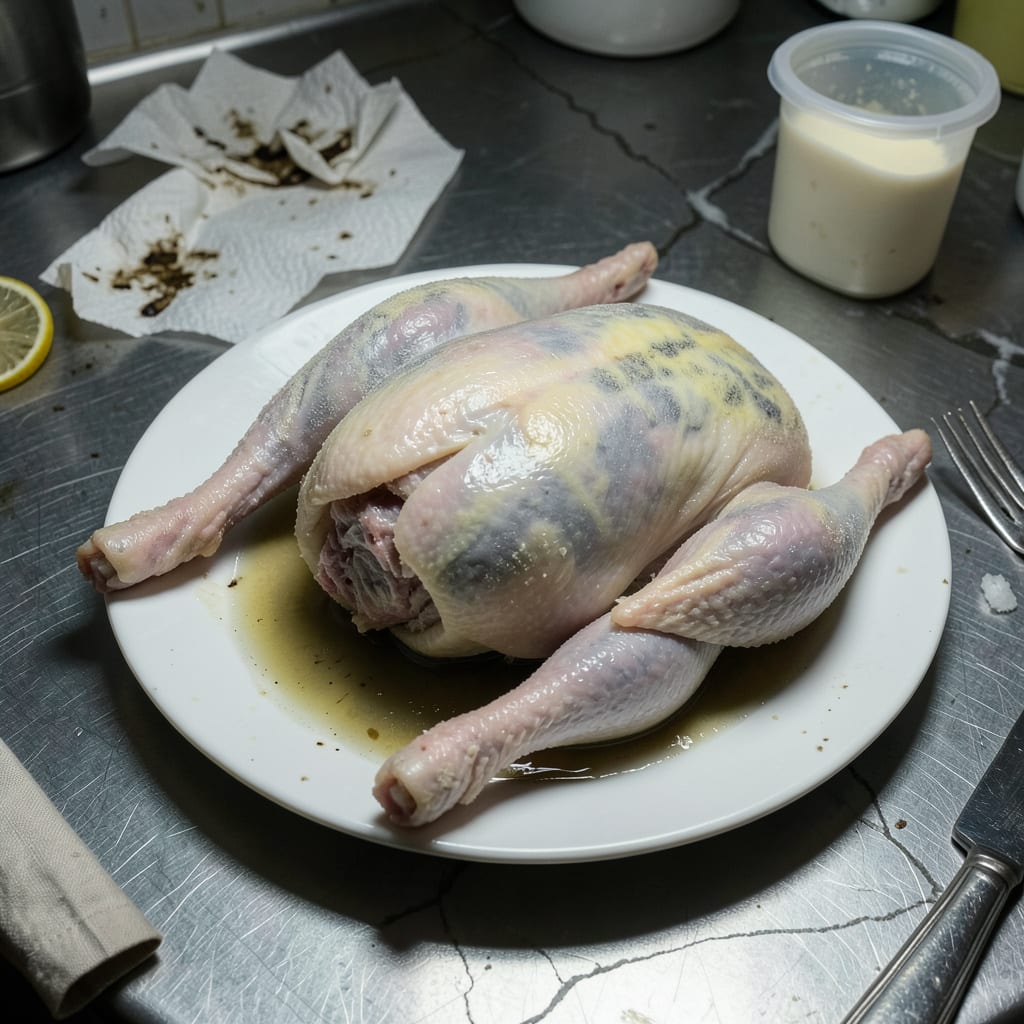
Uncooked frozen chicken left out overnight should be discarded immediately. The USDA warns that perishable foods left in the danger zone (40°F–140°F) for over 2 hours—even if still frozen—risk bacterial growth like Salmonella and E. coli, making it unsafe to cook or eat.
This isn’t just about the chicken thawing—it’s about the outer layers warming up enough to become a breeding ground for harmful bacteria. 🔥 Even if the center stays icy, the surface temperature can climb into the danger zone, where pathogens multiply rapidly. I’ve seen cases where people assume “still cold” means “still safe,” but that’s a risky gamble with foodborne illness. The USDA’s guidelines exist because bacteria like Campylobacter can double in number every 20 minutes at room temperature.
What surprises most folks is that refreezing won’t solve the problem. 💫 Once bacteria start growing, they produce toxins that freezing can’t destroy. That’s why proper thawing methods—like using the fridge or a cold water bath—are critical for maintaining safety from the moment you take the chicken out of the freezer.
💡 In This Article
- Why Overnight Exposure Makes Frozen Chicken Unsafe
- Safe Thawing Methods for Frozen Chicken to Avoid Waste
Why Overnight Exposure Makes Frozen Chicken Unsafe
The danger starts when frozen chicken begins to thaw unevenly. Even if the center remains icy, the outer layers warm up first, creating a perfect environment for bacteria. 🔥 At temperatures between 40°F and 140°F—what food scientists call the “danger zone”—pathogens like Salmonella and Campylobacter multiply exponentially.
These bacteria can double every 20-30 minutes at room temperature, turning a seemingly safe piece of chicken into a health hazard faster than you might expect.
Here’s what most people overlook: the surface temperature matters more than the internal state. While the center might still feel frozen after 8-12 hours at room temperature, the outer layers have likely spent hours in that critical danger zone. 🌡️ Research shows that even partial thawing allows bacteria to migrate from the surface inward.
The USDA’s 2-hour rule exists because after this point, bacterial populations reach levels that cooking can’t always neutralize—especially if the chicken isn’t cooked to the proper 165°F internal temperature.
The freezing process doesn’t kill bacteria—it just puts them into dormancy. When you leave chicken out overnight, you’re essentially giving those dormant bacteria a wake-up call. 💫 Studies from the Journal of Food Protection demonstrate that E. coli and Listeria can survive freezing and become active again during thawing.
This is why refreezing isn’t a solution: the bacteria have already had their chance to multiply and produce heat-stable toxins that remain dangerous even after cooking.
Consider this real-world scenario: A 5-pound frozen chicken left on the counter overnight might still have ice crystals in the center, but the outer 1-2 inches could easily reach 50-60°F—ideal for bacterial growth. The larger the piece of chicken, the more pronounced this temperature gradient becomes.
This uneven thawing creates microenvironments where different bacteria thrive at different rates, making the entire piece unsafe regardless of how “frozen” it appears.
What makes this particularly insidious is that you can’t see, smell, or taste the bacteria.
Unlike spoiled milk that curdles or meat that develops an off odor, chicken contaminated with Salmonella or Campylobacter often looks and smells completely normal. 🦠 The CDC reports that these pathogens cause over 1 million illnesses annually in the U.S. alone, with poultry being the primary vector in most cases.
The risk simply isn’t worth taking when proper thawing methods are so straightforward.
The USDA’s guidelines aren’t arbitrary—they’re based on decades of food safety research. When chicken spends more than 2 hours above 40°F, the bacterial load becomes statistically likely to cause illness. ✨ Even if you plan to cook the chicken thoroughly, some bacteria like Staphylococcus aureus produce heat-stable toxins that aren’t destroyed by normal cooking temperatures.
This is why food safety experts universally recommend discarding chicken left out overnight—no exceptions.
Remember that ambient temperature plays a huge role too. In a kitchen that’s 75°F or warmer, the danger zone effects accelerate. 🌡️ The FDA Food Code actually reduces the safe time limit to just 1 hour when temperatures exceed 90°F, such as during summer months or in warm climates.
This temperature sensitivity explains why professional kitchens are so meticulous about time and temperature control—what might seem like a minor oversight can have serious consequences.

- Jollof Rice Sauce Recipe: West African Tomato and Spice Infusion - September 25, 2026
- Japanese Rice Soup Recipe: Umami-Rich Comfort in a Bowl - September 25, 2026
- Homemade Cream Of Rice Recipe: Silk-Smooth Breakfast in Minutes - September 25, 2026