
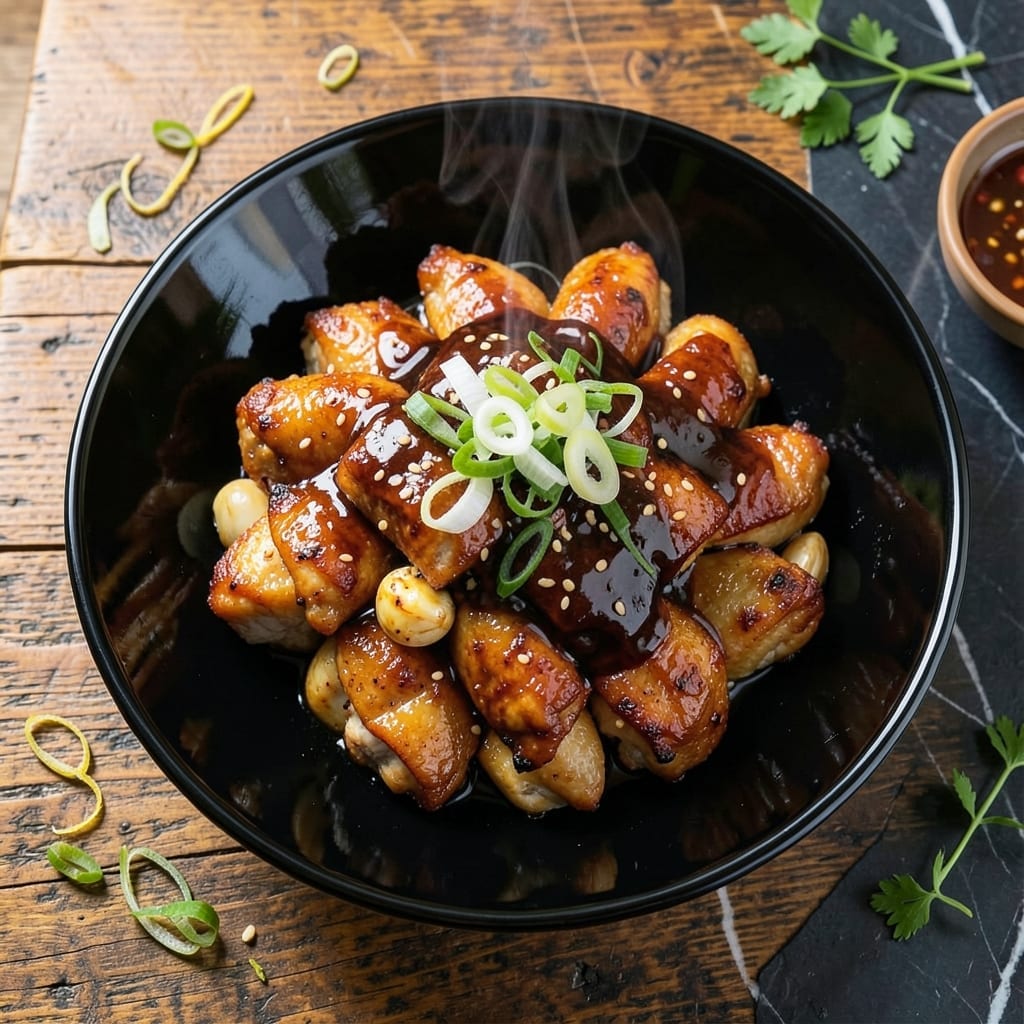
There’s a reason wok cooking delivers unmatched flavor—high heat and quick cooking lock in juices while creating bold, layered tastes. This stir-fry method brings restaurant-quality results to your home kitchen in minutes.
The key is preparation: slice ingredients uniformly, pre-measure sauces, and keep everything within reach. A screaming-hot wok and quick cooking ensure chicken stays tender and vegetables retain their crisp bite.
What emerges is a dish with caramelized edges, vibrant colors, and a sauce that clings to every piece. The aroma alone will have everyone gathering around the table before it’s even plated.
Serve immediately over steamed rice to soak up every drop of flavor. Here’s how to master it.
Ingredients for Wok Chicken
Every ingredient here is chosen to deliver that signature wok-seared intensity and complexity.
| Ingredient | Amount | Notes |
|---|---|---|
| Boneless Skinless Chicken Thighs 🍗 | 1 ½ lb | Cut into 1-inch pieces |
| Soy Sauce 🫒 | ⅓ cup | Low-sodium preferred |
| Oyster Sauce 🫒 | 2 tbsp | Or vegetarian oyster sauce |
| Shaoxing Wine 🍶 | 2 tbsp | Or dry sherry substitute |
| Sesame Oil 🫒 | 1 tbsp | Toasted for depth |
| Garlic Cloves 🧄 | 4 cloves | Minced finely |
| Fresh Ginger Root 🌿 | 1 tbsp | Grated or minced |
| Red Bell Pepper 🌶️ | 1 whole | Thinly sliced |
| Broccoli Florets 🥦 | 2 cups | Cut into bite-size pieces |
| Carrot 🥕 | 1 whole | Julienned or thinly sliced |
| Green Onions 🧅 | 3 whole | Cut into 1-inch pieces |
| Cornstarch 🌾 | 1 tbsp | For velvety sauce |
| Neutral Oil 🫒 | 3 tbsp | High smoke point for wok |
| Granulated Sugar 🧂 | 1 tsp | Balances sauce flavors |
The chicken is the foundation. Boneless, skinless thighs stay juicier than breasts in high heat—look for air-chilled at specialty grocers like Whole Foods for superior texture. Fresh ginger and garlic are non-negotiable; pre-minced jars lack the punch. Shaoxing wine adds depth (find it at H Mart or most Asian markets). The vegetables should be crisp—bright color and firm texture are key indicators of freshness.
No Shaoxing wine? Dry sherry works in a pinch, though the flavor profile shifts slightly. Swap oyster sauce for vegetarian mushroom sauce or hoisin in equal amounts. Chicken breasts can replace thighs, but marinate them first (30 minutes in soy sauce and cornstarch) to prevent dryness. Frozen vegetables work if fresh aren’t available—thaw and pat dry to avoid steaming the dish.
Prep everything before heating the wok—mise en place is critical. Store ginger and garlic in the freezer for up to 3 months; grate frozen without thawing. Cooked leftovers keep 3-4 days refrigerated, but the texture is best fresh. Reheat gently in a skillet to revive the crispness.
Why You’ll Love This Recipe
- I’ll be real: this feeds us on busy nights and still tastes like I put in hours.
- One Pan Wonder: I toss the chicken thighs with soy, oyster sauce, and a splash of Shaoxing wine—20 minutes and it’s done.
- Umami Bomb: That first bite with sesame oil and oyster sauce? Ridiculously good, like takeout but better.
- Weeknight Hero: I’ll be real: this feeds us on busy nights and still tastes like I put in hours.
Step-by-Step Instructions for Wok Chicken Stir-Fry
Here’s the method for achieving restaurant-quality results with minimal effort and maximum flavor.
Step 1: Velvet the Chicken for Tenderness
Cut the 1.5 lb boneless skinless chicken thighs into 1-inch pieces as specified. In a bowl, combine the chicken with the 1 tbsp cornstarch, 1 tbsp soy sauce, and 1 tbsp Shaoxing wine. This velveting technique guarantees tender, juicy meat.
Mix thoroughly to coat each piece evenly. I let it marinate for 10-15 minutes while preparing the remaining ingredients. This brief rest allows the cornstarch to work its magic, creating a protective barrier that locks in moisture during high-heat cooking.
Step 2: Stir-Fry the Aromatics and Vegetables
Heat 2 tbsp neutral oil in a wok over high heat until shimmering. Add the minced 4 cloves garlic cloves and 1 tbsp grated fresh ginger root, stirring for 15-20 seconds until fragrant. Be careful not to let them burn—this establishes the flavor foundation.
Add the thinly sliced 1 whole red bell pepper, 2 cups broccoli florets, and julienned 1 whole carrot. Stir-fry for 3-4 minutes until the vegetables are bright in color and slightly tender but still crisp. The high heat should produce a slight char on some pieces for depth of flavor.
Step 3: Cook the Chicken and Create the Sauce
Push the vegetables to one side of the wok and add the remaining 1 tbsp neutral oil. Add the marinated chicken in a single layer. Let it sear undisturbed for 1-2 minutes until the edges turn white and begin to brown.
Stir-fry the chicken for 3-4 minutes until cooked through and no longer pink. Combine with the vegetables, then add the remaining 0.33 cup soy sauce, 2 tbsp oyster sauce, 1 tbsp Shaoxing wine, and 1 tsp granulated sugar. Stir well to coat everything evenly.
Step 4: Finish with Sesame Oil and Green Onions
Cook for an additional 1-2 minutes, stirring constantly, until the sauce thickens slightly and glistens. The sauce should coat the back of a spoon but still be fluid enough to toss with the chicken and vegetables.
Remove from heat and stir in the 1 tbsp sesame oil and 3 whole green onions cut into 1-inch pieces. The sesame oil adds a final layer of nutty aroma, while the green onions provide a fresh, crisp contrast. Taste and adjust seasoning if needed, though the sauce should be perfectly balanced as written.
Pro Tips For Making Wok Chicken
- Velvet the Chicken: Cut the thighs into 1-inch pieces, then marinate with 1 tsp baking soda and 1 tbsp Shaoxing wine for 15 minutes—this keeps them absurdly tender when stir-frying.
- Blast the Heat: Get your wok screaming hot before adding oil, or the chicken will steam instead of searing. I learned this the hard way after too many sad, pale batches.
- Skip the Overcrowding: Cook the chicken in two batches if needed—packing the wok drops the temperature and turns your stir-fry into a sad boil.
- Finish with Sesame Oil: Drizzle the sesame oil at the very end, off the heat, so it keeps its nutty aroma instead of burning. Sounds small, but it actually changes the outcome.
Common Mistakes When Making Great wok chicken
Overcrowding the Wok
This is the most common mistake I see. Adding too much chicken at once drops the wok temperature dramatically. Cook in 2 batches if needed, using 1 tbsp oil per batch. You’ll get proper browning instead of steamed meat.
Skipping the Velveting Step
Don’t skip coating the chicken with cornstarch and soy sauce. This 10-minute step creates a protective layer that keeps the meat juicy. Without it, chicken often turns dry and tough in the wok’s intense heat.
Cold Ingredients
Always bring chicken to room temperature before cooking. Cold meat seizes up in the wok, preventing even cooking. I pull my chicken from the fridge 20 minutes before starting prep. 🔥
Neglecting High Heat
Your wok must be screaming hot before adding oil. Test by flicking water droplets—they should dance and evaporate immediately. If not, wait another 2-3 minutes on high heat.
Over-Stirring
Let the chicken sear undisturbed for 1-2 minutes initially. Constant stirring prevents browning. I use a wok spatula to flip only when edges turn white.
Sauce Too Thick
If your sauce becomes gluey, you’ve overcooked it. The cornstarch thickens as it cools. Remove from heat as soon as it glistens and coats the spoon. Add 2 tbsp water to thin if needed.
Nutrition Facts
Frequently Asked Questions
What type of wok works best?
A carbon steel wok is ideal for even heating and high-temperature cooking. Avoid non-stick for stir-frying, as it can’t handle the high heat needed. A well-seasoned wok develops a natural non-stick surface over time.
Can I use chicken breasts instead?
Yes, but they dry out faster than thighs. Slice them thinly and velvet with 1 tbsp cornstarch and 1 tbsp soy sauce for 20 minutes before cooking. This helps retain moisture in the lean meat.
How do I know when it’s done?
Chicken is safe at 165°F internal temperature. For stir-fry, look for opaque flesh with no pink and juices running clear. The pieces should be golden-brown with slightly charred edges.
What if my sauce is too thin?
Mix 1 tsp cornstarch with 1 tbsp cold water and stir into the simmering sauce. Cook for 30-60 seconds until it thickens to your desired consistency.

- Jollof Rice Sauce Recipe: West African Tomato and Spice Infusion - September 25, 2026
- Japanese Rice Soup Recipe: Umami-Rich Comfort in a Bowl - September 25, 2026
- Homemade Cream Of Rice Recipe: Silk-Smooth Breakfast in Minutes - September 25, 2026