
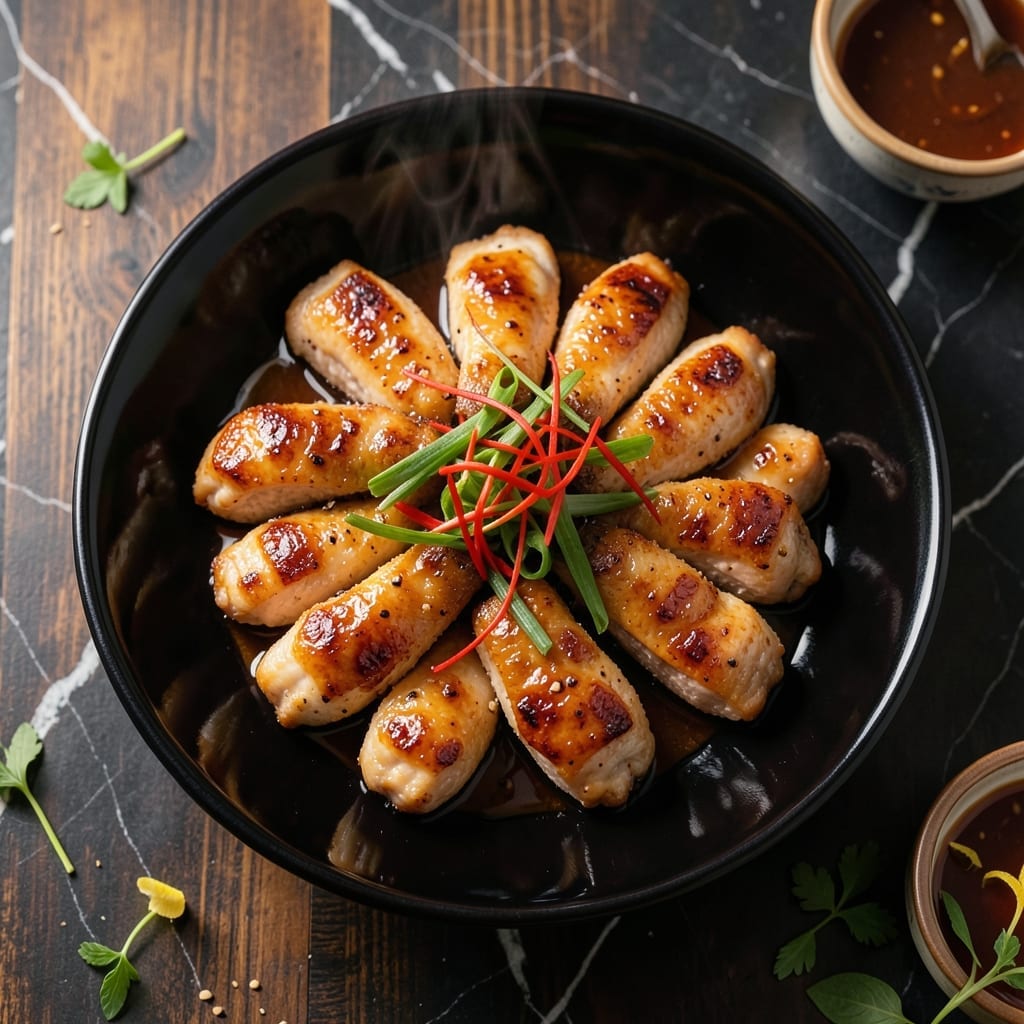
This Cantonese classic delivers an unmatched velvet texture that melts in your mouth. The secret lies in a traditional marinade process using cornstarch and egg white that transforms ordinary chicken into a restaurant-quality dish.
I’ve perfected this method over years of home cooking, ensuring the meat stays tender while absorbing maximum flavor. The light, silky coating creates a base that holds sauces beautifully without overpowering the dish.
What sets this apart is the contrast between the tender chicken and the deeply flavored sauce. The technique requires precision but rewards with results that surpass takeout every time.
Serve with steamed rice to soak up every bit of the savory sauce. This dish brings authentic Cantonese flavors to your kitchen.
Ingredients for Imperial Chicken
Velvet texture starts with chicken, egg whites, and cornstarch. Few pantry staples complete it.
| Ingredient | Amount | Notes |
|---|---|---|
| Boneless Skinless Chicken Thighs 🍗 | 1 ½ lb | Cut into bite-sized pieces |
| Egg Whites 🥚 | 2 whole | From large eggs |
| Cornstarch 🌾 | 2 tbsp | For velvet coating |
| Shaoxing Wine 🍶 | 1 tbsp | Or dry sherry substitute |
| Light Soy Sauce 🫒 | 1 tbsp | Low sodium preferred |
| Oyster Sauce 🍚 | 1 tbsp | Vegetarian oyster if needed |
| Sesame Oil 🫒 | 1 tsp | Toasted variety |
| Garlic Cloves 🧄 | 3 cloves | Minced finely |
| Ginger Root 🌿 | 1 tbsp | Freshly grated |
| Green Onions 🧅 | 3 whole | Thinly sliced |
| Neutral Cooking Oil 🫒 | ½ cup | For stir-frying |
| White Pepper 🌶️ | ½ tsp | Ground fine |
| Sugar 🧂 | ½ tsp | Granulated white |
| Chicken Stock 🥣 | ¼ cup | Low sodium preferred |
The chicken is everything here. Boneless thighs stay juicier than breasts—Costco or Whole Foods have great options. Shaoxing wine is non-negotiable for authentic flavor (find it at Asian markets or online), but dry sherry in a pinch works. The cornstarch creates that signature silkiness—use the kind in the blue box, not the instant stuff.
No Shaoxing? Dry sherry at 1:1 ratio is your best bet. Oyster sauce can be swapped for hoisin or vegetarian oyster. Need to skip the egg whites? Cornstarch slurry alone works, but texture won’t be as perfect. The green onions are flexible—regular onions minced fine can stand in, though they’re stronger in flavor.
Marinate the chicken for 20-30 minutes max—longer makes it mushy. The dish reheats okay, but best fresh. Leftovers keep 2-3 days in the fridge, though that velvet texture fades. Freezing? Not ideal (the coating gets gummy).
Why You’ll Love This Recipe
- One Pan Wonder: I toss the chicken thighs with egg whites and cornstarch, then sear them—no extra bowls, no fuss.
- Umami Bomb: Shaoxing wine and light soy sauce give it that deep, savory punch I crave in every bite.
- Weeknight Hero: Honestly, it’s my go-to for busy evenings when I need dinner fast but still flavorful.
- Budget Stretch: Boneless thighs stay juicy and cost less than breasts, so I can make it often without guilt.
Step-by-Step Instructions for Cantonese-Style Velvet Chicken
Here’s how I achieve that signature tender, silky texture that makes this dish so special.
Step 1: Velvet the Chicken with Egg Whites and Cornstarch
In a large bowl, combine the 1.5 lb Boneless Skinless Chicken Thighs (cut into bite-sized pieces) with 2 whole Egg Whites, 2 tbsp Cornstarch, 1 tbsp Shaoxing Wine, 1 tbsp Light Soy Sauce, 1 tbsp Oyster Sauce, 1 tsp Sesame Oil, 0.5 tsp White Pepper, and 0.5 tsp Sugar.
Mix well with your hands or a fork until the chicken is evenly coated and the mixture looks slightly sticky. This velveting process is what creates the ultra-tender texture. Let it sit for 10-15 minutes at room temperature to allow the cornstarch to fully absorb the liquid.
Step 2: Prepare the Aromatics
While the chicken marinates, finely mince the 3 cloves Garlic Cloves and freshly grate the 1 tbsp Ginger Root. Thinly slice the 3 whole Green Onions, separating the white and green parts. Keep the whites with the garlic and ginger, and reserve the green parts for garnish.
This separation ensures the white parts cook thoroughly with the chicken while the green parts retain their fresh, crisp texture when added at the end. The combination of these aromatics builds the authentic Cantonese flavor base.
Step 3: Stir-Fry the Chicken in Batches
Heat 0.5 cup Neutral Cooking Oil in a wok or large skillet over high heat until it shimmers. Carefully add half the chicken in a single layer—don’t overcrowd the pan or the chicken will steam instead of fry. Cook for 2-3 minutes until the chicken turns opaque and the edges start to brown.
Remove the chicken with a slotted spoon and drain on paper towels. Repeat with the remaining chicken. This batch cooking ensures each piece develops that perfect velvety exterior without becoming greasy.
Step 4: Combine Everything with the Sauce
Return the wok to high heat and add the minced garlic, ginger, and white parts of the green onions. Stir-fry for 30-45 seconds until fragrant but not browned. Pour in the 0.25 cup Chicken Stock and bring to a simmer.
Add all the cooked chicken back to the wok and toss to coat evenly in the sauce. Cook for 1-2 minutes until the sauce thickens slightly and clings to the chicken. The sauce should be glossy and just enough to coat each piece without pooling at the bottom.
Finish by sprinkling the reserved green onion tops over the chicken. The residual heat will soften them slightly while keeping their vibrant color and fresh flavor.
Pro Tips For Making Imperial Chicken
- Velvet the Chicken: Coat the chicken in egg whites and cornstarch for at least 20 minutes before cooking—this keeps the meat absurdly tender, even if you overcook it slightly.
- Hot Wok, Quick Cook: Use the highest heat your stove allows and cook in small batches. Crowding the pan steams the chicken instead of searing it, and you’ll lose that crisp, golden crust.
- Deglaze with Wine: After searing the chicken, pour in the Shaoxing wine while the pan is still hot to lift all those browned bits—this builds a deeper, more complex sauce without extra effort.
- Skip the Over-Marinating: Don’t let the chicken sit in soy sauce for more than 10 minutes before cooking, or it’ll draw out too much moisture and turn mushy. A quick toss is all you need for flavor.
Essential Equipment for imperial chicken
Wok Essentials
A carbon steel wok is non-negotiable for authentic results—I use a 14-inch Joyce Chen model. Its high heat capacity and sloped sides make stir-frying effortless. Season it properly before first use to create a natural non-stick surface. 🔥
High Heat Source
Your stove must deliver serious BTUs. I recommend a gas burner with at least 15,000 BTU output. Electric stoves struggle with the required high heat for proper wok hei. If using induction, opt for a portable propane burner like Bayou Classic.
Precision Tools
A wok spatula (chuan) with a long handle keeps your hands safe. I pair mine with tongs for flipping chicken pieces. A digital instant-read thermometer ensures perfect chicken doneness at 165°F.
Prep Equipment
Use a large mixing bowl for the velveting process—I prefer stainless steel for even temperature. A microplane grates ginger finely without fibers. Keep paper towels handy for draining fried chicken between batches. ✨
Safety Gear
Hot oil splatters are inevitable at these temperatures. Wear an apron and use silicone oven mitts for protection. I keep a lid nearby to smother any flare-ups instantly.
Serving Setup
A bamboo steamer keeps rice hot while you cook. Serve your creation on a pre-warmed platter to maintain temperature. I always have extra bowls ready for immediate plating.
Nutrition Facts
Frequently Asked Questions
What makes the texture so silky?
The velveting technique with egg whites and cornstarch creates a protective coating that locks in moisture. This results in ultra-tender chicken that melts in your mouth.
Can I use chicken breast instead of thighs?
You can, but thighs stay juicier. If using breast, reduce cooking time to 1-2 minutes per batch to prevent dryness. The texture won’t be as rich.
How do I know when it’s fully cooked?
Use a thermometer to check for 165°F internally. The chicken should be opaque with no pink in the center. Overcooking will ruin the velvet texture.
What’s the best way to reheat leftovers?
Gently warm in a skillet with a splash of water or broth on medium-low heat for 2-3 minutes. Microwaving can make the texture rubbery.

- Jollof Rice Sauce Recipe: West African Tomato and Spice Infusion - September 25, 2026
- Japanese Rice Soup Recipe: Umami-Rich Comfort in a Bowl - September 25, 2026
- Homemade Cream Of Rice Recipe: Silk-Smooth Breakfast in Minutes - September 25, 2026